
In the continuous evolution of the foundry industry, the demand for higher quality iron castings has become paramount. The selection of a molding sand process is a critical technological decision that directly determines a factory’s production capability and the ultimate quality of its products. Among the various resin sand casting processes, alkaline phenolic resin sand has emerged as a superior choice, offering significant advantages in terms of environmental friendliness, casting quality, and operational efficiency. This article delves deeply into the properties, application techniques, and practical considerations of utilizing alkaline phenolic resin sand, particularly in the production of demanding castings.
The foundational process of resin sand casting involves bonding silica sand grains using a synthetic resin binder to form a mold or core. Traditional binder systems, such as clay sand, sodium silicate (water glass) sand, and furan resin sand, have been widely used but often come with inherent drawbacks like poor collapsibility, dimensional instability, or the emission of harmful gases during pouring. Alkaline phenolic resin sand addresses many of these limitations, positioning itself as an advanced resin sand casting technology suitable for high-value applications.
The performance requirements for modern industrial components, especially those made from ductile iron, are exceptionally high. Ductile iron, designated typically by grades such as QT 450-10, where the numbers signify minimum tensile strength (in MPa) and percentage elongation, is prized for its excellent combination of strength, toughness, and wear resistance. The metallurgy of ductile iron is complex, requiring precise control over composition and inoculation to ensure the spherical graphite morphology that grants it these properties. The quality of the molding sand directly influences the surface finish, dimensional accuracy, and internal soundness of these castings. Defects like veining, expansion scabbing, gas holes, and poor surface finish can often be traced back to the molding sand system. Therefore, transitioning to a more controllable and responsive sand system like alkaline phenolic resin sand casting is a strategic upgrade for foundries aiming for excellence.
Fundamental Characteristics of Alkaline Phenolic Resin Binders
Alkaline phenolic resin is synthesized from phenol and formaldehyde using an alkaline compound as the catalyst. The high alkalinity of the resin promotes the formation of phenolate anions, which is central to its unique curing mechanism and properties. Unlike some other resin sand casting binders, high-quality alkaline phenolic resins are formulated to be free of nitrogen, phosphorus, and sulfur. The absence of these elements is crucial because they can lead to casting defects such as nitrogen porosity, subsurface pinholes, or metal penetration, especially in steel, alloy iron, and ductile iron castings. This makes alkaline phenolic resin sand exceptionally suitable for producing castings where such defects are unacceptable.
The curing process of alkaline phenolic resin sand is initiated by an organic ester hardener, not an acid. This reaction is distinctive. The initial hardening is somewhat thermoplastic, meaning the sand mold exhibits a degree of thermal plasticity during the early stages of metal pouring. This characteristic allows the mold to yield slightly to the initial thermal expansion of the solidifying metal, reducing stress. Subsequently, a secondary hardening occurs, transforming the binder into a rigid, yet highly collapsible, state after the metal has cooled. This combination of temporary yield followed by excellent collapsibility is a key benefit, as it significantly reduces the tendency for hot tearing and veining defects in the casting. Furthermore, the binder’s thermal properties contribute to reducing erosion and metal penetration, thereby enhancing the dimensional fidelity and surface quality of the final component. The following table contrasts the general characteristics of different resin sand casting processes.
| Process Parameter / Characteristic | Clay Green Sand | Furan Resin Sand | Alkaline Phenolic Resin Sand |
|---|---|---|---|
| Binder Type | Bentonite Clay + Water | Furan Resin + Acid Catalyst | Alkaline Phenolic Resin + Ester Hardener |
| Typical Binder Addition (%) | 8-12 (Clay + Moisture) | 0.8-1.5 | 1.0-1.8 |
| Peak Strength Development | Immediate (with compaction) | Fast (minutes to hours) | Slower (hours, peaks at ~24h) |
| Collapsibility After Pouring | Poor | Good to Excellent | Excellent |
| Emissions During Pouring | Steam, low odor | Formaldehyde, SO2 (acidic) | Predominantly water vapor, low odor |
| Presence of N, P, S | No | Yes (N, S from acid) | No |
| Ideal for | High-volume, simple shapes | Complex cores, general castings | Steel, alloyed irons, critical ductile iron |
The strength development curve of alkaline phenolic resin sand is noteworthy. While it gains handling strength relatively quickly (strip time can be 15-60 minutes depending on conditions), its ultimate tensile strength continues to increase, often reaching a maximum around 24 hours. This high final strength contributes to robust mold and core handling, reducing breakages. The resin is water-soluble and possesses good flowability, which aids in coating the sand grains uniformly during mixing. The hardener, typically a blend of organic esters like glycerol diacetate or triacetin, participates stoichiometrically in the cross-linking reaction. This is a critical point of control: the amount of hardener must be precisely matched to the resin amount. Insufficient hardener leads to incomplete curing and permanently low strength, while excess hardener can degrade the cured binder network, negatively impacting strength and potentially affecting casting surface finish. The relationship can be conceptually summarized as:
$$ \text{Optimal Sand Strength} = f(R, H, T, t) $$
Where \( R \) is the resin addition level, \( H \) is the hardener addition level (optimally a fixed ratio of \( R \)), \( T \) is the temperature of sand and environment, and \( t \) is time.
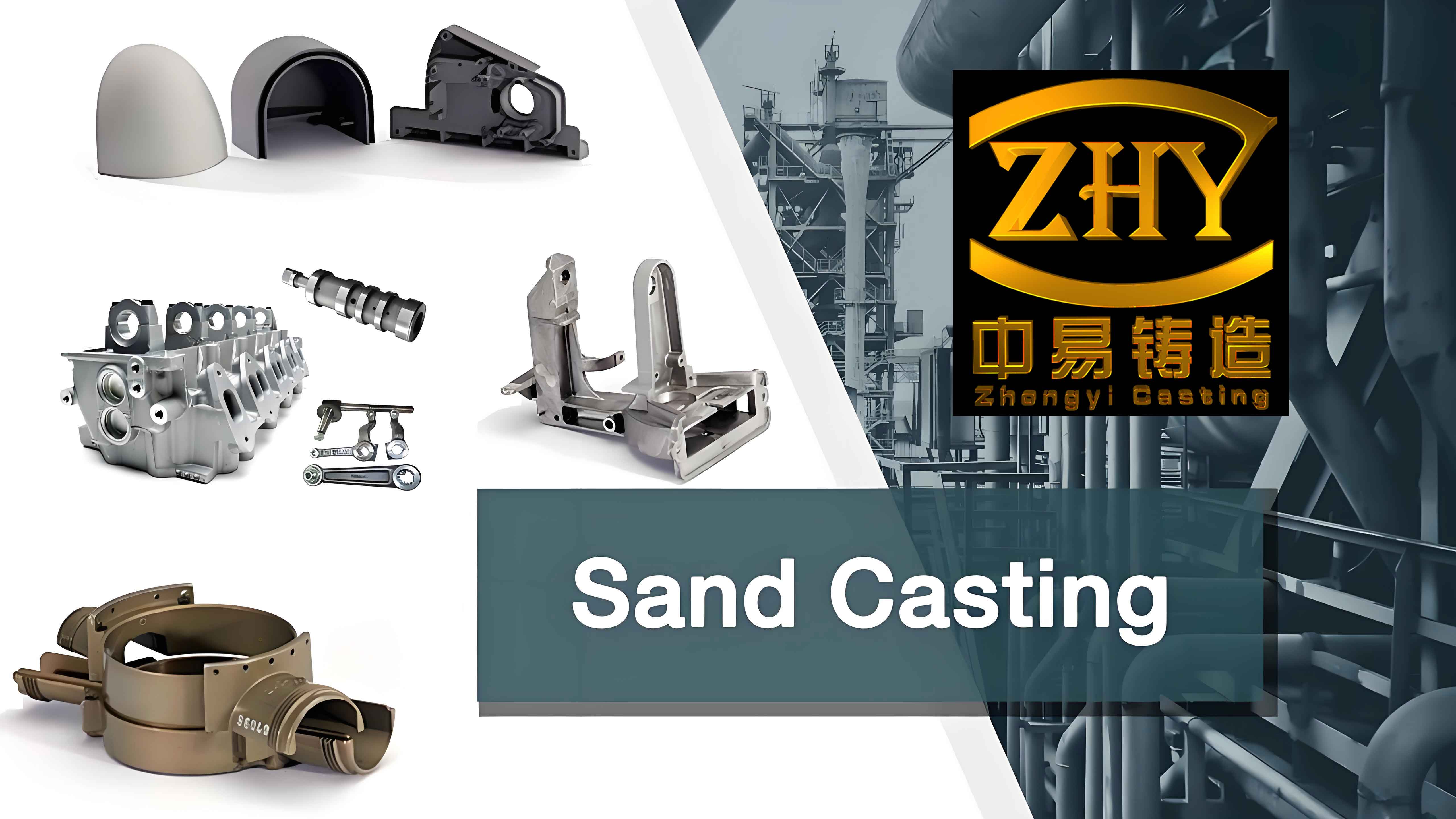
Critical Process Control Parameters in Alkaline Phenolic Resin Sand Casting
Successfully implementing an alkaline phenolic resin sand casting process requires meticulous attention to several key parameters. Failure to control these can lead to inconsistent results, high binder consumption, and defective castings.
1. Control of Reclaimed Sand Loss on Ignition (LOI)
Sand reclamation is economically and environmentally essential in resin sand casting. However, the quality of reclaimed sand is paramount. With alkaline phenolic resin sand, after pouring and cooling, a glassy layer of alkaline metal silicate complexes forms on the surface of the sand grains. This layer is tenacious and difficult to remove completely through mechanical reclamation. If not controlled, this “resin buildup” increases the Loss on Ignition (LOI) of the reclaimed sand. LOI measures the combustible material (remaining carbonaceous resin) coating the sand.
A high LOI has a direct, negative impact. New resin binder cannot adhere effectively to sand grains already coated with old, inert residue. This forces the foundry to increase the new resin addition rate to achieve the necessary mold strength, escalating costs. Through systematic experimentation, it has been established that maintaining the LOI of reclaimed alkaline phenolic sand below 1.5% is crucial. At this level, the new resin can bond effectively, maintaining strength with a typical resin addition of 1.2% to 1.6%. If LOI rises above 2.0%, strength becomes difficult to achieve even with significantly higher resin additions. The relationship between LOI, new resin addition, and resulting tensile strength can be modeled for process optimization:
$$ TS = k \cdot \left( \frac{R_{new}}{1 + \alpha \cdot (LOI – LOI_{target})} \right) $$
Where \( TS \) is tensile strength, \( k \) is a constant, \( R_{new} \) is the new resin addition, \( \alpha \) is a degradation factor, and \( LOI_{target} \) is the optimal LOI level (e.g., 1.5%).
To control LOI, the reclamation system must be efficient. This often involves a combination of intensive mechanical attrition (e.g., using a high-quality sand reclaimer) followed by effective dust removal. In some cases, a thermal reclamation stage may be justified for critical applications to drive off all organic material and reset the sand to a near-virgin state, though this is energy-intensive.
2. Sand and Mold Temperature Management
Temperature is the most influential variable affecting workability and strength development in resin sand casting with alkaline phenolic binders. The reaction kinetics between the resin and ester hardener are highly temperature-sensitive. The ideal temperature for both the sand (virgin and reclaimed) and the patterns/molds is in the range of 20-30°C (68-86°F).
Effects of Low Temperature (<15°C / 59°F): The chemical reaction slows dramatically. This leads to excessively long strip times, low initial strengths, and poor flowability of the sand mix. The sand may not properly fill pattern details, leading to weak mold edges and poor casting definition.
Effects of High Temperature (>35°C / 95°F): The reaction accelerates uncontrollably. This results in a very short usable “bench life” for the mixed sand. The sand may set hard in the mixer or hopper, causing massive downtime for cleaning. Furthermore, rapid surface curing can trap unreacted resin beneath, leading to a weak mold body that may collapse or cause casting blows.
Maintaining consistent sand temperature is therefore non-negotiable. This often requires installing sand cooling equipment after the reclaimer. For the sand mix, the required hardener addition percentage is inversely related to temperature. A standard practice is to have a hardener ratio chart based on sand temperature:
| Sand Temperature (°C) | Relative Hardener Addition (% of Resin) | Expected Strip Time (minutes) |
|---|---|---|
| 15 | 120% | 45 – 70 |
| 20 | 100% (Standard) | 25 – 40 |
| 25 | 85% | 15 – 25 |
| 30 | 70% | 8 – 15 |
Preheating patterns, especially large metal ones, to near room temperature is also critical to prevent cold sand from contacting a cold surface, which can create a soft, uncured skin on the mold surface.
3. Mixer Configuration and Resin-Hardener Blending
Alkaline phenolic resins tend to have a higher viscosity compared to some other foundry resins. If the resin and hardener are not intimately and instantaneously mixed with the sand, the resulting coating will be uneven. This leads to areas of high binder concentration (which may remain sticky or cause gas defects) and areas of low concentration (weak spots). To overcome this, the mixer design is crucial. Many foundries successfully using this process employ continuous mixers where the sand is fluidized and mixed in a high-speed vortex.
A key modification for optimal results is to introduce the resin and hardener streams so that they begin to mix with each other just milliseconds before they hit the sand stream. This pre-blending ensures a more homogeneous distribution of the reactive components onto the sand grains. The goal is to achieve a uniform, thin, complete film of binder on every grain. The mixing energy (\( E_{mix} \)) must be sufficient to disperse the viscous resin, which can be expressed as a function of mixer rotor speed and mixing time:
$$ E_{mix} \propto \omega^{2} \cdot t_{mix} $$
where \( \omega \) is the angular velocity of the mixer blades and \( t_{mix} \) is the residence time of sand in the mixing chamber.
4. Compaction and Mold Density
While alkaline phenolic resin sand is self-setting and does not require heavy ramming like green sand, adequate compaction is still essential. The sand should be properly poured and jolted or vibrated to ensure it flows into all parts of the pattern and achieves a uniform, high density. This is particularly important for ductile iron castings. Ductile iron undergoes significant graphite expansion during solidification. A dense, rigid mold helps to counteract this expansion, promoting denser casting microstructure and reducing the risk of shrinkage porosity. Furthermore, a uniformly high mold density minimizes mold wall movement, ensuring dimensional accuracy. The permeability of the mold, while important for venting, is derived from the sand grain size distribution rather than low density. The relationship between mold density \( \rho_{mold} \), compaction energy, and sand flowability \( \phi \) is critical:
$$ \rho_{mold} = C \cdot \frac{\sqrt{E_{comp}}}{\phi} $$
Here, \( C \) is a constant, and \( E_{comp} \) is the applied compaction energy (e.g., from vibration). Good sand flowability (high \( \phi \)), achieved through proper grain shape, temperature, and binder distribution, is therefore essential for achieving high density with minimal effort.
Advantages and Economic Impact
The transition to alkaline phenolic resin sand casting offers a compelling value proposition. Compared to the previously common water glass (sodium silicate) process, the advantages are transformative. Water glass sand suffers from poor collapsibility, often requiring intense mechanical knockout and causing difficulty in cleaning complex castings. Its hygroscopic nature can lead to mold softening and casting defects in humid conditions. Alkaline phenolic sand, with its excellent collapsibility, dramatically reduces cleaning room labor and shot blasting time.
Environmentally, the process is a significant step forward. The absence of sulfur dioxide, formaldehyde (in significant amounts), and other acidic fumes during pouring creates a better working environment and reduces the load on air pollution control systems. The binder is phenol-formaldehyde based, but the high alkaline nature and modern formulations minimize free phenol. The sand is often easier to reclaim than furan sand due to its different burnout characteristics.
From a quality perspective, the reduction in casting defects such as veining, hot tears, and gas holes directly improves yield and reduces salvage and rework costs. The improved surface finish and dimensional accuracy can reduce machining allowances, saving material and machining time. For a foundry producing high-value components like pump housings, valve bodies, or machinery bases, these quality improvements translate directly into competitive advantage and customer satisfaction.
In conclusion, alkaline phenolic resin sand represents a sophisticated and highly effective evolution in resin sand casting technology. Its unique combination of environmental compatibility, exceptional casting quality (particularly for steel and alloyed irons), and excellent sand reclamation potential makes it a strategic choice for modern foundries. Successful implementation hinges not just on the material itself, but on a holistic understanding and tight control of the entire sand preparation and molding process—from LOI management and temperature control to mixer optimization and mold compaction. For foundries aiming to produce superior castings in a sustainable and efficient manner, mastering the alkaline phenolic resin sand casting process is a worthwhile and rewarding endeavor.