
In my experience with modern manufacturing processes, resin sand casting has emerged as a pivotal technique for producing aluminum alloy components, especially in industries like aerospace where high precision and low-volume, high-variety production are paramount. Compared to traditional clay sand casting, resin sand casting offers superior surface finish, dimensional accuracy, and reduced defect rates, making it a preferred choice for critical applications. This article delves into the comprehensive process design of workshops dedicated to aluminum alloy resin sand casting, analyzing key aspects from equipment selection to facility layout. I will emphasize the importance of integrating efficient workflows, environmental controls, and safety measures, all while repeatedly highlighting the advantages and intricacies of resin sand casting. Throughout, I will employ tables and formulas to summarize critical data, ensuring a thorough understanding of the design principles.
The evolution of resin sand casting over the past three decades has been driven by its ability to produce high-integrity castings with minimal waste. In resin sand casting, a mixture of sand, resin binder, and catalyst is used to create molds and cores that harden at room temperature, eliminating the need for baking in many cases. This self-hardening characteristic streamlines production, but it also introduces unique challenges in workshop design, such as managing pollutants and heat. The core benefits of resin sand casting can be summarized in the table below, which contrasts it with clay sand casting:
| Aspect | Resin Sand Casting | Clay Sand Casting |
|---|---|---|
| Surface Finish | Smooth and clear edges | Rougher with less definition |
| Dimensional Accuracy | High precision | Moderate precision |
| Production Efficiency | Short cycle times | Longer cycles due to drying |
| Defect Rates (e.g., sand inclusion, porosity) | Low (80–95% yield) | Higher (55–70% yield) |
| Sand Reclamation Rate | 90–95% for furan resin | Lower, often requiring more new sand |
| Environmental Impact | Higher emissions but manageable with controls | Less complex emissions |
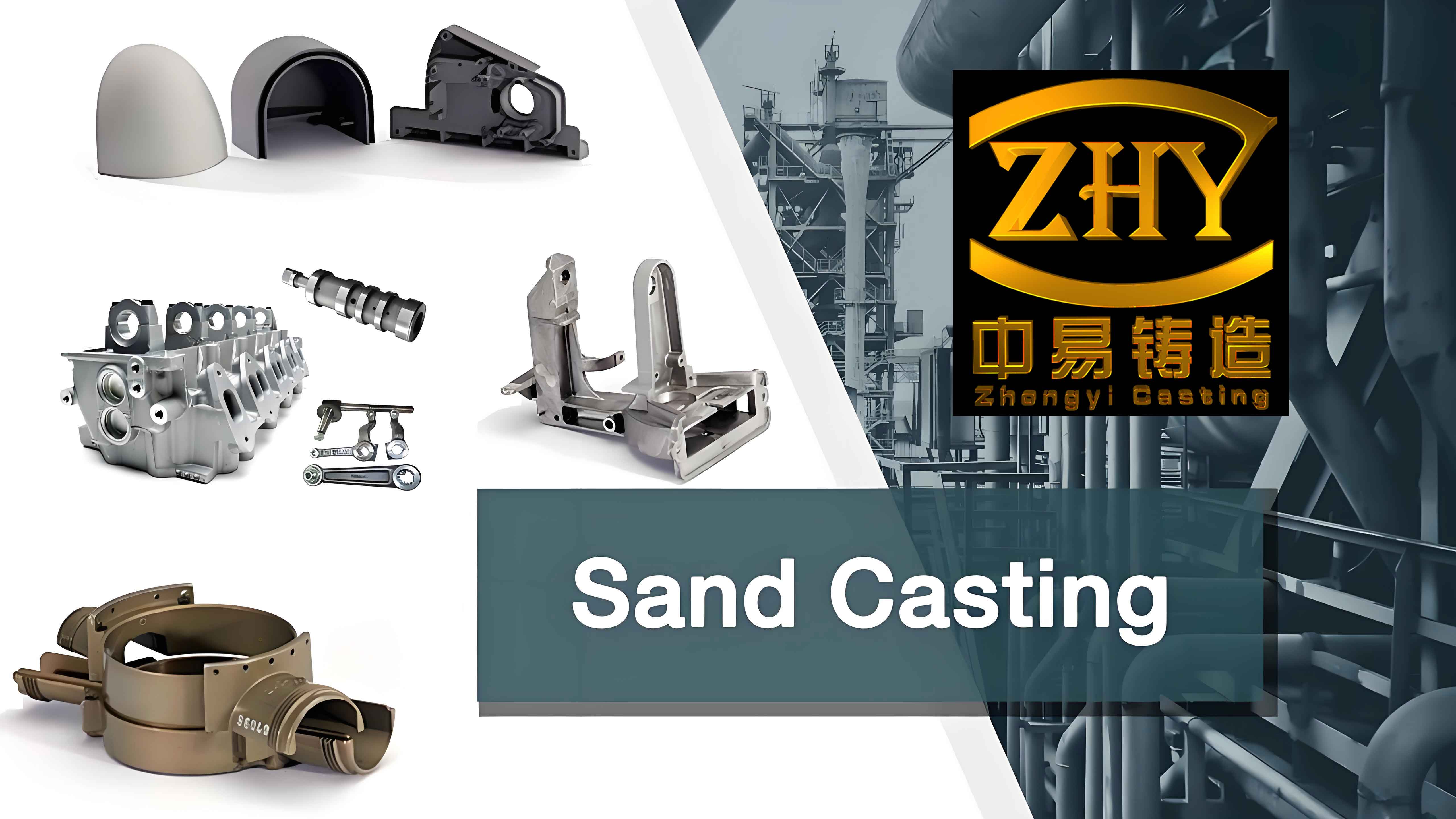
The general process flow for resin sand casting involves several sequential steps: sand mixing, mold making, core making, assembly, melting, refining, pouring, cooling, shakeout, cleaning, and finishing. A key advantage is the omission of baking for coated molds, as the resin binder cures spontaneously. However, this process generates significant heat, dust, and gaseous by-products, necessitating careful workshop planning. To visualize typical components produced through this method, consider the following image of sand-cast parts, which exemplifies the complexity and quality achievable with resin sand casting.
One of the critical aspects of resin sand casting workshop design is the configuration of production equipment. The selection and sizing of machinery directly impact capacity and efficiency. Key devices include sand mixers, molding machines, core shooters, melting furnaces, refining furnaces, shakeout machines, sand reclamation systems, cutting saws, blast cleaners, and welding units. For a resin sand casting line, the sand mixer and melting furnace are often bottleneck resources, and their capacity calculations guide the entire setup. Below, I detail the formulas used to determine these capacities.
For the sand mixer, the required mixing efficiency (δ in tons per hour) depends on the production volume and sand consumption. The formula is derived from the production parameters:
$$ \delta = \frac{n}{\alpha \cdot \beta \cdot \psi \cdot \eta} $$
Where:
• \( n \) = production volume in tons per year (the production target).
• \( \alpha \) = product yield rate (typically 0.80–0.95 for resin sand casting).
• \( \beta \) = gating and riser removal rate (usually 0.25–0.35).
• \( \psi \) = sand-to-metal ratio, representing the amount of sand used per ton of metal (generally 3–7 tons, based on mold complexity).
• \( \eta \) = equipment utilization factor (often set at 0.85 for balanced loads).
This calculation ensures the sand mixer can handle the peak demand, avoiding delays in mold production. Since one mixer typically serves a line, its efficiency dictates the overall throughput.
For melting furnaces, which are crucial for aluminum alloy processing, the number of units (N) is calculated based on melting efficiency. Induction furnaces are common, but gas-fired units are gaining popularity for bulk production. The formula is:
$$ N = \frac{n}{\delta \cdot \alpha \cdot \beta \cdot \eta} $$
Where:
• \( \delta \) = melting efficiency of a single furnace in tons per hour.
• Other variables are as defined above, with \( \alpha \) as yield rate, \( \beta \) as removal rate, and \( \eta \) as load factor (0.85).
Furnaces are often standardized to large capacities to melt metal quickly, with refining done separately to adjust composition.
Refining furnaces are sized based on the melting output and alloy variety. For multi-alloy production, separate refiners are needed to prevent cross-contamination. The total refining capacity should match half the melting efficiency, as each refining cycle takes about 0.5 hours. This ensures molten metal is processed and poured within 30 minutes to minimize hydrogen absorption, which can degrade mechanical properties. The relationship is:
$$ \text{Total Refining Capacity} = \frac{\delta_{\text{melting}}}{2} $$
Where \( \delta_{\text{melting}} \) is the total melting efficiency in tons per hour.
Sand reclamation systems are mandatory in modern resin sand casting workshops to recycle used sand, reducing waste and cost. The reclamation rate varies by resin type: ≥90% for furan resin and ≥60% for phenolic resin. The equipment capacity should align with the sand mixer’s output to maintain a closed-loop system. Even with high reclamation, new sand storage is necessary to compensate for losses. The table below summarizes key equipment and their design considerations:
| Equipment | Primary Function | Design Consideration | Typical Capacity Metric |
|---|---|---|---|
| Sand Mixer | Blend sand, resin, catalyst | Height impacts crane clearance; dust extraction needed | δ (t/h) from formula |
| Melting Furnace | Melt aluminum alloys | Proximity to pouring area; ventilation for heat/fumes | N units from formula |
| Refining Furnace | Adjust composition, remove impurities | Multiple units for alloy segregation; quick turnover | Capacity = melting efficiency / 2 |
| Core Shooter | Produce complex cores | Height for cold-box types; fume treatment for amines | Matched to core demand |
| Shakeout Machine | Separate castings from sand | Noise and dust isolation; integrated除尘 | Throughput aligned with production |
| Sand Reclaimer | Recycle used sand | Dust control; adjacency to mixing and shakeout | Capacity ≈ sand mixer δ |
Workshop layout is another critical facet of resin sand casting facility design. The plant must adhere to environmental regulations, such as being located in Class II or III zones away from sensitive areas like hospitals. The building should be oriented perpendicular to prevailing winds for natural ventilation. Internally, the workshop is divided into distinct zones to optimize workflow and contain pollutants. The guiding principles include minimizing cross-traffic, isolating noisy/dusty processes, and facilitating ductwork for ventilation. I categorize the key zones and their design points below.
The table outlines each production area’s role and design imperatives in a resin sand casting workshop:
| Production Zone | Key Activities | Design Requirements | Environmental Controls |
|---|---|---|---|
| Molding Area | Sand mixing, mold making | High ceiling for mixer/shooter; dust extraction via bag filters | Local exhaust for mixers; general ventilation |
| Melting-Refining Area | Melting, alloy adjustment, degassing | Near pouring zone; exterior walls for heat dissipation | Direct exhaust for furnace heat; scrubbers for refining fumes |
| Pouring-Cooling Area | Pouring molten metal, solidification | Centralized stations; proximity to melting | High-temperature hoods for fumes; enhanced airflow |
| Core Making Area | Core production via shooting | Elevated height for cold-box machines;隔离 | Fume treatment (e.g., scrubbers for amine gases) |
| Shakeout Area | Casting separation from sand | Corner or wall placement; noise-damped enclosures | Enclosed hoods with dust collectors |
| Finishing Area | Cleaning, grinding, cutting, welding | Isolated from main flow; dedicated bays | Dust extraction for grinding; local exhaust for welding |
| Sand Reclamation Area | Sand recycling and processing | Adjacent to molding and shakeout; separate enclosure | Comprehensive dust collection systems |
In resin sand casting workshops, the pouring-cooling zone is particularly challenging due to heat and complex emissions. Resin binders contain additives like urea and formaldehyde, which partially combust during pouring, releasing organic and inorganic gases. Concentrating these operations facilitates effective ventilation via overhead canopies. Similarly, the finishing area generates metal dust and noise, necessitating physical barriers and localized extraction.
Professional discipline requirements are integral to resin sand casting workshop design. Each engineering specialty must address the unique demands of this process. Based on my analysis, the key interdisciplinary considerations are:
| Discipline | Requirements in Resin Sand Casting Workshops | Rationale |
|---|---|---|
| Structural (Civil) | Steel or concrete construction; ceiling height ≥8 m, often ≥10 m for core shooters; avoidance of skylights over melting/pouring | Accommodate tall equipment; prevent water ingress into molten metal |
| Plumbing & Drainage | Cooling water supply for core shooters and reclaimers; sanitary water for showers/locker rooms | Equipment thermal management; worker hygiene per regulations |
| HVAC (Ventilation) | Ridge vents or skylights for general ventilation; local exhaust at furnaces, mixers, shakeouts, etc.; dedicated systems for pouring and finishing zones | Control heat, dust, and fumes; ensure air quality and safety |
| Power & Pneumatics | Compressed air for molding, blast cleaning, and tools; electrical loads for all machinery | Operational needs for automation and manual processes |
| Electrical | Tailored power distribution for inductive furnaces and motor-driven equipment | Ensure reliable operation of high-demand devices |
The ventilation design is paramount in resin sand casting facilities due to multiple pollution sources. I recommend installing roof ventilators away from melting and pouring bays to avoid water contamination risks. Local exhaust hoods should capture emissions at source, with bag filters for dust and scrubbers for acidic gases from refining. The heat load from melting and pouring can cause ambient temperatures to soar, so supplemental cooling or airflow enhancement is often needed in summer.
Logistics and material flow also demand attention in resin sand casting workshop design. Sand circulation—from new storage to mixing, molding, shakeout, reclamation, and back—should be streamlined with conveyors or pneumatic systems to minimize manual handling. Metal flow from melting to refining to pouring must be short to retain temperature and ensure safety. The layout should avoid backtracking; for instance, the sand reclamation area should be near both shakeout and molding zones. Furthermore, worker amenities like changing rooms and showers are essential given the harsh environment, aligning with occupational health standards.
In conclusion, designing a workshop for aluminum alloy resin sand casting is a multifaceted endeavor that balances technical efficiency with environmental and safety compliance. From my perspective, the success hinges on meticulous equipment sizing using formulas like those for sand mixers and furnaces, strategic zoning to manage pollutants, and interdisciplinary coordination to meet structural, mechanical, and electrical demands. Resin sand casting, with its superior quality and recyclability, justifies these complexities, but it requires integrated solutions to mitigate its downsides, such as heat and emissions. By applying the principles outlined here—emphasizing resin sand casting throughout—engineers can create facilities that are productive, sustainable, and safe, supporting advanced manufacturing in sectors like aerospace. This analysis serves as a foundational guide, though site-specific factors may necessitate adaptations. Ultimately, the evolution of resin sand casting will continue to drive innovations in workshop design, fostering more efficient and cleaner production lines.