
In the realm of modern foundry technology, the production of large, thin-walled aluminum alloy castings with high integrity and superior mechanical properties presents significant challenges. Traditional gravity casting methods often fall short in achieving the desired metallurgical quality, especially for components requiring rigorous reliability standards. This is where low-pressure casting, particularly when combined with resin sand molds, offers a transformative solution. As an engineer deeply involved in the development of advanced casting systems, I have dedicated extensive research to designing and implementing specialized low-pressure casting equipment tailored for resin sand casting processes. This equipment enables the production of aluminum alloy castings weighing up to 1.8 tons, with wall thicknesses as low as 10 mm, while ensuring exceptional density, reduced porosity, and enhanced mechanical performance. The integration of precise pressure control, automated mold handling, and innovative software algorithms has revolutionized the approach to resin sand casting, making it a preferred choice for critical applications in aerospace, automotive, and other high-performance industries.
The core innovation lies in the custom-built low-pressure casting system, which overcomes limitations of conventional equipment by addressing key issues such as mold transportation for large weights and precise pressure tracking during filling and solidification. In this article, I will delve into the design principles, operational mechanisms, and control strategies of this equipment, emphasizing its application in resin sand casting. Through detailed explanations, tables, and mathematical formulations, I aim to provide a comprehensive understanding of how this technology elevates the art of resin sand casting to new heights. The journey begins with an overview of the equipment’s architecture, followed by an in-depth analysis of its components, control systems, and工艺 parameters, all while highlighting the repeated advantages of resin sand casting in achieving superior castings.
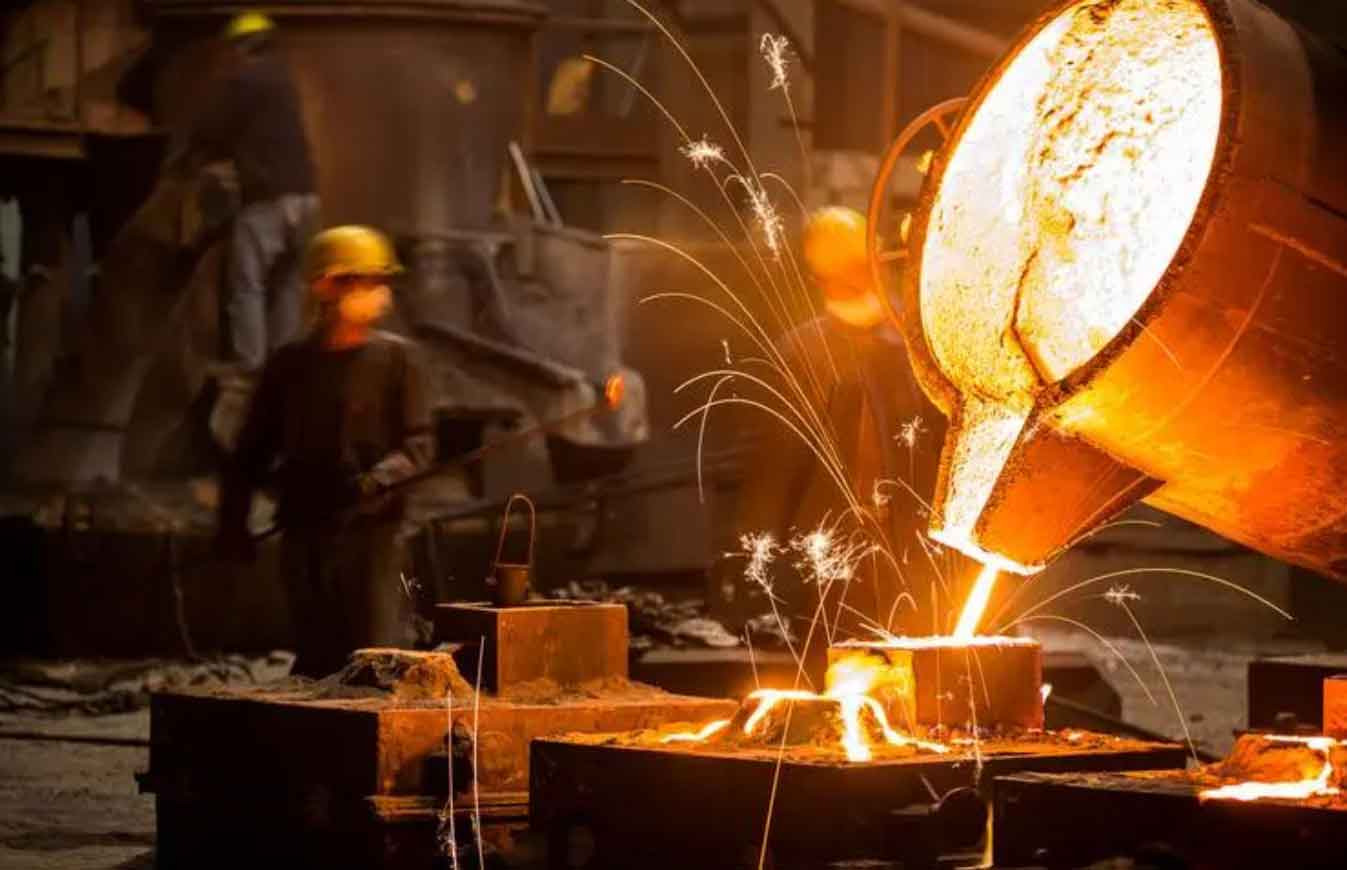
The foundation of this advanced resin sand casting system is its robust equipment design, which seamlessly integrates multiple subsystems to handle the complexities of large-scale production. The primary units include the main pressure vessel, mold transportation trolley, gas control system, electrical control system,保温 furnace, and hydraulic system. Each component plays a pivotal role in ensuring efficient and reliable operation. For instance, the mold transportation trolley, capable of handling loads up to 60 tons, utilizes hydraulic drives to move forward and backward, lift automatically, and position the resin sand mold precisely over the pressure vessel. This addresses a critical challenge in resin sand casting for large parts: the logistical difficulty of maneuvering heavy molds. The pressure vessel, equipped with a locking ring, seals tightly to maintain controlled atmospheric conditions during casting. Inside, the保温 furnace holds the molten aluminum alloy, typically grades like A357, which is known for its excellent castability and strength in resin sand casting processes.
To illustrate the interdependencies of these components, consider the following table summarizing their functions and specifications:
| Component | Function | Key Specifications | Relevance to Resin Sand Casting |
|---|---|---|---|
| Mold Transportation Trolley | Transports and positions resin sand molds | Max load: 60 tons; Hydraulic drive; Automated lift/forward motion | Enables handling of large, bulky resin sand molds, reducing manual labor and improving precision in mold alignment for浇注. |
| Pressure Vessel | Seals the environment for pressure application | Locking ring mechanism; Compatible with various mold sizes | Provides a controlled atmosphere for low-pressure filling, essential for minimizing defects in resin sand casting. |
| Gas Control System | Regulates compressed air for pressure tracking | Uses assembled valve with 256 flow states; Fast response time (~80 ms) | Ensures precise pressure control during充型, critical for thin-walled parts in resin sand casting to avoid turbulence. |
| Electrical Control System | Orchestrates all automated processes | Custom software with PID+fuzzy logic; Windows-based interface | Allows fine-tuning of casting parameters, enhancing repeatability in resin sand casting operations. |
| Insulation Furnace | Melts and holds aluminum alloy | Capacity for over 2 tons of melt; Temperature control up to 800°C | Maintains optimal melt temperature, crucial for fluidity in resin sand casting of complex geometries. |
| Hydraulic System | Powers movement and sealing actions | High-pressure pumps; Smooth actuation for locking and lifting | Supports automated mold handling, streamlining resin sand casting workflows. |
The heart of the pressure control mechanism is the assembled valve system, a digital valve configuration that I developed to replace traditional pneumatic diaphragm valves. This system comprises eight solenoid valves, eight manual valves, and eight throttle valves, allowing for 256 distinct flow states. This versatility is paramount in resin sand casting, as it enables meticulous adjustment of filling rates to suit varying mold geometries and wall thicknesses. The valve’s rapid response time of approximately 80 milliseconds ensures that pressure fluctuations are minimized, which is vital for preventing defects like oxide inclusions and gas porosity in resin sand casting. The mathematical representation of the flow control can be expressed in terms of valve states and pressure dynamics. For a given valve configuration, the mass flow rate $Q$ of compressed air into the pressure vessel is governed by:
$$ Q = \sum_{i=1}^{8} C_i \cdot A_i \cdot \sqrt{\frac{2 \Delta P}{\rho}} $$
where $C_i$ is the flow coefficient for valve $i$, $A_i$ is the effective orifice area, $\Delta P$ is the pressure difference across the valve, and $\rho$ is the air density. By digitally switching valves, the system achieves a linear pressure rise during充型, as shown in ideal tracking curves. In resin sand casting, this precision translates to smoother metal flow and reduced turbulence.
Transitioning to process control, the custom software suite I designed forms the brain of the operation. Built on the Windows platform using Delphi, it features intuitive interfaces for parameter setup and real-time monitoring. The software implements a hybrid PID+fuzzy control algorithm to manage the five stages of low-pressure casting:升液 (lift),充型 (filling),加压结壳 (pressure increase for shell formation),保压结晶 (pressure holding for crystallization), and卸压 (pressure release). For resin sand casting, each stage must be meticulously controlled to ensure proper feeding and solidification. The PID component handles linear adjustments based on error between set pressure $P_{set}$ and actual pressure $P_{act}$, while the fuzzy logic component manages nonlinearities and uncertainties inherent in resin sand molds, such as gas leakage or mold permeability variations.
The control algorithm can be summarized with the following equations. The PID output $u_{PID}(t)$ is given by:
$$ u_{PID}(t) = K_p e(t) + K_i \int_0^t e(\tau) d\tau + K_d \frac{de(t)}{dt} $$
where $e(t) = P_{set}(t) – P_{act}(t)$, and $K_p$, $K_i$, $K_d$ are tuning parameters optimized for resin sand casting conditions. The fuzzy logic module uses membership functions to map pressure error and its derivative to corrective actions, enhancing robustness. For example, if pressure deviation is “large” and changing “rapidly,” the system might trigger additional valve openings. This combination ensures that even for tall castings over 2 meters in height, pressure tracking remains stable, a common challenge in resin sand casting due to long metal columns.
The software interface allows operators to input critical工艺 parameters, which I have compiled into a table below for typical resin sand casting applications:
| Process Parameter | Typical Range for Resin Sand Casting | Influence on Casting Quality | Remarks |
|---|---|---|---|
| Filling Rate | 30–70 mm/s | Higher rates reduce temperature loss but risk turbulence; lower rates promote laminar flow. | For thin walls (<8 mm), use 40–50 mm/s; for thicker walls (>10 mm), use 30–40 mm/s in resin sand casting. |
| Filling Pressure Gradient | 0.5–2.0 kPa/s | Controls metal velocity; steep gradients can cause mistiming in mold filling. | Adjusted via valve states to match mold complexity in resin sand casting. |
| 浇注 Temperature | 680–720°C for A357 alloy | Lower temperatures reduce porosity but require higher pressure; higher temperatures improve fluidity. | In resin sand casting, temperatures are often 10–20°C lower than gravity casting to enhance mechanical properties. |
| Pressure Holding Time | 60–300 seconds | Ensures complete solidification and feeding; too short leads to shrinkage, too long may cause hot tearing. | Depends on casting mass and section thickness in resin sand casting. |
| 升液 Time | 5–15 seconds | Brings metal to mold entrance smoothly; critical for avoiding initial turbulence. | Optimized based on升液管 height in resin sand casting setups. |
In resin sand casting, the gating system design is paramount to achieving directional solidification. A typical configuration involves a bottom-fed system with multiple gates and chill plates to maintain open feeding channels. The goal is to ensure that solidification progresses from the mold extremities toward the升液管, allowing continuous补缩. This is mathematically modeled using thermal dynamics. The solidification time $t_s$ for a section of thickness $d$ in a resin sand mold can be estimated by:
$$ t_s = \frac{d^2}{4 \alpha \cdot \text{Ste}} $$
where $\alpha$ is the thermal diffusivity of the aluminum alloy, and $\text{Ste}$ is the Stefan number representing latent heat effects. By placing chills strategically, we modify the thermal gradient to favor upward solidification, which is crucial in resin sand casting for preventing shrinkage defects.
The advantages of this low-pressure approach in resin sand casting are evident in the metallurgical outcomes. Compared to gravity casting, low-pressure casting under counter-gravity conditions promotes finer grain structures due to pressure-assisted nucleation. The applied pressure $P_{app}$ during solidification enhances the feeding capability, reducing microporosity. The relationship between pressure and porosity volume fraction $V_p$ can be described as:
$$ V_p \propto \frac{1}{\sqrt{P_{app}}} $$
meaning that higher pressures significantly decrease porosity, a key benefit in resin sand casting for aerospace components. For A357 aluminum alloy castings produced via this resin sand casting method, typical mechanical properties extracted from本体 samples exceed $\sigma_b > 320\, \text{MPa}$ tensile strength and $\delta > 5\%$ elongation. These values outperform those from conventional resin sand casting by 10-15%, underscoring the efficacy of the pressure-assisted process.
To quantify the performance improvements, consider the following table comparing resin sand casting with low-pressure versus gravity methods:
| Property | Low-Pressure Resin Sand Casting | Gravity Resin Sand Casting | Improvement |
|---|---|---|---|
| Tensile Strength (MPa) | 320–350 | 280–310 | ~12% increase |
| Elongation (%) | 5–8 | 3–5 | ~40% increase |
| Porosity Level (ASTM) | 1–2 | 3–4 | 1–2 grades reduction |
| Density (g/cm³) | 2.68–2.70 | 2.65–2.68 | ~1% increase |
| Fatigue Life (cycles) | 10^6–10^7 | 10^5–10^6 | Order of magnitude better |
The application scope of this equipment extends beyond standard resin sand casting to include shell molding and investment casting for thin-walled parts under 1 mm thickness. Several foundries have adopted this technology for producing large, complex components such as aircraft intake lips and structural frames, all subject to stringent non-destructive testing like 100% X-ray inspection and fluorescent penetrant examination. The adaptability of the system to various mold materials highlights its versatility in advancing resin sand casting practices.
From a thermodynamic perspective, the low-pressure casting process in resin sand molds involves complex heat transfer phenomena. The energy balance during充型 can be expressed as:
$$ \rho_m C_p \frac{\partial T}{\partial t} + \rho_m \mathbf{v} \cdot \nabla T = \nabla \cdot (k \nabla T) + \dot{q}_{latent} $$
where $\rho_m$ is the metal density, $C_p$ is specific heat, $T$ is temperature, $\mathbf{v}$ is velocity vector, $k$ is thermal conductivity, and $\dot{q}_{latent}$ is the latent heat release rate. In resin sand casting, the mold’s insulating properties affect cooling rates, necessitating precise pressure control to compensate. The software’s real-time temperature monitoring, via embedded thermocouples, allows for dynamic adjustments, ensuring optimal solidification conditions.
In conclusion, the development of this specialized low-pressure casting equipment represents a significant leap forward in resin sand casting technology. By integrating automated mold handling, a high-response digital valve system, and intelligent control algorithms, it addresses the longstanding challenges of producing large, thin-walled aluminum alloy castings with exceptional quality. The repeated emphasis on resin sand casting throughout this discussion underscores its pivotal role in achieving superior surface finish, dimensional accuracy, and mechanical performance. As the industry continues to demand lighter and stronger components, such innovations in resin sand casting will remain at the forefront of foundry advancements, enabling the production of reliable parts for critical applications. Future work may focus on further optimizing the fuzzy logic parameters for specific resin sand formulations or expanding the equipment’s capacity for even larger castings, thereby pushing the boundaries of what is possible in modern manufacturing.