
Casting holes, encompassing defects like gas pores and sand inclusions, represent one of the most persistent and costly challenges in a foundry. These defects compromise the structural integrity, pressure tightness, and surface finish of cast components, leading to significant scrap rates and remedial costs. In my years of practice, tackling these issues has never been about applying a single fix; it is a systematic engineering discipline that requires a deep understanding of process physics, material science, and meticulous control. The journey to eliminate casting holes involves diagnosing their specific genesis—whether they are volumetric voids from trapped gas or cavities filled with foreign material—and then deploying a targeted, multi-faceted strategy. The following discussion synthesizes my first-hand experience and analysis from resolving such defects in critical components, translating empirical lessons into generalizable principles.
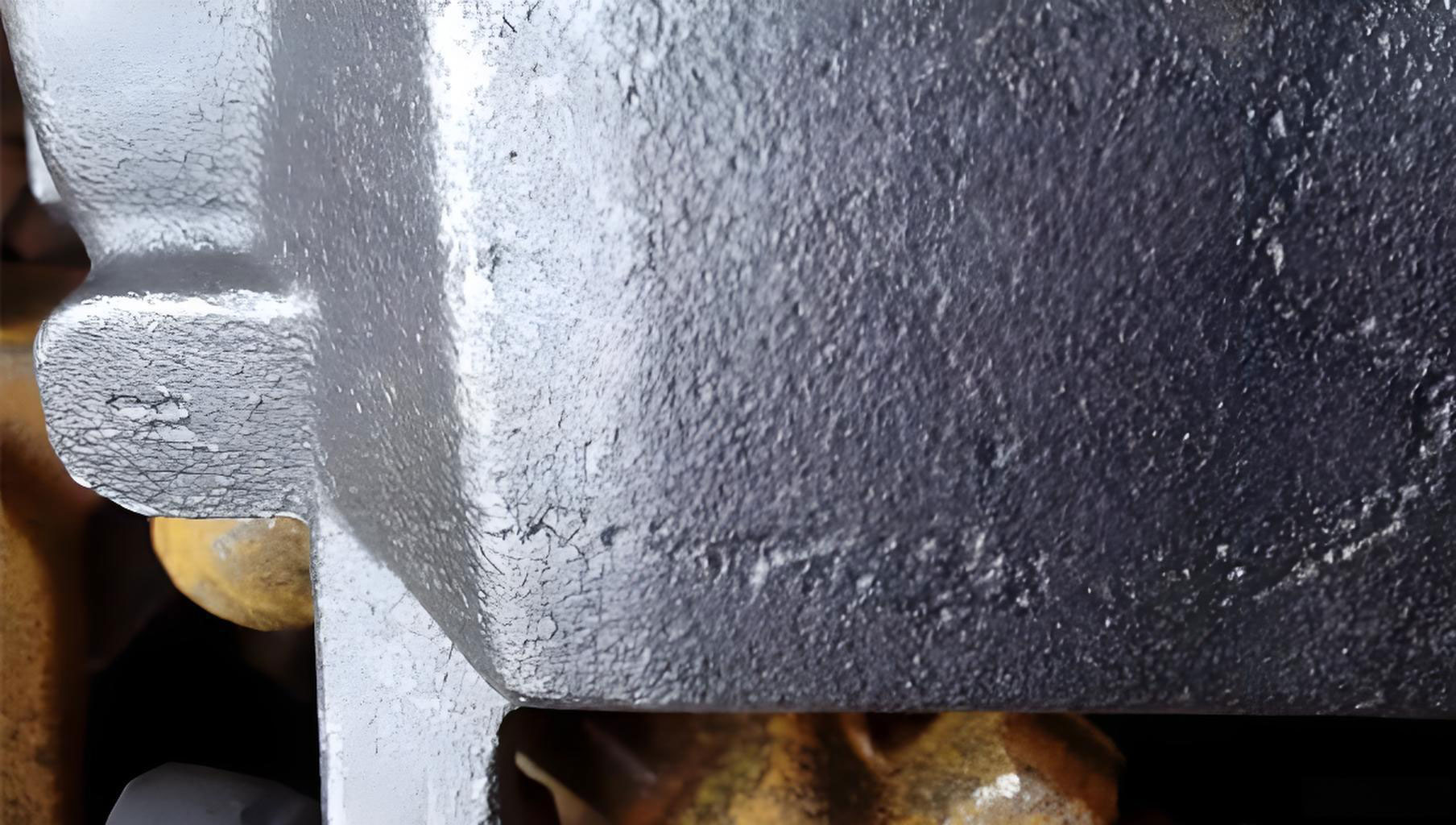
The visual manifestation of casting holes can vary, but their root causes often intertwine. My approach begins with a fundamental categorization. Gas-related casting holes, or blowholes and pinholes, form when gas trapped within the mold or molten metal fails to escape before solidification. In contrast, sand-related casting holes are physical inclusions where mold or core material is eroded and entrained in the metal stream. While distinct, both types of casting holes demand a preventative philosophy rooted in process stability and robustness.
Part I: Combating Gas-Related Casting Holes in a Large Impeller
A pivotal case involved the production of a large excavating pump impeller, a component where performance and reliability are non-negotiable. Recurring gas porosity was a major yield detractor. The defect appeared as subsurface or surface voids, often detected during machining or pressure testing, classic signatures of gas-related casting holes.
1. Mechanism Analysis and Root Cause Investigation
The formation of gas porosity is governed by the solubility of gases in molten metal and the pressure dynamics within the mold cavity. The general sequence leading to these casting holes can be described as:
1. Gas Generation or Entrapment: Gases originate from decomposing binders (in resin-bonded sands), moisture, or air entrainment during pouring.
2. Nucleation and Growth: As metal cools, gas solubility decreases. Bubbles nucleate at favorable sites (e.g., inclusions, rough mold surfaces) and grow if the local gas pressure exceeds the sum of metallostatic and atmospheric pressures.
3. Trapping: The advancing solidification front traps the expanding gas bubbles, forming permanent casting holes.
Mathematically, the condition for bubble growth and stabilization can be related to a pressure balance. For a bubble to nucleate and grow, the internal gas pressure \( P_{gas} \) must overcome the opposing pressures:
$$ P_{gas} \geq P_{atm} + \rho g h + \frac{2\gamma}{r} $$
Where:
\( P_{atm} \) = Atmospheric pressure,
\( \rho \) = Density of the molten metal,
\( g \) = Gravitational acceleration,
\( h \) = Metallostatic head above the bubble,
\( \gamma \) = Surface tension of the metal,
\( r \) = Radius of the bubble nucleus.
Our investigation pointed to multiple contributing factors for the impeller’s casting holes:
- Resin Sand System: The use of a furan resin-bonded sand system was a primary gas source. Inconsistent mixing or improper ratios of resin and catalyst led to uneven curing and excessive gaseous decomposition products during pouring.
- Pouring Practice: Turbulent filling, often from an uncontrolled pour height or lack of a proper pouring basin, promoted air entrainment and occlusion within the metal stream, creating another source for casting holes.
- Venting Inadequacy: While vents existed, their total cross-sectional area and placement were insufficient to handle the voluminous gas release from the large sand mass, especially from cores, in the short time available during pouring and solidification.
- Mold Atmosphere: Cold, damp molds could exacerbate the problem by introducing additional moisture-derived hydrogen, a potent contributor to pinhole casting holes.
2. The Implemented Systemic Solution
Eliminating these casting holes required a holistic plan attacking each root cause. We moved beyond isolated parameter tweaks to an integrated system control.
| Root Cause Category | Specific Issue | Corrective Action | Impact on Casting Holes |
|---|---|---|---|
| Material & Preparation | Unstable resin/catalyst ratios | Implemented strict weight-based dispensing and mixing protocols; introduced routine sand property tests (e.g., tensile strength, gas evolution). | Reduced volume and variability of gas generation from the mold. |
| Cold, potentially damp molds | Mandated the use of mold and core heaters (hot air torches) on all large or complex molds before closing. Created a standard operating procedure (SOP). | Eliminated moisture, warmed the mold atmosphere, improved venting efficiency, and reduced thermal shock gas precipitation. | |
| Process & Gating | Turbulent pouring, air entrainment | Redesigned gating to include a well-sized, offset pouring basin. Enforced a controlled, steady pour rate to maintain a full basin. | Minimized air occlusion and promoted laminar, front-free filling to prevent gas-related casting holes. |
| Inadequate venting | Added multiple, strategically placed vent channels from high points and blind pockets directly to the atmosphere. Calculated total vent area to be >~0.2x total choke area. | Provided low-resistance escape paths for generated gases before they could form casting holes. | |
| Process Control | Lack of standardized practice | Developed comprehensive work instructions and training for sand mixing, mold preparation, and pouring teams. | Ensured consistency and repeatability, removing human variability as a source of casting holes. |
The effectiveness of venting is crucial. The required vent area \( A_v \) can be approximated based on the gas generation rate \( Q_{gas} \) and the time available for escape \( t \), considering gas flow through porous media (Darcy’s Law principles):
$$ A_v \propto \frac{Q_{gas} \cdot t \cdot \mu}{k \cdot \Delta P} $$
Where \( \mu \) is gas viscosity, \( k \) is sand permeability, and \( \Delta P \) is the pressure differential driving flow. In practice, we ensure \( A_v \) is generously sized, as clogging is always a risk.
3. Results and Confirmation
The combination of these actions was transformative. The incidence of gas-related casting holes on the large impeller dropped to negligible levels. Mechanical properties from cast-on test bars consistently met specifications, confirming the internal soundness. This case cemented the principle that preventing gas-related casting holes is a battle fought and won during preparation and pouring, not after solidification.
Part II: Eradicating Sand-Related Casting Holes in an Engine Cylinder Block
A different but equally challenging defect emerged in the production of a complex, thin-walled engine cylinder block: sand inclusions. These sand-related casting holes were localized, primarily in the cylinder bore areas, and were discovered during machining, rendering the expensive castings scrap.
1. Deep Dive into the Sand Inclusion Mechanism
Sand inclusions, another severe form of casting holes, occur when the mold or core surface erodes, and the dislodged sand grains are carried into the casting. The driving force is the hydrodynamic force of the flowing metal. A core grain will be entrained if the drag and lift forces imposed by the metal exceed the cohesive and adhesive forces binding it to the sand matrix.
We can model the threshold condition for a sand grain of diameter \( d \) to be detached. The dominant adhesive force for a resin-coated sand is often the binder bridge strength. The hydrodynamic drag force \( F_d \) is given by:
$$ F_d = C_d \cdot \frac{1}{2} \rho_m v^2 \cdot A_p $$
Where:
\( C_d \) = Drag coefficient,
\( \rho_m \) = Density of molten metal,
\( v \) = Local metal velocity past the grain,
\( A_p \) = Projected area of the grain (\( \propto d^2 \)).
For erosion to start, \( F_d \) must exceed the adhesive force \( F_a \), which is a function of binder strength \( \sigma_b \) and contact area:
$$ F_a \propto \sigma_b \cdot d^2 $$
Thus, the condition for erosion leading to sand casting holes becomes:
$$ \rho_m v^2 > K \cdot \sigma_b $$
where \( K \) is a constant. This shows the critical importance of low metal velocity (controlled filling) and high core surface strength.
Our forensic analysis of the defective cylinder blocks and their cores revealed the true, interconnected root causes:
- Defective Core Integrity: Dissection of the cylinder bore cores showed poor curing in thick sections. The surface “cured shell” was thin and weak, with a soft, under-cured interior. This created a natural plane of weakness—a “layered” structure prone to peeling.
- Inadequate Core Density: The shooting process was flawed. The design of the core box’s sand-filling system (shot sleeve, vents) created a restriction, limiting sand flow and resulting in low compacted density in certain areas, especially the thick sections. A weak, low-density core is highly susceptible to erosion.
- Process Instability: Fluctuations in the shooting air pressure exacerbated the density inconsistency. Low-pressure shots produced friable cores that passed visual inspection but failed under the thermal and mechanical stress of pouring.
- Metal Penetration as a Trigger: During pouring, hot metal would penetrate the weak, porous surface of the core. This thermal shock and mechanical pressure would cause the thin, cured shell to spall off in chunks, which were then enveloped by the metal, creating gross sand inclusion casting holes.
2. The Multi-Pronged Corrective Campaign
Solving this required fixing the core at its origin. We targeted the core making process from three angles: material, tooling, and process control.
| Problem Area | Root Cause | Corrective Action | Effect on Core Quality & Casting Holes |
|---|---|---|---|
| Core Material | Slow-curing resin coated sand leads to shallow cure depth in thick sections. | Switched to a fast-curing resin coated sand formulation. This sand achieves full cure ~30% faster under same temperature/time. | Dramatically increased the thickness and strength of the cured surface shell in thick areas, eliminating the “layering” effect and raising \( \sigma_b \) in our erosion model. |
| Weak core surface strength (\( \sigma_b \)). | The faster cure also improved cross-linking density at the surface, enhancing resistance to metal penetration and erosion. | Directly increased the threshold \( \rho_m v^2 \) required to initiate erosion and create sand casting holes. | |
| Core Tooling (Mold) | Restricted sand flow path during shooting causes low fill density. | Redesigned the shooting plate assembly. Increased the clearance between the shot plate and baffle plate by 2mm to expand the minimum cross-sectional area for sand flow. | Ensured abundant sand supply during shooting, resulting in uniformly high compacted density and eliminating soft spots prone to causing sand casting holes. |
| Core Machine Process | Unstable/insufficient shooting pressure. | Modified machine logic to prevent shooting cycle initiation if air pressure was below the set process minimum. Calibrated and maintained pressure regulators. | Guaranteed consistent, high-impact energy during shooting, ensuring optimal sand compaction and core density every cycle, preventing the formation of weak cores that lead to casting holes. |
| Quality Control | Latent core defects not caught before molding. | Instituted a mandatory post-cure, pre-coating inspection. Operators performed a manual “thumb pressure” test on thick sections of every core. | Provided a final human sensor check to intercept cores with poor curing or low density before they could ever create sand-related casting holes in a casting. |
The improvement in core quality was quantifiable. The fast-curing sand essentially doubled the effective cured shell thickness \( \delta_{shell} \), which acts as a protective barrier. The erosion resistance can be thought of as an integral of strength over this thickness:
$$ \text{Erosion Resistance} \propto \int_{0}^{\delta_{shell}} \sigma_b(x) \, dx $$
By increasing both \( \sigma_b \) (through better cure) and \( \delta_{shell} \), the integral value increased significantly, raising the core’s defense against metal attack and preventing the creation of sand casting holes.
3. Outcome and Sustained Control
This comprehensive intervention virtually eliminated the sand inclusion defects. The reject rate for sand-related casting holes in the cylinder block fell from 1.5% to a trace level. The solution proved robust and sustainable because it addressed the systemic weaknesses in the core manufacturing chain.
Part III: Synthesis and Universal Principles for Casting Hole Prevention
Reflecting on these two distinct battles against casting holes—one against gas, the other against sand—reveals a powerful, unified framework for defect prevention in any foundry context. The following table synthesizes the comparative learnings and extrapolates them into foundational principles.
| Aspect | Gas Porosity (Casting Holes) | Sand Inclusions (Casting Holes) | Unified Prevention Principle |
|---|---|---|---|
| Primary Genesis | Gas generation & entrapment within the solidifying metal. | Mechanical erosion & entrainment of mold/core material. | Casting holes originate from the interaction between the molten metal and the mold system. Control the interface. |
| Key Defect Driver | Gas Pressure (\( P_{gas} \)) > Opposing Pressures. | Hydrodynamic Force (\( F_d \)) > Adhesive Force (\( F_a \)). | Defects occur when a destructive force (gas pressure, drag force) overcomes a restorative resistance (metal pressure, binder strength). |
| Critical Process Stage | Mold/core preparation, pouring, and early solidification. | Core/mold making, and the metal filling stage. | Prevention is upstream. The battle is won or lost in stages long before the casting solidifies. |
| Material Focus | Sand binder chemistry, moisture control, metal cleanliness (gas content). | Sand binder strength & curing kinetics, coating quality. | Material properties are not assumptions; they are control levers. Select and control materials (sand, binder, coating) to create a robust, predictable mold interface resistant to casting holes. |
| Tooling & Design Focus | Gating for laminar fill, generous and strategic venting. | Core box design for uniform, high-density filling. | Tooling must enable process stability. Design gating to minimize turbulence and design core boxes/patterns to ensure mold integrity, thereby avoiding conditions that foster casting holes. |
| Process Control Focus | Consistent sand mixing, controlled pouring parameters, mold drying/heating. | Stable shooting parameters (pressure, time), strict curing cycles, inline inspection. | Consistency is king. Define, document, and control every critical process parameter. Variability is the breeding ground for casting holes. |
| Philosophy | Manage gas: Minimize generation, maximize removal. | Protect the mold: Maximize strength, minimize attack. | Be proactive, not reactive. Implement a system designed to prevent the forces that cause casting holes, rather than one that inspects out the resulting defects. |
The fundamental lesson is that casting holes are not an inevitable nuisance but a measurable output of a complex process system. Their elimination is an exercise in systems engineering. It requires:
1. Precise Diagnosis: Using metallurgical analysis (like core dissection) to move from symptom (“a hole”) to true root cause (“a weakly cured core layer”).
2. Quantitative Understanding: Applying first-principle models, even simplified ones like the pressure and force balances shown, to guide corrective actions logically.
3. Integrated Solutions: Recognizing that a single change is rarely sufficient. Success comes from a synchronized package of material, tooling, and process control improvements.
4. Cultural Embedding: Translating solutions into standardized work instructions, training, and controls that make the new, robust method the default, error-proofed practice.
In conclusion, whether facing the elusive voids of gas porosity or the destructive inclusions of sand erosion, the path to zero casting holes is paved with discipline, science, and a relentless focus on the process. By controlling the genesis—be it a molecule of gas or a grain of sand—we gain mastery over the casting’s integrity. This holistic, preventative approach is what transforms foundry practice from an art into a reliable engineering science, ensuring that components meet their demanding service lives free from the weakness of casting holes.