
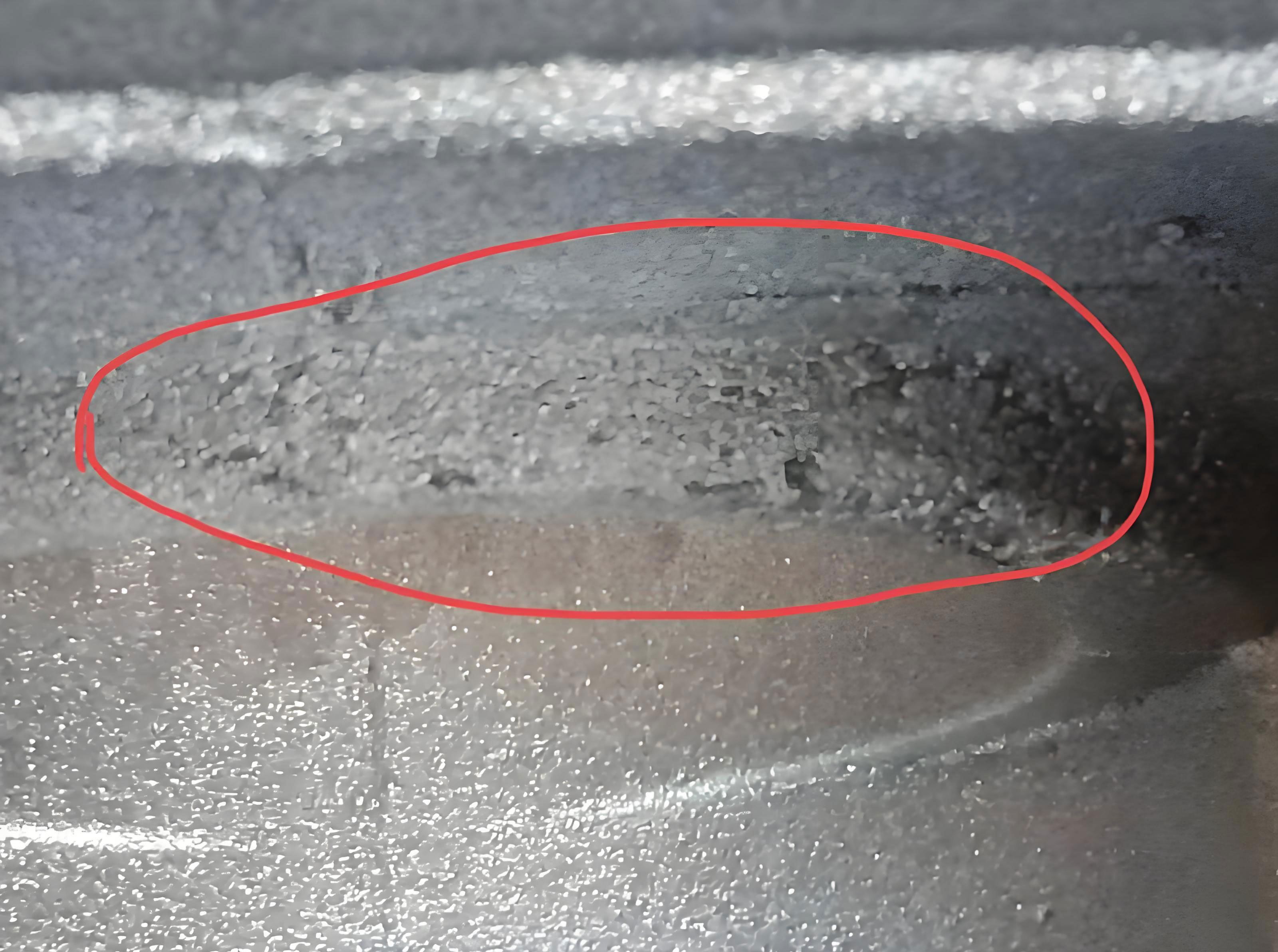
In my extensive experience within the foundry industry, addressing defects in cast components has been a paramount concern for ensuring product quality and performance. Among these defects, porosity in casting stands out as a particularly prevalent and challenging issue, especially in aluminum alloy castings. The pursuit of high-integrity castings for demanding applications such as aerospace, automotive, and instrumentation has driven me to deeply investigate the root causes and develop effective countermeasures. Porosity in casting not only compromises mechanical properties like tensile strength and fatigue resistance but also can lead to leakage failures in pressurized components. This article, drawn from years of hands-on practice and observation, aims to provide a detailed, first-person perspective on the mechanisms behind porosity formation and the practical strategies for its prevention, emphasizing the critical keyword ‘porosity in casting’ throughout our discussion.
The fundamental issue of porosity in casting, specifically in aluminum alloys, primarily stems from the entrapment of gases within the solidifying metal. While several gases can be involved, hydrogen is the most notorious culprit due to its significant solubility variation between the liquid and solid states of aluminum. The formation of porosity in casting is a multifaceted problem influenced by raw materials, process parameters, and environmental conditions. To systematically break down this complexity, I will first delve into the causes, supported by theoretical models and empirical data, and then elaborate on the proven preventive measures.
1. Root Causes of Porosity Formation in Aluminum Castings
From my observation, the genesis of porosity in casting can be traced to several interconnected factors. The most common manifestation is microporosity, often termed “pinholing,” which is largely attributed to hydrogen precipitation. Let’s analyze each contributing factor in detail.
1.1 Hydrogen Sources and the Role of Water Vapor
The primary agent for porosity in casting is hydrogen, and its main carrier is water vapor. During melting and pouring, various sources introduce water molecules that dissociate at high temperatures, releasing atomic hydrogen that dissolves into the molten aluminum. The chemical reaction can be represented as:
$$ 2Al_{(l)} + 3H_2O_{(g)} \rightarrow Al_2O_{3(s)} + 6H_{(dissolved)} $$
This reaction highlights how moisture directly feeds hydrogen into the melt. The key sources include:
- Raw and Auxiliary Materials: Charge materials (ingots, returns), fluxes, and grain refiners often contain adsorbed moisture or chemical compounds like hydroxides (e.g., Al(OH)₃) that decompose upon heating.
- Mold and Core Materials: In sand casting, the binders (both organic and inorganic) in green sand, resin-bonded sands, or coatings release large volumes of gas. The binder pyrolysis and moisture evaporation generate a local atmosphere rich in hydrogen.
- Coatings: Die or mold coatings, especially those applied unevenly or inadequately dried, contribute significantly to the total gas volume. While binders in coatings increase layer adherence, they also increase the “gas evolution potential,” a major precursor for porosity in casting.
The relationship between moisture content and dissolved hydrogen can be summarized empirically. For instance, in sand casting, the hydrogen content in the alloy correlates strongly with mold humidity. A simple representation of the trend observed in practice is:
$$ [H]_{melt} \propto \sqrt{W_{mold}} $$
where $[H]_{melt}$ is the hydrogen concentration in the melt and $W_{mold}$ is the mold moisture content by weight percent.
1.2 Influence of Melting Equipment and Tools
The state of melting equipment profoundly affects the severity of porosity in casting. New or contaminated crucibles, furnaces, and tools (skimmers, ladles) are reservoirs for moisture. For example, a new graphite or ceramic crucible can absorb atmospheric moisture, which must be driven off by a rigorous pre-heating protocol. The recommended practice is to heat crucibles to 700-800°C for 2-4 hours before use. Similarly, new furnace linings made of refractory materials contain both free and chemically combined water, requiring extended drying or “burn-in” periods of several days to weeks. Failure to do so results in a continuous release of hydrogen throughout the melting cycle, directly feeding porosity in casting.
1.3 The Critical Duo: Melt Temperature and Holding Time
Through countless furnace operations, I have confirmed that melt temperature and holding time are perhaps the most controllable factors influencing hydrogen pickup. The solubility of hydrogen in molten aluminum increases with temperature. The relationship is governed by an equation of the form:
$$ S_H = S_0 \exp\left(-\frac{\Delta H_s}{RT}\right) $$
where $S_H$ is the hydrogen solubility (e.g., in ml/100g Al), $S_0$ is a pre-exponential constant, $\Delta H_s$ is the heat of solution, $R$ is the gas constant, and $T$ is the absolute temperature. Hydrogen absorption is a diffusion-controlled process occurring at the melt-atmosphere interface. Prolonged exposure of the melt to high temperatures, especially above 750°C, allows more time for hydrogen to diffuse into the bulk liquid. Therefore, a higher temperature coupled with a longer holding time exponentially increases the dissolved hydrogen content, leading to more extensive porosity in casting upon solidification. The kinetic aspect can be approximated by:
$$ \frac{d[H]}{dt} = k A (P_{H2}^{1/2} – [H]/K) $$
where $d[H]/dt$ is the rate of hydrogen concentration change, $k$ is a rate constant, $A$ is the interfacial area, $P_{H2}$ is the partial pressure of hydrogen at the surface, and $K$ is the equilibrium constant.
| Melt Temperature (°C) | Holding Time (hours) | Relative Hydrogen Pickup | Expected Porosity Level |
|---|---|---|---|
| 700 | 1 | Low | Minimal |
| 750 | 2 | Moderate | Noticeable |
| 780 | 4 | High | Severe |
| 800 | 3 | Very High | Very Severe |
1.4 Environmental and Seasonal Factors
A phenomenon often observed in our foundry is “seasonal porosity in casting,” which peaks during humid monsoon seasons. Ambient air with high relative humidity increases the moisture adsorbed on all surfaces—charge materials, tools, and even the furnace interior. Furthermore, the humidity raises the partial pressure of water vapor in the furnace atmosphere, shifting the equilibrium of the water-aluminum reaction to favor more hydrogen dissolution. This environmental effect underscores that porosity in casting is not just a process issue but also a climate-sensitive one, demanding adaptive control measures.
1.5 The Mold’s Role: Sand vs. Metal
The type of mold exerts a defining influence on the mechanism of porosity in casting.
Sand Molds: In green sand casting, the mold moisture is a direct source of gas. Data from controlled experiments show a clear correlation:
| Mold Moisture Content (%) | Approx. Hydrogen Content in Alloy (ml/100g) |
|---|---|
| 5.0 | 1.5 |
| 6.0 | 2.5 |
| 8.0 | 3.0 |
Upon contact with the hot metal, moisture vaporizes instantly, generating high-pressure steam. If this gas cannot escape through the permeable sand quickly enough, it may intrude into the metal stream, creating large, irregular “blowholes” or “inclusionary porosity in casting.” Hence, for critical work, dry sand or skin-dried molds are preferred, while for wet sand molds, keeping moisture below 6% is crucial.
Metal Molds (Permanent Molds): Here, the challenge of porosity in casting arises from the mold’s impermeability and low yield. As the alloy fills the cavity, the trapped air is rapidly compressed and heated. The ideal gas law helps understand the pressure build-up:
$$ P_f = P_i \frac{T_f}{T_i} \frac{V_i}{V_f} $$
where $P_i$, $T_i$, $V_i$ are initial pressure, temperature, and volume of trapped air, and $P_f$, $T_f$, $V_f$ are the final values. The final pressure $P_f$ can become high enough to oppose metal flow, cause turbulence, or even force metal back out of the ingate. The oxidized metal folds back into the stream, entrapping air pockets and creating dross-related porosity in casting. Proper venting and controlled filling are essential to mitigate this.
2. Proactive Strategies to Prevent and Minimize Porosity
Preventing porosity in casting is a battle fought on multiple fronts. It requires stringent discipline in material preparation, process control, and the application of specialized treatments. Based on my practice, a systematic approach yields the best results.
2.1 Meticulous Preparation of Charge Materials and Equipment
The first line of defense against porosity in casting is to minimize hydrogen sources at the very start.
- Charge Material Treatment: All炉料 (charge materials) must be cleaned via shot blasting or grinding to remove rust, scale, sand, and oil. Subsequently, they should be preheated to 350-450°C for at least 3 hours. This drives off adsorbed moisture and volatile contaminants. The preheating energy required can be estimated as $Q = m C_p \Delta T$, where $m$ is mass, $C_p$ is specific heat, and $\Delta T$ is the temperature rise.
- Equipment Conditioning: Crucibles, ladles, molds, and tools must be thoroughly cleaned and preheated to 120-250°C, then coated with a suitable protective wash. For new crucibles or furnace linings, a slow, programmed bake-out is non-negotiable to remove both physical and chemical moisture.
2.2 Tight Control Over Melting and Pouring Parameters
Adherence to a strict thermal and temporal protocol is vital to control porosity in casting.
The golden rule is: Melt quickly, hold at the lowest possible temperature, and pour promptly. We enforce a maximum time limit from melt start to pour completion: 4 hours for sand casting, 6 hours for permanent mold casting, and 8 hours for die casting. The alloy temperature should generally not exceed 760°C. When holding is necessary, the melt surface must be covered with a flux to form a protective barrier against atmospheric humidity. The flux layer reduces the effective $P_{H2O}$ at the interface, thus lowering the driving force for hydrogen absorption.
The thermal history’s impact on porosity in casting can be modeled by integrating the hydrogen pickup rate over time. Minimizing the integral $\int_{t_{melt}}^{t_{pour}} [H](T,t) dt$ is the objective.
2.3 Enhanced Measures for Humid Conditions
During rainy seasons, our standard protocols are intensified. All materials receive extended preheating. The foundry environment is dehumidified if possible, and the time between furnace opening and pouring is minimized. We treat “humid day” operations as a special regime, acknowledging that the risk factor for porosity in casting is significantly elevated.
2.4 Melt Degassing and Refining: The Core Treatment
The most direct technical intervention to eliminate porosity in casting is melt degassing, often combined with inclusion removal (refining). Since hydrogen is the primary target, the process is tailored to remove it. The principle is to introduce a purge gas or a chemical agent that either lowers the partial pressure of hydrogen at the bubble-melt interface or reacts to form stable compounds.
Common Methods:
- Rotary Degassing with Inert Gases: A rotating impeller disperses fine bubbles of nitrogen ($N_2$) or argon ($Ar$) through the melt. Each bubble acts as a vacuum for hydrogen due to the partial pressure difference. The rate of hydrogen removal can be described by:
$$ -\frac{d[H]}{dt} = k’ A_b ([H] – [H]_e) $$
where $k’$ is a mass transfer coefficient, $A_b$ is the total bubble surface area, and $[H]_e$ is the equilibrium concentration at the bubble surface (near zero for inert gas). - Chlorine and Chloride Fluxing: Introducing chlorine gas ($Cl_2$) or hexachloroethane ($C_2Cl_6$) tablets is highly effective. $Cl_2$ reacts with aluminum to form $AlCl_3$ vapor bubbles at the treatment temperature, which efficiently scavenge hydrogen. The reaction:
$$ 2Al_{(l)} + 3Cl_{2(g)} \rightarrow 2AlCl_{3(g)} $$
The $AlCl_3$ bubbles provide a very low hydrogen partial pressure. However, environmental and safety concerns limit its use. - Vacuum Degassing: Placing the melt under reduced pressure lowers the solubility of hydrogen according to Sieverts’ law:
$$ [H] = K_H \sqrt{P_{H2}} $$
where $K_H$ is the solubility constant. Reducing the ambient pressure $P_{H2}$ causes hydrogen to nucleate and bubble out of the melt. This is a very clean method to prevent porosity in casting. - Ultrasonic Degassing: High-intensity ultrasonic waves create cavitation bubbles in the melt that nucleate and grow, collecting dissolved hydrogen and floating to the surface. The acoustic pressure facilitates bubble formation even without external gas injection.
| Method | Principle | Typical Hydrogen Reduction | Advantages | Limitations |
|---|---|---|---|---|
| Rotary $N_2/Ar$ | Partial Pressure Lowering | 40-60% | Safe, clean, good inclusion removal | Requires equipment, gas cost |
| $Cl_2$/Chloride | Chemical Scavenging | 60-80% | Very effective, also removes inclusions | Toxic fumes, corrosive, environmental issues |
| Vacuum | Solubility Reduction | 70-90% | Excellent removal, no gas additions | Expensive equipment, batch process |
| Ultrasonic | Cavitation Nucleation | 50-70% | Rapid, no external gas | Limited depth penetration, probe durability |
2.5 Modifying Solidification Conditions to Suppress Gas Precipitation
Even with some residual hydrogen, porosity in casting can be minimized by manipulating solidification to prevent gas bubble nucleation and growth. The key is to increase the solidification rate or apply pressure.
Rapid Solidification: Techniques like die casting, squeeze casting, or using chills in sand molds promote a high cooling rate. This reduces the time available for hydrogen diffusion and bubble growth. The critical radius for a bubble to nucleate homogeneously is given by:
$$ r_c = \frac{2\gamma}{P_{gas} – P_{hyd} + \sigma_{th}} $$
where $\gamma$ is surface tension, $P_{gas}$ is the gas pressure inside the potential bubble, $P_{hyd}$ is the hydrostatic pressure, and $\sigma_{th}$ is the tensile stress due to thermal contraction. Rapid cooling reduces $P_{gas}$ by limiting hydrogen diffusion and may increase $P_{hyd}$ through faster feeding, making nucleation harder.
High-Pressure Solidification: Applying external pressure during solidification, as in squeeze casting, dramatically increases the solubility of gas in the solidifying metal (Henry’s law: $S = k_H P$). This can force hydrogen to remain in solution, effectively eliminating macroscopic porosity in casting. The required pressure to suppress a pore of a given size can be estimated from the equilibrium condition.
Furthermore, the distribution of porosity in casting is influenced by the solidification pattern and the resulting solute redistribution. The well-known Niyama criterion, often used for predicting shrinkage porosity, can be adapted to consider gas-driven porosity by incorporating the local hydrogen concentration and thermal gradient $G$ and solidification rate $R$:
$$ Niyama = \frac{G}{\sqrt{R}} $$
Areas with a low Niyama value are susceptible to both shrinkage and gas porosity. Therefore, optimizing gating and risering to promote directional solidification with high $G/R$ ratios is a powerful indirect method to combat porosity in casting.
Conclusion
In conclusion, the challenge of porosity in aluminum alloy castings is pervasive but manageable. Through my journey in foundry operations, I have learned that porosity in casting is not an inevitable defect but a consequence of specific, controllable process variables. A holistic strategy encompassing scrupulous material preparation, disciplined thermal and temporal control, effective melt degassing, and intelligent solidification engineering is essential. Each foundry must develop its own optimized protocol based on its specific alloys, equipment, and product requirements. The continuous battle against porosity in casting drives innovation in process technology and quality control, ultimately leading to more reliable and high-performance aluminum components across industries. The key takeaway is that understanding the science behind the formation of porosity in casting is the first and most crucial step towards its effective prevention.