
In my extensive work with V-process casting, also known as vacuum sealed molding, I have consistently encountered the challenge of porosity in casting. This defect is prevalent in both iron and steel castings produced via this method. Porosity in casting can severely compromise the mechanical properties and integrity of cast components, leading to scrap and increased costs. However, through careful analysis and practical adjustments, I have found that porosity in casting is manageable. This article details my firsthand insights into the classification, causes, and preventive measures for various types of porosity in casting within V-process operations, emphasizing the importance of process control and operational diligence.
The V-process, invented in Japan in 1969, utilizes a thin plastic film (typically EVA) to seal a dry sand mold under vacuum. While it offers advantages like excellent surface finish and reduced environmental impact, the unique characteristics of the process, such as the use of films and vacuum, contribute to specific porosity issues. I classify porosity in casting into five main types based on my observations: entrapped air porosity, invaded gas porosity, reaction porosity, precipitated gas porosity, and cavity滞留 porosity (a term I coined to describe gas trapped in sealed cavities). Each type has distinct origins and requires tailored solutions. Below, I elaborate on each, incorporating tables and formulas to summarize key points.
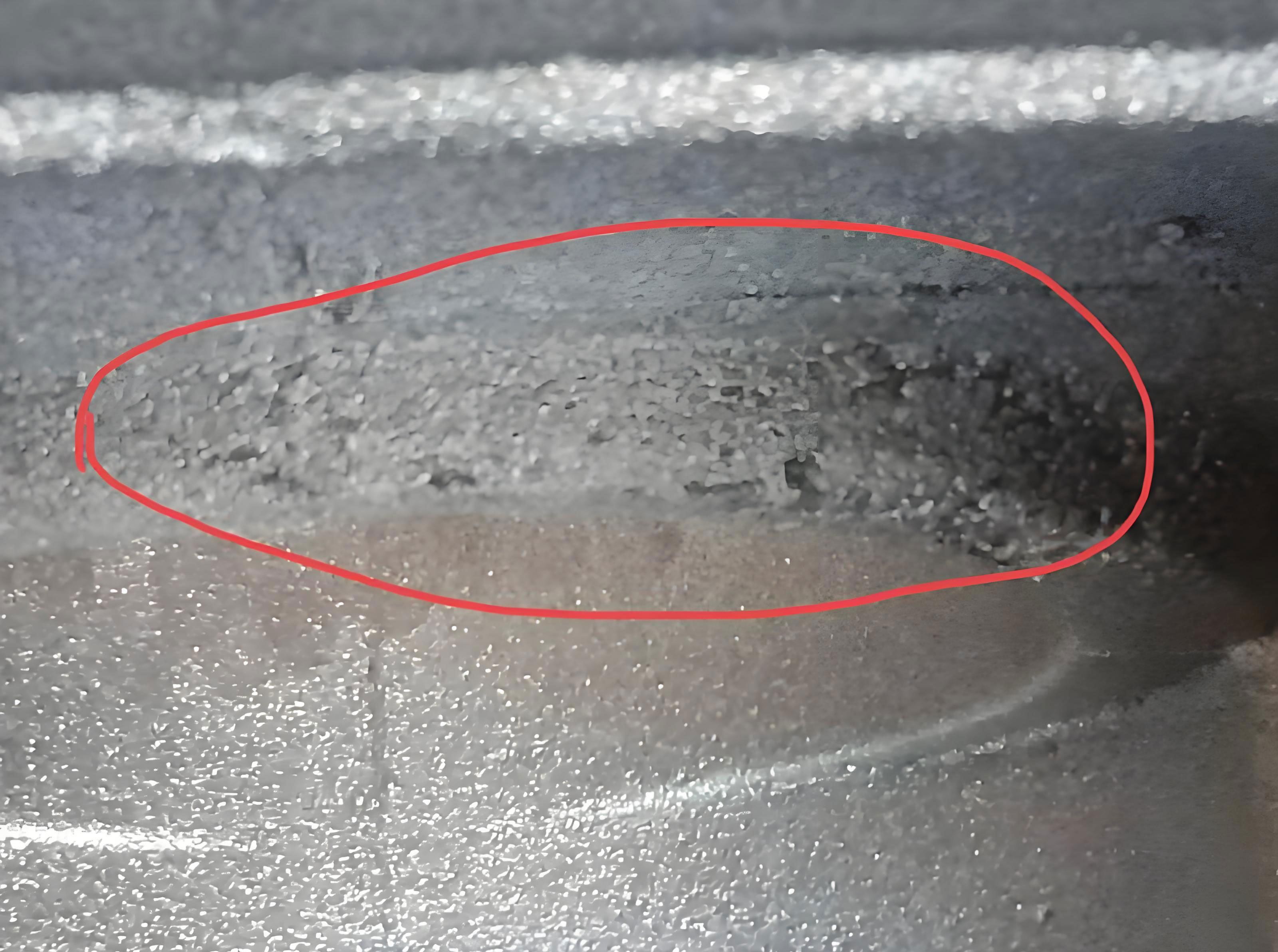
Porosity in casting is not unique to V-process, but the method’s reliance on films and vacuum exacerbates certain gas-related defects. The fundamental principle is that gas pockets form within the solidifying metal, leading to voids. Controlling porosity in casting requires a holistic approach from pattern design to melting and pouring. I will now delve into each porosity type, starting with entrapped air porosity.
Classification and Analysis of Porosity in Casting
To effectively combat porosity in casting, one must first understand its categories. The following table summarizes the five types I identify in V-process casting:
| Type of Porosity | Primary Cause | Typical Location/Appearance | Key Influencing Factors in V-Process |
|---|---|---|---|
| Entrapped Air Porosity | Air bubbles卷入ed during mold filling | Near gates or in turbulent flow zones | Open gating system design, pouring speed |
| Invaded Gas Porosity | Gas from mold materials (film, coating, cores) invading molten metal | Subsurface or near mold-metal interface | EVA film decomposition, coating gases, core gas evolution |
| Reaction Porosity | Chemical reactions between metal components or metal-mold interface | Often associated with slag inclusions | Oxides in melt, reaction with films/coatings |
| Precipitated Gas Porosity | Gas dissolved in molten metal precipitating during solidification | Uniformly distributed or in last-to-solidify areas | Hydrogen, nitrogen, oxygen content from charge materials |
| Cavity滞留 Porosity (Cavity-Stagnant Porosity) | Gas trapped in sealed cavities of the mold due to film sealing and metal progression | In isolated pockets or upper sections of castings | Mold cavity geometry, venting design, vacuum maintenance |
This classification helps in diagnosing porosity in casting defects and applying specific remedies. Each type contributes to the overall challenge of porosity in casting, and I will now discuss them in detail.
Entrapped Air Porosity: Causes and Mitigation
Entrapped air porosity in casting occurs when air bubbles are卷入ed into the molten metal stream during pouring and cannot escape before solidification. In V-process casting, the need for rapid, smooth filling to protect the EVA film often leads to open gating systems, which are prone to air entrapment. The key is to minimize turbulence and vortex formation.
From my practice, the gating system design is critical. For steel castings, I use an open system where the sprue is the smallest cross-section, controlling the pouring speed. The ratios should be adjusted compared to traditional sand casting. I recommend the following formula for cross-sectional areas:
For steel castings (open system):
$$ F_{\text{sprue}} : \sum F_{\text{runner}} : \sum F_{\text{ingate}} = 1 : (1.2 \text{ to } 1.4) : (1.2 \text{ to } 2.0) $$
For iron castings (semi-open system, where ingates are smallest):
$$ F_{\text{sprue}} : \sum F_{\text{runner}} : \sum F_{\text{ingate}} = 1 : (1.2 \text{ to } 1.4) : (0.8 \text{ to } 1.4) $$
Here, \( F \) denotes cross-sectional area. These ratios ensure a 30% increase in area compared to conventional methods, reducing velocity and air entrapment. Additionally, I implement the following measures to prevent entrapped air porosity in casting:
- Place pouring cups at the sides or ends of flasks, 300-400 mm from edges, to minimize drop height and avoid splashing.
- Use eccentric conical pouring cups (as shown in earlier diagrams) to promote smooth metal entry.
- Maintain a low distance between ladle lip and pouring cup, ideally less than three times the sprue diameter (\( < 3d \)).
- Preheat and dry pouring cups thoroughly, especially if made from CO₂-hardened sodium silicate sand, which retains moisture.
- Ensure a tight seal between the pouring cup and the EVA film on the cope mold using soft clay to prevent air ingress.
- Install a buffer well core at the sprue base to absorb impact and reduce splashing, as illustrated in sketches from experience.
- Pour continuously without interruption; for large castings, use multiple ladles simultaneously to maintain a full sprue.
These steps significantly reduce the incidence of entrapped air porosity in casting. The table below summarizes the key actions:
| Action Point | Purpose | Impact on Porosity in Casting |
|---|---|---|
| Gating system design with increased areas | Reduce flow velocity and turbulence | Minimizes air卷入 |
| Proper pouring cup placement and shape | Ensure smooth, controlled metal entry | Prevents air induction from splashing |
| Buffer well core installation | Absorb kinetic energy at sprue base | Reduces飞溅 and air entrapment |
| Continuous pouring practice | Maintain steady flow without breaks | Avoids air aspiration into the stream |
Invaded Gas Porosity: Managing Mold-Material Gases
Invaded gas porosity in casting results from gases generated by mold materials—EVA film, coatings, and cores—that infiltrate the molten metal. Although V-process uses dry sand, these materials can still produce substantial gas. Controlling this type of porosity in casting involves material selection and process optimization.
First, the EVA film: it is a hydrocarbon polymer that pyrolyzes upon contact with hot metal, releasing gases. I choose high-quality, thinner films to reduce gas generation. The film thickness should be minimized while maintaining sealing integrity; less film means less gas, directly impacting invaded gas porosity in casting.
Second, coatings: Alcohol-based quick-dry coatings are standard, but alcohols (ethanol/methanol) and resins like phenolic resin are hydrocarbons that produce gas. I enforce strict quality control:
- Source dry powder coatings and high-purity alcohols from reliable suppliers with quality agreements.
- Limit resin additions to necessary levels; excess resin increases gas evolution.
- Apply coatings uniformly but thinly, only where needed to prevent metal penetration, thus reducing gas sources.
- Use advanced spraying equipment like high-pressure airless sprayers for even application, which minimizes waste and improves drying.
- Dry coatings thoroughly with hot air below 500°C; forced hot air circulation ensures complete drying, unlike radiant heaters that may overheat local areas.
- Install water separators on compressed air lines to prevent moisture from hindering coating drying and contributing to gas formation.
Third, cores: Most cores in V-process are made from self-setting resin sand, shell sand, or sodium silicate sand, all significant gas producers. My strategies include:
- Using high-quality base sand with low angularity (angularity factor ≤1.35), low clay content (≤0.5%), and low acid demand (≤7) to minimize resin binder usage (typically 1-2% reduction).
- For steel castings, employing low-nitrogen or nitrogen-free resins to prevent nitrogen porosity in casting.
- For CO₂-sodium silicate cores, baking at 250°C after hardening to remove residual moisture (4-5% water).
- Applying alcohol-based coatings to cores and flame-drying or oven-drying them.
- Utilizing ceramsite sand (宝珠砂) of 40-70 mesh for cores; its spherical shape reduces binder requirement by 30-40%, drastically cutting gas evolution.
- Designing venting systems for large or high-gas cores: install vent pipes on core prints connected to internal channels, sealed with film and adhesive tape to direct gas out of the mold without contacting metal.
The gas generation potential can be approximated by considering the decomposition reactions. For EVA film, the pyrolysis yields hydrocarbons:
$$ \text{EVA} \xrightarrow{\Delta} \text{Hydrocarbon gases} + \text{Residue} $$
For coatings, alcohol evaporation and resin decomposition:
$$ \text{C}_2\text{H}_5\text{OH} \rightarrow \text{Gases} + \text{Heat} $$
$$ \text{Phenolic Resin} \xrightarrow{\Delta} \text{CO} + \text{CH}_4 + \text{etc.} $$
Controlling these sources is vital to reducing invaded gas porosity in casting. The table below outlines core-related measures:
| Core Material | Key Control Measures | Expected Reduction in Gas Evolution |
|---|---|---|
| Self-setting Resin Sand | Use high-purity sand, low-N resins, optimize binder % | 20-30% less gas |
| Shell Sand (覆膜砂) | Control resin coating thickness, ensure curing | 15-25% less gas |
| Sodium Silicate Sand | Post-CO₂ baking at 250°C, use quality silicate | Removes 4-5% moisture, reducing gas |
| Ceramsite Sand | Spherical grains reduce binder need | 30-50% less binder, significantly lower gas |
Reaction Porosity: Chemical Origins and Control
Reaction porosity in casting arises from chemical reactions that produce gases, typically at the metal-mold interface or within the melt itself. In V-process, common reactions involve carbon and oxygen, leading to carbon monoxide formation. The primary reactions are:
$$ \text{C} + \text{O} \rightarrow \text{CO} \uparrow $$
$$ \text{FeO} + \text{C} \rightarrow \text{Fe} + \text{CO} \uparrow $$
Here, CO gas is insoluble in metal and forms pores. Controlling oxide content is crucial to prevent reaction porosity in casting. My approach spans melting and pouring practices:
- Charge Material Management: Use clean, rust-free scrap. Rust (FeO) introduces oxygen; I avoid heavily rusted steel or thin, oxidized materials in induction furnaces. For iron, prohibit light-gauge scrap (<3 mm) in cupolas and minimize use of swarf briquettes.
- Slag Covering: After tapping, immediately cover the metal surface with slag coagulants to minimize exposure to air, preventing oxidation. This is especially critical in electric arc furnaces where slagging operations should be swift.
- Charge Composition: Limit returns (gates, risers, scrap castings) to ≤30% of the charge, as repeated melting increases gas and oxide inheritance. Prefer fresh steel cuttings over oxidized returns.
- Deoxidation Practice: For steel melted in induction furnaces (which only melt without refining), pre-deoxidation is essential. I add ferromanganese 10 minutes before tap and ferrosilicon 8 minutes before tap, based on sample checks. Final deoxidation uses aluminum or Al-Si compounds at 0.1% (max 0.3%).
- Pouring Protection: Tap quickly and maintain a short ladle-to-cup distance to reduce stream oxidation.
Reaction porosity in casting often manifests as slag-blowholes, where pores contain slag inclusions rich in FeO and MnO. Since V-process open gating lacks slag-trapping capability, I employ filters:
- Ceramic filters with labyrinth channels for high-alloy steel castings; they trap slag but add cost.
- Steel-grade filter meshes for general steel castings; place them in runners rather than under pouring cups to avoid erosion. The filter area should exceed sprue area to maintain flow rate.
The effectiveness of deoxidation can be expressed by the equilibrium constant for CO formation:
$$ K = \frac{P_{\text{CO}}}{a_{\text{C}} \cdot a_{\text{O}}} $$
where \( P_{\text{CO}} \) is CO partial pressure, and \( a \) denotes activity. Reducing oxygen activity through deoxidation lowers \( P_{\text{CO}} \), mitigating reaction porosity in casting.
| Stage | Action | Target |
|---|---|---|
| Melting | Use clean charge, limit returns | Minimize FeO and oxygen input |
| Deoxidation | Pre-deoxidize with Mn, Si; final deoxidize with Al | Reduce dissolved oxygen in melt |
| Pouring | Rapid tap, short stream, slag cover | Prevent reoxidation during transfer |
| Gating | Install filters (ceramic or mesh) | Remove slag inclusions that cause gas |
Precipitated Gas Porosity: Dissolved Gases Evolution
Precipitated gas porosity in casting results from gases dissolved in the molten metal—primarily hydrogen, nitrogen, and oxygen—that precipitate during solidification. While similar to conventional casting, V-process requires attention to charge moisture and lining drying. My focus is on hydrogen control, as nitrogen is managed via low-N resins mentioned earlier.
Hydrogen sources include moisture in charge materials (especially from rain/snow) and inadequate drying of furnace linings and ladles. I implement:
- Store charge materials under cover to keep them dry.
- Thoroughly dry furnace linings and ladle linings until no moisture remains; for ladles, preheat to above 600°C using proper heaters, not just wood fires, to ensure hydrogen removal.
- Preheat ladles to 600°C+ before use, which also aids in slag removal and metal镇静.
The solubility of hydrogen in liquid iron follows Sieverts’ law:
$$ [H] = K_H \sqrt{P_{H_2}} $$
where \( [H] \) is dissolved hydrogen concentration, \( K_H \) is the solubility constant, and \( P_{H_2} \) is hydrogen partial pressure. Moisture increases \( P_{H_2} \), raising \( [H] \). During solidification, solubility drops sharply, causing hydrogen precipitation and porosity in casting. Thus, drying reduces \( P_{H_2} \) and prevents this defect.
For nitrogen, besides resin control, I avoid high-nitrogen charge materials. The solubility relationship is similar:
$$ [N] = K_N \sqrt{P_{N_2}} $$
Proper lining and ladle preheating can reduce hydrogen-related precipitated gas porosity in casting by up to 50% based on my observations.
Cavity滞留 Porosity: A V-Process Specific Challenge
Cavity滞留 porosity in casting, or cavity-stagnant porosity, is a phenomenon I identified in V-process. It occurs because the mold cavity is sealed by the EVA film, and as metal fills, local film burn-through creates sealed pockets where gases from residual air and combustible materials expand but cannot escape. This leads to gas滞留, causing blows, mold collapse, or incomplete filling. Preventing this requires careful venting design.
I analyze the mold cavity dynamics during pouring. Initially, the entire mold is one gas cavity. As metal rises, geometry may split it into multiple cavities. For example, in a truck axle housing casting, when metal reaches a certain height (say line A), three separate cavities form: left, right, and central. Each must be vented individually; omitting vents leads to collapse in those sections, as I verified through trials.
Vent design rules I follow:
- Vent Cross-Section Area: For semi-open gating (ingates smallest), total vent area \( \sum F_{\text{vent}} \) should relate to total ingate area \( \sum F_{\text{ingate}} \). For open gating (sprue smallest), relate to sprue area \( F_{\text{sprue}} \). My empirical formulas:
- Vent Quantity: Ensure at least one vent per gas cavity. For steel castings, vents can be larger and combined with risers, as they are cut off later. For iron castings (especially ductile iron with expansion shrinkage), use many small vents to avoid shrinkage at roots; vent thickness should be ~2/3 of local wall thickness for easy break-off.
- Vent Placement: Use core print extensions to relocate vents outside casting body, positioning them at highest points for better exhaust and easier removal, reducing grinding work.
Thin-walled small castings: \( \sum F_{\text{ingate}} : \sum F_{\text{vent}} = 2:1 \)
Thick-walled medium/large castings: \( \sum F_{\text{ingate}} : \sum F_{\text{vent}} = 3:1 \)
The gas pressure in a sealed cavity can be estimated using ideal gas law as metal advances:
$$ P V = n R T $$
where \( P \) is pressure, \( V \) is cavity volume, \( n \) is moles of gas, \( R \) is gas constant, \( T \) is temperature. As \( V \) decreases and \( T \) increases, \( P \) rises sharply, leading to porosity in casting if not vented. Vents provide escape, keeping \( P \) low.
| Casting Type | Vent Area Ratio (Ingate:Vent) | Vent Characteristics | Reasoning |
|---|---|---|---|
| Steel Castings | 3:1 (approx.) | Fewer, larger vents, often round, combined with risers | Solidification收缩 allows cutting; gas escape needed |
| Iron Castings (Ductile Iron) | 2:1 to 3:1 | Many small rectangular vents, thickness ~2/3 wall | Avoids shrinkage at vent roots, easy break-off |
| Complex geometries | Based on cavity count | One vent per isolated cavity, placed high | Prevents gas trapping in pockets |
Integrated Approach and Conclusion
In my experience, porosity in casting in V-process is a multifaceted issue, but a systematic approach can control it effectively. Each type of porosity in casting requires specific interventions, yet they interrelate. For instance, good venting reduces cavity滞留 porosity while also helping evacuate invaded gases. Similarly, proper deoxidation cuts reaction porosity and minimizes precipitated gases.
I emphasize the following integrated practices to combat porosity in casting:
- Process Discipline: Strict adherence to gating ratios, venting designs, and pouring protocols.
- Material Quality: Source high-grade films, coatings, sands, and resins to minimize gas generation.
- Melting Control: Manage charge materials, deoxidize thoroughly, and maintain dry, preheated linings and ladles.
- Training: Ensure operators understand the reasons behind each step to execute consistently.
The economic impact of porosity in casting can be severe, but with these measures, defect rates can drop significantly. For example, in producing steel axle housings, implementing comprehensive venting and coating drying reduced porosity-related scrap by over 80% in my projects.
To summarize, porosity in casting—whether entrapped, invaded, reactive, precipitated, or cavity-stagnant—is controllable in V-process casting. Key formulas and ratios, such as gating area proportions and venting calculations, provide quantitative guidance. Regular monitoring and adjustment based on casting geometry and material are essential. I am confident that by sharing these insights, practitioners can further refine their processes and minimize porosity in casting, advancing the adoption of V-process for high-integrity castings.
Future work could focus on predictive modeling for vent placement and real-time gas evolution monitoring. However, the fundamentals outlined here—rooted in firsthand practice—offer a robust foundation for tackling porosity in casting. Remember, every defect is an opportunity for improvement; with diligent application of these principles, porosity in casting becomes a manageable challenge rather than an insurmountable obstacle.