
In my extensive experience within foundry engineering, addressing defects in metal castings, particularly porosity in casting, remains a paramount challenge that directly impacts component integrity and performance. The transition from sand casting to permanent mold casting for complex, thick-walled aluminum components often unveils unforeseen issues related to gas entrapment. This article delves into a detailed investigation I conducted concerning severe porosity in casting observed in a critical actuator housing component. The defect manifested prominently after shifting to a permanent mold process, necessitating a root-cause analysis focused on the design and dynamics of the vertical slot gating system employed. The core of my work involved dissecting the interplay between gating geometry, filling patterns, and the formation of subsurface blowholes, leading to targeted modifications that successfully eliminated the defect. The insights gained, especially regarding the design principles for vertical slot gates in heavy-section castings, offer valuable guidelines for preventing porosity in casting across similar applications.
The component in question was a large, intricate aluminum alloy casting with a height of 140 mm and a weight of approximately 6 kg. Its geometry featured numerous deep pockets, bosses, and undercuts, creating significant challenges for mold filling and venting in a permanent mold. The prior sand-cast versions, while functionally adequate, suffered from inferior dimensional accuracy and surface finish. The initial batch produced using the permanent mold exhibited unacceptable levels of porosity in casting, specifically within a deeply recessed boss located in the upper region of the part. This defect threatened to halt production, making its rapid resolution critical.
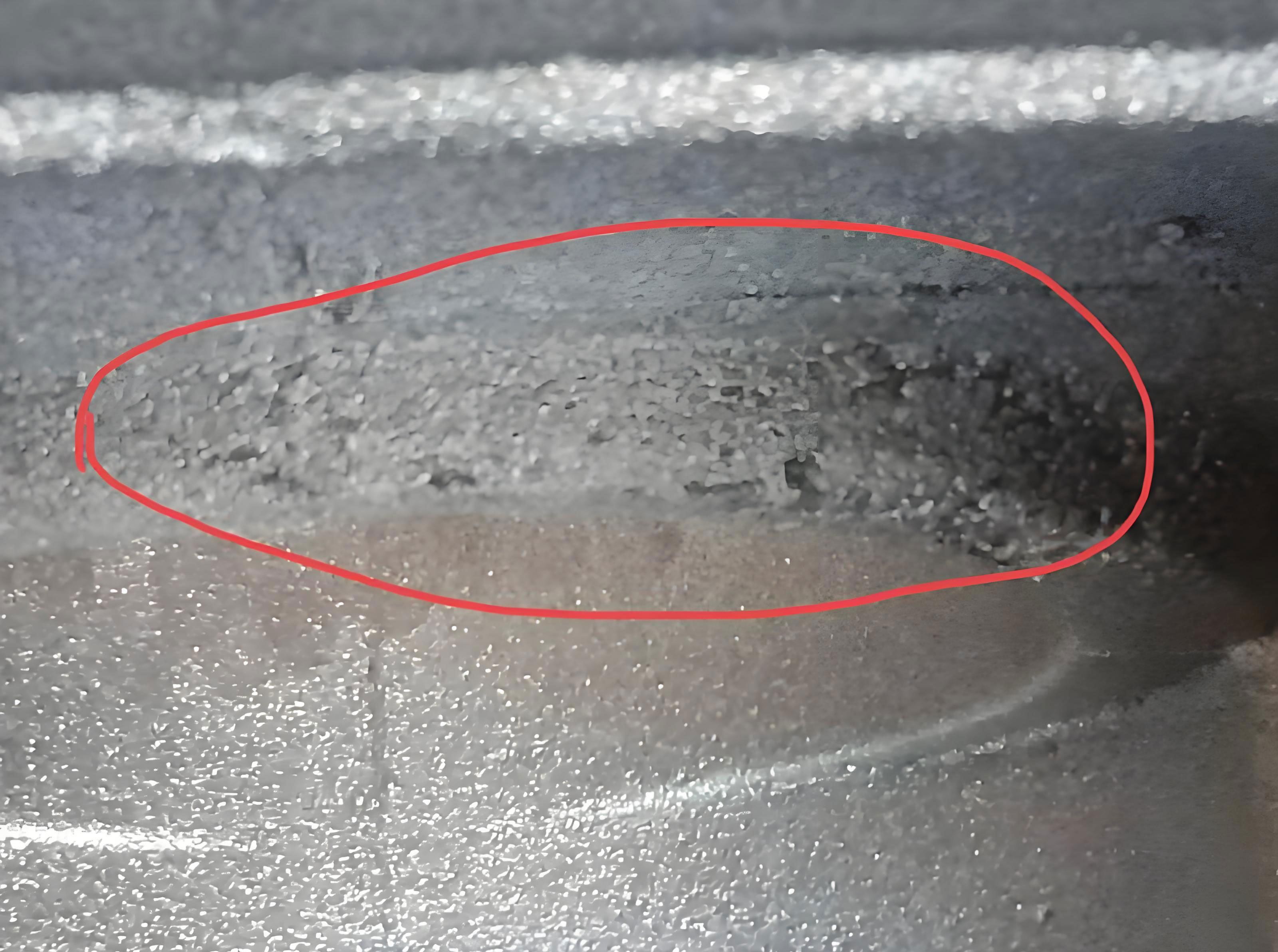
The porosity in casting discovered was characterized by 2-4 mm diameter, pear-shaped cavities with a dark gray, oxidized surface. Their location in a blind pocket or “air dead zone” and their morphology clearly identified them as entrainment defects. Gas had been trapped during mold filling rather than evolving from solidification shrinkage. Crucially, this defective boss was situated directly adjacent to the vertical slot gate, immediately suggesting a strong correlation between the gating system’s operation and the genesis of porosity in casting.
To understand this failure, I embarked on a thorough analysis of the vertical slot gating system. This system, comprising a spruce, a surge basin (or slag trap), and a thin, vertical gate along the side of the casting, is favored for aluminum permanent mold casting due to its potential for tranquil, bottom-up filling. This promotes slag flotation, venting, and directional solidification. However, its efficacy is highly sensitive to design parameters. The fundamental relationship governing the flow area of the slot gate during filling is given by:
$$ F = a \cdot h $$
where \( F \) is the instantaneous flow cross-sectional area of the slot gate, \( a \) is the constant gate thickness, and \( h \) is the height of the metal head in the mold cavity above the gate’s bottom. This equation reveals a critical characteristic: the flow area increases linearly with the rising metal level in the mold.
This dynamic has profound implications for filling behavior and the potential for porosity in casting. Initially, with a small \( h \), the flow area is minimal, promoting a low, smooth inflow that allows air to escape easily. As filling progresses and \( h \) increases, \( F \) grows proportionally. This can lead to a rapid acceleration of the flow rate into the cavity during the final stages of filling. The consequence is two-fold: firstly, air and oxides in the upper regions of the cavity, particularly in dead zones, have insufficient time to float out before being overwhelmed by the rushing metal stream. Secondly, the metal in the upper layers is cooler and more viscous, further impeding the ascent of any entrapped gas bubbles. Additionally, the flow from the slot gate is inherently turbulent, creating a low-pressure zone that can actively draw in and entrain air from adjacent pockets. If the slot gate is positioned next to such a pocket, the risk of localized porosity in casting is greatly amplified. My observations and simulations confirmed that an improperly designed system can even exhibit surging or jetting behavior, drastically worsening air entrainment.
The interaction between the key dimensions of the gating system components dictates the overall filling pattern. The system’s behavior is governed by the balance between the spruce diameter \( d \) (controlling metal supply rate), the surge basin diameter \( D \), and the slot gate thickness \( a \) (together controlling flow distribution). An ideal filling state maintains a positive metal level difference between the surge basin and the mold cavity \( (h_{basin} > h_{cavity}) \), ensuring pressure-fed, controlled flow through the slot and effective slag retention. Deviations from optimal proportions lead to defective filling modes that promote porosity in casting.
I constructed the following table to summarize the standard design relationships for vertical slot gates and to contrast them with the problematic initial design used for the thick-section housing casting:
| Parameter | Standard Design Guideline (for walls ≤30mm) | Initial Faulty Design (for thick-section casting) | Consequence of Deviation |
|---|---|---|---|
| Slot Thickness \( a \) | \( a = (0.5 \text{ to } 0.8) \times \text{wall thickness} \delta \) | \( a = 7 \text{ mm} \) (≈0.14δ for δ=50mm) | Too thin relative to wall. |
| Basin Diameter \( D \) | \( D = (6 \text{ to } 8) \times a \) | \( D = 32 \text{ mm} \) (≈4.6a) | At lower bound of range. |
| Spruce Diameter \( d \) | \( d \leq 25 \text{ mm} \) and \( D > 1.5d \) | \( d = 30 \text{ mm} \) and \( D \approx d \) | \( d \) too large; \( D \) not > \( 1.5d \). |
The analysis of the initial design revealed critical flaws. The spruce was oversized (\(d = 30mm > 25mm\)), delivering metal too rapidly. The surge basin was relatively undersized (\(D \approx d\)), and the slot gate was too thin for such a heavy casting. This combination caused the surge basin to fill and overflow prematurely. The overflow metal traveled up a connected channel to the top riser, effectively creating an unintended secondary top-gating system. This resulted in a highly detrimental filling mode where metal cascaded from the top, violently impinging on the rising metal surface in the cavity. This impingement turbulence entrapped large volumes of mold air and oxide films, leading to macro-scale porosity in casting. Simultaneously, the thin, poorly positioned slot gate contributed to micro-turbulence and air entrainment in its immediate vicinity—the defective boss. The resultant porosity in casting was thus a synergistic effect of these two flawed flow mechanisms.
The mathematical modeling of the flow rates highlights the issue. The theoretical initial flow rate \( Q \) can be approximated by Torricelli’s law modified for a slot: \( Q = C_d \cdot a \cdot h_0 \cdot \sqrt{2 g h_0} \), where \( h_0 \) is the initial head in the basin, \( g \) is gravity, and \( C_d \) is a discharge coefficient. With a small \( a \), the initial \( Q \) is low, but the rapid rise in \( h \) during filling causes \( Q \) to increase non-linearly. The overflow condition from the basin occurs when the volumetric inflow from the spruce exceeds the outflow through the slot. This can be expressed as:
$$ \frac{\pi d^2}{4} \cdot v_{sprue} > a \cdot h_{cavity} \cdot v_{slot} $$
where \( v_{sprue} \) and \( v_{slot} \) are the respective flow velocities. With a large \( d \) and small \( a \), this inequality is satisfied early in the fill, triggering the undesirable top-flow condition. Preventing this is essential to avoid the associated porosity in casting.
Given the constraints of the existing permanent mold tooling, a radical redesign of the spruce and basin was impractical. Therefore, my corrective strategy focused on optimizing the slot gate itself to alter the flow dynamics and mitigate both sources of porosity in casting. The primary modifications were twofold.
First, I significantly increased the height of the vertical slot gate, extending it upward from its original termination point to directly connect with the root of the top riser. This modification served a crucial purpose: it provided a direct escape path for air trapped in the deep boss adjacent to the gate. Instead of being forced into the molten metal, air could now travel up the enlarged gate channel and vent out through the riser. This directly addressed the localized entrainment porosity in casting.
Second, and more fundamentally, I increased the slot gate thickness \( a \) from 7 mm to 9 mm. Coupled with the increased height, this modification dramatically increased the total flow area \( F_{total} \) of the gate. The calculation illustrates the scale of change:
Original gate flow area (approx.): \( F_{orig} = a_{orig} \times h_{orig} = 7 \text{ mm} \times 80 \text{ mm} = 560 \text{ mm}^2 \).
Modified gate flow area: \( F_{mod} = a_{mod} \times h_{mod} = 9 \text{ mm} \times 105 \text{ mm} = 945 \text{ mm}^2 \).
This represents an increase of approximately 69% in the available flow area. The impact on system hydraulics was profound. With a larger, more open gate, the outflow resistance decreased substantially. This allowed the metal to enter the cavity much more rapidly and efficiently, preventing the premature filling and overflow of the surge basin. The condition \( h_{basin} > h_{cavity} \) was now maintained throughout the filling process, ensuring a steady, pressure-fed flow from the bottom. The disruptive top-pouring via the riser was completely eliminated. Furthermore, the increased flow rate reduced the total fill time and minimized heat loss, keeping the metal more fluid and enabling any minor entrapped gases to coalesce and rise more easily. The table below summarizes the before-and-after state of key parameters related to porosity in casting risk:
| Aspect | Initial Design State | Modified Design State | Impact on Porosity in Casting |
|---|---|---|---|
| Basin Overflow | Early occurrence, causing top impingement. | Eliminated; controlled bottom-up fill. | Removed major source of large-scale air entrainment. |
| Slot Gate Flow Regime | Turbulent, surging near dead zone. | Smoother, higher-volume flow. | Reduced localized air entrainment at the boss. |
| Venting of Dead Zone | No direct path; gas trapped. | Direct path to riser via extended gate. | Provided escape route for trapped air. |
| Metal Temperature Loss | Higher due to longer fill time. | Lower due to faster fill. | Improved metal fluidity, aiding gas floatation. |
In addition to the gating system changes, I addressed other potential sites for porosity in casting on the component. For other deep, isolated pockets that acted as natural air dead ends, I designed and implemented small, sacrificial venting ribs on the mold cores. These ribs created minute channels connecting the dead-end volume to the main mold cavity or parting line, allowing air to be pushed out ahead of the metal front. After casting, these ribs are machined off. This secondary measure further safeguarded against any residual gas entrapment.
The efficacy of these interventions was rigorously validated. A production run of 21 castings was poured using the modified mold system. Non-destructive X-ray inspection of all castings revealed a complete absence of the previously prevalent subsurface porosity in casting. Destructive sectioning of sample castings confirmed the findings; the internal structure was sound and free from gas defects. The successful elimination of porosity in casting validated the hypothesis that the defect originated from the dysfunctional interaction between the gating system geometry and the mold cavity’s venting challenges. This success secured the viability of the permanent mold process for this component, achieving superior quality to the original sand castings.
Reflecting on this investigation, several fundamental conclusions can be drawn regarding the prevention of porosity in casting when employing vertical slot gating systems, especially for thick-section, complex permanent mold castings. First, the dimensional ratios between the spruce, surge basin, and slot gate are not mere suggestions but critical determinants of flow stability. Adherence to the principle \( D > 1.5d \) and \( d \leq 25 \) mm for aluminum is crucial to maintain the necessary head differential and prevent basin overflow, which is a direct catalyst for severe porosity in casting. Second, for heavy sections, the slot gate thickness \( a \) should be selected at the upper end of the conventional ratio range (\( a \approx 0.5\delta \)) or even slightly larger. A more generous gate promotes higher, smoother flow rates, maintains the desired pressure gradient, and avoids the low-flow, high-turbulence conditions that seed porosity in casting. Third, gate placement must be considered an integral part of venting design. Positioning a slot gate adjacent to an unventable dead zone is an invitation for localized porosity in casting. The gate should be located to facilitate air evacuation, or its geometry must be adapted, as demonstrated by extending it to a riser, to provide an integral venting function. Finally, permanent molds require proactive venting strategies for isolated pockets—using vent ribs, plugs, or porous inserts—to compensate for the mold’s lack of permeability compared to sand. This holistic approach to managing air displacement is essential for mitigating porosity in casting.
The broader implication of this work is that porosity in casting often stems from a systems-level failure in liquid metal handling during mold filling, not just from localized factors. A deep understanding of the fluid mechanics of the chosen gating system, quantified through relationships like \( F = a \cdot h \) and flow balance equations, is indispensable for robust process design. By rigorously analyzing these dynamics and implementing calculated modifications to the flow path and volume, the persistent and costly problem of porosity in casting can be effectively solved, paving the way for reliable production of high-integrity cast components.