
In my extensive experience in foundry engineering, I have focused on developing materials and processes to improve wear resistance while addressing common casting defects such as porosity in casting. This article details my approach to designing high-performance alloy steel liners and mitigating porosity in casting for valve shells, integrating practical insights with theoretical principles. The goal is to balance cost, performance, and quality, ensuring durability in demanding applications like grinding mills and industrial machinery.
Porosity in casting remains a critical challenge, as it can compromise structural integrity and wear properties. By optimizing composition, melting, casting, and heat treatment, I aim to minimize defects while enhancing mechanical performance. Throughout this discussion, I will emphasize strategies to reduce porosity in casting, as it directly impacts the longevity and reliability of cast components. The interplay between material design and process control is key to achieving superior results.
Material Design for Wear-Resistant Liners
I begin with the development of medium- or high-carbon multi-alloy steel liners. The base composition is tailored for dry applications, where adjustments can lower production costs without sacrificing wear resistance. This involves careful selection of alloying elements like chromium, molybdenum, vanadium, and titanium, which contribute to hardenability and carbide formation. A key consideration is minimizing porosity in casting during solidification, as voids can act as stress concentrators and reduce abrasion resistance. The composition is optimized to promote dense, homogeneous microstructures.
| Element | Range (wt.%) | Role in Wear Resistance | Impact on Porosity in Casting |
|---|---|---|---|
| C | 0.5–0.8 | Forms hard carbides | Higher carbon can increase shrinkage, requiring process control |
| Cr | 1.0–2.5 | Enhances hardness and corrosion resistance | Minimal effect if properly balanced |
| Mo | 0.3–0.7 | Improves strength and tempering resistance | Reduces hot tearing, indirectly lowering porosity in casting |
| V | 0.1–0.3 | Refines grain size | Promotes finer structure, reducing gas entrapment |
| Ti | 0.05–0.15 | Acts as deoxidizer | Helps reduce oxide inclusions and porosity in casting |
The cost-benefit analysis is crucial: by adjusting alloy ratios, I achieve a 15–20% reduction in material expenses while maintaining hardness levels of HRC 50–55. This is validated through field trials, where liners show three times the lifespan of traditional high-manganese steel in dry mills. However, porosity in casting must be controlled through precise melting and casting practices, as even minor voids can initiate cracks under impact loads.
Melting and Refining Processes
I employ medium-frequency or electric arc furnaces for melting, following standard alloy steel procedures. The process starts with charging raw materials, then applying 40–50% power for 10–15 minutes to stabilize the current before full-power melting. Once molten, I add a slag cover to protect the bath and facilitate impurity removal. Deoxidation is performed 5–10 minutes before tapping, using aluminum or silicon-based agents to minimize gas solubility and prevent porosity in casting.
Key parameters include a tapping temperature above 1600°C to ensure fluidity and degassing. I use composite modifiers like Mo-Cu and V-Ti for inoculation, which refine the microstructure and reduce shrinkage defects. The liquid steel is quantitatively ladled and poured promptly to avoid temperature drops that could lead to cold shuts or porosity in casting. Chemical analysis is conducted pre-tap for adjustments, ensuring consistency.
| Step | Parameter | Value | Rationale |
|---|---|---|---|
| Initial Heating | Power Level | 40–50% | Prevents thermal shock and ensures even melting |
| Melting | Full Power Time | Until molten | Achieves homogeneous composition |
| Slag Cover | Type | Basic slag | Removes impurities and reduces oxidation |
| Deoxidation | Time Before Tap | 5–10 min | Lowers oxygen content to minimize porosity in casting |
| Tapping | Temperature | ≥1600°C | Ensures proper fluidity for casting |
| Modification | Agents | Mo-Cu, V-Ti | Enhances nucleation and reduces porosity in casting |
The role of gas evolution is critical here; I monitor hydrogen and nitrogen levels to avoid porosity in casting. The equilibrium gas pressure in the melt can be described by Sievert’s law: $$C = k \sqrt{P_{\text{gas}}},$$ where \(C\) is gas concentration, \(k\) is a constant, and \(P_{\text{gas}}\) is partial pressure. By controlling atmosphere and deoxidation, I keep \(P_{\text{gas}}\) low to prevent gas entrapment.
Casting工艺 Design and Implementation
Casting工艺 is where I ensure defect-free components, particularly for large平板-like liners. The mold is prepared using dried magnesia powder (sieve size 0.075/0.053 mm) as a facing to improve surface finish and reduce gas generation. Green sand with a compactness >50 is used, and vents are added to the cope for gas escape. For sections thicker than 60 mm, I insert iron nails to enhance cooling and minimize shrinkage porosity in casting.
The gating system is designed for rapid, uniform filling to prevent turbulence that can entrain air and cause porosity in casting. I use a semi-closed system with ratios: $$F_{\text{inner}} : F_{\text{runner}} : F_{\text{sprue}} = 1.2 : 1.0 : 1.2.$$ The runner is placed on the cope along the longest side, with multiple flat, trumpet-shaped ingates in the drag for even distribution. No risers are used for small, uniform-thickness parts; side risers are added for thick sections. Multiple wedge-shaped vents are set on the cope,约 200 mm apart, to release gases and reduce porosity in casting.
| Aspect | Specification | Purpose |
|---|---|---|
| Mold Inclination | 5°–10° angle | Facilitates metal flow and gas escape |
| Pouring Temperature | 1500–1540°C | Balances fluidity and minimizes shrinkage |
| Pouring Speed | Fast initial, then slow | Reduces turbulence and porosity in casting |
| Cooling in Mold | 8–16 hours | Prevents cracking and allows gradual solidification |
| Shakeout Temperature | <200°C | Avoids thermal stress and porosity in casting |
During pouring, I maintain a steady stream to fill the sprue quickly, then slow near the end to avoid mold erosion. This practice, combined with proper venting, significantly reduces porosity in casting. The solidification time \(t\) can be estimated using Chvorinov’s rule: $$t = B \left( \frac{V}{A} \right)^2,$$ where \(B\) is a mold constant, \(V\) is volume, and \(A\) is surface area. For liners, I optimize \(V/A\) to promote directional solidification and minimize isolated hot spots that lead to porosity in casting.
Heat Treatment for Optimal Microstructure
Heat treatment is essential to achieve the desired mechanical properties. I subject castings to air quenching and tempering. The process involves heating from low temperatures at a rate ≤100°C/h, holding at 700°C for 1–1.5 hours for stress relief, then austenitizing at 30–50°C above AC3 or AC1 for 2–4 hours. Quenching is done with forced air or spray to about 400°C, followed by slow cooling to below 150°C. Tempering at 250–400°C for 2–4 hours yields a microstructure of martensite (M), lower bainite (B下), carbides (K), and retained austenite (A残).
This treatment enhances hardness to HRC 50–55 and impact toughness \(a_K \geq 10 \, \text{J/cm}^2\), as measured on 20 mm × 20 mm × 120 mm un-notched samples from the casting body. The transformation kinetics can be described by the Avrami equation: $$f = 1 – \exp(-kt^n),$$ where \(f\) is phase fraction, \(k\) and \(n\) are constants. By controlling cooling rates, I minimize residual stresses that could exacerbate porosity in casting. For thick sections, I extend holding times to ensure uniformity and reduce the risk of porosity in casting from inadequate heat treatment.
| Stage | Temperature Range | Time | Microstructural Outcome |
|---|---|---|---|
| Heating | ≤100°C/h rise | – | Reduces thermal shock |
| Stress Relief | 700°C | 1–1.5 h | Relieves casting stresses |
| Austenitization | AC3/AC1 + 30–50°C | 2–4 h | Ensures complete transformation |
| Quenching | To 400°C (air/spray) | – | Forms martensite and bainite |
| Tempering | 250–400°C | 2–4 h | Improves toughness and reduces porosity in casting effects |
The final microstructure, observed under etching with picric acid, hydrochloric acid, and ethanol, shows tempered martensite and bainite in thin sections, and tempered sorbitte and troostite in thick areas. This diversity ensures wear resistance without brittleness, though porosity in casting must be absent to maintain integrity.
Application Examples and Performance
In dry applications, these multi-alloy steel liners have been produced for years in various plants, used in cement factories and power plants with磨机 diameters from 2.4 m to 3.6 m. They demonstrate three times the service life of traditional high-manganese steel liners, thanks to optimized composition and minimal porosity in casting. For wet conditions, high-carbon multi-alloy steel liners are used, weighing 205 kg with dimensions 960 mm × 320 mm × (80–140) mm. Their impact toughness ranges from 19 to 45 J/cm², hardness HRC 49–53, and they survive destructive tests like a 1-ton hammer drop from 4 meters without failure.
Field tests in ball mills confirm a doubled lifespan compared to high-manganese steel, directly attributable to reduced porosity in casting and superior microstructure. The economic impact is significant, as lower replacement frequency cuts downtime and costs. However, porosity in casting remains a concern if processes deviate, underscoring the need for stringent control.
Analysis and Prevention of Porosity in Casting for Valve Shells
Shifting focus to another critical issue, I address porosity in casting in HT150 valve shells, where rejection rates once reached 35% due to large侵入性气孔 in flange热节 zones and皮下 areas. These pores, 1–3 mm in size, are identified as侵入性气孔 caused by mold gases. The condition for gas invasion into molten metal is given by: $$P_{\text{gas}} > \frac{2\sigma}{R} + \rho h + P_{\text{mold}},$$ where \(P_{\text{gas}}\) is gas pressure in the mold, \(\sigma\) is surface tension, \(R\) is pore radius, \(\rho\) is metal density, \(h\) is metallostatic head, and \(P_{\text{mold}}\) is mold pressure. To prevent porosity in casting, I ensure: $$P_{\text{gas}} < \frac{2\sigma}{R} + \rho h + P_{\text{mold}}.$$ Since \(\frac{2\sigma}{R}\) is material-dependent and \(P_{\text{mold}}\) negligible, reducing \(P_{\text{gas}}\) is key by lowering gas generation and improving permeability.
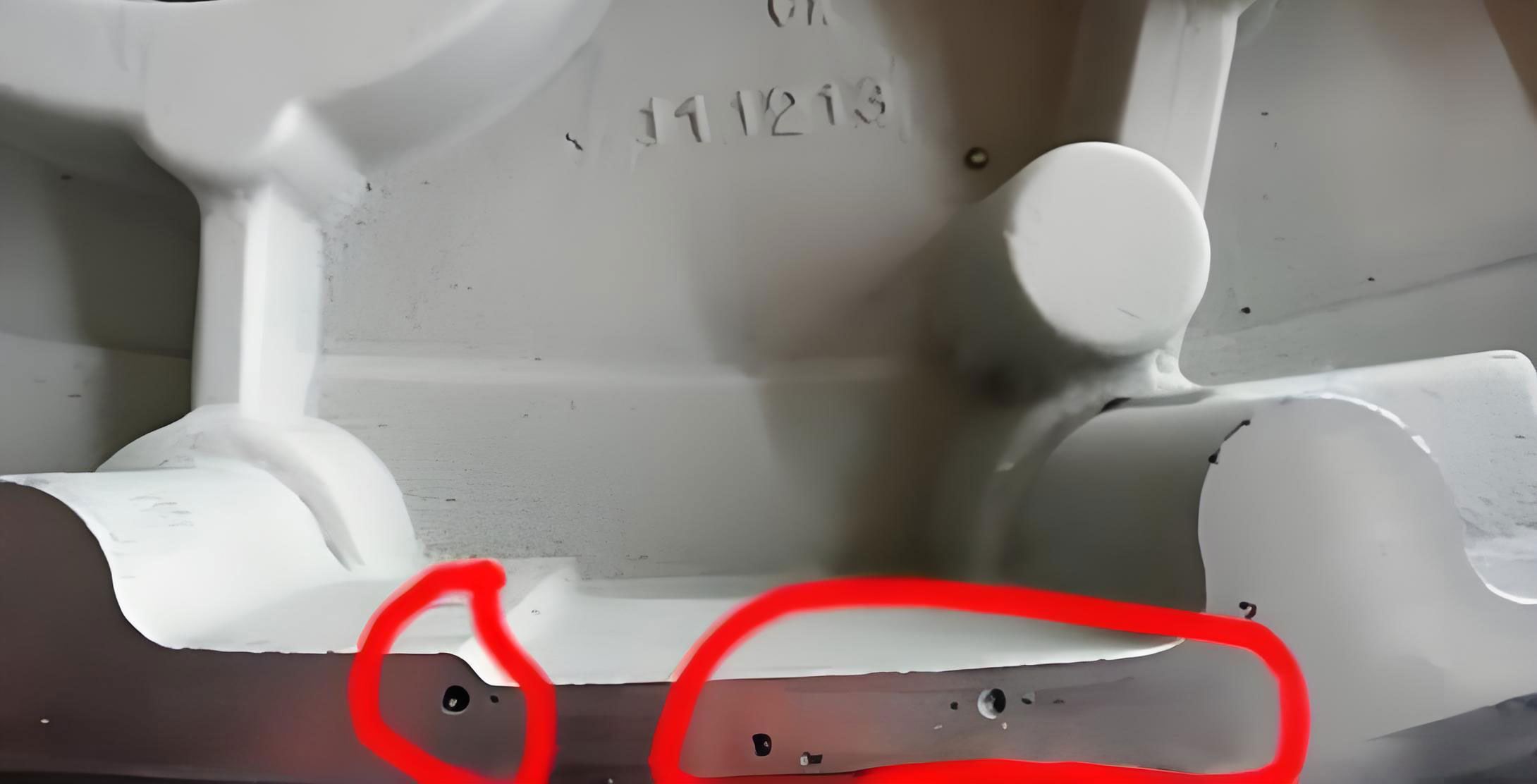
I implement several measures to combat porosity in casting. First, adjust sand formulations: for green sand, reduce moisture from 6.5% to 4.5%, bentonite from 4.0% to 2.5%, and coal dust from 5% to 4%, while using coarser sand (0.212/0.106 mm) and adding 0.1% sodium carbonate for activation. For core sand, decrease wood flour from 4% to 2% and add 5–7% coke particles (0.600/0.425 mm) to enhance permeability. These changes cut gas evolution and improve venting, directly reducing porosity in casting.
| Sand Type | Parameter | Original | Improved | Effect on Porosity in Casting |
|---|---|---|---|---|
| Green Sand | Moisture (%) | 6.5 | 4.5 | Lowers gas generation and improves permeability |
| Bentonite (%) | 4.0 | 2.5 | ||
| Coal Dust (%) | 5.0 | 4.0 | ||
| Sand Grain Size (mm) | 0.150/0.075 | 0.212/0.106 | ||
| Additives | None | 0.1% Na2CO3 | ||
| Core Sand | Wood Flour (%) | 4.0 | 2.0 | Reduces gas and enhances venting |
| Coke Particles (%) | 0 | 5–7 | ||
| Bentonite (%) | 6.0 | 5.0 | ||
| Grain Size (mm) | 0.425/0.211 | 0.425/0.211 + coke |
Second, I modify molding and core-making: control mold hardness to 70–75 (down from 75–80) for better permeability; increase core drying temperature from 200–250°C to 250–300°C with longer holds (2.5–3 hours); add more vents (4–6 per 100 cm² vs. 2–3); and limit time between molding and pouring to under 3 hours to avoid moisture absorption. These steps drastically reduce porosity in casting by lowering \(P_{\text{gas}}\).
Third, I enhance melting and pouring: maintain铁液 temperature ≥1400°C to aid gas flotation, increase pouring speed for higher dynamic pressure, and use pouring cups to boost static head. The metallostatic pressure \(\rho h\) in the equation helps counteract gas invasion, thus minimizing porosity in casting. After implementing these, rejection rates drop below 5%, proving the effectiveness of integrated process control.
The theoretical basis extends to the kinetics of gas bubble formation. The critical radius \(R_c\) for pore stability is: $$R_c = \frac{2\sigma}{P_{\text{gas}} – \rho h}.$$ By keeping \(P_{\text{gas}}\) low through sand adjustments and venting, I ensure \(R_c\) is large, making pore nucleation difficult and reducing porosity in casting. Additionally, the gas evolution rate \(Q\) from sand can be modeled as: $$Q = A e^{-E/RT},$$ where \(A\) is pre-exponential factor, \(E\) activation energy, \(R\) gas constant, and \(T\) temperature. Lower moisture and organic content reduce \(Q\), directly mitigating porosity in casting.
Conclusion and Future Directions
In summary, my approach combines material science and process engineering to enhance wear resistance and control porosity in casting. For multi-alloy steel liners, optimized composition, melting, casting, and heat treatment yield durable components with extended service life. Simultaneously, for valve shells, targeted adjustments in sand formulations and工艺 parameters effectively eliminate侵入性气孔, showcasing the importance of a holistic view. Porosity in casting is a pervasive issue that demands continuous attention; through rigorous formula applications and practical tweaks, I achieve significant quality improvements.
Future work will focus on advanced simulation tools to predict porosity in casting during solidification, using finite element analysis coupled with gas evolution models. I also explore additive manufacturing for complex geometries where porosity in casting is more challenging. The principles discussed here—balancing cost, performance, and defect minimization—remain foundational for all casting endeavors. By persistently addressing porosity in casting, I aim to push the boundaries of reliability and efficiency in industrial applications.
Throughout this article, I have emphasized how porosity in casting can be managed through scientific principles and empirical refinements. Whether dealing with high-wear liners or intricate valve shells, the synergy between theory and practice is essential. As I continue my work, I will further investigate novel alloys and processes to reduce porosity in casting, ensuring that cast components meet the ever-growing demands of modern engineering.