
In my extensive experience within the foundry industry, addressing defects related to porosity in casting has been a persistent and critical challenge, particularly for complex components like engine blocks and cylinder heads. The inherent use of numerous intricate cores in these castings makes them highly susceptible to gas-related flaws, which can constitute a significant portion of scrap rates. This article, drawn from years of hands-on practice and systematic investigation, delves into the characteristics, root causes, and effective countermeasures for porosity in casting. I will present this analysis from a first-person perspective, incorporating data summaries through tables and formulas to elucidate key principles.
The manifestation of porosity in casting is not uniform; it varies based on location and formation mechanism. In engine blocks, for instance, the defects are primarily侵入性气孔 (intrusive porosity). Based on my observations, they can be categorized by area: porosity at the water jacket cover plate flange, cylinder bore porosity, top deck porosity, and valve chamber porosity. The pores at the flange root are often subcutaneous, only revealed after removing ventilation fins, with surfaces that are usually bright and shapes that are irregular. Cylinder bore porosity is exclusively subcutaneous, detected only after machining, and tends to concentrate in the upper sections along the pouring direction and the mid-sections of the bores. These pores can be substantial, with diameters historically reaching up to 50 mm during initial production phases. Top deck porosity presents as smaller, blackish, subsurface holes resembling shrinkage, while valve chamber porosity often appears as surface defects akin to mistruns or cold shuts.
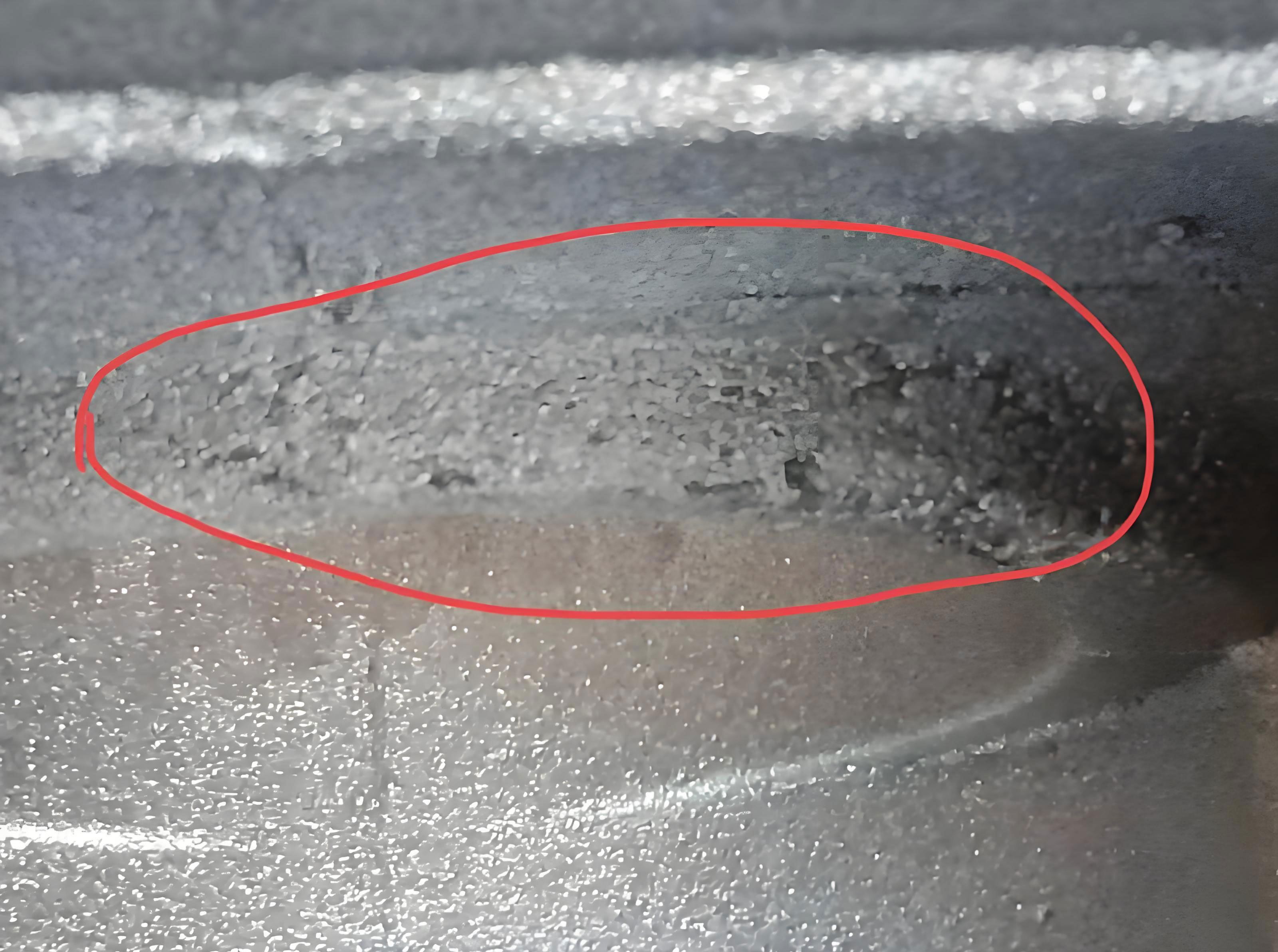
The battle against porosity in casting is multifaceted, involving every stage from mold design to metal treatment. Below, I detail the primary influencing factors and the proven preventative measures derived from my work.
1. The Critical Role of Venting Systems
A single engine block casting may utilize over thirty cores of various types, such as water jacket cores and cylinder bore cores. These cores are a major source of gases during pouring. For example, a 4 kg water jacket core can release approximately 0.06 m³ of gas. If not vented properly, pressure builds within the core, exceeding the metallostatic pressure of the molten iron and leading directly to porosity in casting upon solidification.
My trials consistently showed that enhancing the venting system dramatically reduces scrap. This involves maximizing vent holes, enlarging local vents, adding false cores (chills) to create additional escape paths, and incorporating vent grooves along parting lines. A particularly effective innovation was implementing “vent bridges” for areas like the top deck where direct vent holes were impractical. These bridges provided a conduit for gas escape, which virtually eliminated the small shrinkage-porosity defects on the top deck and reduced porosity in other areas. However, this introduced a new issue of broken edges during cleaning, which was resolved by adding crescent-shaped projections on the core prints. Furthermore, widening these vent bridges from 3/6 mm (top/bottom) to 6/9 mm ensured all six main vent pins were filled with metal after pouring, indicating excellent venting and a subsequent drastic drop in cylinder bore porosity.
The design of core prints in flange areas is crucial. In a past case with transmission castings, severe porosity, cold shuts, and shrinkage were resolved by altering the pouring position and raising the core print height to match the flange’s high point, supplemented with a large open vent riser. This highlights the necessity of prioritizing venting for high-point features in complex castings. Another persistent challenge is sealing the connection between internal core vents (e.g., in water jacket cores) and the mold’s vent holes to prevent metal penetration while allowing gas escape. My solution involved designing core vent exits with a thin sand wall (about 2 mm). This barrier allows gas to pass but blocks molten metal if seal failure occurs, effectively mitigating one source of porosity in casting.
| Modification | Primary Target Area | Observed Reduction in Porosity |
|---|---|---|
| Addition of vent bridges | Top deck, cylinder bore | ~70% reduction in top deck pores; significant decrease in bore pores |
| Widening of vent bridges | Cylinder bore | Further ~50% reduction, all main vents filled with metal |
| Core print redesign & open riser | Flange areas (e.g., transmission cases) | Near elimination of porosity and associated defects |
2. Minimizing Gas Generation from Molding Materials
Binders, coatings, and repair compounds contribute significantly to the gas load. My comparative studies revealed that applying coatings to molds, especially if poorly dried, invariably increases instances of porosity in casting. Therefore, selecting coatings with low gas evolution and high anti-penetration properties is essential. In some cases, eliminating coatings altogether by using finer base sands can be more effective. For valve chamber cores, switching from a hot-box process with S50/100 sand and a water-based graphite wash to a shell-core process with S140/70 sand (without coating) solved both burn-on and gas defect problems.
Among core processes, cold-box cores have demonstrated superior performance in my experience, offering excellent dimensional accuracy and lower gas generation compared to hot-box or shell cores when using the same base sand. Reducing binder content is a straightforward tactic. For hot-box resins, using low-nitrogen varieties helps. In cylinder head production, employing high-strength, low-gas evolution coated sands (resin addition 1.6–1.8%) with a gas evolution value around 13 ml/g proved highly beneficial in controlling porosity in casting. Furthermore, mechanically fastening multiple core segments (e.g., with screws) instead of relying solely on adhesive bonds minimizes relative movement (core float) and reduces the interfacial area prone to gas generation.
The gas evolution from binders can be modeled. The decomposition of urea-based resins, for instance, follows a reaction that releases gases:
$$ \text{Urea derivatives} \xrightarrow{\Delta} NH_3 $$
Subsequently, ammonia can decompose or combust:
$$ 2NH_3 \rightarrow N_2 + 3H_2 \quad \text{(in anaerobic conditions)} $$
$$ 4NH_3 + 3O_2 \rightarrow 2N_2 + 6H_2O \quad \text{(combustion)} $$
The water vapor can further dissociate. The hydrogen and nitrogen generated are then available for dissolution into the molten metal, leading to subsurface porosity in casting.
| Core Process | Typical Gas Evolution (ml/g) | Relative Tendency for Porosity in Casting | Key Advantage for Porosity Control |
|---|---|---|---|
| Hot-Box (Standard) | 15-25 | High | — |
| Hot-Box (Low-N) | 12-18 | Medium | Reduced nitrogen source |
| Shell | 10-16 | Medium-Low | Good dimensional stability |
| Cold-Box | 8-12 | Low | Lowest gas, high accuracy |
3. The Overlooked Factor: Molding Sand Temperature
In high-volume production, the temperature of return sand and subsequently the molding sand is a cyclical yet potent factor influencing porosity in casting. My systematic measurements, sampling every batch of sand on the molding line and correlating with hourly casting quality, revealed a clear trend: as sand temperature rises, so does the scrap rate due to porosity. The defect rate in summer could be ten times higher than in winter.
The mechanism is straightforward. Hot sand (often above 45°C in my plant’s case) causes rapid moisture evaporation from the mold surface after closing. This creates a strong, humid air current flowing out through vents and pouring cups. When this moisture-laden air encounters cooler cores, condensation occurs on the core surface. This extra moisture dramatically increases the gas pressure within the mold cavity during pouring, directly promoting porosity in casting.
To combat this, I led the implementation of several cooling measures: installing hot sand separation conveyors under shakeouts, adding water spray systems on return sand belts, modifying rotary screens with internal baffles and finer meshes, and enhancing forced ventilation in mixers. These interventions collectively lowered the average molding sand temperature by approximately 10°C, with a corresponding significant drop in porosity defects. The relationship can be conceptualized as a driving force for gas pressure buildup proportional to the vapor pressure difference, which is a function of temperature.
$$ P_{gas} \propto \Delta P_{vap} \approx f(T_{sand}) $$
Where a higher \( T_{sand} \) leads to a greater \( \Delta P_{vap} \) and thus higher \( P_{gas} \), increasing the risk of porosity in casting.
| Season / Condition | Avg. Return Sand Temp. (°C) | Avg. Molding Sand Temp. (°C) | Approx. Porosity Scrap Rate for Engine Blocks |
|---|---|---|---|
| Winter (Baseline) | 30-40 | 25-30 | ~2% |
| Summer (Pre-cooling) | 50-80 | 45-60 | ~20% |
| Summer (Post-cooling) | 40-65 | 35-45 | ~8% |
4. The Role of Additives and Melt Chemistry
The interaction between core sands and molten metal chemistry is pivotal in forming subcutaneous porosity or pinholes. As mentioned, gases like nitrogen and hydrogen dissolve in the iron. The presence of certain elements, notably aluminum (Al), increases the solubility of these gases in iron, exacerbating the tendency for porosity in casting. The solubility of a diatomic gas like nitrogen in molten iron can be described by Sieverts’ law:
$$ [N] = K_N \sqrt{P_{N_2}} $$
where \( [N] \) is the dissolved nitrogen concentration, \( K_N \) is the equilibrium constant (temperature-dependent), and \( P_{N_2} \) is the partial pressure of nitrogen at the metal-mold interface. Elements like Al increase the value of \( K_N \), leading to higher \( [N] \) for the same \( P_{N_2} \). Upon solidification, the solubility drops sharply, causing gas precipitation and pore formation.
A common practical remedy is adding iron oxide (Fe₂O₃) to core sands. The mechanisms are debated. One theory suggests Fe₂O₃ forms a low-melting-point oxide film that increases interfacial pressure, blocking gas-metal contact. Another proposes that Fe₂O₃ decomposes, reacting with carbon in the iron to generate CO bubbles:
$$ Fe_2O_3 + 3C \ (in \ iron) \rightarrow 2Fe + 3CO \uparrow $$
These bubbling CO bubbles can scavenge dissolved nitrogen and hydrogen from the melt, carrying them away and thus reducing porosity in casting. Empirically, increasing the iron oxide content in facing sands or core sands is a rapid-response tactic that I have successfully used to suppress sudden outbreaks of subsurface porosity.
Melt cleanliness is equally critical. The use of rusty or unknown-origin steel scrap can introduce excessive oxygen and hydrogen. In one severe incident where cylinder head leakages due to porosity exceeded 80%, melt analysis showed oxygen content as high as 0.0353%, compared to a normal level around 0.0068%. High nitrogen content, often from certain steel scraps, not only promotes porosity but also increases cracking tendency. Neutralizing nitrogen by adding titanium (Ti) is an effective metallurgical solution, as Ti forms stable nitrides.
| Element | Normal Range (wt.%) | High-Defect Observed Range (wt.%) | Primary Source & Mitigation |
|---|---|---|---|
| Oxygen (O) | 0.0005 – 0.0080 | 0.0147 – 0.0353 | Rusty charge, high humidity blast; Use clean charge, control blast air moisture |
| Nitrogen (N) | 0.0063 – 0.0078 | >0.0080 | Certain steel scrap, organic binders; Reduce scrap charge, add Ti inoculant |
| Hydrogen (H) | 0.00003 – 0.00004 | Up to 0.0005 | Moisture in charge/atmosphere; Ensure dry charging materials |
5. Pouring Parameters: Temperature and Speed
My controlled experiments on engine block production showed that within the range of 1380°C to 1410°C, pouring temperature has an不明显 (insignificant) effect on porosity in casting. However, once the temperature falls below 1380°C, a clear inverse relationship emerges: lower temperatures lead to a sharp increase in gas defects. This is because lower metal fluidity and faster cooling at the meniscus hinder the escape of bubbles and promote gas entrapment.
For castings made in high-density molds (e.g., high-pressure molding), increasing the pouring speed is generally beneficial for reducing porosity in casting. This is especially true for bottom-gated systems like engine blocks. A slow pour allows the metal front to cool considerably before reaching upper sections like cylinder bores and flanges, making these areas highly vulnerable to gas entrapment and mistruns. In my practice, reducing the pouring time for a block from 24 seconds to 19 seconds—by enlarging sprue and pouring cup cross-sections to increase metallostatic pressure—significantly decreased porosity defects. The relationship can be thought of in terms of the pressure head \( h \) and the velocity \( v \):
$$ v \approx \mu \sqrt{2gh} $$
$$ \text{Where } \mu \text{ is the discharge coefficient.} $$
A higher velocity \( v \), achieved via a larger \( h \), helps the metal front overcome gas back-pressure more effectively, reducing the time window for gas pore formation.
| Parameter | Tested Range | Optimal Range for Low Porosity | Mechanism & Rationale |
|---|---|---|---|
| Pouring Temperature | 1350 – 1420 °C | 1380 – 1410 °C | Below 1380°C, fluidity drops sharply, promoting gas entrapment and poor venting. |
| Pouring Speed (Time for a given casting) | 19 – 30 seconds | 19 – 22 seconds | Faster filling reduces metal temperature loss and provides dynamic pressure to overcome gas pressure in the mold cavity. |
| Metallostatic Pressure Head | Standard vs. Increased | Increased (Larger sprue/pour cup) | Higher head increases filling velocity and pressure, forcing gases out through vents. |
6. A Holistic View and Concluding Synthesis
Controlling porosity in casting is a systems engineering challenge. It is the integrated result of mold design, material selection, process control, and melt quality. No single factor operates in isolation. For instance, excellent venting can be negated by excessively hot molding sand, and a perfect melt can be ruined by a gassy core coating. Therefore, a disciplined, multi-pronged approach is essential.
Through my work, a synergistic strategy encompassing enhanced venting (bridges, enlarged vents, better sealing), aggressive control of molding sand temperature, selective use of finer sands and advanced core processes (like cold-box) to eliminate coatings, optimization of pouring speed and temperature, and stringent control over melt gas content has been perfected. This systematic approach transformed a situation where porosity in casting dominated the scrap rate to one where it is a minor contributor. In the current state, scrap rates specifically due to porosity in casting for engine blocks and cylinder heads have been stabilized at around 1%, with overall scrap rates for these components at approximately 5% and 8%, respectively.
The fundamental takeaway is that porosity in casting, while complex, is manageable. It requires diligent investigation to identify the dominant gas sources in a specific production context—be it from cores, sand, or the metal itself—and then applying targeted, often interlinked, solutions. Continuous monitoring of parameters like sand temperature, melt chemistry, and vent efficiency is as crucial as the initial design. By understanding the underlying physics and chemistry, as summarized in the formulas and tables herein, foundries can proactively design processes to minimize this pervasive defect and achieve high-quality, reliable castings.