
Lost foam casting is a near-net-shape manufacturing process that has gained widespread adoption due to its ability to produce complex geometries with high dimensional accuracy, design flexibility, elimination of sand cores, a cleaner working environment, and reduced costs. The technology, often referred to as expendable pattern casting, involves using a foam pattern—typically made of expandable polystyrene (EPS)—that is embedded in unbonded sand and vaporized by molten metal during pouring, leaving behind a precise cavity. While lost foam casting has been successfully applied to non-ferrous alloys like aluminum and copper, as well as cast iron, its application to steel castings has been more challenging. This is primarily due to the high pouring temperatures involved, which intensify the interaction between the metal and the decomposing foam, leading to defects such as gas holes, carbon pickup, and hydrogen absorption. Among these, gas holes are a predominant issue that can severely compromise the mechanical integrity and surface quality of steel castings. In this analysis, I will delve into the root causes of gas hole defects in lost foam casting of steel, drawing from practical experiences and theoretical insights, and propose a comprehensive set of solutions. The discussion will be supported by tables and mathematical models to summarize key points, aiming to provide a robust framework for improving the reliability of lost foam casting in steel foundries.
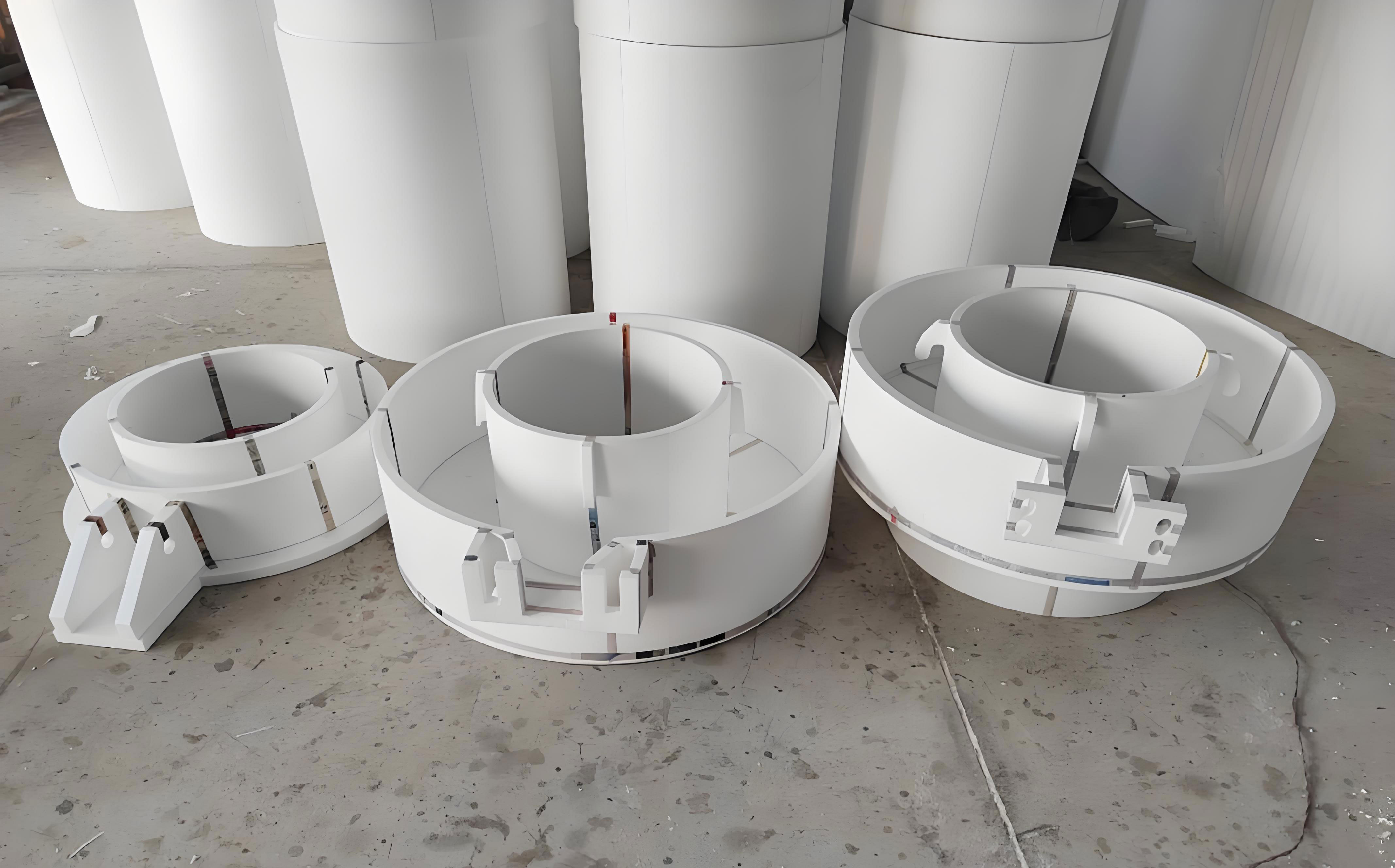
The formation of gas holes in lost foam casting of steel is a multifaceted problem that stems from the inherent characteristics of the process. During pouring, the molten steel front advances and thermally degrades the foam pattern, producing a mixture of gases, liquids, and solid residues. If these decomposition products are not efficiently vented away through the coating and sand mold, they can become entrapped in the solidifying metal, leading to porosity. Gas holes in lost foam castings are broadly categorized into two types: intrusive gas holes and precipitated gas holes. Intrusive gas holes arise from external gases—primarily from foam decomposition—invading the molten metal, while precipitated gas holes result from gases that are dissolved in the steel melt during melting and later evolve during solidification. Understanding the mechanisms behind these defects is crucial for developing effective countermeasures in lost foam casting operations.
Intrusive gas holes are the most common type encountered in lost foam casting of steel. Their formation is closely tied to the dynamics of foam decomposition and metal flow. One key factor is the pouring rate; if the pouring time is too short, the foam pattern cannot vaporize completely, leading to an accumulation of liquid pyrolysis products at the metal front. These liquids, which consist of styrene monomers and other hydrocarbons, may be encapsulated by the metal and subsequently decompose into gases, creating voids. The relationship between gas generation and pouring parameters can be modeled using kinetic equations. For instance, the rate of foam mass loss during decomposition can be approximated by a first-order reaction:
$$ \frac{dm}{dt} = -k(T) \cdot m $$
where \( m \) is the mass of the foam pattern, \( t \) is time, and \( k(T) \) is a temperature-dependent rate constant that increases exponentially with temperature, reflecting the accelerated decomposition at higher pouring temperatures. This rapid gas generation leads to a spike in pressure within the mold cavity. The gas pressure \( P(t) \) as a function of time can be expressed as:
$$ P(t) = P_0 + \int_0^t \frac{RT}{V} \cdot \frac{dn}{dt} \, dt $$
where \( P_0 \) is the initial pressure (often sub-atmospheric due to vacuum application), \( R \) is the gas constant, \( T \) is the absolute temperature, \( V \) is the cavity volume, and \( dn/dt \) is the molar rate of gas generation from foam degradation. If this pressure exceeds the metallostatic pressure of the molten steel, gases can infiltrate the liquid metal, forming intrusive gas holes. Additionally, the use of adhesives for assembling foam patterns poses a significant risk. Adhesives like AB glue or polyurethane-based bonds have higher densities and slower decomposition rates compared to EPS foam. When metal envelops these adhesive joints before they fully vaporize, the trapped adhesive continues to decompose, releasing gases that become entrapped. Moisture is another contributor; water absorbed by the coating, foam, or sand can vaporize upon contact with hot metal, producing steam and hydrogen that may invade the melt. The following table summarizes the primary causes of intrusive gas holes in lost foam casting of steel:
| Causal Factor | Mechanism | Impact on Gas Hole Formation |
|---|---|---|
| Excessive Pouring Speed | Insufficient time for complete foam vaporization leads to liquid residue entrapment. | Increases likelihood of gas generation within the metal matrix. |
| High Pouring Temperature | Elevates foam decomposition rate, causing rapid gas pressure buildup. | Promotes gas intrusion due to pressure differentials. |
| Adhesive Application | High-density adhesives decompose slower than foam, creating local gas sources. | Gas holes preferentially form at pattern joints. |
| Moisture Presence | Water vaporizes to steam and dissociates into hydrogen, which can be absorbed or trapped. | Introduces additional gas volume and hydrogen pickup. |
| Inadequate Coating Permeability | Restricts venting of decomposition gases through the coating layer. | Causes gas accumulation at the metal-coating interface. |
Precipitated gas holes, on the other hand, originate from gases dissolved in the molten steel during the melting process. Hydrogen is particularly problematic in steel castings produced via lost foam casting because it can originate from moisture in charge materials, furnace atmosphere, or even from foam decomposition products. The solubility of hydrogen in liquid steel is much higher than in solid steel; as the metal solidifies, the dissolved hydrogen exceeds the solubility limit and precipitates as molecular hydrogen gas, forming fine, scattered pores. The solubility relationship is given by Sieverts’ law:
$$ [H] = K_H \cdot \sqrt{P_{H_2}} $$
where \( [H] \) is the concentration of dissolved hydrogen in the steel, \( K_H \) is the temperature-dependent Sieverts’ constant, and \( P_{H_2} \) is the partial pressure of hydrogen in contact with the melt. During solidification, the local hydrogen concentration may rise due to microsegregation, leading to pore nucleation and growth. The critical concentration for pore formation \( [H]_{crit} \) can be estimated using:
$$ [H]_{crit} = \frac{2 \gamma}{r} \cdot \frac{1}{RT} + [H]_{eq} $$
where \( \gamma \) is the surface tension of the steel, \( r \) is the pore radius, \( R \) is the gas constant, \( T \) is the temperature, and \( [H]_{eq} \) is the equilibrium solubility at the given pressure. In lost foam casting, the presence of foam decomposition gases can alter the local atmosphere, potentially increasing \( P_{H_2} \) and exacerbating hydrogen absorption. Therefore, controlling melt quality is paramount to preventing precipitated gas holes.
To effectively mitigate gas hole defects in lost foam casting of steel, a holistic approach addressing both intrusive and precipitated gas sources is necessary. Based on practical foundry experience, I propose the following integrated measures, which have proven successful in enhancing casting quality. First, reducing the gas generation from foam patterns is fundamental. This can be achieved by using low-density EPS foam, typically in the range of 0.017 to 0.020 g/cm³, and designing hollow sections for thick areas like risers and gates to minimize foam volume. The gas yield \( Y_g \) from foam decomposition can be quantified as:
$$ Y_g = \rho_f \cdot V_f \cdot \beta(T) $$
where \( \rho_f \) is the foam density, \( V_f \) is the foam volume, and \( \beta(T) \) is a temperature-dependent gas yield factor. Lowering \( \rho_f \) directly reduces \( Y_g \), thereby decreasing the gas load that must be vented. Second, optimizing the gating system to control pouring dynamics is critical. For instance, reducing ingate cross-sectional area prolongs pouring time, allowing more gradual foam vaporization. A modified Bernoulli equation can guide gating design to ensure laminar flow:
$$ v = \sqrt{2gh + \frac{2(P_a – P_m)}{\rho_m}} $$
where \( v \) is the metal velocity at the ingate, \( g \) is gravity, \( h \) is the sprue height, \( P_a \) is atmospheric pressure, \( P_m \) is the mold cavity pressure, and \( \rho_m \) is the metal density. By adjusting ingate dimensions, the velocity can be kept below a critical threshold to minimize turbulence and gas entrainment. Third, adhesive usage should be minimized; mechanical joints like pins or interlocking features are preferred, and when adhesives are unavoidable, low-gas-emitting types should be selected. Fourth, coating quality must be ensured. The coating serves as a permeable barrier that allows gases to escape while protecting the sand mold. Its permeability \( \kappa \) can be described by Darcy’s law:
$$ Q = \frac{\kappa A}{\mu} \cdot \frac{\Delta P}{L} $$
where \( Q \) is the gas flow rate, \( A \) is the area, \( \mu \) is the gas viscosity, \( \Delta P \) is the pressure drop across the coating, and \( L \) is the coating thickness. Using coatings with high-temperature strength and optimized particle size distribution (e.g., coarser sands like 180 mesh instead of 200 mesh) enhances \( \kappa \). Additionally, thorough drying of coatings is essential to eliminate moisture; drying at temperatures around 45–50°C for 48 hours is typical, but faster methods like convection heating can be employed. Fifth, strategic placement of vents and risers helps evacuate gases from dead zones. Small auxiliary risers with perforated tops can be added at locations where decomposition products accumulate, such as upper surfaces and corners. These risers act as escape channels for gases and also collect any slag or residues. Sixth, pouring practice must be meticulously controlled. A bottom-gating system with a “slow-fast-slow” sequence is recommended: initial slow pouring to establish flow, followed by rapid filling to maintain a consistent metal front, and finally slowing down near completion to allow gas escape. Pouring temperature should be sufficiently high (≥1600°C for steel) to ensure complete foam degradation, but balanced with coating integrity. The thermal gradient during pouring influences foam decomposition; a higher temperature gradient \( \nabla T \) accelerates vaporization but also increases gas pressure. An empirical relation for safe pouring temperature \( T_p \) might be:
$$ T_p = T_m + \Delta T_{sup} – \frac{\alpha \cdot \rho_f}{\kappa_c} $$
where \( T_m \) is the melting point of steel, \( \Delta T_{sup} \) is the superheat, \( \alpha \) is a foam-related constant, and \( \kappa_c \) is the coating thermal conductivity. Seventh, melt treatment is vital for preventing precipitated gas holes. This includes using clean, dry charge materials; employing rapid melting techniques to minimize hydrogen pickup; and degassing with appropriate agents like aluminum (0.04–0.06% addition) to reduce dissolved hydrogen. The effectiveness of degassing can be modeled using mass transfer equations:
$$ \frac{d[H]}{dt} = -k_d A ([H] – [H]_{eq}) $$
where \( k_d \) is the mass transfer coefficient, and \( A \) is the interfacial area. Vacuum assistance during pouring, typically maintained at 0.05–0.06 MPa, further helps by lowering the partial pressure of gases in the mold cavity, promoting their evacuation. The table below summarizes these mitigation strategies for lost foam casting of steel:
| Mitigation Measure | Technical Implementation | Expected Outcome |
|---|---|---|
| Foam Pattern Optimization | Use low-density EPS (0.017–0.020 g/cm³), design hollow sections for thick regions. | Reduces gas generation volume, minimizes residual liquids. |
| Gating System Design | Employ bottom gating, reduce ingate size to extend pouring time (e.g., 20 s), ensure laminar flow. | Enhances foam vaporization, decreases turbulence and gas entrainment. |
| Adhesive Management | Minimize adhesive use; prefer mechanical joints or low-gas adhesives; avoid excess at joints. | Eliminates local gas sources at pattern connections. |
| Coating Enhancement | Select high-permeability coatings with coarse fillers (e.g., 180 mesh sand), ensure thorough drying (≤1 mm thickness). | Improves gas venting, reduces moisture-related gas generation. |
| Venting and Riser Placement | Add small risers with pierced tops at potential gas accumulation points (e.g., upper surfaces, corners). | Provides escape routes for gases and collects decomposition residues. |
| Pouring Technique | Adopt “slow-fast-slow” pouring sequence, maintain temperature ≥1600°C, use vacuum (0.05–0.06 MPa). | Promotes steady metal advance, complete foam degradation, and gas evacuation. |
| Melt Quality Control | Degas with aluminum (0.04–0.06%), use dry charge materials, implement rapid melting practices. | Lowers dissolved hydrogen content, prevents precipitated gas holes. |
Implementing these measures in a coordinated manner has demonstrated significant improvements in lost foam casting of steel components. For instance, in production trials involving maze ring castings made of ZG270-500 steel, adjusting foam density to 0.018 g/cm³, modifying ingates to achieve a pouring time of 20 seconds, and incorporating vented risers reduced gas hole incidence dramatically. The initial rejection rate of 60% due to dispersed gas holes (some up to 3 mm in diameter) dropped to below 10%, achieving a yield exceeding 90%. The effectiveness of coating modifications—such as increasing binder content and using coarser sand—was quantified by measuring gas permeability before and after changes. The permeability \( \kappa \) improved from approximately \( 1.5 \times 10^{-12} \, m^2 \) to \( 2.8 \times 10^{-12} \, m^2 \), facilitating better gas escape. Moreover, controlling pouring temperature within a narrow window (1600–1620°C) ensured that foam decomposition was complete without causing coating breakdown. The integration of vacuum at 0.055 MPa further stabilized the process by maintaining a consistent pressure differential. These practical outcomes underscore the importance of a systematic approach to lost foam casting parameter optimization.
In conclusion, gas hole defects in lost foam casting of steel are multifactorial, arising from both intrusive gases from foam decomposition and precipitated gases from melt dissolution. However, through a comprehensive strategy that addresses foam properties, gating design, adhesive use, coating quality, venting, pouring practices, and melt treatment, these defects can be effectively mitigated. The lost foam casting process, when properly controlled, offers substantial benefits for steel foundries, including reduced machining allowances and enhanced design freedom. Key to success is the continuous monitoring and adjustment of parameters based on real-time data and theoretical models. For example, using sensors to track mold cavity pressure during pouring can provide insights into gas generation dynamics, allowing for adaptive control. Future advancements in lost foam casting may involve developing foam materials with lower gas yields or coatings with tailored permeability gradients. By embracing these solutions, manufacturers can harness the full potential of lost foam casting for high-quality steel castings, expanding its application beyond traditional alloys and contributing to more efficient and sustainable metalworking industries.