
In the modern manufacturing landscape, the lost foam casting process has emerged as a pivotal technique for producing complex and high-precision components, particularly in the automotive industry for aluminum alloy engine cylinders. This process, often hailed as a green and efficient technology for the 21st century, involves using foam patterns that are vaporized during metal pouring, leaving behind a precise casting. However, the quality of the final product is heavily influenced by the conditions in the white zone—the area where foam patterns are prepared, dried, and cured. Temperature control in this zone is critical, as improper regulation can lead to defects such as cracks, distortions, and inconsistent fusion of foam beads, ultimately compromising the integrity of aluminum alloy cylinder castings. In this article, I present a comprehensive study on a novel temperature control system designed specifically for the lost foam casting white zone, leveraging microcontroller technology and advanced algorithms to achieve superior performance.
The lost foam casting process begins with the creation of a foam pattern that mirrors the desired final product. This pattern is then coated and placed in a sand-filled flask, where molten metal is poured, causing the foam to vaporize and be replaced by the metal. The white zone encompasses all preparatory steps before casting, including foam molding, drying, and assembly. Precise temperature management during these stages is essential to ensure dimensional accuracy, surface finish, and mechanical properties of the aluminum alloy cylinder. Traditional temperature control systems, often based on programmable logic controllers (PLCs), have shown limitations such as significant fluctuations, low accuracy, and delayed responses, which hinder their ability to maintain optimal conditions. These shortcomings stem from the inherent complexity of the lost foam casting process, where temperature must be dynamically adjusted across heating, holding, and cooling phases to match the thermal characteristics of different foam materials and mold geometries.
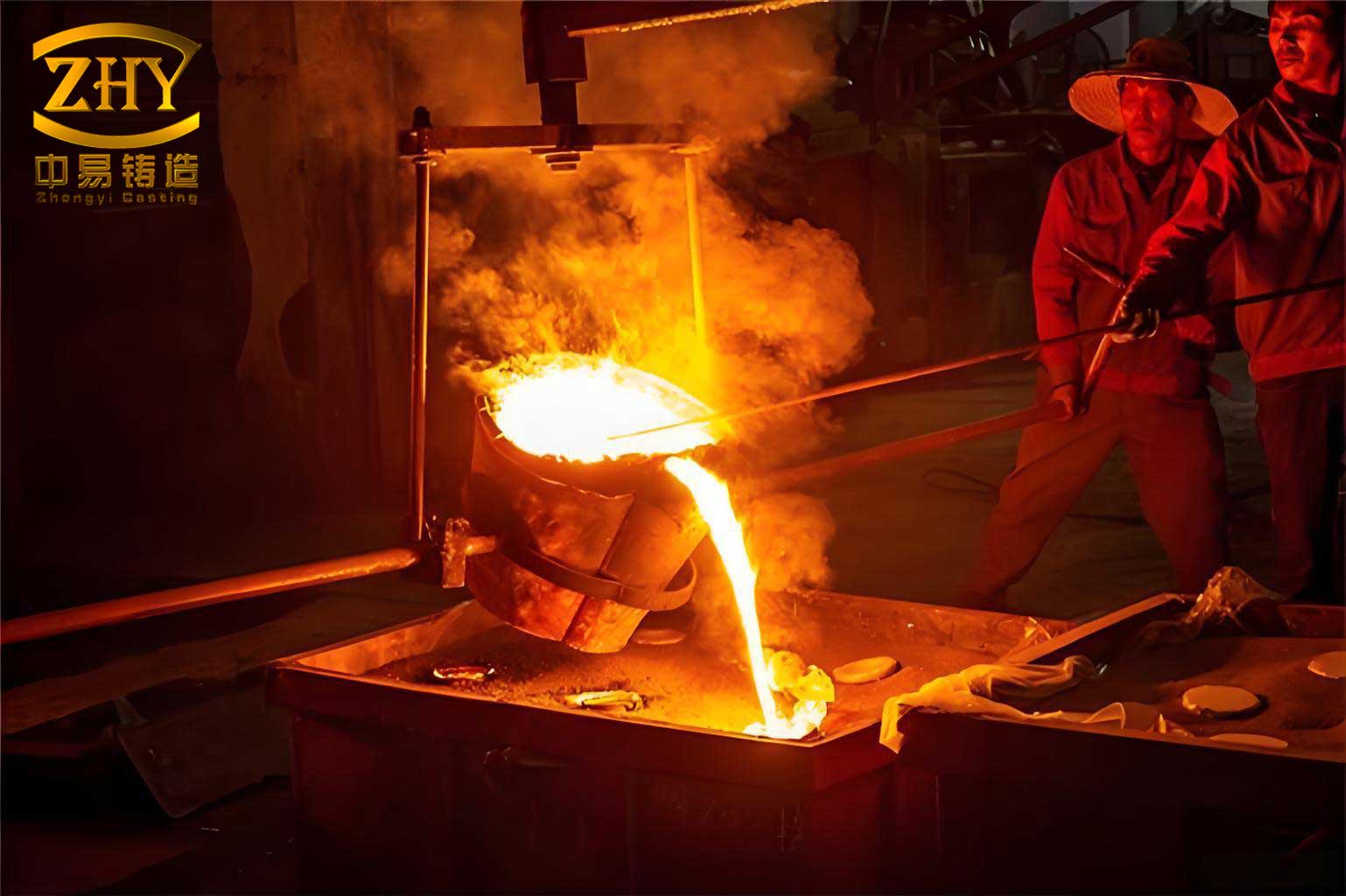
To address these challenges, I propose a temperature control system centered on a high-speed microcontroller, the STC15F2K60S2, integrated with a neural network-enhanced PID algorithm. This approach aims to provide rapid response times and high precision, thereby enhancing the quality of aluminum alloy cylinder castings produced via the lost foam casting process. The system’s design is grounded in a thorough analysis of the thermal requirements in the white zone, which vary based on factors like foam density, mold size, and ambient humidity. By incorporating real-time monitoring and adaptive control, the system can adjust steam temperature and other parameters to maintain a stable environment, reducing the incidence of defects and improving production efficiency.
The hardware architecture of the temperature control system is built around the STC15F2K60S2 microcontroller, chosen for its fast processing capabilities and robustness in industrial environments. This microcontroller serves as the core controller, interfacing with various sensors and actuators to regulate temperature. Key components include a CSW-11(08) temperature and humidity sensor for data acquisition, a signal conditioning circuit for filtering and amplification, a user interface with an LCD display and keypad for parameter setting, and control units such as thyristors and solenoid valves for adjusting steam flow. The sensor captures real-time temperature and humidity values, which are converted into electrical signals and processed by the microcontroller. Based on the deviation between the setpoint and actual values, the microcontroller generates control signals to modulate the thyristors, thereby precisely controlling the solenoid valves that regulate steam injection into the white zone. This hardware setup ensures low latency and high reliability, which are crucial for the dynamic nature of the lost foam casting process.
To illustrate the hardware components and their functions, I have summarized them in Table 1. This table provides an overview of the system’s key elements, highlighting their roles in achieving accurate temperature control for the lost foam casting white zone.
| Component | Model/Specification | Function |
|---|---|---|
| Microcontroller | STC15F2K60S2 | Core controller for processing data and generating control signals |
| Temperature Sensor | CSW-11(08) | Measures real-time temperature and humidity in the white zone |
| Signal Conditioning Circuit | Custom-designed | Filters and amplifies sensor signals for accurate input |
| User Interface | LCD Display and Keypad | Allows parameter setting and displays real-time data |
| Control Unit | Thyristors and Solenoid Valves | Regulates steam flow based on microcontroller signals |
| Power Supply | 24V DC | Provides stable power to all components |
The software control strategy is the heart of the system, employing a neural network-optimized PID algorithm to achieve adaptive and precise temperature regulation. Traditional PID control, while widely used, often suffers from fixed parameters that may not suit the nonlinear and time-varying dynamics of the lost foam casting process. The PID control law can be expressed as:
$$ u(t) = K_P e(t) + K_I \int_0^t e(\tau) d\tau + K_D \frac{de(t)}{dt} $$
where \( u(t) \) is the control output, \( e(t) = r(t) – y(t) \) is the error between the setpoint \( r(t) \) and the process variable \( y(t) \), and \( K_P \), \( K_I \), and \( K_D \) are the proportional, integral, and derivative gains, respectively. In digital form, this becomes:
$$ \Delta u(k) = K_P [e(k) – e(k-1)] + K_I e(k) + K_D [e(k) – 2e(k-1) + e(k-2)] $$
where \( k \) denotes the discrete time step. However, tuning these gains manually is challenging and may not accommodate the complex thermal behaviors in the lost foam casting white zone. To overcome this, I integrate a neural network that dynamically adjusts the PID parameters based on real-time data. The neural network is a three-layer feedforward structure with input, hidden, and output layers, designed to model the nonlinear relationship between temperature errors and optimal control actions.
The neural network’s output function is given by:
$$ S = \mathbf{W}^T \mathbf{D} = \sum_{i=0}^n w_i D_i $$
where \( \mathbf{W} \) is the weight vector and \( \mathbf{D} \) is the basis vector. The performance index is defined as:
$$ J = \frac{1}{2} (S(k) – S_d(k))^2 = \frac{1}{2} e(k)^2 $$
where \( S_d(k) \) is the desired output. Using the Jacobian matrix to approximate the sensitivity of the output to input changes, the PID parameters are updated online through gradient descent. The adjustment rules are derived as follows:
$$ \Delta K_P = \eta_P e(k) \frac{\partial S(k)}{\partial u(k)} [e(k) – e(k-1)] $$
$$ \Delta K_I = \eta_I e(k) \frac{\partial S(k)}{\partial u(k)} e(k) $$
$$ \Delta K_D = \eta_D e(k) \frac{\partial S(k)}{\partial u(k)} [e(k) – 2e(k-1) + e(k-2)] $$
where \( \eta_P \), \( \eta_I \), and \( \eta_D \) are learning rates. This adaptive mechanism allows the system to respond swiftly to disturbances, such as changes in ambient humidity or foam properties, ensuring stable temperature control throughout the lost foam casting process.
The software implementation follows a modular design, with key modules including hardware initialization, parameter setting, temperature processing, and control signal output. The flowchart in Figure 1 outlines the program control logic, emphasizing the neural network-PID algorithm as the core. This design ensures that the system can handle the multi-stage temperature profiles required in the white zone, from initial low-temperature drying to high-temperature molding and cooling.
To validate the effectiveness of the proposed temperature control system, I conducted simulation experiments using MATLAB 7.0, comparing it with a conventional PLC-based method from prior research. The simulation setup modeled the thermal dynamics of a typical lost foam casting white zone for aluminum alloy cylinders, with temperature setpoints varying between 20°C and 50°C over a 10-hour cycle. The performance metrics included settling time, overshoot, and steady-state error, which are critical for assessing temperature control accuracy in the lost foam casting process.
The simulation results are summarized in Table 2, which contrasts the proposed system with the conventional method. The data clearly demonstrates the advantages of the microcontroller-based neural network-PID approach in terms of faster response and higher precision.
| System | Settling Time (min) | Overshoot (%) | Steady-State Error (°C) | Temperature Fluctuation (°C) |
|---|---|---|---|---|
| Proposed System | 5.2 | 1.5 | ±0.3 | ±0.5 |
| Conventional PLC System | 12.8 | 4.7 | ±1.2 | ±1.8 |
As shown in Table 2, the proposed system achieves a settling time of 5.2 minutes, which is significantly shorter than the 12.8 minutes of the conventional system. This rapid response is crucial in the lost foam casting process, where temperature must be adjusted quickly to prevent defects like foam cracking or uneven fusion. Moreover, the overshoot is reduced to 1.5%, compared to 4.7% in the conventional method, indicating smoother transitions between temperature phases. The steady-state error and temperature fluctuations are also markedly lower, with the proposed system maintaining temperature within ±0.3°C of the setpoint and fluctuations within ±0.5°C, versus ±1.2°C and ±1.8°C for the conventional system. These improvements stem from the adaptive nature of the neural network-PID algorithm, which continuously optimizes control parameters based on real-time feedback, thereby enhancing the stability and accuracy of the lost foam casting white zone environment.
The simulation curves further illustrate these findings. In the conventional method, the temperature trajectory shows noticeable deviations and oscillations around the setpoint, particularly during heating and cooling phases. In contrast, the proposed system’s curve closely follows the setpoint with minimal deviation, underscoring its superior tracking capability. This precision is vital for ensuring consistent foam pattern quality, as even minor temperature variations can lead to defects that propagate through the lost foam casting process, affecting the final aluminum alloy cylinder casting.
Beyond simulation, the practical implications of this temperature control system are substantial. In industrial applications, the lost foam casting process often involves large-scale production of aluminum alloy cylinders for automotive engines, where repeatability and quality are paramount. By implementing the proposed system, manufacturers can reduce scrap rates, improve energy efficiency, and enhance product performance. For instance, precise temperature control during foam drying prevents moisture-related issues, while accurate regulation during molding ensures uniform expansion and fusion of foam beads, leading to patterns with minimal residual stress and optimal dimensional stability. Additionally, the system’s user-friendly interface allows operators to easily set temperature profiles tailored to specific模具 designs or foam materials, further optimizing the lost foam casting process for diverse applications.
The integration of the STC15F2K60S2 microcontroller also offers advantages in cost and scalability. Compared to PLC-based systems, which can be expensive and complex to program, the microcontroller solution is more affordable and flexible, making it accessible for small to medium-sized foundries. Moreover, the modular software design facilitates future upgrades, such as incorporating additional sensors for monitoring foam density or air pressure, thereby extending the system’s capabilities to other aspects of the lost foam casting process.
To further elaborate on the system’s adaptability, I derived mathematical models for the thermal behavior in the white zone. The heat transfer dynamics can be approximated using a first-order plus dead-time (FOPDT) model, commonly used in process control:
$$ G(s) = \frac{K e^{-\theta s}}{\tau s + 1} $$
where \( K \) is the process gain, \( \tau \) is the time constant, and \( \theta \) is the dead time. For the lost foam casting white zone, these parameters vary with factors like foam type and chamber size. The neural network-PID controller is designed to handle such variations by online identification and adjustment. The control law in discrete time can be expressed as:
$$ u(k) = u(k-1) + \Delta u(k) $$
with \( \Delta u(k) \) computed from the neural network-PID algorithm. This incremental approach minimizes abrupt changes, promoting smooth temperature transitions that are essential for foam integrity.
In terms of implementation, the system’s software includes routines for calibration and fault detection. For example, the temperature sensor is calibrated periodically to ensure accuracy, and any anomalies in sensor readings or actuator responses trigger alarms, allowing for timely maintenance. This reliability is critical in industrial settings where downtime can be costly. Furthermore, the system logs temperature data over time, enabling analysis of long-term trends and optimization of the lost foam casting process parameters.
The lost foam casting process is inherently sensitive to environmental conditions, and humidity plays a significant role in temperature control. High humidity can slow down foam drying, while low humidity may cause premature cracking. The CSW-11(08) sensor provides simultaneous temperature and humidity measurements, allowing the control system to adjust steam injection not only based on temperature but also on humidity levels. This integrated approach is represented in the control algorithm through a multivariable formulation, where the error term \( e(t) \) incorporates both temperature and humidity deviations:
$$ e(t) = \alpha (T_{set} – T_{actual}) + \beta (H_{set} – H_{actual}) $$
where \( \alpha \) and \( \beta \) are weighting coefficients determined by the neural network based on historical data. This enhances the system’s ability to maintain optimal conditions for the lost foam casting white zone, regardless of external disturbances.
Looking ahead, there are opportunities to expand this research. For instance, integrating Internet of Things (IoT) technology could enable remote monitoring and control of multiple white zone stations, facilitating centralized management in large foundries. Additionally, machine learning techniques beyond neural networks, such as reinforcement learning, could be explored to further optimize temperature profiles for specific aluminum alloy cylinder designs. These advancements would continue to push the boundaries of efficiency and quality in the lost foam casting process.
In conclusion, the temperature control system developed in this study represents a significant step forward in managing the thermal environment of the lost foam casting white zone. By combining a high-speed microcontroller with a neural network-enhanced PID algorithm, the system achieves rapid response, high accuracy, and robust adaptability, addressing the limitations of traditional PLC-based methods. Simulation results confirm its superiority in terms of settling time, overshoot, and steady-state error, which directly translate to improved quality and consistency in aluminum alloy cylinder castings. As the lost foam casting process continues to evolve as a key manufacturing technology, such innovative control solutions will play a crucial role in maximizing its potential, reducing waste, and meeting the growing demands for precision components in industries like automotive and aerospace.
Throughout this article, I have emphasized the importance of precise temperature regulation in the lost foam casting process, particularly for aluminum alloy cylinders. The proposed system not only meets the technical requirements but also offers practical benefits in cost and scalability. Future work will focus on real-world implementation and testing in industrial environments, with the aim of refining the algorithm and expanding its applications to other aspects of the lost foam casting process. By continuing to innovate in this area, we can further enhance the sustainability and competitiveness of modern manufacturing practices.