
The lost foam casting process, also known as evaporative pattern casting, represents a significant advancement in near-net-shape, precision green foundry technology. Its core advantages include the ability to produce complex castings (both external and internal geometries) without the need for binders or core-making, minimal solid waste generation, high dimensional accuracy, and excellent surface finish. A critical economic and environmental benefit is the high reusability of the molding sand, with recovery rates often exceeding 95%. However, the very nature of the process, which utilizes foam patterns (pattern clusters) made from expanded polystyrene (EPS) beads, introduces a stringent thermal constraint. The working temperature for these patterns must generally not exceed 85°C. Consequently, the temperature of the recycled molding sand is a paramount process parameter that directly dictates production stability, casting quality, and operational cost.
Excessively high sand temperature leads to a cascade of detrimental effects: it reduces the strength of the foam pattern, causing deformation which translates directly into casting defects or even complete mold collapse (sand run). Furthermore, hot sand contacting cooler equipment like sand silos or flasks causes steam condensation, leading to sand sticking and poor shakeout. Persistently high temperatures force production halts for cooling, disrupting schedules and increasing costs if sand replacement becomes necessary. Therefore, effective control of recycled sand temperature is not merely an operational detail but a fundamental requirement for the successful and economical implementation of the lost foam casting process.
1. Production Context and Initial Challenges
Our facility operated a 10,000 t/year automated lost foam casting line. The sand reclamation system was designed with a nominal capacity of 40 t/h and included key components such as a vibrating shakeout conveyor, magnetic separator, fluidized bed cooler, a dedicated sand temperature conditioner, bucket elevators, and several storage silos (a 35t molding silo, a 25t temperature-conditioning silo, and a 50t intermediate silo). The total sand in circulation was designed to be no less than 200 tons, supported by a 200 m³ recirculating water cooling system with cooling towers.
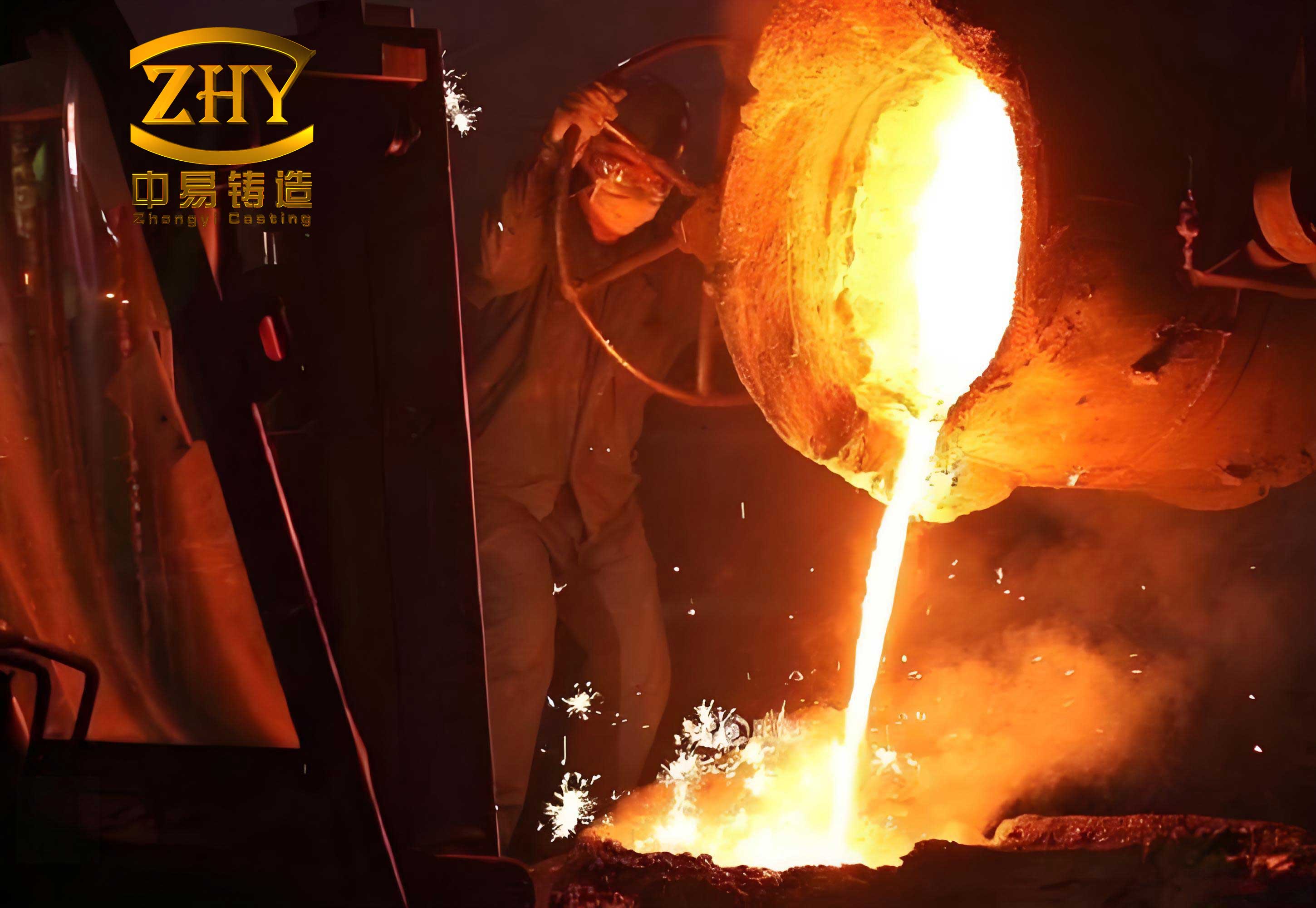
The process flow was standard: after pouring and cooling, flasks were inverted, separating castings from sand. The hot reclaimed sand passed through the shakeout screen, was elevated, magnetically cleaned, and then cooled primarily via the fluidized bed cooler and the sand temperature conditioner before returning to the molding station. Despite this setup, we faced significant operational instability, particularly during summer months. Sand temperatures frequently exceeded the critical threshold of 50-60°C, reaching 70-80°C or higher. This resulted in foam pattern softening, production stoppages of 2-3 hours per shift awaiting sand cooling, and a direct cap on production capacity, limiting melt sessions.
2. Root Cause Analysis of Elevated Sand Temperature
The cooling efficiency in a lost foam casting sand system is governed by the heat exchange between the hot sand and the cooling medium (air and water), the total mass of sand participating in the cycle, and the performance of the cooling equipment. A systematic investigation was undertaken to pinpoint the contributing factors.
2.1 Thermal Performance Assessment of Key Stations
Temperature measurements at critical points in the sand reclamation circuit revealed inefficient cooling.
| Measurement Point | Inlet Temp. (°C) | Outlet Temp. (°C) | Delta T (°C) | Remark |
|---|---|---|---|---|
| Fluidized Bed Cooler | >200 | ~129 | >71 | Significant cooling effect. |
| Sand Temp. Conditioner | ~86 | ~82 | ~4 | Negligible cooling effect. |
| Intermediate Silo (50t) | ~85 | ~86 | -1 (rise) | Natural cooling ineffective; heat retention. |
The data indicated that while the fluidized bed was functional, the dedicated sand temperature conditioner was ineffective. Furthermore, large storage silos, relying on natural convection, were not only failing to cool the sand but sometimes allowing its temperature to rise due to poor heat dissipation from the core of the sand mass. The specific heat capacity of sand ($C_{sand} \approx 0.84 \text{ kJ/kg·°C}$) is much lower than that of water ($C_{water} = 4.18 \text{ kJ/kg·°C}$), meaning sand loses heat more slowly, exacerbating the problem during continuous production.
2.2 Analysis of Effective Sand Circulation
Two issues were identified that reduced the effective mass of sand involved in the heat exchange cycle. First, operational practices sometimes led to excessive sand being stored in idle flasks, effectively removing it from the active cooling loop. Calculations showed a potential reduction of up to 10% in circulating sand mass. Second, and more critically, the design of the silo discharge cones created “dead zones.”
The angle of repose for molding sand is approximately 45° at rest and 30° in motion. Measurements of our silo discharge angles were below the static angle of repose:
- Intermediate Silo Cone Angle: 41°-42° (Theoretical requirement: >45°)
- Temperature-Conditioning Silo Transition: 29°-30° (Theoretical requirement: >45°)
These sub-optimal angles caused sand to stagnate in the cones, preventing it from flowing into the bucket elevators and proceeding through the cooling system. A significant portion of the nominal 200-ton sand inventory was therefore not participating in the cycle, drastically reducing the system’s thermal mass and its ability to absorb and dissipate heat from newly introduced hot sand.
2.3 Analysis of the Water Cooling System
The closed-loop water system was underperforming. Temperature measurements at the heat exchangers told a clear story:
| Cooling Unit | Water Inlet (°C) | Water Outlet (°C) | Delta T (°C) |
|---|---|---|---|
| Fluidized Bed Cooler | 21-22 | 45-48 | 24-26 |
| Sand Temp. Conditioner | 21-22 | 21-23 | 0-2 |
The near-zero temperature difference across the sand temperature conditioner confirmed it was not transferring heat. Furthermore, the recirculating water reservoir was often inadequately replenished. With a design volume of 200 m³, the actual water level was frequently 1.0-1.2 meters below capacity, reducing the total cooling water mass by approximately 25%. This lower volume led to a faster temperature rise in the circulating water, reducing the temperature differential ($\Delta T$) between the water and the sand, which is the driving force for heat transfer according to the fundamental equation: $$Q = m \cdot c \cdot \Delta T$$ where $Q$ is heat transferred, $m$ is mass, and $c$ is specific heat capacity. A smaller $\Delta T$ results in less heat ($Q$) being removed per cycle.
2.4 Equipment-Specific Deficiencies
Sand Temperature Conditioner Design Flaw: The original unit was a shell-and-tube type where sand flowed through tubes surrounded by cooling water. Analysis revealed a critical design issue. With 241 tubes of 42 mm diameter and 2 m length, the total cross-sectional area for sand flow was about 0.33 m². For a sand throughput of 40 t/h (≈0.007 m³/s), the sand velocity ($v$) within the tubes was:
$$v = \frac{\text{Flow Rate}}{\text{Area}} = \frac{0.007 \text{ m}^3/\text{s}}{0.33 \text{ m}^2} \approx 0.02 \text{ m/s}$$
The residence time ($t$) for sand in the 2m long tubes was therefore:
$$t = \frac{\text{Length}}{\text{Velocity}} = \frac{2 \text{ m}}{0.02 \text{ m/s}} = 100 \text{ s}$$
This brief contact time, coupled with a limited heat transfer area (approximately 64 m²), rendered the unit thermally ineffective for the required duty.
Cooling Tower Degradation: The glass-reinforced plastic (GRP) cooling towers were in poor condition. Packing material was broken and unevenly distributed, and water distributors were damaged or missing. This caused poor water distribution and reduced air-water contact area, severely hampering the towers’ ability to reject heat from the returning hot water back to the atmosphere.
3. Implemented Solutions for Sand Temperature Control
Based on the root cause analysis, a multi-faceted modification plan was executed to enhance the cooling capacity of the lost foam casting sand system.
3.1 Structural Modifications to Sand Silos
The goal was to eliminate dead zones, increase effective thermal mass, and integrate active cooling within the silos themselves.
1. Intermediate Silo (50t) Retrofit: The existing discharge cone was replaced with a new one designed with a steeper angle (≥45°) to ensure complete sand flow. More importantly, custom-built cooling panels were installed inside both the cylindrical body and the new conical section of the silo. These panels consist of networks of pipes through which cooling water circulates. The panels were mounted by creating openings in the silo walls, welding them in place, and reinforcing the structure with external supports. The internal surface area for heat exchange was dramatically increased.
2. Temperature-Conditioning Silo Expansion and Retrofit: This was a major overhaul. The original sand temperature conditioner and its associated transition hopper were completely removed. The cylindrical section of the 25t silo was extended by 0.5-0.8m to increase its volume. A new, steep-angled (≥45°) discharge cone was fabricated. Most critically, a large cooling panel assembly, similar to the one in the intermediate silo but designed to fit this silo’s dimensions, was installed between the extended cylinder and the new cone. The sand outlet was reconfigured to ensure the feed pipe to the downstream elevator had an angle greater than 30°, promoting smooth sand flow. This transformation converted a passive storage unit into an active, high-volume cooling chamber.
3. Installation of Sand Distributors (Baffle Plates): To protect the cooling panels from direct, abrasive impact by falling sand and to ensure even sand distribution over the panel surface, multi-layer baffle plates were installed inside each modified silo just above the cooling panels. These plates, perforated with staggered holes, break the falling sand stream, reducing its velocity and spreading it evenly. This promotes a “creeping” flow of sand over the cooling surfaces, optimizing heat transfer and extending equipment life. The heat transfer area added by the cooling panels in both silos totaled approximately 470 m², compared to the original conditioner’s 64 m².
3.2 Upgrades to the Water Cooling Circuit
The hydraulic system was modified to service the new silo cooling panels. New water pipelines were installed, connected via tees and control valves to the existing pump and header system. This allowed independent flow control to each cooling silo. A strict operational protocol was established to maintain the water level in the 200 m³ reservoir within 0.5 meters of full capacity, ensuring the designed thermal mass of cooling water was always available.
3.3 Enhanced Cooling Equipment Maintenance
A proactive maintenance schedule was implemented for the GRP cooling towers. This included regular inspection, cleaning of debris, and replacement of damaged packing material and water distribution nozzles. The objective was to restore uniform water film formation over the entire packing surface area, maximizing air-water contact and thermodynamic efficiency for heat rejection to the environment.
4. Results and Operational Benefits
The modifications yielded immediate and sustained improvements in the thermal management of the lost foam casting process. Post-retrofit temperature measurements confirmed the functionality of the new silo cooling systems.
| Cooling Silo Panel | Water Inlet (°C) | Water Outlet (°C) | Delta T (°C) |
|---|---|---|---|
| Intermediate / Conditioning Silo | 29-35 | 41-45 | 10-12 |
A consistent 10-12°C temperature rise in the cooling water indicates effective heat extraction from the sand. The key outcomes were:
- Stable Sand Temperature: The molding sand temperature was reliably controlled below the critical 50-60°C threshold, regardless of ambient summer conditions.
- Elimination of Production Stoppages: The forced downtime of 2-3 hours per shift for sand cooling was completely eliminated, leading to predictable and continuous production flow.
- Increased Production Capacity: With thermal stability achieved, the line could support increased melting frequency. Production capacity rose sustainably to 45 melts per day across three shifts.
- Improved Casting Quality: Consistent, lower sand temperatures prevented foam pattern deformation, reducing defects related to mold integrity and improving overall casting dimensional accuracy and surface quality.
- Optimized Sand Utilization: The steeper silo angles ensured full participation of the sand inventory in the cooling cycle, maximizing the effective thermal mass. The integrated cooling transformed silos from passive storage to active process units.
The heat transfer efficacy can be conceptually summarized by comparing the old and new states. The total heat ($Q$) that must be removed from the sand per hour is relatively fixed for a given production rate. The retrofit increased the overall heat transfer coefficient ($U$) and the available surface area ($A$), as per the heat exchanger equation:
$$Q = U \cdot A \cdot \Delta T_{lm}$$
where $\Delta T_{lm}$ is the log-mean temperature difference. By increasing $A$ (via silo panels) and improving $\Delta T_{lm}$ (via better water cooling tower performance and greater water mass), the system’s capacity to remove heat ($Q$) increased sufficiently to handle the thermal load.
5. Critical Design and Operational Considerations for Lost Foam Sand Systems
Based on this experience, several principles are paramount for designing and operating an efficient sand cooling circuit in a lost foam casting process:
- Silo Geometry is Critical: All sand discharge paths, especially silo cones, must have angles significantly greater than the sand’s static angle of repose (aim for >45°) to prevent dead zones and ensure 100% sand circulation.
- Active Cooling Integration: Large storage silos should be designed with integrated, protected cooling surfaces. Cooling water flowing through panels inside a silo is far more effective than sand flowing through tubes in a small external conditioner, as it dramatically increases contact time and area.
- Adequate Thermal Mass: Maintain both the designed total sand inventory and cooling water volume. Operational practices must prevent the sequestration of sand or depletion of water, as both reduce the system’s heat absorption capacity.
- Cooling Tower Health: The efficiency of the entire water loop depends on the cooling towers. Regular maintenance of packing and water distributors is non-negotiable for effective heat rejection to the environment.
- Holistic System View: Sand temperature control is a system-wide challenge. It involves equipment design, material flow management, water system performance, and disciplined operational procedures. Optimizing only one component while neglecting others will not yield a stable process.
In conclusion, controlling recycled sand temperature is a fundamental pillar for stable, high-quality, and economical production in the lost foam casting process. The strategy of transforming passive storage silos into active, high-capacity heat exchangers, combined with rigorous management of the water cooling circuit, proved to be a highly effective solution. This approach not only resolved our immediate production constraints but also provided a robust and scalable framework for thermal management that can be applied to other lost foam casting operations seeking to enhance their process capability and efficiency.