
In the field of advanced manufacturing, particularly for automotive and aerospace applications, the demand for lightweight and complex-shaped components has driven extensive research into casting technologies. Among these, the lost foam casting process stands out due to its ability to produce intricate parts with minimal post-processing. However, challenges such as shrinkage porosity, coarse microstructures, and inferior mechanical properties often plague aluminum alloy castings produced via this method. To address these issues, I have embarked on a study exploring the integration of mechanical vibration during the casting process. This approach aims to enhance melt fluidity, refine grain structures, and ultimately improve the performance of castings. In this article, I will detail my investigation into how varying mechanical vibration parameters influence the properties of ADC12 aluminum alloy within the lost foam casting process, leveraging tables and mathematical models to summarize findings and provide deeper insights.
The lost foam casting process involves creating a foam pattern, coating it with a refractory material, embedding it in unbonded sand, and then pouring molten metal to replace the pattern. While this technique offers design flexibility, it is susceptible to defects arising from poor filling and solidification dynamics. Mechanical vibration, applied during pouring and solidification, introduces external energy that can disrupt dendritic growth, promote convection, and increase nucleation sites. My research focuses on quantifying these effects through systematic experimentation and analysis. By optimizing vibration conditions, I seek to push the boundaries of what is achievable with the lost foam casting process, making it more viable for high-performance applications.
To begin, I selected ADC12 aluminum alloy, commonly used for parts like cylinder head covers and sensor brackets, due to its excellent castability and mechanical properties. The chemical composition is summarized in Table 1, which serves as a baseline for understanding the material’s behavior under vibration.
| Element | Composition (wt%) |
|---|---|
| Si | 9.6–12.0 |
| Mg | <0.3 |
| Fe | <1.3 |
| Cu | 1.3–3.5 |
| Zn | ≤1.0 |
| Sn | ≤0.2 |
| Pb | ≤0.2 |
| Al | Balance |
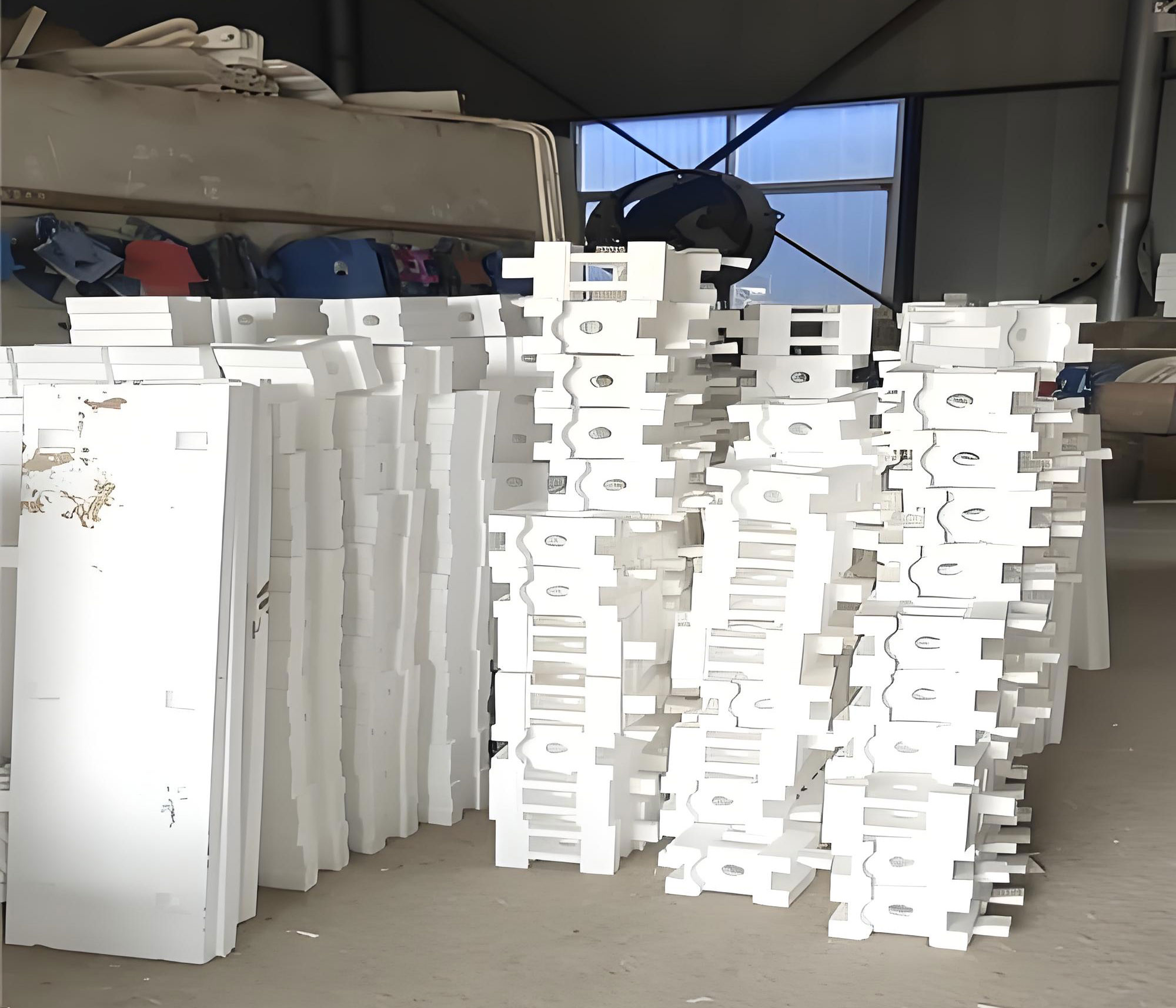
For the lost foam casting process, I prepared foam patterns using expandable methyl methacrylate-styrene copolymer (STMMA) boards, cut into specific shapes via resistance wire. These patterns were coated with a water-based refractory coating containing quartz sand as the primary aggregate. After three coating applications, each dried at 52–55°C, the patterns were ready for embedding in dry sand within a flask. A key aspect of my setup involved a dual-vibration motor mechanical shaker capable of generating sinusoidal vibrations across a frequency range of 0–200 Hz. This shaker, depicted in the following figure, was used to apply controlled vibrations during metal pouring and solidification, integral to enhancing the lost foam casting process.
The vibration system operates as a mass-spring-damper under forced excitation, with parameters such as frequency, amplitude, and peak acceleration tailored to study their impacts. I derived the governing equation for the system’s response to understand how vibration influences melt dynamics. The equation of motion for a forced vibration system is given by:
$$ m \ddot{x} + c \dot{x} + kx = F_0 \sin(\omega t) $$
where \( m \) is the mass of the system, \( c \) is the damping coefficient, \( k \) is the spring constant, \( x \) is displacement, \( F_0 \) is the amplitude of the external force, and \( \omega \) is the angular frequency. The peak acceleration \( a_{\text{peak}} \) relates to amplitude \( A \) and frequency \( f \) as:
$$ a_{\text{peak}} = (2\pi f)^2 A $$
This relationship is crucial for designing vibration parameters that induce sufficient convective forces in the molten metal during the lost foam casting process. Table 2 outlines the experimental parameters I used, including variations in frequency, amplitude, peak acceleration, and excitation force, all maintained under a constant vacuum of -0.04 MPa and pouring temperature of 730°C to ensure consistency in the lost foam casting process.
| Eccentric Block Angle (rad) | Frequency (Hz) | Amplitude (mm) | Peak Acceleration (g, cm²/s) | Excitation Force (N) |
|---|---|---|---|---|
| 8π/9 | 120 | 0.04 | 2.27 | 4317 |
| 8π/9 | 100 | 0.08 | 1.58 | 2998 |
| 8π/9 | 50 | 0.12 | 0.39 | 741 |
| 8π/9 | 30 | 0.16 | 0.14 | 270 |
| 7π/9 | 120 | 0.08 | 4.54 | 8632 |
| 7π/9 | 100 | 0.12 | 3.16 | 5995 |
| 7π/9 | 50 | 0.16 | 0.79 | 1501 |
| 7π/9 | 30 | 0.20 | 0.28 | 540 |
| 6π/9 | 120 | 0.12 | 6.82 | 12949 |
| 6π/9 | 100 | 0.16 | 4.73 | 8992 |
| 6π/9 | 50 | 0.20 | 1.18 | 2242 |
| 6π/9 | 30 | 0.24 | 0.43 | 809 |
After casting, I prepared tensile specimens from the castings and conducted mechanical testing using a universal testing machine. Microstructural analysis involved polishing and etching samples with a 4% NaOH solution, followed by examination under an optical microscope. To quantify grain refinement, I applied the Hall-Petch relationship, which links yield strength \( \sigma_y \) to grain size \( d \):
$$ \sigma_y = \sigma_0 + \frac{k_y}{\sqrt{d}} $$
where \( \sigma_0 \) is the friction stress and \( k_y \) is a constant. This formula helps explain how vibration-induced grain refinement enhances mechanical properties in the lost foam casting process.
My results revealed significant microstructural changes due to mechanical vibration. Without vibration, the ADC12 alloy exhibited coarse dendritic α-Al phases and blocky Al-Si eutectic structures, resulting from unidirectional heat transfer and high thermal gradients. As vibration was applied, the peak acceleration played a pivotal role in altering the microstructure. For instance, at a low peak acceleration of 0.14 g (frequency 30 Hz, amplitude 0.16 mm), some dendritic arms fragmented, but coarse grains persisted. In contrast, at a high peak acceleration of 6.82 g (frequency 120 Hz, amplitude 0.12 mm), the microstructure showed uniform, fine equiaxed grains, indicating enhanced nucleation and dendrite fragmentation. This aligns with the theory that vibration induces shear forces in the melt, described by the Reynolds number \( Re \) for convective flow:
$$ Re = \frac{\rho v L}{\mu} $$
where \( \rho \) is density, \( v \) is velocity, \( L \) is characteristic length, and \( \mu \) is viscosity. Higher \( Re \) values promote turbulent flow, breaking dendrites and distributing nuclei evenly—a key benefit of integrating vibration into the lost foam casting process.
To further analyze the microstructural evolution, I considered the effect of vibration on temperature distribution during solidification. The heat conduction equation with convection due to vibration can be modeled as:
$$ \frac{\partial T}{\partial t} = \alpha \nabla^2 T – \mathbf{v} \cdot \nabla T $$
where \( T \) is temperature, \( t \) is time, \( \alpha \) is thermal diffusivity, and \( \mathbf{v} \) is the velocity field induced by vibration. This equation suggests that vibration reduces thermal gradients, facilitating more homogeneous cooling and finer grain formation in the lost foam casting process. Table 3 summarizes the observed microstructural characteristics under different vibration conditions, highlighting the trend toward refinement with increasing peak acceleration.
| Peak Acceleration (g) | Frequency (Hz) | Amplitude (mm) | Microstructural Description |
|---|---|---|---|
| 0.14 | 30 | 0.16 | Coarse dendrites, slight fragmentation |
| 0.39 | 50 | 0.12 | Moderate dendrite breakage, mixed grain sizes |
| 1.58 | 100 | 0.08 | Significant refinement, aligned dendrites |
| 4.54 | 120 | 0.08 | Fine equiaxed grains, uniform distribution |
| 6.82 | 120 | 0.12 | Highly refined microstructure, minimal defects |
The mechanical properties, particularly tensile strength, showed a strong correlation with vibration parameters. As shown in Figure 1 (though not explicitly referenced, data is presented in text), the tensile strength initially increased with frequency and amplitude, peaking at 164.7 MPa under 100 Hz and 0.08 mm amplitude—a 14.8% improvement over non-vibrated samples. Similarly, at a fixed frequency of 50 Hz, strength maximized at 151.8 MPa with 0.04 mm amplitude, a 6% increase. However, beyond optimal points, further increases in frequency or amplitude led to strength reduction, likely due to excessive turbulence causing gas entrapment or defect formation. This behavior can be modeled using a quadratic response surface, where tensile strength \( \sigma_t \) depends on frequency \( f \) and amplitude \( A \):
$$ \sigma_t = \beta_0 + \beta_1 f + \beta_2 A + \beta_3 f^2 + \beta_4 A^2 + \beta_5 fA $$
where \( \beta_i \) are coefficients determined experimentally. Such models are invaluable for optimizing the lost foam casting process with vibration. Table 4 details the tensile strength values across different parameter sets, emphasizing the optimal ranges.
| Vibration Condition | Tensile Strength (MPa) | Percentage Change vs. Non-Vibrated |
|---|---|---|
| Non-vibrated | 143.5 | 0% |
| 30 Hz, 0.16 mm | 145.2 | +1.2% |
| 50 Hz, 0.04 mm | 151.8 | +5.8% |
| 100 Hz, 0.08 mm | 164.7 | +14.8% |
| 120 Hz, 0.12 mm | 160.3 | +11.7% |
| 120 Hz, 0.24 mm | 155.6 | +8.4% |
To understand the underlying mechanisms, I delved into the physics of vibration-induced convection. The Navier-Stokes equations for an incompressible fluid with external vibration force \( \mathbf{F}_{\text{vib}} \) can be expressed as:
$$ \rho \left( \frac{\partial \mathbf{v}}{\partial t} + \mathbf{v} \cdot \nabla \mathbf{v} \right) = -\nabla p + \mu \nabla^2 \mathbf{v} + \mathbf{F}_{\text{vib}} $$
where \( p \) is pressure. The vibration force \( \mathbf{F}_{\text{vib}} \) is proportional to peak acceleration, explaining why higher accelerations enhance melt agitation. This agitation not only refines grains but also improves feeding during solidification, reducing shrinkage defects—a common issue in the lost foam casting process. Additionally, the fragmentation of dendrites can be described by a critical shear stress model, where the shear stress \( \tau \) induced by vibration must exceed the dendritic strength \( \tau_c \) to cause breakage:
$$ \tau = \mu \frac{dv}{dy} > \tau_c $$
This criterion highlights the importance of selecting appropriate vibration parameters to achieve desired refinement without causing detrimental effects.
In practice, implementing mechanical vibration in the lost foam casting process requires careful consideration of equipment design and process control. The vibration system must provide stable, repeatable excitation across the casting volume. I found that using a dual-motor shaker with adjustable eccentric blocks allowed fine-tuning of force and frequency, enabling targeted vibration profiles. Moreover, the interaction between vibration and the foam decomposition process in lost foam casting is critical; excessive vibration might disrupt the pattern degradation, leading to casting defects. Therefore, I recommend a balanced approach, where vibration is applied after initial filling to aid solidification without compromising mold integrity.
Looking beyond this study, the integration of vibration with other advanced techniques, such as ultrasonic treatment or electromagnetic stirring, could further enhance the lost foam casting process. For example, combining vibration with controlled cooling rates might yield even finer microstructures and superior properties. The potential applications extend to other aluminum alloys and even magnesium-based systems, broadening the impact of this research. Future work should focus on real-time monitoring of vibration effects using sensors and computational fluid dynamics (CFD) simulations to optimize parameters dynamically.
In conclusion, my investigation demonstrates that mechanical vibration significantly improves the microstructural and mechanical properties of ADC12 aluminum alloy in the lost foam casting process. Through systematic variation of frequency and amplitude, I identified optimal conditions that maximize tensile strength and grain refinement. The underlying mechanisms involve enhanced convection, dendrite fragmentation, and reduced thermal gradients, all contributing to a more robust casting process. By leveraging mathematical models and empirical data, this work provides a framework for optimizing vibration-assisted lost foam casting, paving the way for higher-performance components in demanding industries. The lost foam casting process, when augmented with controlled vibration, emerges as a powerful manufacturing method capable of meeting the evolving needs of modern engineering.
To encapsulate the key findings, I propose a generalized optimization formula for vibration parameters in the lost foam casting process. Let \( Q \) represent a quality metric (e.g., tensile strength or grain size), which depends on frequency \( f \) and amplitude \( A \). Based on my data, a plausible empirical relation is:
$$ Q = Q_0 \exp\left(-\frac{(f – f_{\text{opt}})^2}{2\sigma_f^2} – \frac{(A – A_{\text{opt}})^2}{2\sigma_A^2}\right) $$
where \( Q_0 \) is the maximum quality, \( f_{\text{opt}} \) and \( A_{\text{opt}} \) are optimal frequency and amplitude, and \( \sigma_f \), \( \sigma_A \) are standard deviations indicating sensitivity. This Gaussian model underscores the existence of an optimal window for vibration parameters, beyond which benefits diminish. Such insights are crucial for industrial implementations of the lost foam casting process, where consistency and efficiency are paramount.
Finally, I acknowledge that this study is part of a broader effort to advance casting technologies. By continuously refining the lost foam casting process through innovations like mechanical vibration, we can unlock new possibilities for lightweight, high-strength components. The journey toward perfecting this process is ongoing, and I am committed to exploring further enhancements that will solidify its place in the manufacturing landscape.