
In modern foundry practice, the quest for producing high-integrity, complex, and lightweight components efficiently and sustainably has led to the widespread adoption of advanced molding techniques. Among these, the lost foam casting process stands out for its unique advantages, particularly for intricate parts like automotive and agricultural machinery gearbox housings. My experience in optimizing this process for thin-wall gray iron castings has been a systematic journey of problem-solving, where each critical parameter was scrutinized and refined to achieve defect-free production.
The lost foam casting process, especially under vacuum-assisted conditions, offers distinct benefits over traditional green sand methods. It enables the production of castings with excellent dimensional accuracy, superior surface finish, and minimal drafting requirements, all while reducing environmental impact due to the absence of binders and the associated sand reclamation issues. The core principle involves embedding a foam pattern, coated with a refractory wash, in unbonded dry sand within a ventilated flask. A vacuum is applied to compact the sand, providing mold rigidity. During pouring, the molten metal vaporizes the foam pattern, and the vacuum system continuously evacuates the gaseous byproducts, allowing the metal to fill the exact cavity left by the pattern. The success of this lost foam casting process hinges on the precise control and harmonious interplay of numerous factors, including gating system design, flask packing orientation, compaction parameters, alloy composition (carbon equivalent), vacuum level, and pouring temperature.
Thin-wall gearbox housings, typically made from grades like HT300, present a formidable challenge. Their geometries are complex, with substantial variations in wall thickness from mounting flanges and bosses, yet the main body sections are remarkably thin, often between 5–7 mm. These castings must be pressure-tight, undergoing rigorous hydrostatic testing, which demands an extremely sound internal structure free from shrinkage porosity, slag inclusions, and gas-related defects. Initial production runs using conventional lost foam casting process parameters resulted in unacceptably high scrap rates due to leakage and surface defects, necessitating a comprehensive, data-driven optimization campaign.
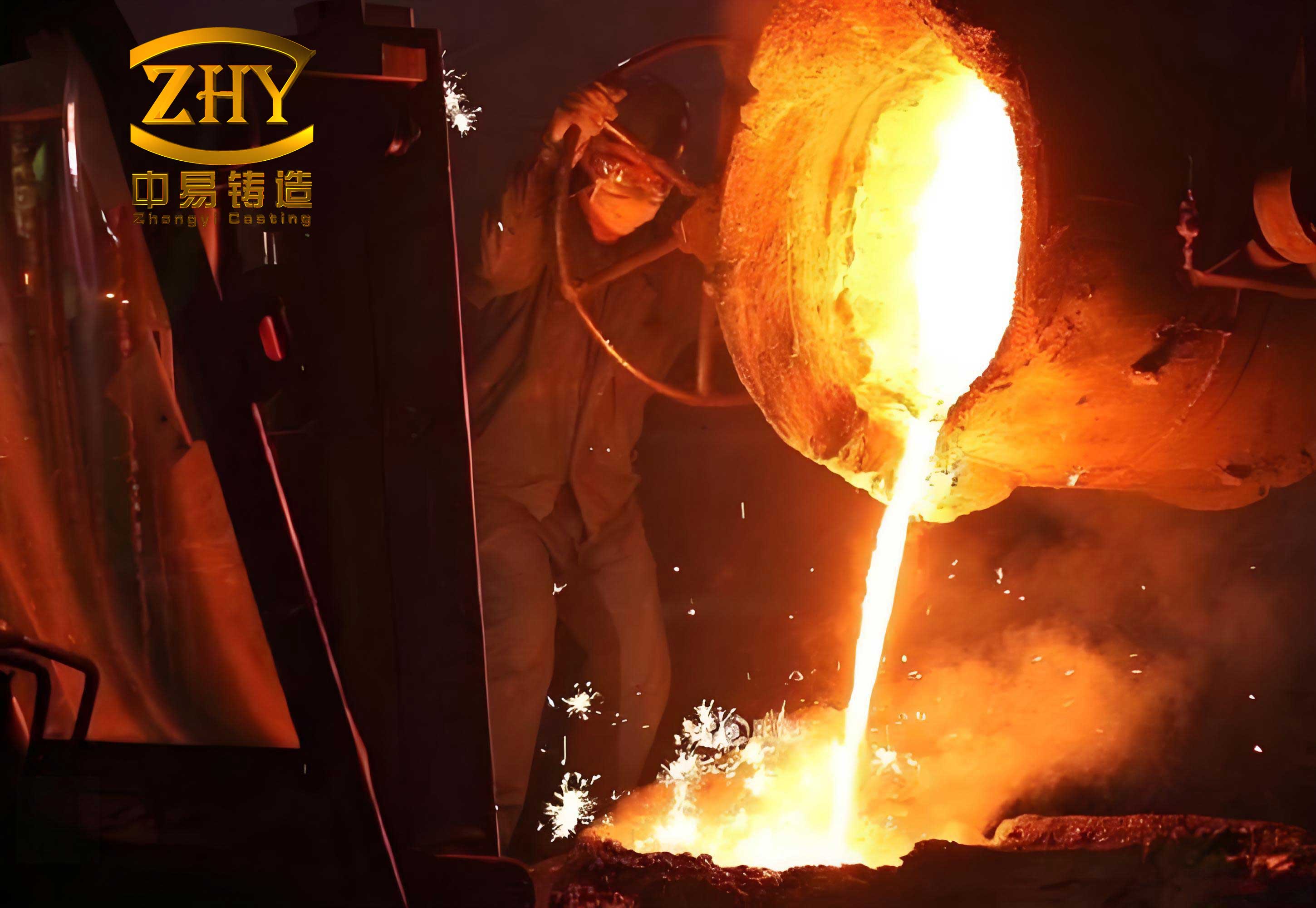
Production Context and Initial Challenges
The production was conducted on a high-capacity vacuum-assisted lost foam casting line. The foundational conditions were set as follows: The base sand had a primary grain fineness of 20-40 mesh (≥85%), with a clay content ≤0.3%. The foam patterns were coated with a refractory coating achieving a thickness of 1.0–1.5 mm after drying. The flasks were sizable, measuring 2050 mm × 1500 mm × 1300 mm, equipped with a five-sided ventilation system and a bottom vacuum source. Pouring was automated using a teapot-style ladle with a maximum capacity of 2100 kg. To maximize productivity and economic viability, a multi-casting setup per flask (“cluster casting”) was essential, further compounding the difficulty of ensuring uniform quality for every thin-wall casting in the cluster.
The three specific gearbox housings targeted for optimization—designated here as Type A, B, and C—shared the common characteristics of complex shapes, predominant wall sections of 5-7 mm, and a requirement for a 3 bar hydrostatic pressure test. The primary failure modes from initial production were consistent across all types: a high percentage of castings failing the pressure test due to micro-leakage, and the presence of visible slag inclusions and cold shuts on machined surfaces. A defect mapping analysis of 30 scrap Type A castings revealed that leaks were not randomly distributed but clustered in specific regions, often corresponding to areas that were last to fill or were oriented unfavorably during pouring. This pointed directly to shortcomings in the filling and solidification dynamics controlled by the lost foam casting process parameters.
A Systematic Approach to Lost Foam Casting Process Optimization
The optimization was structured as a series of factorial experiments, where key variables were altered methodically while observing their effect on defect rates. The central philosophy was to promote rapid, tranquil, and complete mold filling to avoid degradation-related defects and to ensure optimal metallurgical conditions for sound solidification.
1. Gating System and Flask Packing Orientation
The initial gating designs, while adhering to general principles, were inadequate for the thin-wall geometry and cluster arrangement. They often employed bottom or combination bottom-side gating with a single pour cup. The filling times were long relative to the section thickness, leading to excessive foam degradation, gas generation, and the potential for cold metal fronts to meet and fuse incompletely (cold shuts). The area ratios of the gating systems were also not optimally tuned for rapid filling.
The hypothesis was that a faster, more uniform fill was critical. This was achieved through a multi-pronged redesign:
- Adoption of Open, Pressurized, and Stepped Systems: The new designs combined elements of pressurized systems (to maintain a full sprue) with overall open ratios to ensure high flow rates. A three-tier stepped gating approach was implemented, introducing metal at the bottom, middle, and top levels of the casting to synchronize the fill and reduce the distance any metal front must travel.
- Implementation of Twin Pouring Points: For the larger clusters, a single sprue was insufficient. Twin sprue/runner systems with separate pouring cups were introduced. This effectively halved the fill time for each casting in the cluster and balanced the thermal load.
- Reorientation of Castings in the Flask: Perhaps the most significant change was flipping the packing orientation. Initially, castings were packed with their non-critical, often larger open faces, facing down. This placed the critical, pressure-containing walls (like bearing bulkheads) in an unfavorable position for feeding and soundness. The new scheme oriented the castings with the critical pressure zone downward. This positioned the heaviest, hottest metal at the critical area during fill, promoting better temperature gradients for directional solidification towards the risers (which were often the non-critical upper sections or the gating system itself).
The evolution of the gating system parameters for Type A casting is summarized in the table below, illustrating the shift towards larger, faster, and more distributed feeding.
| Design Phase | Sprue Ø (mm) | Runner Cross-Section (mm) | Ingate Cross-Section (mm) | No. of Ingates | Area Ratio (Sprue:Runner:Ingate) | Packing Orientation | Casts per Flask |
|---|---|---|---|---|---|---|---|
| Initial | 50 | 30 x 20 (x4) | 40 x 10 (x8) | 8 | 1 : 1.3 : 1.7 | Non-critical zone down | 6 |
| Optimized | 70 (Twin) | 35 x 20 (x6 per cast) | 50 x 10 (x12 per cast) | 12 | 1 : 1.1 : 1.5 | Critical pressure zone down | 8 |
The fill time (t) can be modeled as a function of the total ingate area (Ai), the effective metallostatic head (H), and a system constant (k) accounting for foam resistance and alloy fluidity. The optimization aimed to minimize t:
$$ t \approx \frac{k \cdot V_{cast}}{A_{i} \cdot \sqrt{H}} $$
By increasing Ai through more and larger ingates and maintaining a high head H with a full sprue, the fill time was significantly reduced, curtailing foam degradation time.
2. Vacuum Level Optimization
Vacuum serves multiple critical functions in the lost foam casting process: it consolidates the sand mold, it evacuates pyrolysis gases to prevent back-pressure and casting defects, and it can influence the metal flow dynamics. The initial vacuum setting was conservative. A dedicated DOE was conducted on Type A castings (using the improved gating) where only the vacuum level was varied incrementally from 0.040 MPa to 0.052 MPa. Pouring temperature and composition were held constant initially.
| Vacuum Level (MPa) | Hydrostatic Test Pass Rate (%) | Visible Slag/Cold Shut Defect Rate (%) | Observations |
|---|---|---|---|
| 0.040 – 0.045 | 55 – 65 | 18 – 22 | Significant smoke, occasional mold instability. |
| 0.046 – 0.048 | 70 – 78 | 12 – 15 | Improved gas evacuation, reduced scum. |
| 0.049 | 82 | 9 | Optimal balance of gas removal and metal flow. |
| 0.050 – 0.052 | 80 – 79 | 10 – 11 | Diminishing returns, slightly increased risk of metal penetration. |
The results confirmed that increasing vacuum up to approximately 0.049 MPa (≈ 0.5 bar) dramatically improved quality by ensuring swift removal of pyrolysis products. Beyond this point, benefits plateaued. The relationship between defect prevention and vacuum (Pv) can be conceptualized as a parabolic function where an optimum exists:
$$ Q \propto -a(P_v – P_{opt})^2 + Q_{max} $$
where Q is casting quality, Popt is the optimal vacuum (~0.049 MPa), and ‘a’ is a process-specific constant.
3. Pouring Temperature Optimization
For thin-wall castings, fluidity is paramount. The initial pouring temperature of 1470°C, based on thicker-section castings, proved insufficient. Cold shuts and mistruns were direct evidence of premature freezing. A systematic increase in pouring temperature was undertaken. Holding the improved gating, 0.049 MPa vacuum, and a baseline carbon equivalent (CE) constant, the temperature was raised in steps of 5°C.
| Pouring Temperature Range (°C) | Cold Shut Defect Rate (%) | Hydrostatic Test Pass Rate (%) | Slag Inclusion Rate (%) |
|---|---|---|---|
| 1470 – 1485 | >15 | < 75 | >10 |
| 1490 – 1495 | 5 – 8 | 78 – 82 | 8 – 9 |
| 1500 – 1505 | ~0 | 85 – 87 | 6 – 7 |
| 1510 – 1525 | 0 | 88 – 90 | 5 – 6 |
The data clearly indicated a threshold above 1500°C where cold shuts were eliminated. The enhanced fluidity ensured complete filling of the thin sections before the metal front lost its thermal energy. Furthermore, the higher superheat provided a greater thermal buffer, allowing pyrolysis gases to escape more completely and potentially improving slag floatation. However, the leakage and slag rates, while improved, were still not at an acceptable commercial level, indicating another limiting factor.
4. Carbon Equivalent (CE) Optimization
Gray iron’s properties and castability are fundamentally governed by its Carbon Equivalent, calculated as: $$ CE = \%C + \frac{\%Si + \%P}{3} $$
A higher CE improves fluidity, reduces shrinkage tendency, and increases graphitization, which can enhance pressure tightness. The initial alloy had a low CE (~3.6-3.8%) targeting high strength (HT300). We hypothesized that for thin-wall castings, the inherent chilling effect was so severe that a higher CE was necessary to ensure graphitic solidification and avoid carbidic (chilled) edges that could be leak paths. Keeping the optimized gating, 0.049 MPa vacuum, and a pouring temperature of 1515–1525°C, the CE was systematically increased.
| Carbon Equivalent (CE %) | Approximate Composition (%C / %Si) | Hydrostatic Test Pass Rate (%) | Slag Inclusion Rate (%) | Mechanical Properties (Typical) |
|---|---|---|---|---|
| 3.6 – 3.7 | 3.1 / 1.5 | ~88 | ~6 | High strength, risk of chill. |
| 3.8 – 3.9 | 3.2 / 1.7 | 90 – 92 | 5 – 5.5 | Meets HT300 spec. |
| 4.0 – 4.1 | 3.4 / 1.8 | 95 – 97 | 2 – 3 | Meets HT300 spec. |
| 4.1 – 4.2 | 3.5 / 1.9 | 98 – 99 | < 2 | Excellent balance. |
| 4.3 | 3.6 / 2.1 | 98 | < 2 | Potential for reduced strength, lower hardness. |
The improvement was dramatic. A CE of 4.1% (achieved with ~3.5% C and ~1.8% Si) delivered near-perfect pressure tightness and minimal slag defects. The enhanced fluidity from both high temperature and high CE worked synergistically. The increased graphitization potential ensured a softer, more machinable, and leak-proof structure at the thin walls, without compromising the required tensile strength for the application. This finding underscores that for thin-section lost foam casting of gray iron, the CE must be optimized for castability and soundness, not solely for maximum as-cast strength.
Synthesized Optimal Lost Foam Casting Process Parameters
The orthogonal experimental approach revealed the profound interactions between parameters in the lost foam casting process. The final, validated optimal process window for thin-wall (5-7 mm) gray iron gearbox housings is defined by the following confluence of factors:
- Gating & Packing: Use an open, multi-tiered stepped gating system designed for rapid filling. Employ twin pouring points for large clusters. Orient the casting in the flask with the critical, pressure-containing section downward to place the hottest, cleanest metal in that region and promote favorable thermal gradients.
- Vacuum Level: Maintain a consistent vacuum of 0.049 – 0.050 MPa (≈ 0.5 bar) during pouring and solidification to ensure swift gas evacuation and mold stability.
- Pouring Temperature: Utilize a high pouring temperature of 1510°C – 1525°C to overcome the chilling effect of the thin walls and ensure complete, turbulent-free filling.
- Alloy Composition: Target a Carbon Equivalent of 4.1 – 4.2% (e.g., 3.5% C, 1.8-2.0% Si) to maximize fluidity, promote a fully graphitic matrix, and eliminate micro-shrinkage leakage paths.
The success of this lost foam casting process optimization can be conceptualized as a multiplicative function where the output (Quality, Q) is the product of individual parameter functions reaching their optimal plateaus:
$$ Q = f_{gate}(G_{opt}) \cdot f_{vac}(P_{opt}) \cdot f_{temp}(T_{opt}) \cdot f_{comp}(CE_{opt}) $$
Sub-optimal performance in any single factor (e.g., low temperature) severely diminishes the overall quality, even if other factors are optimized.
Conclusion and Future Perspectives
Optimizing the lost foam casting process for demanding applications like thin-wall, pressure-tight gray iron castings is a holistic exercise. It moves beyond treating parameters in isolation and requires an integrated understanding of how gating design, thermal management, metallurgy, and process physics interact. The key insight from this work is that the inherent challenges of thin sections—rapid heat loss and high flow resistance—must be aggressively countered. This is achieved not by a single change, but by a coordinated strategy: dramatically increasing fluidity via high superheat and carbon equivalent, ensuring instantaneous filling via optimized gating, creating a stable mold environment with sufficient vacuum, and leveraging gravity and thermal gradients through intelligent flask packing. The lost foam casting process, when tuned to this refined set of parameters, transitions from a viable method to a superior and reliable production technology for high-quality complex thin-wall castings, meeting the stringent demands of modern automotive and agricultural machinery industries. Future work may explore dynamic vacuum control, advanced foam pattern materials for even cleaner decomposition, and real-time thermal monitoring to further push the boundaries of quality and consistency in this versatile foundry process.