
The production of large-scale, structurally intricate, and thin-walled castings represents a significant challenge within foundry practice. A primary obstacle encountered in our research and development involved the rear transmission housing for a high-power tractor. This component, with external dimensions of 1050mm × 925mm × 750mm, a theoretical wall thickness in critical sections, and a calculated weight of approximately 615 kg, epitomizes the challenges of casting large, complex geometries. To meet stringent requirements for dimensional accuracy and production efficiency, the lost foam casting process was selected. However, initial production trials revealed persistent defects: significant casting distortion, difficult-to-remove sand inclusions (“burn-on”) in internal cavities, and surface carbonaceous defects (“carbon black”) leading to machining scrap.
While numerous factors influence these outcomes, the coating system is universally acknowledged as the most critical element in the lost foam casting process. An ill-configured coating not only fails to prevent defects but can actively induce them. Our initial coating formulation proved inadequate in three key areas: poor adhesion and suspension stability leading to uneven application on the expansive polystyrene (EPS) pattern; insufficient green and high-temperature strength, failing to resist pattern deformation during handling and sand compaction, and prone to failure during metal pouring; and critically low permeability, incapable of venting the massive volume of gaseous decomposition products from the large EPS pattern, leading to gas porosity and carbon defects. This paper details our systematic research into developing and characterizing a high-performance coating specifically tailored for the lost foam casting process of such demanding components.
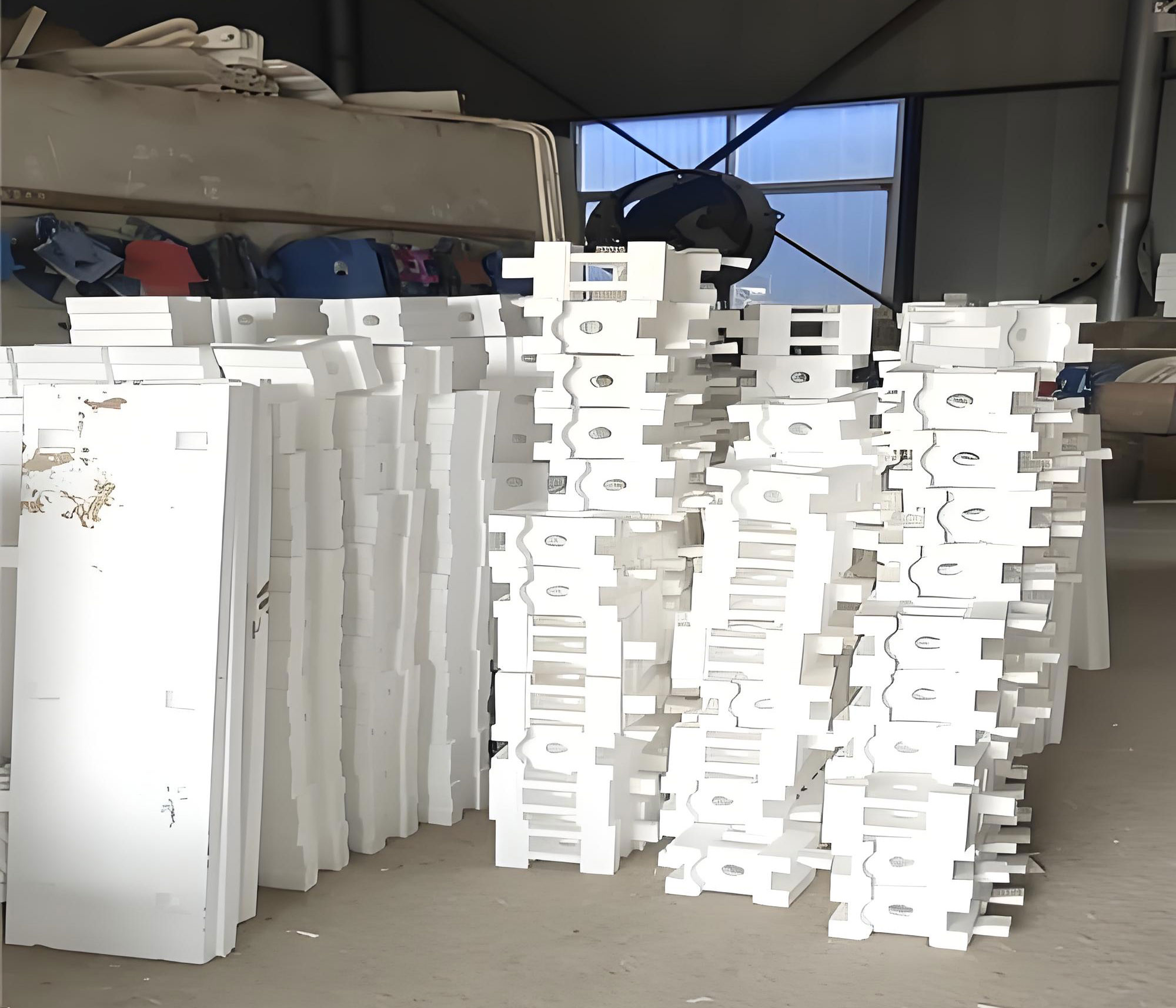
The theoretical foundation for our coating development rests on balancing competing properties. The coating must act as a robust, gas-permeable barrier between the molten metal and the sand mold. Its primary functions can be summarized by the following interdependent requirements, where achieving one often impacts the others:
- Adhesion & Rheology: Excellent wetting and adhesion to the non-polar EPS surface to ensure a uniform, continuous layer without sagging, especially on vertical surfaces during spraying or flow-coating.
- Mechanical Strength: High green strength to prevent damage during handling and sand filling, and sufficient high-temperature strength to withstand metallostatic pressure and thermal shock without erosion or collapse.
- Gas Permeability: Maximized permeability at casting temperatures to allow rapid egress of pattern pyrolysis gases (styrene, hydrogen, carbon particulates) to prevent back-pressure and gas defects. The permeability $k$ can be conceptually related to coating microstructure parameters by a simplified form of the Kozeny-Carman equation:
$$ k \propto \frac{\phi^3}{S_v^2 (1-\phi)^2} $$
where $\phi$ is the coating layer porosity and $S_v$ is the specific surface area of the refractory particles. Coarser, rounded particles increase $\phi$ and reduce $S_v$, thereby enhancing $k$. - Refractoriness & Sintering: Adequate refractoriness to resist metal penetration, yet controlled sintering to allow easy removal from internal passages after casting. The sintering tendency can be related to temperature and composition.
- Suspension Stability: Long-term stability to prevent settling of dense refractory powders, ensuring consistent slurry properties and application characteristics.
Our development strategy focused on formulating a water-based coating where each component was selected to address these specific functional needs, with particular emphasis on permeability and strength for large patterns.
1. Coating Formulation Design and Material Selection
The development proceeded through iterative testing, adjusting component ratios based on performance metrics. The finalized base formulation is presented in Table 1.
| Component Category | Specific Material | Function | Mass Percentage (%) | Key Rationale for Selection |
|---|---|---|---|---|
| Refractory Aggregate | Calcined Bauxite (Al2O3 ~85%) | Primary refractory base, provides bulk and high-temperature stability. | 64 – 68 | Coarse, rounded grain morphology (~180/200 mesh) promotes high intrinsic permeability and low specific surface area. |
| Refractory Aggregate | Mica Flakes (KAl2(AlSi3O10)(OH)2) | Secondary refractory, improves coating plasticity and sinterability. | 16 – 20 | Lamellar structure enhances interlayer slipping, improves green strength, coverage, and promotes post-casting spalling. Lowers overall sintering temperature of the coating matrix. |
| Binder System | Polyvinyl Acetate (PVA) Emulsion (“White Latex”) | Primary organic binder for green strength. | 2.5 – 4.0 | Provides strong, flexible film upon drying, excellent adhesion to EPS. |
| Binder System | α-Starch | Organic co-binder, enhances suspension and viscosity. | 0.6 – 1.6 | Biodegradable, provides temporary strength and good burnout characteristics. |
| Binder System | Proprietary Additive RSF | Inorganic/organic hybrid binder and wetting agent. | 0.4 – 1.6 | Critically improves wettability of EPS by the aqueous slurry. Enhances high-temperature bond strength and coating layer permeability via controlled micro-porosity formation. |
| Suspension/Thixotropy Agent | Lithium-based Bentonite (Li-P) | Primary suspending and thixotropic agent. | 0.6 – 1.6 | Forms a stable colloidal gel network, prevents settling, provides yield strength to prevent sagging. |
| Suspension/Thixotropy Agent | Attapulgite Clay | Co-suspension and anti-sag agent. | 0.6 – 1.2 | Rod-like crystal structure synergizes with bentonite’s platelet structure, creating a robust 3D network for superior suspension stability and coating body. |
| Additives | Defoamer (e.g., silicone-based) | Eliminates air entrained during mixing. | 0.06 – 0.24 | Ensures a bubble-free slurry for a dense, uniform coating layer. |
| Additives | Biocide | Prevents microbial growth in slurry. | 0.04 – 0.20 | Essential for long-term storage stability of water-based systems. |
| Carrier | Water | Liquid vehicle for slurry. | Balance (~10-15% of total slurry weight) | Adjusts slurry density and viscosity to application requirements. |
The synergistic effect of the dual refractory system is noteworthy. The bauxite provides the primary refractory skeleton, while the mica flakes act as a functional filler. The plate-like mica particles orient parallel to the pattern surface, enhancing the barrier effect and increasing the effective path length for metal penetration. Furthermore, their elasticity contributes to the dry coating’s resistance to cracking from minor pattern flexure. The permeability benefit is modeled by considering the coating as a composite porous medium. The effective permeability $k_{eff}$ of the mixed aggregate system can be higher than a monodisperse fine system due to better particle packing, creating more interconnected pores:
$$ k_{eff} = f(d_{bauxite}, \psi_{bauxite}, d_{mica}, \psi_{mica}, \xi) $$
where $d$ represents particle size, $\psi$ represents sphericity/roundness (higher for bauxite, lower for mica), and $\xi$ is a packing efficiency factor influenced by the bimodal size/shape distribution.
The binder system is a tri-component design. The PVA and starch provide the necessary green strength and burnout profile. The proprietary RSF additive is pivotal. It contains surfactants that dramatically lower the surface tension of the water carrier, enabling it to wet the hydrophobic EPS surface effectively ($\theta < 90^\circ$). This results in immediate adhesion and prevents beading. Chemically, it also contributes inorganic bonds that activate at elevated temperatures, supplementing the ceramic bond formed from the refractory particles, thereby increasing the coating’s high-temperature strength without significantly reducing permeability.
2. Coating Slurry Preparation and Rheology Control
A disciplined two-stage preparation protocol was established to fully activate the suspension agents and achieve a homogenized, high-performance slurry. The process is defined by specific energy input and sequence.
Stage 1: Dry Premix / “Coating Base” Preparation. The refractory aggregates (bauxite and mica) are loaded into a high-shear mixer (e.g., a mullet-style sand mixer). They are dry-blended for 5-10 minutes to achieve a uniform physical mixture. Subsequently, all dry powder additives—the lithium bentonite, attapulgite, and the powdered RSF component—are added and mixed for an additional 15-20 minutes. This step ensures the clay particles are dispersed and coated onto the refractory grains, initiating their activation. Finally, the liquid binders (PVA emulsion, starch solution) and other liquid additives are gradually added while mixing continues. The total mulling time in this stage is 40-50 minutes, resulting in a damp, homogeneous “coating base” ready for final slurry preparation or storage.
Stage 2: Final Slurry Mixing and Aging. The coating base is charged into water in a variable-speed propeller mixer. The key is a controlled shear regime:
- High-Shear Dispersion (30-40 mins): The mixer is operated at high speed (800-1000 rpm) to rapidly wet all particles, break up agglomerates, and fully disperse the clay network. The power input during this phase per unit volume, $P/V$, is critical for deagglomeration.
- Low-Shear Hydration & Thixotropy Build-up (90-120 mins): The speed is reduced to 300-500 rpm. This allows the clay platelets (bentonite) and rods (attapulgite) to fully hydrate and develop the desired thixotropic gel structure without incorporating excessive air. The viscosity $\eta(t)$ increases asymptotically during this phase.
- Aging (Maturing): The mixed slurry is left to stand for a minimum of 24 hours. This aging period allows for complete hydration, stabilization of the rheological properties, and escape of entrained air. The final viscosity and yield stress $\tau_0$ reach stable, reproducible values post-aging.
The final slurry properties are adjusted before use. The primary control parameter is slurry density, often expressed as Baume degree (°Bé) for foundry control. The relationship between density $\rho$, solids volume fraction $\Phi_s$, and Baume is empirical but crucial. We control the slurry to a Baume degree of 75-80°Bé, which correlates to a density of 1.60-1.65 g/cm³. The viscosity is typically measured with a flow cup (e.g., Zahn #5), with a target drain time ensuring proper application thickness in a single pass. The Herschel-Bulkley model effectively describes the slurry’s rheology:
$$ \tau = \tau_0 + K \cdot \dot{\gamma}^n $$
where $\tau$ is shear stress, $\tau_0$ is the yield stress (high due to clay network), $K$ is the consistency index, $\dot{\gamma}$ is shear rate, and $n < 1$ indicates shear-thinning (pseudoplastic) behavior. This is ideal for spraying/flow-coating (low viscosity under high shear) and immediate sag resistance once shear is removed (high $\tau_0$).
| Property | Test Method | Target Specification | Significance in Lost Foam Casting Process |
|---|---|---|---|
| Slurry Density | Weight per 100 mL | 1.60 – 1.65 g/cm³ | Directly relates to solids loading; affects coating weight and thickness per application. |
| Baume Degree (°Bé) | Baume Hydrometer | 75 – 80 °Bé | Standard foundry control parameter for density/viscosity correlation. |
| Suspension Stability (6h) | Volume % of clear supernatant in 100 mL cylinder | ≥ 99% (≤1% settling) | Ensures consistent slurry composition and properties during application shifts. |
| Dry Layer Thickness | Micrometer on coated 100mm EPS test block | 1.0 – 1.5 mm (per single application) | Ensures sufficient barrier thickness. Achieving this in one coat minimizes pattern handling and distortion risk. |
| Green (Dry) Strength | Transverse strength test on coated beam | ≥ 0.8 MPa | Resists cracking and abrasion during pattern handling, gating, and sand filling. |
| High-Temperature Permeability (600°C) | Specialized instrument (e.g., multi-function tester) | 0.68 – 0.78 cm4/(g·min) | Critical KPI. Measures ability to vent pyrolysis gases at metal front temperature, preventing back-pressure and gas defects. |
| High-Temperature Strength (600°C) | Specialized instrument (e.g., high-temperature compressive strength) | 60 – 65 kPa | Indicates coating’s ability to resist erosion and pressure from molten metal without collapse. |
3. Application, Foundry Trials, and Defect Analysis
The large, thin-walled EPS pattern for the transmission housing could not be dipped due to excessive buoyancy forces risking distortion or breakage. A combined spraying and flow-coating method was employed using a custom-designed application station. The optimized slurry exhibited excellent atomization during spraying and formed a continuous, non-dripping film during flow-coating. A single application cycle achieved the target dry thickness of 1.2 ±0.2 mm, verifying the excellent wetting and adhesion properties provided by the RSF additive.
Patterns were dried in a controlled convection oven at 50-55°C for over 8 hours to ensure complete moisture removal. The dry coating was hard, crack-free, and exhibited a smooth surface. The coated clusters were then embedded in dry, unbonded silica sand, compacted using vibration. Pouring was conducted with grey iron (HT250) at a temperature range of 1380-1430°C.
Results and Discussion:
- Dimensional Fidelity: Castings showed a dramatic reduction in distortion compared to initial trials. The high green strength of the coating provided a rigid shell that supported the EPS pattern against the forces of sand compaction, a critical factor in the lost foam casting process for large, thin sections. The dimensional variance on critical mating faces was reduced to within the machining allowance.
- Surface Quality & Burn-on Elimination: The castings exhibited a clean, dense surface finish. The optimized refractory blend and coating integrity effectively prevented metal penetration and reaction with the sand. The issue of “burn-on” or “metal penetration” in complex internal cavities was eliminated. This is attributed to the coating’s high-temperature strength ($\sim$62 kPa at 600°C) maintaining a complete barrier, and its controlled sintering behavior allowing for easy peel-off post-shakeout.
- Carbon Defect Mitigation: Surface carbon defects (lustrous carbon, carbon folds) were reduced to non-critical levels. The high permeability ($\sim$0.73 cm4/(g·min)) of the coating allowed the rapid evacuation of the large volume of carbon-rich gases generated by the decomposition of the substantial EPS pattern. Furthermore, the porous, adsorptive nature of the calcined bauxite aggregate is believed to have trapped some of the nascent carbon particles within the coating layer, preventing their deposition at the metal-coating interface.
- Coating Collapsibility: After casting and cooling, the coating readily detached from the casting surface, particularly from internal passages. This is a direct benefit of the mica addition, which lowered the sintering point of the coating matrix just enough to create a friable sintered layer that lacked strong adhesion to the metal surface, significantly reducing cleaning costs.
The success of the trials confirms the theoretical design approach. The coating functioned as an integrated system: the bimodal refractory provided the permeable, refractory backbone; the synergistic clay system gave robust rheology and green strength; the multi-component binder secured adhesion and high-temperature integrity; and the proprietary wetting agent enabled flawless application.
4. Generalized Principles and Mathematical Correlations
Based on this development work, several generalized principles and empirical correlations can be proposed for coatings in the lost foam casting process for large components:
A. Coating Thickness ($T_c$) as a Function of Slurry Properties and Application:
For a single dip or flow-coat application, the wet coating thickness $T_{wet}$ is approximated by the Landau-Levich derivation for viscous films:
$$ T_{wet} \approx 0.94 \cdot \frac{(\eta \cdot U)^{2/3}}{\gamma_{LV}^{1/6} \cdot (\rho \cdot g)^{1/2}} $$
where $\eta$ is slurry viscosity at application shear rate, $U$ is withdrawal/flow velocity, $\gamma_{LV}$ is liquid-vapor surface tension, $\rho$ is slurry density, and $g$ is gravity. The dry thickness $T_c$ is then:
$$ T_c = T_{wet} \cdot \Phi_s $$
where $\Phi_s$ is the volume fraction of solids in the slurry. Our formulation aimed to maximize $\Phi_s$ while maintaining applicable viscosity to achieve $T_c > 1.0$ mm in one pass.
B. Permeability-Strength Trade-off Optimization:
A key finding is that permeability and high-temperature strength are not simply inversely related but can be co-optimized through microstructure design. We postulate an optimization function $Z$ for coating performance:
$$ Z = \alpha \cdot \log(k_{eff}) + \beta \cdot S_{HT} – \gamma \cdot \Delta P_{crit} $$
where $k_{eff}$ is effective high-temperature permeability, $S_{HT}$ is high-temperature strength, $\Delta P_{crit}$ is the critical pressure difference at which coating fails (related to erosion/collapse), and $\alpha, \beta, \gamma$ are weighting factors dependent on the specific casting (size, metal pressure, gas volume). Our formulation moved the coating to a Pareto-optimal point where both $k_{eff}$ and $S_{HT}$ were sufficiently high for the application.
C. Role of Additives in Wetting and Adhesion:
The contact angle $\theta$ of the slurry on EPS is modified by surfactants (in RSF). Young’s equation governs the equilibrium:
$$ \gamma_{SV} = \gamma_{SL} + \gamma_{LV} \cos\theta $$
where $\gamma_{SV}$, $\gamma_{SL}$, $\gamma_{LV}$ are solid-vapor, solid-liquid, and liquid-vapor interfacial tensions. Surfactants reduce $\gamma_{LV}$ and $\gamma_{SL}$, driving $\cos\theta$ towards 1 ($\theta \rightarrow 0^\circ$), leading to spontaneous spreading and adhesion. The work of adhesion $W_a$ is increased:
$$ W_a = \gamma_{LV} (1 + \cos\theta) $$
High $W_a$ is essential for coating the hydrophobic EPS pattern in the lost foam casting process.
5. Conclusion
This detailed investigation underscores that the coating is not merely a ancillary material but the linchpin in the lost foam casting process, especially for challenging large, thin-walled castings. By systematically engineering the coating formulation—employing a bimodal refractory system of coarse bauxite and mica, a tri-modal binder package including a specialized wetting/bonding agent, and a synergistic suspension system of Li-bentonite and attapulgite—we developed a slurry with an exceptional balance of properties. The resultant coating provided superior adhesion, achieving the required thickness in one application to minimize pattern handling; high green and elevated-temperature strength to resist distortion and erosion; and critically, very high gas permeability to vent pattern decomposition products effectively. These properties collectively resolved the major defects of distortion, burn-on, and carbon defects in the production of the complex transmission housing. The principles and correlations derived from this work provide a validated framework for designing and optimizing coatings for other demanding applications within the lost foam casting process.