
In my extensive experience within the foundry industry, the evolution of the lost foam casting process represents a significant leap towards precision and complexity in metal part manufacturing. This innovative method is exceptionally well-suited for producing high-volume components with intricate geometries, internal channels, and undercuts that are challenging or impossible to achieve with conventional green sand or resin-bonded molding techniques. The process begins with a foam pattern—an exact replica of the desired part—which is assembled, coated with a refractory wash, and then embedded in unbonded, free-flowing sand within a flask. During metal pouring, the molten metal rapidly vaporizes and replaces the foam pattern, precisely replicating its shape. While this description simplifies the procedure, the success of the entire lost foam casting process hinges on a critical, often underestimated component: the filling sand.
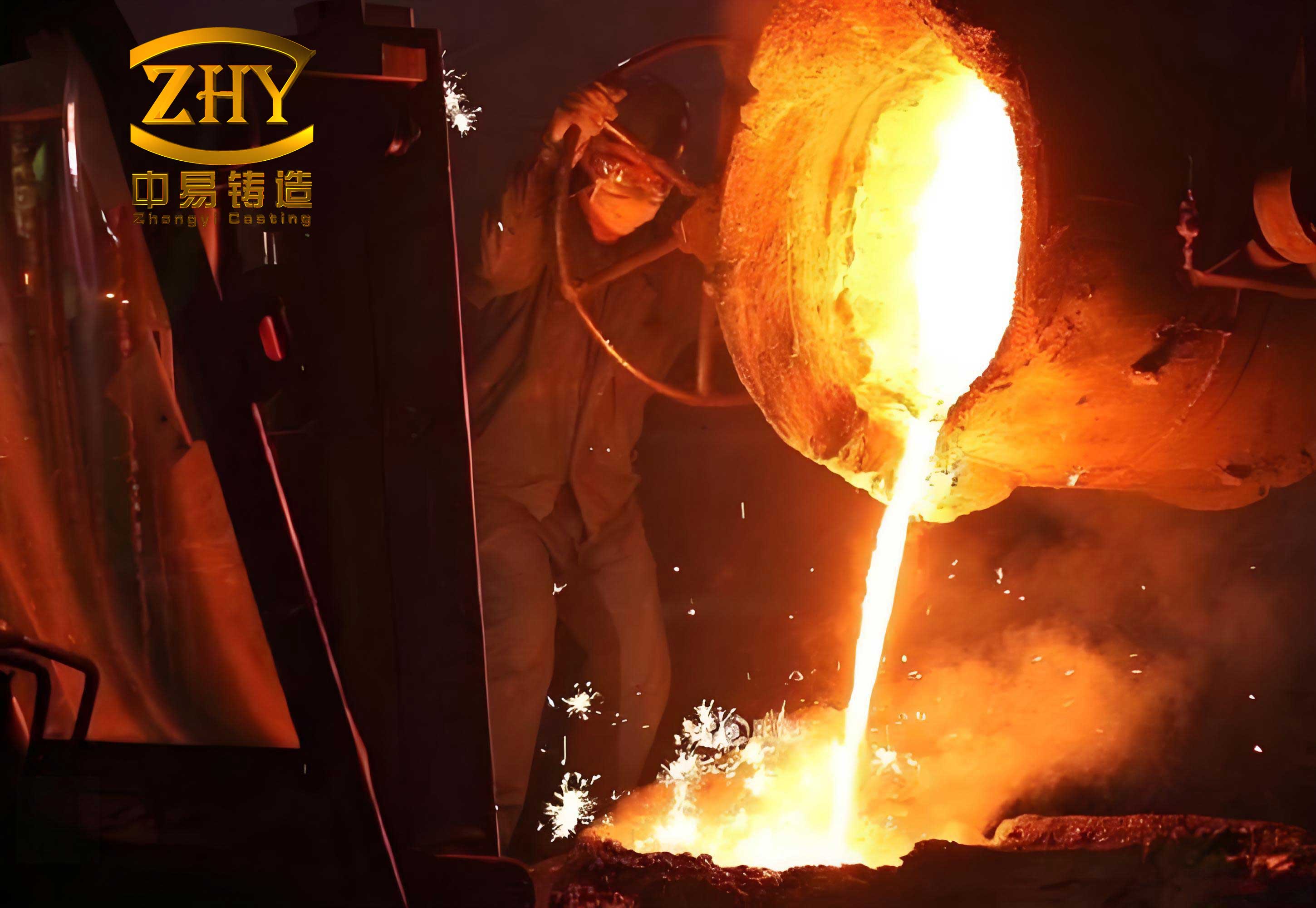
The role of the sand in the lost foam casting process is multifaceted and demanding. It is not merely a support medium; it is an active participant in determining the final quality of the casting. The sand must possess exceptional dry-flow characteristics to completely and uniformly fill every cavity, deep recess, and thin section of the complex foam cluster without causing pattern distortion. Once filled, it must maintain stability under the thermal shock of molten metal to prevent mold wall movement or collapse (“veining” or “bulges”). Furthermore, as the foam pattern thermally decomposes, it generates a substantial volume of gaseous and liquid pyrolysis products. The sand bed must exhibit high permeability to allow these residues to escape rapidly through the coating and into the sand mass, preventing defects like gas porosity, carbon inclusions, or incomplete filling. For decades, silica (quartz) sand dominated as the primary material for this purpose, prized for its ubiquity and low cost. However, a deeper analysis reveals fundamental limitations of silica sand that increasingly conflict with the demands of modern, high-quality lost foam casting process operations.
The inherent drawbacks of silica sand become pronounced under the severe conditions of the lost foam casting process. Its high and sudden expansion upon heating, particularly at the α-β cristobalite transition near 573°C, is a primary source of casting defects such as scabbing and rat tails. Its relatively low refractoriness and acidic nature can lead to severe chemical burn-on and penetration with certain steel alloys, making cleaning operations labor-intensive and costly. Perhaps most critically for the lost foam casting process, silica sand undergoes significant mechanical degradation (attrition) and chemical breakdown during repeated thermal cycling. This leads to the generation of fine, airborne silica dust—a serious occupational health hazard linked to silicosis. The declining flowability and permeability of the sand system over time due to this fines generation directly compromise the consistency and quality of castings. These challenges necessitate a superior alternative: ceramic spherical sand, often referred to as “ceramic bead sand” or “fusion-cast alumina sand.”
Ceramic sand is an engineered material produced by electrically melting high-purity calcined bauxite and then atomizing the molten stream to form nearly perfect spheres. This manufacturing process yields a product with a unique combination of properties that align perfectly with the rigorous requirements of the lost foam casting process. Its adoption marks a shift from relying on a naturally occurring, compromise-laden material to utilizing a purpose-designed, high-performance molding medium. In the following sections, I will dissect the specific demands of the lost foam casting process on sand, detail the properties of ceramic sand that meet these demands, and provide a comprehensive technical and economic analysis of its application.
Technical Imperatives for Sand in the Lost Foam Casting Process
The selection criteria for sand in the lost foam casting process are distinct from other casting methods. The sand is dry and unbonded, making its innate physical properties paramount. We can define the key requirements through a set of performance metrics:
1. Particle Shape and Flowability: This is the foremost criterion. The sand must flow like a fluid to fill the mold. Angular sands interlock, creating bridges and leaving voids, especially in deep pockets and narrow sections behind the foam pattern. This leads to inadequate support, causing the foam to deflect under the sand pressure or the mold wall to collapse during metal pouring. The ideal shape is spherical. Sphericity can be quantified by the Angularity Number or, more commonly in foundry practice, by the angle of repose. A lower angle of repose indicates better flowability. The relationship can be conceptualized as the ease with which particles slide past one another, which is maximized for spheres. The filling capability for a deep, narrow cavity can be thought of as a function of inter-particle friction:
$$ \text{Filling Efficiency} \propto \frac{1}{\mu_{eff}} $$
where $\mu_{eff}$ is the effective coefficient of friction between sand grains. For spherical particles, $\mu_{eff}$ is minimal.
2. Permeability and Gas Evolution Management: During the lost foam casting process, the vaporizing foam generates gases at a rate that can be modeled. The sand bed must provide a low-resistance path for these gases to escape to the vacuum system. Permeability (P) is a standard measure, but the uniform packing achieved by spherical grains creates more consistent and interconnected void channels than angular sands at the same compaction level. This is crucial for preventing back-pressure that can force pyrolysis liquids into the metal surface, creating lustrous carbon defects.
3. Thermal Stability and Chemical Inertness: The sand in direct contact with the metal reaches high temperatures. It must not melt (high refractoriness), must exhibit low thermal expansion to avoid mold dilation defects, and must be chemically neutral to prevent reactions with metal oxides that cause burn-on. The thermal expansion behavior is critical; a low and linear coefficient of thermal expansion (CTE) is highly desirable.
4. Reclamation and Environmental Impact: Since hundreds of tons of sand are circulated, its ability to withstand mechanical and thermal shock without breaking down is essential for a sustainable operation. Low attrition means less new sand make-up, lower dust generation, and a cleaner working environment.
The following table contrasts the typical properties of common sands against these imperatives for the lost foam casting process:
| Property / Requirement | Silica Sand | Chromite Sand | Ceramic (Bead) Sand | Ideal for Lost Foam |
|---|---|---|---|---|
| Particle Shape | Sub-angular to Angular | Sub-angular | Spherical | Spherical |
| Angle of Repose | ~35-45° | ~40-50° | ~25-30° | Minimized |
| Thermal Expansion (20-1000°C) | ~1.5-1.8% (Sudden jump at ~573°C) | ~0.3-0.4% | ~0.13-0.15% (Linear) | Low & Linear |
| Refractoriness (℃) | ~1,710 | ~1,830 | >1,800 | High |
| Chemical Nature | Acidic | Neutral/Basic | Neutral | Neutral |
| Attrition Resistance | Poor | Good | Excellent | Excellent |
| Bulk Density (g/cm³) | ~1.5 | ~2.8 | ~1.9-2.0 | Moderate to High |
As is evident, ceramic sand’s property profile offers a near-perfect match for the demands of the lost foam casting process, particularly in the most critical areas of shape, expansion, and durability.
Ceramic Sand: A Material Engineered for Performance
Let us delve deeper into the characteristics of ceramic sand that make it transformative for the lost foam casting process. Its primary chemical composition is aluminum oxide (Al₂O₃), typically ranging from 70% to 76%, with the balance comprising silica (SiO₂), iron oxide (Fe₂O₃), and titanium oxide (TiO₂). This composition is derived from high-grade calcined bauxite, ensuring consistency and high refractoriness.
Sphericity and Flow Dynamics: The atomization manufacturing process is key. Molten material is disintegrated into fine droplets which solidify in free fall, forming perfect spheres. This results in an angularity factor very close to 1 (where 1 is a perfect sphere). In practical terms, this means the sand flows with exceptional ease. In the lost foam casting process, this translates to the ability to fill complex clusters completely and uniformly. The sand can be conveyed horizontally over much greater distances within the flask compared to angular sands. The enhanced flow ensures that deep internal cavities, sharp corners, and thin-walled sections of the foam pattern are fully and firmly supported, eliminating a primary source of dimensional inaccuracy and mold wall failure.
Thermal and Chemical Behavior: The amorphous, fused microstructure of ceramic sand grants it a very low and linear coefficient of thermal expansion, on the order of $7.2 \times 10^{-6} /K$ between 20-600°C. This is dramatically lower than the expansion of silica sand ($\approx 23 \times 10^{-6} /K$), which includes a disruptive phase transformation. The absence of this sudden expansion in the lost foam casting process virtually eliminates defects related to mold dilation. Furthermore, its neutral chemical character prevents it from reacting with molten ferrous alloys, including challenging grades like high-manganese steel (Mn-steel), significantly reducing burn-on and penetration. This inertness simplifies coating selection and improves the as-cast surface finish, often reducing cleaning and finishing costs by over 50%.
Permeability and Gas Escape: The uniform size and spherical shape allow for dense, regular packing. While this increases bulk density, the voids between the spheres are more uniform and interconnected than in a randomly packed angular sand mass. This structure provides high and consistent permeability, which is crucial for venting the large volumes of gas produced during the decomposition phase of the lost foam casting process. The improved venting reduces the incidence of gas-related defects such as porosity and puffing.
Durability and Environmental Profile: With a Mohs hardness of 7-8 and a fused, monolithic grain structure, ceramic sand exhibits extraordinary resistance to mechanical breakdown. In closed-loop systems typical of the lost foam casting process, its attrition loss is typically less than 5% per cycle, compared to 15-25% for silica sand. This dramatically reduces the need for fresh sand addition and, most importantly, minimizes the generation of hazardous respirable crystalline silica dust. The improvement in workplace air quality and the reduction in long-term occupational health risks cannot be overstated. The economic benefit of reduced sand consumption directly offsets its higher initial purchase price.
The selection of the optimal grain size distribution is another critical aspect for the lost foam casting process. A tight, controlled distribution is preferred over a wide grading. Common specifications for ceramic sand in lost foam applications are focused on two or three adjacent sieves to maximize permeability and flow. The following table illustrates typical grain size distributions:
| Grade Designation | Key Sieve Sizes (US Mesh) and Retained Percentage | Application Note |
|---|---|---|
| AFS 40-50 (Coarse-Fine) | Concentrated on 40 and 50 mesh. | Excellent for fine details and thin-section ferrous castings. Provides a smooth surface finish. |
| AFS 30-40 (Medium) | Concentrated on 30 and 40 mesh. | A versatile, widely-used grade for general steel and iron castings in the lost foam casting process. |
| AFS 20-30 (Coarse) | Concentrated on 20 and 30 mesh. | Used for heavier-section castings where very high gas permeability is the primary concern. |
The principle can be summarized by looking at the permeability as a function of grain size and uniformity. A simplified model for permeability in a bed of spheres is given by the Carmen-Kozeny equation, which shows that permeability is highly sensitive to the particle diameter and the porosity of the bed:
$$ P \propto \frac{D_p^2 \phi^3}{(1-\phi)^2} $$
where $P$ is permeability, $D_p$ is the effective particle diameter, and $\phi$ is the porosity. A uniform, spherical sand achieves an optimal balance of particle size and packing porosity, maximizing $P$ for efficient degassing in the lost foam casting process.
Quantitative Benefits and Economic Justification
The transition from silica sand to ceramic sand in a lost foam casting process line represents a strategic investment. The justification is built on a total-cost-of-ownership model that encompasses direct casting quality, operational efficiency, and environmental compliance. The economic analysis is compelling when all factors are considered over time.
1. Quality and Yield Improvement: By fundamentally eliminating sand-related expansion defects and drastically reducing burn-on, ceramic sand directly increases the yield of saleable castings. For example, a foundry producing high-alloy steel components might see a reduction in scrap and rework rates from 8% to 2% simply by switching sands. This 6% point improvement in yield on high-value castings pays for the sand premium rapidly. The consistency of the sand properties from cycle to cycle also reduces process variability, leading to more predictable and higher quality outcomes in the lost foam casting process.
2. Sand Consumption and Lifecycle Cost: Although the initial purchase price per ton of ceramic sand is higher than silica sand, its consumption rate is drastically lower. Let’s define a simple cost model over an annual period:
Let:
$C_s$ = Cost of silica sand per metric ton ($/t)
$C_c$ = Cost of ceramic sand per metric ton ($/t)
$L_s$ = Annual loss/waste rate for silica sand (e.g., 0.20 or 20%)
$L_c$ = Annual loss/waste rate for ceramic sand (e.g., 0.05 or 5%)
$T$ = Total annual sand mass required in the system circulation (t)
The annual sand make-up cost for each option is:
Cost_Silica = $T \times L_s \times C_s$
Cost_Ceramic = $T \times L_c \times C_c$
Even with $C_c$ being 2-3 times $C_s$, the product $L_c \times C_c$ is often lower than $L_s \times C_s$ because $L_c$ is 3-4 times smaller than $L_s$. Furthermore, the reduced sand consumption minimizes associated costs of waste handling and disposal.
3. Labor and Post-Casting Savings: The most visible saving often comes from the cleaning room. Castings produced with ceramic sand in the lost foam casting process have markedly cleaner surfaces with minimal burn-on. This can reduce grinding, shot blasting, and finishing time by 30-70%. The savings in labor, consumables (grinding wheels, shot), and energy are substantial and recur with every batch.
4. Environmental and Health Compliance: This is a critical, non-negotiable benefit. By virtually eliminating silica dust, foundries mitigate the risk of regulatory fines, reduce costs associated with personal protective equipment (PPE) and advanced ventilation, and, most importantly, protect their workforce. The value of a safer, more attractive workplace and reduced liability is immense, though difficult to quantify purely in immediate financial terms.
The following table summarizes the holistic comparison, translating the technical advantages into operational and economic terms for the lost foam casting process:
| Evaluation Factor | Silica Sand System | Ceramic Sand System | Impact on Lost Foam Operation |
|---|---|---|---|
| Direct Material Cost (per ton) | Low | High | Higher initial outlay. |
| Annual Sand Consumption | High (15-25% makeup) | Very Low (2-5% makeup) | Ceramic system has lower long-term material cost. |
| Casting Surface Quality | Frequent burn-on, penetration | Clean, minimal adherence | Drastic reduction in cleaning costs (labor, media, energy). |
| Defect Rate (Sand-related) | Higher (Veining, Scabs) | Negligible | Increased yield of good castings. |
| Process Stability | Variable due to fines accumulation | Highly consistent | More predictable production, less downtime. |
| Dust Generation | High (Respirable Silica) | Very Low (Aluminosilicate) | Major improvement in EHS compliance and cost. |
| Applicable Metal Range | Limited for high-alloy steels | Very Broad (Iron, Steel, High-Mn) | Flexibility to use one sand for diverse products. |
In practice, foundries that have integrated ceramic sand into their lost foam casting process typically report a full return on the incremental investment within 8 to 14 months, driven by the combined effect of yield improvement, cleaning cost savings, and reduced sand consumption. The business case becomes even stronger for operations focusing on high-value, complex, or difficult-to-cast alloys.
Conclusion and Implementation Perspective
The lost foam casting process is a powerful technology for manufacturing complex, near-net-shape metal components. Its full potential, however, is unlocked only when every element of the system is optimized. The filling sand, long treated as a commodity, is in fact a critical process variable. Ceramic spherical sand is not merely an alternative to silica sand; it is a technologically superior substrate specifically engineered to address the core challenges of the lost foam casting process.
Its near-perfect sphericity ensures flawless mold filling and stability, its low thermal expansion guarantees dimensional fidelity, its neutral chemistry provides unparalleled versatility across ferrous alloys, and its exceptional durability creates a sustainable, low-waste, and safe working environment. The initial cost premium is decisively offset by a cascade of downstream savings and quality enhancements.
For any foundry serious about advancing its lost foam casting process capabilities, improving product quality, reducing total cost, and fostering a sustainable future, the adoption of high-purity ceramic bead sand is a logical and profitable step. It transforms the sand system from a source of variability and cost into a pillar of reliability and quality in the sophisticated lost foam casting process.