
The pursuit of advanced, lightweight materials is a cornerstone of modern engineering, particularly in sectors like aerospace and automotive. Magnesium alloys, with their exceptional strength-to-weight ratio, and aluminum alloys, known for their good ductility and corrosion resistance, are key players. The combination of these two metals into a single Al/Mg bimetal composite promises a synergistic enhancement of properties, marrying lightweight potential with improved structural integrity. However, a fundamental challenge lies at the heart of this combination: the interface. The formation of brittle Al-Mg intermetallic compounds (IMCs), the ever-present barrier of surface oxides, and the tendency for undesirable phase segregation can severely compromise the mechanical performance of the joint. This article delves into an innovative approach to mastering this interface: the strategic integration of ultrasonic vibration treatment (UVT) into the lost foam casting process.
The lost foam casting process itself is a unique and advantageous method for fabricating such composites. As a near-net-shape process, it offers high material utilization and design flexibility for complex geometries. The process involves creating a foam pattern (typically expanded polystyrene, EPS) of the desired part. A solid metal insert—in this case, the aluminum component—is securely positioned within the foam assembly. The entire structure is then coated with a refractory layer, dried, and placed in a flask filled with unbonded sand. When molten metal (the magnesium alloy) is poured into the sprue, the foam pattern thermally decomposes, and the resulting cavity is filled by the melt, which solidifies around the solid aluminum insert, forming the bimetal composite.
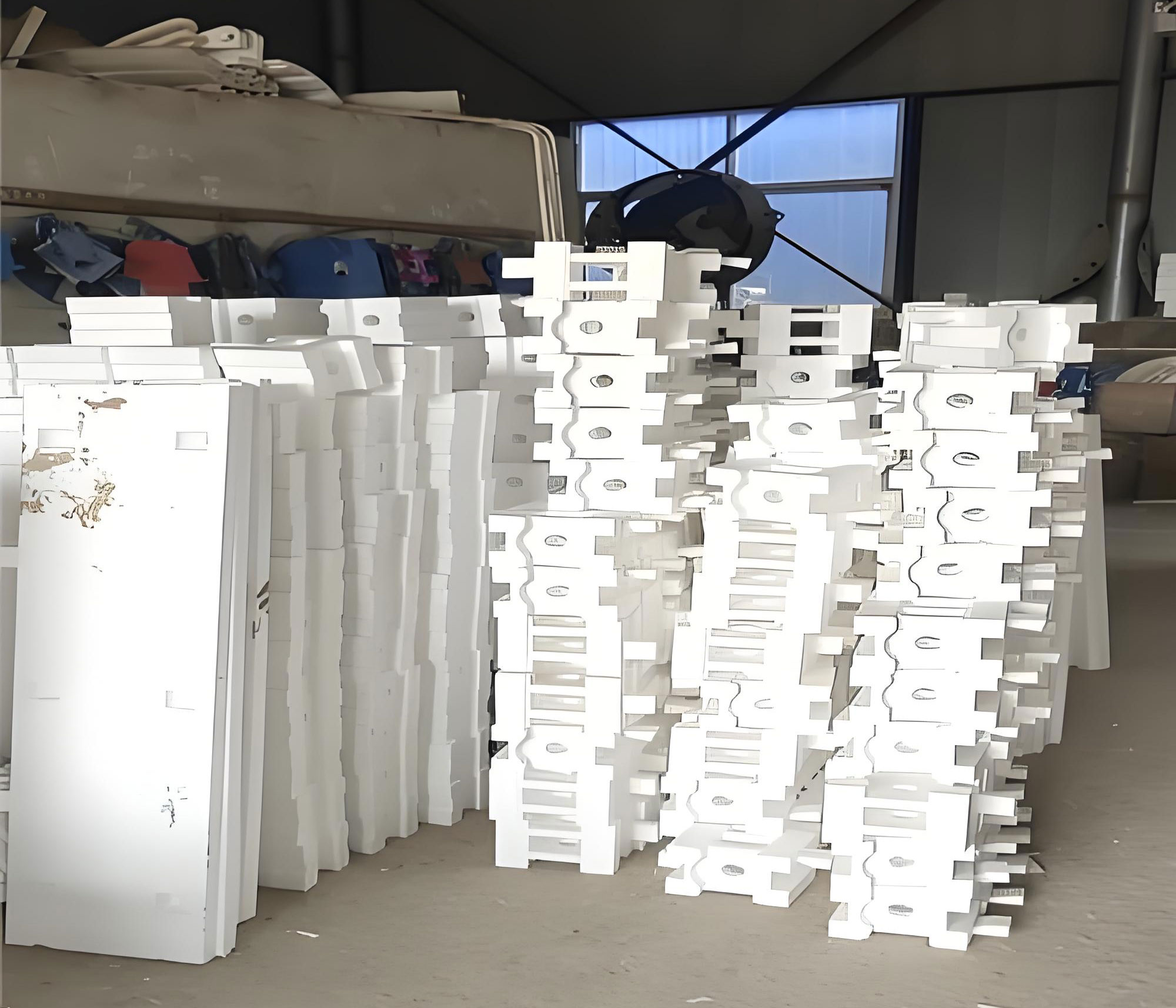
A critical advantage of the lost foam casting process for reactive metals like aluminum and magnesium is the protective atmosphere created by the decomposing foam. The pyrolysis products are largely reducing gases, which help minimize further oxidation during the critical pouring and interface formation stages. Furthermore, the solid-liquid compound approach inherent to this method, where a pre-fabricated solid insert is combined with a liquid melt, offers superior control over the geometry and positioning of the dissimilar metal interface compared to other casting techniques.
Despite these advantages, the intrinsic metallurgical challenges of Al/Mg systems remain. The primary issues are twofold: first, a thin but tenacious oxide film (primarily Al2O3 on the aluminum) acts as a physical barrier to atomic diffusion and metallurgical bonding. Second, the Al-Mg binary system features several IMCs, such as Al3Mg2 (β-phase) and Al12Mg17 (γ-phase), which are inherently hard and brittle. Their uncontrolled growth, often in a layered or needle-like morphology, creates a stress concentration site prone to crack initiation under load. Additionally, secondary phases like Mg2Si in the A356/AZ91D system can agglomerate into detrimental networks if not properly managed.
This is where ultrasonic vibration presents a transformative solution. When high-intensity ultrasound (typically in the 20-40 kHz range) is introduced into a liquid or semi-solid medium, it generates powerful nonlinear effects. The most significant for metallurgical processing are acoustic cavitation and acoustic streaming.
- Acoustic Cavitation: The rapid pressure fluctuations from the ultrasound wave cause the formation, growth, and violent collapse of microscopic vapor bubbles (cavities) in the melt. The implosive collapse of these bubbles generates extreme localized conditions—transient temperatures exceeding 5000 K and pressures of hundreds of atmospheres. This micro-scale “forge” can effectively fracture and disperse surface oxide films and non-metallic inclusions.
- Acoustic Streaming: This is a steady, macroscopic flow of the liquid induced by the attenuation of the acoustic wave momentum. It acts as a highly efficient stirring mechanism, homogenizing temperature and composition, disrupting concentration boundary layers, and accelerating diffusion processes at the solid-liquid interface.
By applying UVT at the critical moment of interface formation during the lost foam casting process, we can directly intervene in the solidification dynamics to engineer a superior interface.
The following sections present a detailed investigation into how different ultrasonic excitation modes—specifically, continuous vibration and intermittent vibration—influence the interfacial evolution and final properties of an Al/Mg bimetal fabricated via this novel lost foam casting process. All experimental work was conducted using A356 aluminum alloy as the solid insert and AZ91D magnesium alloy as the poured melt. The chemical compositions are summarized in Table 1.
| Alloy | Si | Mg | Al | Fe | Zn | Mn | Ti |
|---|---|---|---|---|---|---|---|
| A356 | 7.07 | 0.31 | Bal. | 0.10 | – | – | 0.11 |
| AZ91D | 0.02 | Bal. | 9.11 | – | 0.61 | 0.24 | – |
The solid A356 insert was machined to a resonant length for efficient ultrasonic energy transfer. Its surface was meticulously prepared through grinding, alkaline cleaning, acid pickling, and ultrasonic cleaning in ethanol to remove contaminants and the native oxide layer prior to assembly. The EPS foam pattern containing the insert was coated, dried, and placed in a sand flask. The key innovation was the integration of an ultrasonic horn connected directly to the protruding end of the aluminum insert. A thermocouple monitored the insert surface temperature. When this temperature dropped to 470°C—safely above the solidus temperatures of the relevant Al-Mg phases and the AZ91D alloy—the ultrasonic transducer was activated. Two distinct vibration modes were applied at a fixed power (75 W) and frequency (20 kHz), as detailed in Table 2.
| Sample ID | Vibration Mode | Description | Total Active Time | Key Characteristic |
|---|---|---|---|---|
| No-UVT | None | Reference sample, no vibration applied. | 0 s | Baseline for comparison. |
| C-UVT | Continuous | Ultrasound applied continuously. | 5 s | Sustained acoustic effects. |
| I-UVT | Intermittent | Ultrasound applied in pulses: 3 s ON, 3 s OFF, 2 s ON. | 5 s | Non-steady-state cavitation and flow. |
Interfacial Microstructure: Baseline Without Vibration
The interface of the sample produced by the standard lost foam casting process without ultrasonic assistance serves as the critical baseline. Its microstructure is characterized by a distinct bilayer architecture with an average total thickness ($L_{total}$) of approximately 1586 µm. This interface can be clearly divided into two zones:
- Al-Mg Intermetallic Compound (IMC) Zone: Adjacent to the A356 aluminum insert, this zone is primarily composed of Al3Mg2 and Al12Mg17 phases. A prominent feature is the presence of a skeletal, interconnected network of Mg2Si particles. These particles are not uniformly distributed; they show significant agglomeration, particularly near the boundary with the second zone.
- Eutectic Zone: Closer to the AZ91D magnesium bulk, this region consists of primary Al12Mg17 dendrites surrounded by a δ-Mg + Al12Mg17 lamellar eutectic structure. The dendritic growth direction is roughly perpendicular to the interface plane, indicating heat extraction normal to the insert surface.
The most critical observation is the presence of a thin, continuous oxide film precisely at the boundary separating the IMC zone and the eutectic zone. This film acts as a formidable diffusion barrier during solidification. It hinders the free transport of solute, leading to the pile-up and networking of Mg2Si particles, which are pushed ahead of the solidifying front but cannot traverse the oxide barrier. The formation of this interface can be conceptually related to the interplay of diffusion and reaction. The growth of the IMC layer can be approximated by a parabolic growth law, where its thickness ($L_{IMC}$) is a function of time ($t$):
$$ L_{IMC} = k \sqrt{D t} $$
where $k$ is a kinetic constant and $D$ is the effective interdiffusion coefficient. The oxide layer significantly reduces the effective $D$, leading to microstructural inhomogeneity.
Transformation Under Continuous Ultrasonic Vibration (C-UVT)
The application of continuous ultrasonic vibration during the lost foam casting process induces a profound metamorphosis of the interface. The most immediate effect is the complete elimination of the continuous oxide film. The combined action of cavitation bubble collapse (micro-jet impingement) and intense acoustic streaming scrubs the interface clean, removing the primary barrier to metallurgical bonding.
This removal has cascading effects on the microstructure, summarized in Table 3. Firstly, the Mg2Si phase undergoes a dramatic transformation from a coarse, continuous network into fine, discrete particles that are now uniformly dispersed throughout the entire interfacial region, including areas that were formerly the eutectic zone. Secondly, the promotion of atomic diffusion by acoustic streaming encourages the reaction of δ-Mg in the eutectic with Al to form more Al12Mg17. Consequently, the interface architecture shifts: the IMC zone thickens significantly (by ~53%), while the eutectic zone shrinks (by ~69%). The total interface thickness increases slightly to ~1680 µm. The microstructure becomes markedly more homogeneous, with a finer and more uniform distribution of all constituent phases.
Effects of Intermittent Ultrasonic Vibration (I-UVT)
The intermittent vibration mode introduces a different dynamic. While it also successfully disrupts the oxide film and refines/distributes the Mg2Si phase, its non-steady-state nature leads to unique features. The total interface thickness (~1628 µm) is closer to the No-UVT sample and less than the C-UVT sample, which could be beneficial for minimizing brittle phase volume.
However, the interrupted application of ultrasound has two notable consequences. First, during the “OFF” periods, cavitation bubbles that have been nucleated may not have sufficient time to fully collapse before being trapped by the advancing solidification front. This results in the presence of small, spherical pore defects (~55 µm in diameter) within the interface layer—frozen evidence of the cavitation process itself. Second, we observe a curious phenomenon of Mg2Si particle clusters. The mechanism is hypothesized as follows: during the “ON” pulse, acoustic forces gather fine Mg2Si particles. The subsequent “OFF” period and the final short “ON” pulse (2s) may not provide enough energy or time to fully redistribute these clusters before solidification locks them in place. While these clusters are more compact than the original network, they still represent local inhomogeneities.
| Feature | No-UVT (Baseline) | Continuous UVT (C-UVT) | Intermittent UVT (I-UVT) |
|---|---|---|---|
| Oxide Film | Present, continuous at IMC/Eutectic boundary. | Completely eliminated. | Completely eliminated. |
| Mg2Si Morphology | Coarse, interconnected network, agglomerated. | Fine, discrete particles, uniformly dispersed. | Fine particles, mostly dispersed but with some local clusters. |
| Interface Zones | Clear bilayer: IMC Zone + Eutectic Zone. | Thickened IMC Zone, significantly reduced Eutectic Zone. | Moderately thickened IMC Zone, reduced Eutectic Zone. |
| Phase Distribution | Highly inhomogeneous. | Significantly more homogeneous. | Improved homogeneity, but with local variations. |
| Defects | None related to process. | None observed. | Presence of small cavitation-induced pores. |
| Primary Mechanism | Diffusion-limited growth, oxide barrier. | Sustained cavitation & streaming, enhanced diffusion. | Pulsed cavitation & streaming, incomplete redistribution. |
Mechanical Performance: Quantifying the Enhancement
The microstructural modifications engineered by the lost foam casting process coupled with UVT directly translate into superior mechanical properties. Microhardness profiling across the interface reveals the impact. The No-UVT sample shows a high but irregular hardness profile: the IMC zone is very hard (254-287 HV), the eutectic zone is softer (165-200 HV), and the transition at the oxide film is sharp. Both UVT modes produce a more uniform hardness distribution across the interface, with values in the 235-275 HV range for C-UVT, indicating a more consistent and reliable interfacial material.
The most critical performance metric is the interfacial shear strength, which was measured using a push-out test. The shear strength ($\tau$) is calculated by:
$$ \tau = \frac{F_{max}}{\pi d h} $$
where $F_{max}$ is the maximum load at failure, $d$ is the diameter of the aluminum insert, and $h$ is the thickness of the test specimen.
The results, consolidated in Table 4, are striking. Ultrasonic treatment during the lost foam casting process dramatically improves the bond strength. The Continuous UVT mode yields the highest shear strength of 53.9 MPa, which represents a 63.8% increase over the non-treated sample (32.9 MPa). Even the Intermittent UVT mode achieves a substantial strength of 49.5 MPa, a 50.5% improvement.
| Sample | Avg. Microhardness at Interface (HV) | Shear Strength, $\tau$ (MPa) | Strength Increase vs. No-UVT | Dominant Fracture Path |
|---|---|---|---|---|
| No-UVT | Highly varied (165-287 HV) | 32.9 | Baseline (0%) | Crack propagates along the oxide film at IMC/Eutectic boundary. |
| C-UVT | Uniform (235-275 HV) | 53.9 | +63.8% | Crack propagates through the more homogeneous interface, traversing both former IMC and eutectic regions. |
| I-UVT | Mostly uniform, local spikes | 49.5 | +50.5% | Crack initiation is often associated with Mg2Si clusters or pores; path is less straight than C-UVT. |
Fractography and crack path analysis provide further insight. In the No-UVT sample, failure occurs catastrophically along the weak oxide film plane. In contrast, for the C-UVT sample, the crack path is more tortuous, meandering through the now-homogeneous interfacial microstructure. This indicates that the interface has been transformed from a plain of weakness into a cohesive, load-bearing region. For the I-UVT sample, while the overall bond is strong, the crack often initiates at stress concentrators like the residual pore defects or the Mg2Si particle clusters, explaining its slightly lower strength compared to C-UVT.
Discussion and Synthesis: Mechanisms of Ultrasonic Improvement in Lost Foam Casting
The integration of ultrasonic vibration into the lost foam casting process for fabricating Al/Mg bimetal composites is a potent example of using physical fields to actively control solidification science. The results unequivocally demonstrate that the primary role of ultrasound is to remove barriers and enhance kinetics.
1. Oxide Film Disruption: This is the first and most critical step. The lost foam casting process provides a reducing environment, but the native oxide on the solid aluminum insert remains a formidable obstacle. Ultrasound, through cavitation, provides the localized, high-energy mechanism necessary to fracture this film. Acoustic streaming then carries the fragments away from the interface, preventing re-agglomeration and exposing clean, reactive metal surfaces for bonding.
2. Enhanced Diffusion and Phase Transformation: With the oxide barrier gone, acoustic streaming dramatically increases the effective interdiffusion coefficient ($D_{eff}$) at the interface. This can be conceptually modeled by adding a convective term to Fick’s laws. The enhanced mass transport accelerates the reaction between Al and Mg, promoting the conversion of the softer eutectic mixture (δ-Mg + Al12Mg17) into the harder IMC phase (Al12Mg17). While increasing the volume of a brittle phase might seem counterintuitive, the key is that it is done in a controlled and homogeneous manner. The resulting interface lacks the sharp mechanical property gradient that acts as a crack initiator.
3. Microstructure Refinement and Homogenization: Cavitation and streaming provide powerful forces for fragmenting and dispersing secondary phases like Mg2Si. The transformation from a continuous network to isolated particles eliminates easy crack propagation pathways. Furthermore, the homogenization of temperature and composition suppresses localized undercooling, leading to a finer and more uniform solidification structure overall.
The comparison between continuous and intermittent modes highlights the importance of processing window and steady-state conditions in the lost foam casting process. Continuous vibration provides a stable, high-intensity field that optimally applies the beneficial effects. Intermittent vibration, while still highly effective, introduces instability. The pauses can allow partial recovery of concentration gradients and, more critically, lead to the capture of transient process features (bubbles, particle clusters) by the solidifying interface, which act as micro-defects.
In conclusion, the marriage of ultrasonic vibration treatment with the lost foam casting process represents a significant leap forward in the manufacturing of high-performance Al/Mg bimetal composites. By fundamentally altering the interfacial formation mechanics—shattering diffusion barriers, accelerating reactions, and refining microstructure—ultrasound transforms a problematic interface into the robust heart of the composite material. The continuous vibration mode, in particular, emerges as the superior strategy within the context of this study, producing the most homogeneous interface and the highest mechanical strength. This approach opens a new, green, and efficient pathway for fabricating advanced lightweight multi-material components for demanding engineering applications.