
As a near-net-shape forming technology, lost foam casting is particularly suitable for producing complex components, such as engine blocks and machine tool beds made from gray cast iron. However, the inherent characteristics of the process, namely the decomposition of the foam pattern and the use of unbonded sand molds, often necessitate higher pouring temperatures and result in slower cooling rates. These factors can lead to coarse microstructures and consequently inferior mechanical properties in the final castings. To address this challenge, the application of mechanical vibration during solidification has emerged as a promising physical modification technique. This study investigates the influence of vibration amplitude on the microstructure evolution and resultant mechanical properties of HT100 gray iron produced by the lost foam casting process.
The fundamental principle of lost foam casting involves creating a foam replica of the desired part, coating it with a refractory slurry, embedding it in loose, unbonded sand, and then pouring molten metal. The metal replaces the foam pattern as it vaporizes and decomposes. Introducing vibration through the sand compaction table during solidification is a strategic method to refine the as-cast microstructure. The mechanical vibration imparts energy to the solidifying melt, influencing nucleation, dendrite fragmentation, and convective flow, all of which contribute to grain refinement and reduction of casting defects like shrinkage porosity.
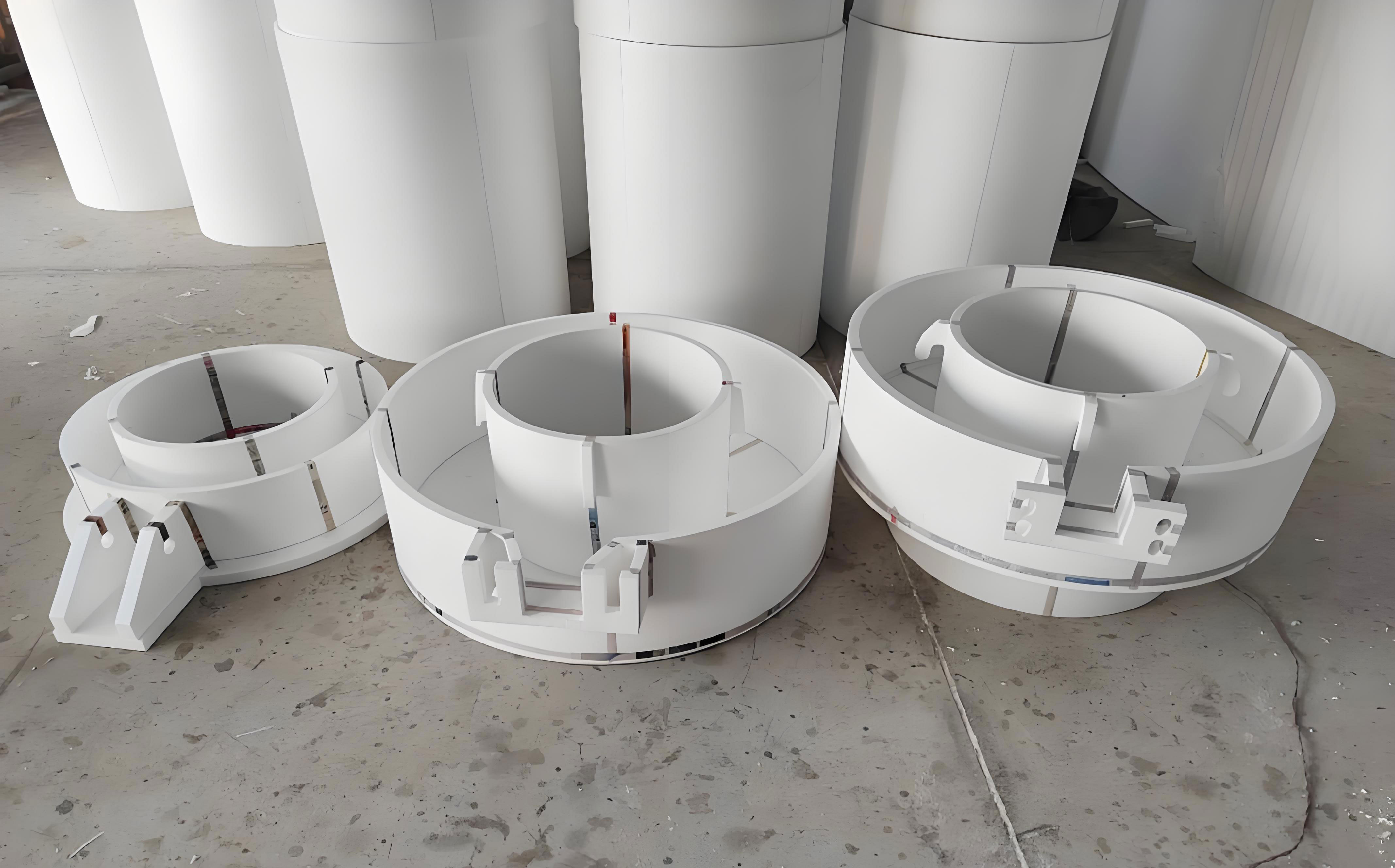
The experimental setup for this investigation involved the production of Y-block test castings from HT100 gray iron. The charge materials, including steel scrap, pig iron, and necessary ferroalloys, were melted in a medium-frequency induction furnace. After reaching a superheating temperature and adjusting the composition to the target range shown in Table 1, the melt was inoculated and subsequently poured into the vibrating lost foam casting molds. The vibration frequency was maintained constant at 35 Hz, while the amplitude was varied at 0 mm (no vibration), 2 mm, 3 mm, and 4 mm to study its isolated effect.
| C | Si | Mn | P | S | Fe |
|---|---|---|---|---|---|
| 3.50 | 2.60 | 0.50 | <0.07 | <0.06 | Bal. |
The microstructural analysis was performed using optical microscopy on both unetched samples (for graphite morphology) and samples etched with 4% nital (for matrix and austenite morphology). Quantitative analysis of graphite parameters was conducted using image analysis software. Mechanical properties were assessed through Brinell hardness tests and tensile testing at room temperature. Fractography was performed using a scanning electron microscope to analyze the fracture mechanisms.
Influence of Amplitude on Graphite Morphology
The morphology, size, and distribution of graphite flakes are paramount in determining the properties of gray iron. The application of vibration in lost foam casting significantly altered these characteristics. Without vibration, the graphite structure comprised mainly of type A flakes but also contained some blocky type C graphite. As the vibration amplitude was introduced and increased, a notable refinement occurred. The graphite flakes became shorter and thinner, with a higher population of type A graphite. The mechanical agitation promotes melt flow, reduces local temperature gradients and concentration fluctuations of carbon, and hinders the unrestricted growth of graphite nuclei, leading to this refined structure.
A quantitative summary of the graphite analysis is presented in Table 2. The area fraction of graphite exhibited a non-monotonic trend with amplitude, first decreasing, then increasing, and finally decreasing again. The shortest average graphite length was achieved at an amplitude of 3 mm. This complex behavior suggests that while vibration generally refines graphite, the optimal energy input for maximizing graphite dispersion or minimizing its volume fraction is amplitude-dependent within the lost foam casting process.
| Amplitude (mm) | 0 | 2 | 3 | 4 |
|---|---|---|---|---|
| Graphite Area Ratio (%) | 11.9 | 8.7 | 12.3 | 9.2 |
| Average Graphite Length (mm) | 0.36 | 0.31 | 0.19 | 0.35 |
Influence of Amplitude on Primary Austenite Morphology
The primary solidification product in hypoeutectic gray iron is austenite dendrites, whose morphology forms a skeletal framework that persists in the final microstructure. Vibration during lost foam casting profoundly transforms this framework. Without vibration, the structure consisted of relatively coarse columnar dendrites alongside some finer cellular grains. Upon applying vibration, the columnar growth was suppressed. At an amplitude of 2 mm, a well-developed cellular dendritic structure was observed. Further increase in amplitude to 3 mm resulted in less developed cellular grains, and at 4 mm, the cellular grains appeared short and coarse without forming an extensive interconnected network.
The refinement mechanism can be analyzed by considering the forces acting on a growing dendrite arm during vibration in the lost foam casting environment. The dendrite experiences a combined force at its root due to vibration-induced drag in the viscous melt and inertial forces. This net force, which can lead to dendrite arm fragmentation or remelting, is a function of the vibration parameters and dendrite geometry. For a simplified model, the combined stress ($\sigma_{total}$) at the root of a dendrite arm can be expressed as:
$$
\sigma_{total} = \sigma_{viscous}(L) + \sigma_{inertial}(L) = \frac{24 \eta L^2}{D_r^3} V + \frac{4 \rho L^2}{D_r} \alpha
$$
where $\eta$ is the melt viscosity, $L$ is the characteristic length related to vibration amplitude, $D_r$ is the dendrite arm radius, $V$ is the relative melt velocity, $\rho$ is the dendrite density, and $\alpha$ is the acceleration. This equation illustrates that increasing the amplitude ($L$) significantly increases the stress, particularly the viscous drag component, promoting dendrite arm fragmentation. This fragmentation increases nucleation sites, leading to the observed transition from columnar to equiaxed/cellular growth in vibrated lost foam casting. However, at very high amplitudes, the induced fluid flow and thermal fluctuations might also promote the remelting of very small secondary arms, leading to coarsening of the remaining structure, which explains the less ideal structures at the highest amplitude of 4 mm.
Influence of Amplitude on Matrix Microstructure
The matrix of all produced gray irons consisted of pearlite. However, the interlamellar spacing and morphology of the cementite within the pearlite were affected by vibration in the lost foam casting process. Without vibration, the pearlite exhibited a relatively coarse lamellar structure. The most significant change was observed at an amplitude of 2 mm, where the cementite lamellae appeared to coarsen, the interlamellar spacing increased, and there was a noticeable tendency for the cementite to spheroidize or become more granular. At higher amplitudes (3 and 4 mm), the pearlite spacing appeared to decrease again, becoming finer than in the non-vibrated sample. This can be attributed to the increased undercooling and altered solidification kinetics induced by mechanical vibration during lost foam casting, which affects the eutectoid transformation that forms the pearlite matrix.
Influence of Amplitude on Mechanical Properties
The changes in microstructure induced by varying the vibration amplitude in lost foam casting directly translated to changes in mechanical properties.
Hardness
The Brinell hardness showed a trend of initial increase followed by a decrease with increasing amplitude. The maximum hardness of approximately 160 HBW was achieved at an amplitude of 3 mm. This peak correlates with the finest observed pearlite spacing at this amplitude, as fine pearlite is harder than coarse pearlite. The lower hardness in the non-vibrated sample is associated with its mixed columnar/cellular austenite framework and coarser matrix. The sample vibrated at 2 mm, despite having a refined austenite network, showed lower hardness due to the coarsened/globular cementite in its pearlite, which is less effective at impeding deformation than fine lamellae.
Tensile Strength and Elongation
The ultimate tensile strength (UTS) and elongation followed a similar trend, peaking at an amplitude of 2 mm before decreasing. The optimal values were 147.51 MPa and 1.17%, respectively. The superior performance at 2 mm is attributed to the synergistic effect of a refined and well-developed cellular austenite skeleton, which effectively bears load, and the refined type A graphite flakes, which are less detrimental as stress concentrators. The formula for the cooling rate ($\dot{T}$) influenced by vibration-induced convection can be conceptually related to this refinement:
$$
\dot{T}_{vibrated} \approx \dot{T}_{static} + k \cdot (A \cdot f)^n
$$
where $\dot{T}_{static}$ is the cooling rate without vibration, $A$ is amplitude, $f$ is frequency, and $k$ and $n$ are constants. Increased cooling rate promotes finer microstructure. However, at amplitudes of 3 and 4 mm, the degradation of the austenite network continuity and the possible increase in micro-porosity (as inferred from fractography) led to a reduction in both strength and ductility, despite the finer graphite at 3 mm.
| Amplitude (mm) | Hardness (HBW) | UTS (MPa) | Elongation (%) |
|---|---|---|---|
| 0 | ~142 | ~125 | ~0.85 |
| 2 | ~155 | 147.51 | 1.17 |
| 3 | 160 | ~135 | ~0.95 |
| 4 | ~154 | 108.40 | ~0.90 |
Fracture Behavior
Fractographic analysis revealed that failure occurred primarily via cleavage of the metallic matrix and decohesion around graphite flakes, which act as internal notches. The fracture surfaces contained numerous cavities associated with graphite flakes. The sample produced with an amplitude of 2 mm showed a slightly higher density of shallow micro-dimples adjacent to cleavage facets, indicating marginally better micro-ductility, consistent with its higher elongation. In contrast, samples from other conditions, particularly at 0 mm and 4 mm amplitudes, exhibited larger and more numerous cavities, explaining their lower strength and ductility. This highlights the role of vibration in lost foam casting not only in refining structure but also in potentially reducing shrinkage porosity through forced feeding from inertial forces.
Conclusion
The application of mechanical vibration during the lost foam casting process is an effective method for modifying the microstructure and enhancing the mechanical properties of gray cast iron. The amplitude of vibration is a critical parameter with non-linear effects:
- Microstructural Refinement: Vibration promotes the formation of shorter, thinner type A graphite flakes and transforms the primary austenite morphology from columnar to a refined cellular dendritic structure. The optimal austenite network was achieved at a moderate amplitude of 2 mm. The pearlite matrix is also affected, showing coarsening and incipient spheroidization at this amplitude.
- Mechanical Properties: Hardness, tensile strength, and elongation all exhibit a peak at specific amplitudes. Maximum hardness (160 HBW) was obtained at 3 mm, correlated with the finest pearlite spacing. Maximum tensile strength (147.51 MPa) and elongation (1.17%) were achieved at 2 mm, resulting from the optimal combination of a robust refined austenite skeleton and less detrimental graphite morphology.
- Underlying Mechanisms: The improvements are attributed to vibration-induced dendrite fragmentation, increased effective undercooling, enhanced melt convection, and reduced shrinkage porosity. However, excessive amplitude can lead to dendrite remelting, degradation of the continuous austenite framework, and potentially detrimental flow conditions, leading to property deterioration.
This study confirms that optimizing the vibration parameters, specifically amplitude, is essential for harnessing the full benefits of the lost foam casting process to produce gray iron castings with superior and reliable performance.