
In the production of small, high-volume castings for industrial applications, traditional casting methods can struggle with efficiency and precision. My experience in developing and applying a specialized lost foam casting technique—cluster casting—has proven to be a transformative solution. This guide details the complete technical pathway for implementing this process, drawing from extensive practical application in producing components like spacer blocks. The lost foam casting process, where a foam pattern coated with refractory material is vaporized by molten metal, is uniquely amplified in its cluster variant to maximize throughput for small parts.
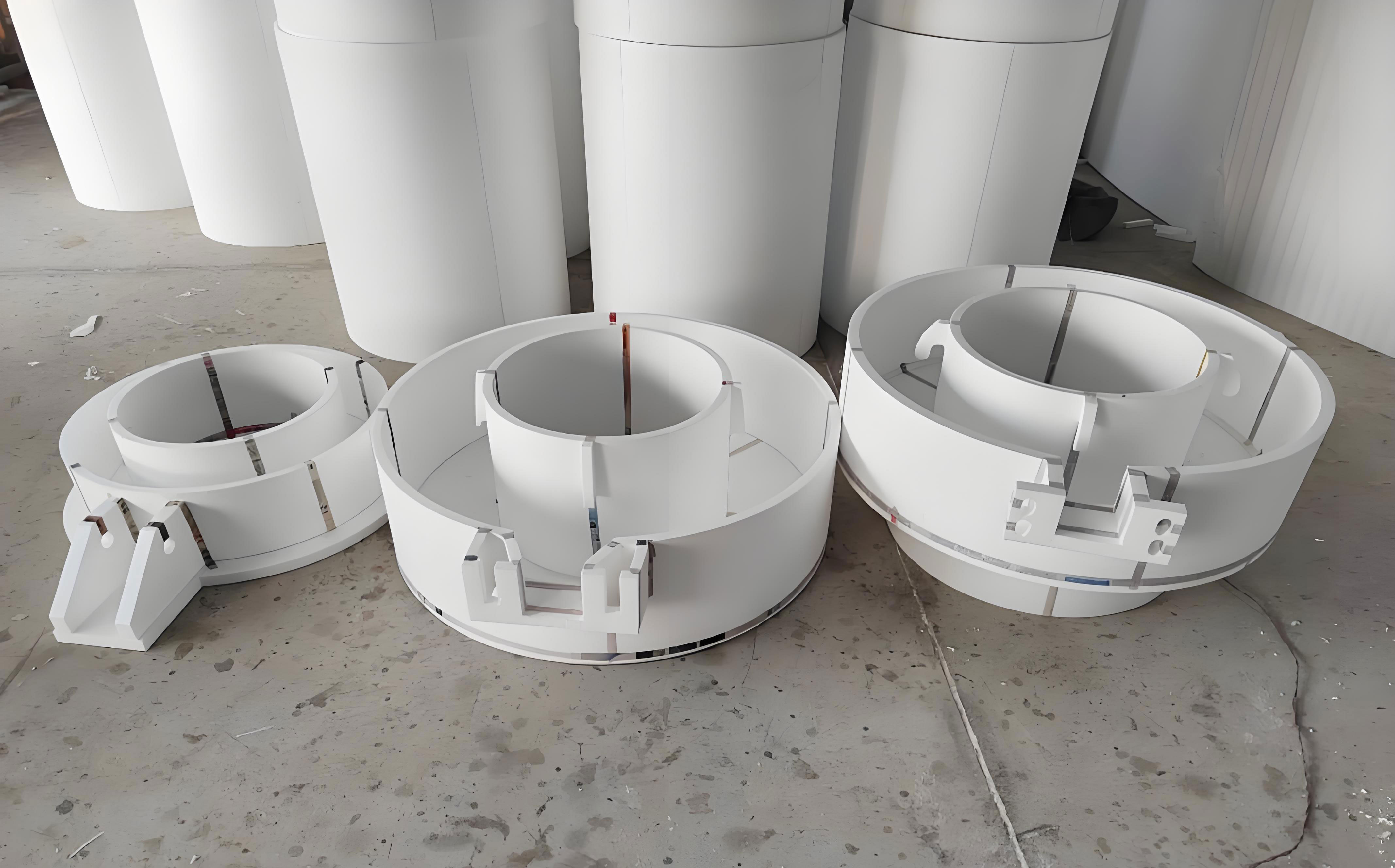
The core advantage of cluster lost foam casting lies in its systemic efficiency. By assembling multiple foam patterns onto a common gating system, we achieve high mold yields, often exceeding 98%. This approach simplifies mold assembly, optimizes metal fluidity and feeding, and perfectly matches the batch capacity of standard foundry equipment like medium-frequency induction furnaces and sand flasks. The following sections provide a granular, first-person account of the process parameters, material science, and defect control strategies essential for success.
1. Process Fundamentals and Pattern Assembly
The initial and most critical phase in cluster lost foam casting is the creation and assembly of the expendable foam patterns. For the production of high-integrity components, we select Expanded Polystyrene (EPS) with a density of 18 g/cm³. This density offers an optimal balance between pattern strength for handling and minimal gas generation during decomposition. Patterns are machined using CNC technology to ensure dimensional accuracy, critical for features that will be used in the as-cast state.
The innovation in cluster lost foam casting is the strategic assembly. Individual patterns are attached via their gates to longer, vertical runners. A typical cluster for a spacer-type component involves creating sub-assemblies where two patterns are bonded to a single horizontal ingate (e.g., 15mm x 15mm cross-section). Multiple of these sub-assemblies are then spaced at precise intervals (e.g., 50mm) along a vertical runner (e.g., 40mm x 25mm). A single cluster can consist of 7 such sub-assemblies, yielding 14 castings per vertical runner. The gating system is designed not only for metal delivery but also to act as a feeding channel to counteract solidification shrinkage, a principle expressed by ensuring adequate modulus. The modulus (M) of a casting section is given by its Volume (V) divided by its Cooling Surface Area (Ac):
$$M = \frac{V}{A_c}$$
The gating channels are designed to have a modulus greater than that of the casting sections they feed, ensuring they remain liquid longer to act as an effective riser.
2. Refractory Coating: Composition, Rheology, and Application
The coating applied to the foam cluster is the critical interface between the decomposing pattern and the molten metal. Its functions in lost foam casting are more demanding than in conventional processes: it must provide refractory resistance, possess sufficient permeability to allow pattern pyrolysis gases to escape, and have high dry strength to withstand sand compaction and metal static pressure.
The coating is a water-based suspension of carefully selected materials. The choice of refractories depends on the alloy being poured; for carbon steels, a blend of zircon flour and silica flour is optimal. Binders are both organic (for green strength) and inorganic (for high-temperature strength). Suspension and other additives ensure stability and proper application properties.
| Component | Function | Weight Percentage (%) | Key Properties/Notes |
|---|---|---|---|
| Zircon Flour | Primary Refractory | 73 | High refractoriness, low thermal expansion. |
| Silica Flour | Secondary Refractory | 16 | Cost-effective, fills interstices. |
| Phenolic Resin | High-Temp Binder | 4 | Provides sintered strength during pour. |
| Polyvinyl Acetate (PVA) | Low-Temp Binder | 3 | Imparts green strength after drying. |
| Carboxymethyl Cellulose (CMC) | Suspension Agent/ Binder | 2 | Controls viscosity and improves coating strength. |
| Lithium-based Bentonite | Suspension Agent | 2 | Thixotropic agent, prevents settling. |
| Water | Carrier Vehicle | To Rheology | Adjusted to achieve a target Baume density (~70°Bé). |
The coating preparation protocol is sequential. First, the suspension agents (CMC, bentonite) are dispersed in water under high shear for 30-40 minutes. The refractory powders are then added and mixed for another 30 minutes. Finally, the liquid binders (resin, PVA) are incorporated, and the batch is mixed for a further 2 hours to achieve complete homogenization and de-aeration.
Application involves dipping or brushing the assembled foam cluster. The coating thickness is paramount and typically targeted between 1.2mm and 1.4mm. This is achieved through two coats. After the first application, the cluster is dried in a controlled oven at 45-55°C for 12 hours. A second coat is applied and dried for another 12 hours. Any bare spots or damaged areas must be meticulously repaired before proceeding. The final, dried coating must be uniform and free of cracks to prevent metal penetration.
3. Gating System Design and Mold Assembly
The gating design for cluster lost foam casting must ensure smooth, rapid, and controlled filling to compensate for the endothermic decomposition of the foam. The system is designed as a pressurized system to promote a planar filling front. For a standard 1000mm x 1000mm x 900mm flask, the design follows a top-pouring, bottom-vacuum scheme.
The system is sized using a choke principle. The cross-sectional area ratio from the sprue to the ingates is designed to be approximately 1 : 1.1 : 2.4. For a cluster box holding multiple clusters, the main sprue (e.g., 65mm x 65mm) feeds into a primary runner, which then branches. Each branch feeds several vertical cluster runners. The total cross-sectional area of all ingates is less than that of the sprue, maintaining pressure. The fill time (t) can be approximated using Bernoulli’s principle and accounting for foam degradation:
$$t \approx \frac{V_{casting}}{\mu \cdot A_{choke} \cdot \sqrt{2gh}}$$
where $V_{casting}$ is the total volume of metal in the cluster, $\mu$ is a discharge coefficient (reduced for lost foam casting due to foam back-pressure), $A_{choke}$ is the smallest cross-sectional area in the system, $g$ is gravity, and $h$ is the effective metallostatic head.
Mold assembly, or “boxing,” is a precision operation. The coated cluster is placed in the flask, and special attention is paid to complex features like holes. Sand is introduced via a rain-style sand filler to minimize coating damage. The use of protective baffles above delicate cluster sections is advisable. Three-dimensional vibration is then applied to achieve a uniform and high compaction density of the unbonded sand, ensuring mold rigidity during pouring.
4. Pouring Protocol and Process Control Parameters
Strict control of pouring parameters is non-negotiable in lost foam casting to manage the thermal and gaseous dynamics. For carbon steel castings like ZG270-500, the following protocol is established:
| Parameter | Target Value / Range | Rationale and Control Method |
|---|---|---|
| Furnace Tap Temperature | 1700°C | Accounts for temperature loss during tapping, holding, and transfer. Ladle cover compound used to minimize heat loss. |
| Pouring Temperature | 1675 – 1680°C | Optimal fluidity to counteract foam cooling; minimizes gas absorption and penetration defects. |
| Vacuum Level | 0.04 – 0.05 MPa (50 kPa) | Draws decomposition gases through the coating, stabilizes the mold, and assists filling. Excessive vacuum promotes penetration. |
| Pouring Speed | Fast, Continuous | Maintains a full pouring basin to prevent slag entrainment and ensures a consistent metal head pressure. |
| Pouring Method | Top-Pour, followed by “hot-topping” | Quick fill minimizes cold defects; final addition of hot metal to the sprue feeds solidification shrinkage. |
The negative pressure, applied through the bottom of the flask, is a defining feature of lost foam casting. The required vacuum (ΔP) must overcome the gas pressure from foam decomposition (Pgas) and the capillary pressure in the coating/sand (Pcap), while being less than the pressure that would cause metal infiltration into the sand pores. It can be conceptually framed as:
$$P_{cap} + P_{gas} < \Delta P < \frac{2\gamma \cos\theta}{r_{pore}}$$
where $\gamma$ is the surface tension of the metal, $\theta$ is the contact angle, and $r_{pore}$ is the effective pore radius in the coating/sand matrix. The operational value of 50 kPa is a practical balance derived from experience.
5. Defect Analysis and Mitigation Strategies in Cluster Casting
Despite its advantages, cluster lost foam casting is susceptible to specific defects whose root causes must be understood for prevention.
Penetration and Burn-On (Vein Defects): This manifests as a rough, fused-sand surface, often on upper faces of the cluster. Causes: Localized coating failure due to sand erosion during filling, or excessive pouring temperature/vacuum lowering metal viscosity and increasing capillary force. Mitigation: Use of rounded, ceramic-coated sand (e.g.,宝珠砂) improves flowability and reduces abrasion. Protective baffles during sand filling are crucial. Strict adherence to the 1675-1680°C pouring temperature and 50 kPa vacuum is essential.
Cold Shuts and Misruns: These appear as incomplete fusion of metal streams or unfilled sections. Causes: The primary cause is the significant heat sink effect of the vaporizing foam. Low pouring temperature, slow filling, or a gating design that causes premature metal cooling are contributors. Mitigation: The fast-pour, top-gate system is designed to combat this. Ensuring the sprue and runner cross-sections are sufficiently large to maintain hot metal delivery is key. The metal temperature must be at the high end of the acceptable range.
Carbon Pick-Up: Unique to lost foam casting of steel, the decomposing foam generates a carbon-rich atmosphere which can diffuse into the metal surface. Mitigation: The alloy charge chemistry is targeted at the lower specification limit for carbon. The use of EPS (as opposed to EPMMA, which has higher carbon content) and ensuring high coating permeability to quickly evacuate pyrolysis gases also help control this issue.
Pattern Shift or Distortion: This is a dimensional inaccuracy caused by foam deformation during sand compaction or due to buoyant forces from the metal. Mitigation: Adequate coating dry strength is the first defense. The 3D vibration cycle must be optimized—sufficient to compact sand fully, especially in internal cavities, but not so aggressive as to distort the foam. A well-compacted mold also resists metal static pressure.
6. Conclusion and Broader Applicability
The cluster lost foam casting methodology detailed here represents a highly optimized production system for small, precision castings required in large volumes. By integrating meticulous pattern engineering, a scientifically formulated coating, a dynamically calculated gating system, and tightly controlled pouring parameters, the process achieves exceptional yield, dimensional accuracy, and surface finish.
The success with spacer blocks has led to the broad application of this cluster lost foam casting technique to a family of similar components: counterweights, pressing blocks, motor connection flanges, and water channel parts. The principles remain constant—cluster for efficiency, robust coating for interface integrity, and rapid top-pouring for thermal management. This approach fully leverages the inherent advantages of the lost foam casting process, translating them into tangible economic benefits through reduced machining, lower cleaning costs, and dramatically improved production rates, all while maintaining a cleaner and safer working environment compared to traditional green sand molding. The future of high-volume, small-component casting lies in such advanced, integrated applications of the lost foam casting technology.