
As a practitioner deeply involved in advanced foundry processes, I have dedicated significant effort to the research and application of lost foam casting technology. This innovative method, which utilizes vaporizable foam patterns to create precise metal components, has revolutionized the production of complex castings, particularly for demanding sectors like engineering machinery. Our work focuses on harnessing its full potential to achieve high-quality, efficient, and environmentally friendly manufacturing. Lost foam casting eliminates traditional steps such as core-making, mold assembly, and parting line management, streamlining production cycles and enhancing dimensional accuracy. In this comprehensive account, I will detail our journey in mastering this technology, from fundamental principles to large-scale industrial application, emphasizing the critical role of lost foam casting throughout.
The lost foam casting process is systematically divided into three distinct zones: the white zone, yellow zone, and black zone. Each zone encompasses specific operations that are crucial for final product quality. In the white zone, pattern production occurs, involving pre-expansion of foam beads, molding of pattern segments, and assembly of the complete foam model. The yellow zone deals with coating preparation, dipping, and drying, where a refractory layer is applied to the foam pattern. Finally, the black zone covers molding, melting, pouring, sand handling, and cleaning, where the actual metal casting takes place. The holistic integration of these zones defines the success of lost foam casting. Key characteristics include the use of a monolithic foam pattern that negates the need for cores and complex mold assemblies, the employment of dry sand for easy shakeout, minimal flash, and reduced cleaning labor. Notably, the white zone offers a clean working environment, and the process is adaptable to various metals, though it is optimal for castings under 500 kg with wall thicknesses above 4 mm. Economically, it benefits from high-volume production runs to justify mold costs. Technologically, lost foam casting excels for components with intricate internal cavities, as it avoids parting-line issues, improves dimensional precision to CT6-CT8 grades, reduces weight by 10-20%, and decreases machining allowances by 15-30%, thereby saving energy and tools. These attributes make lost foam casting a competitive choice for集约化 and规模化 production of complex castings.
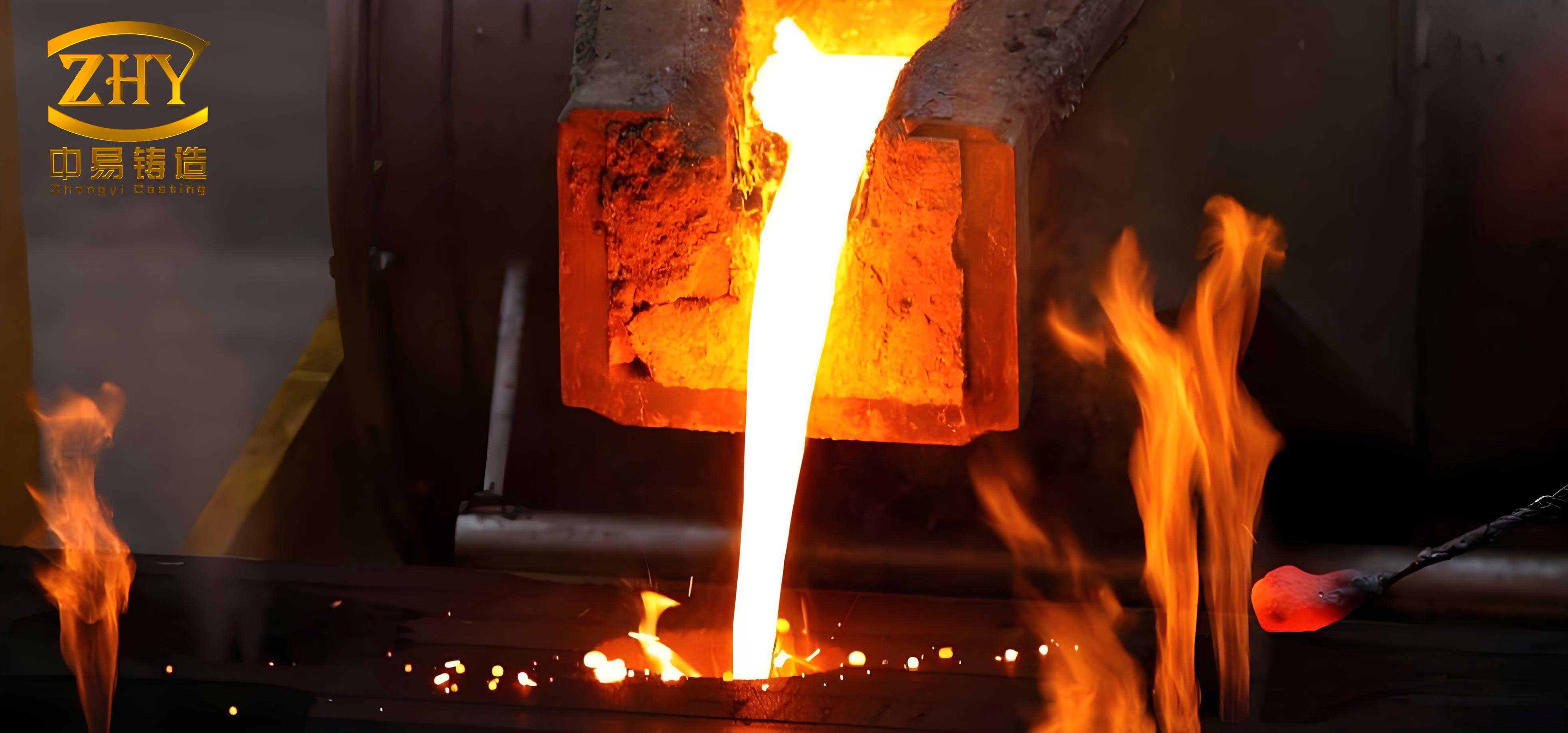
Our specific application target was a loader transmission case, a large, thin-walled shell casting with a complex internal structure. This component features a three-tier external阶梯 structure and a double-layer internal cavity system. Made from HT200 gray iron, it requires stress-relief annealing and must be free from defects like cracks, cold shuts, sand inclusions, slag, and deformation. With numerous machined surfaces, high-pressure oil passages, and hydraulic valve faces, it must pass rigorous pressure tests without leakage. The casting’s轮廓 dimensions are 1032 mm × 590 mm × 606 mm, with a main wall thickness of 12 mm, maximum thickness of 30 mm, and a weight of 250 kg. Producing such a part via lost foam casting presented significant challenges but also offered immense rewards in terms of quality and efficiency. The intricacies of this casting perfectly align with the strengths of lost foam casting, particularly its ability to replicate complex geometries without cores.
Our technical research encompassed several critical areas to optimize the lost foam casting process for this application. First, we focused on国产化 of foam bead materials, collaborating with domestic suppliers to refine formulations for pre-expansion and molding性能. This involved微调发泡 parameters to achieve optimal bead characteristics compatible with imported German pre-expansion equipment. The goal was to ensure consistent, high-quality foam patterns that minimize defects in the final casting. Second, we mastered the工艺特性 of imported molding machines, implementing scientific control over steam temperature, pressure, and time to achieve optimal,模式化, and user-friendly parameter settings. Third, we developed a novel assembly scheme utilizing robotic adhesion for the foam patterns, replacing manual gluing to enhance productivity and bonding quality. Fourth, we optimized coating formulations for improved suspension,涂挂性, permeability, and reduced drying cycles. Fifth, we designed and fabricated various tooling, including烘烤 carts, sand boxes, and other fixtures. Sixth, we designed and validated the gating system and pouring orientation for the pattern clusters. Seventh, we studied the vibration compaction parameters and the effects of vacuum negative pressure, flow rate, and holding time on casting quality, investigating pattern deformation during molding to find solutions. Eighth, we addressed specific issues like blind-hole堵塞 and sand adhesion in complex geometries by employing随形 sand cores and sealing techniques. These research initiatives were integral to advancing our lost foam casting capabilities.
To support these efforts, we carefully selected and integrated advanced equipment and materials, each contributing to the工艺性 of the lost foam casting process. The following tables summarize key aspects of our setup across the white, yellow, and black zones.
| Zone | Equipment/Material | Supplier/Type | Key工艺性 Features | Role in Lost Foam Casting |
|---|---|---|---|---|
| White Zone | Pre-expansion Machine | German Teubert, intermittent automatic | Computer-controlled temperature, steam pressure, time; density微调 via sensors; output 40-50 kg/h;珠粒熟化 in controlled rooms (20-25°C). | Produces uniform, stable expanded beads with戊烷 content >6.5%, essential for high-quality foam patterns in lost foam casting. |
| Molding Machine | German Teubert, fully automatic horizontal type | Large platen area molds two large pattern segments (800mm×650mm) simultaneously; automated feeding, molding, ejection; minimal steam/冷却液 leakage. | Ensures precise, smooth pattern segments with high dimensional accuracy, critical for lost foam casting of complex parts. | |
| Adhesion System | Japanese Kawasaki robotic胶液 application | Robot follows programmed paths for uniform glue dispensing on bonding surfaces; fixed pattern plates. | Enables fast, consistent pattern assembly, improving粘模 quality and throughput in lost foam casting lines. | |
| Yellow Zone | Coating System | Domestically developed (e.g., Minfu brand), liquid-based涂料 | Good suspension,涂挂性, adhesion, low shrinkage; applied via dipping; dried in electric烘烤 rooms with forced air, temperature/humidity control, timed dehumidification. | Provides refractory layer with adequate strength and permeability for lost foam casting, ensuring clean metal surface and easy清理. |
| Black Zone | Molding Line | American福康, micro-vibration automatic | Computer-controlled pre-sanding, vibration, flask handling; multi-angle分区 vibration; capable of 12 flasks/hour; supports多种浇注方式 including bottom and vertical pouring without film sealing. | Ensures effective sand compaction around patterns and stable浇注 conditions, vital for defect-free lost foam casting. |
| Melting Furnace | American应达, 6t medium-frequency induction | Automated control for fast melting of high-quality iron; capacity 20 t/h; power consumption <600 kWh/t; equipped with dust collection. | Delivers consistent, clean molten metal at required temperatures for lost foam casting浇注. | |
| Sand Handling System | Domestic manufacturer | Two-stage magnetic separation, fluidized cooling, bucket elevators, belt conveyors; with除尘 and ventilation. | Maintains dry, cool sand for molding, supporting continuous lost foam casting operations. | |
| Cleaning Equipment | Danish迪砂 shot blaster,联合液帘式 spray booth | Simultaneous shakeout, core removal, and cleaning; efficient oxide removal; paint spray with waste collection. | Completes the lost foam casting process by producing clean, finished castings ready for dispatch. |
The selection and optimization of these elements were guided by the unique demands of lost foam casting. For instance, the pre-expansion process relies on precise control of parameters to achieve desired bead density, which can be modeled using empirical relationships. A simplified formula for final bead density ($\rho_f$) in lost foam casting might consider initial bead density ($\rho_0$), steam temperature ($T$), pressure ($P$), and exposure time ($t$):
$$ \rho_f = \rho_0 \cdot e^{-k \cdot (T \cdot P \cdot t)} $$
where $k$ is a material-specific constant. In practice, we fine-tuned these parameters through iterative testing to achieve densities that balance pattern strength and gas evolution during pouring in lost foam casting.
Our research yielded significant成果 that enhanced the reliability and scalability of lost foam casting. The following table summarizes key achievements and their applications:
| Research Area | Achievement | Application Impact in Lost Foam Casting |
|---|---|---|
| Foam Bead国产化 | Successful adaptation of domestic共聚物 beads to imported German pre-expansion equipment, with optimized配方 and parameter control. | Ensured stable supply of high-quality pre-expanded beads, reducing costs and improving pattern consistency for lost foam casting. |
| Molding Parameter Optimization | Established optimal steam温度, pressure, and time settings for进口成型 machines,实现模式化 control. | Produced robust foam patterns resistant to deformation, minimizing gas and carbon defects in lost foam casting. |
| Robotic Pattern Assembly | Implemented robotic涂胶 for multi-layer pattern粘接, replacing manual methods. | Increased assembly speed by over 50%, improved bonding uniformity, and enabled flow-line production for lost foam casting of complex箱体. |
| Coating Development | Collaborated to develop domestic coatings with superior涂挂性, permeability, and low shrinkage (~0.5%). | Enhanced coating performance, reduced drying time, and prevented pattern distortion in lost foam casting. |
| Molding Process Study | Optimized vibration compaction recipes and真空负压 parameters (flow, pressure, hold time) for different products. | Reduced pattern deformation during molding and improved casting integrity in lost foam casting. |
| Blind-Hole Defect Resolution | Developed technique using随形 sand cores, coating, and sealing for扁状拐弯深盲孔. | Eliminated孔堵 and粘砂 in complex features like loader后壳体, expanding lost foam casting applicability. |
| Coating Shrinkage Measurement | Devised a simple method to quantify coating shrinkage ($S$): | Enabled quantitative analysis for coating selection/formulation, reducing shrinkage from 1.35% to 0.5% in lost foam casting coatings. |
The coating shrinkage measurement is particularly noteworthy. We defined shrinkage $S$ as:
$$ S = \frac{L_i – L_f}{L_i} \times 100\% $$
where $L_i$ is the initial coating length on a reference substrate, and $L_f$ is the final length after drying. This allowed us to compare formulations and minimize distortion in lost foam casting patterns. Furthermore, to address warping in large flat sections like the transmission case’s bottom frame during coating drying, we innovated by using polished ceramic tiles as烘烤托板. The tiles’ smooth, thermally stable surface provided even support, preventing deformation—a simple yet effective solution in lost foam casting.
The cumulative impact of these成果 is profound. In our lost foam casting production line, annual output for components like the loader transmission case exceeds 10,000 tons. The technology has resolved chronic issues associated with traditional casting, such as poor dimensional accuracy, difficult internal cleaning, and high scrap rates. For instance, dimensional tolerances consistently achieve CT7 levels, machining allowances are reduced by 20%, and overall weight savings enhance machine performance. The elimination of cores and binders also contributes to a greener process, with lower emissions and waste. Lost foam casting has thus enabled集约化 and规模化 production of high-integrity castings, strengthening competitiveness in the engineering machinery sector.
In conclusion, our extensive work demonstrates that lost foam casting is not merely an alternative but a superior manufacturing paradigm for complex, high-quality castings. The successful application to loader transmission cases underscores its ability to solve longstanding production challenges, improve product reliability, and support sustainable manufacturing. The technological advancements we’ve implemented—from material国产化 and robotic automation to process optimization—have collectively elevated the capabilities of lost foam casting. As we continue to refine this technology, its potential for broader industrial adoption grows, promising further innovations in precision casting. Lost foam casting stands as a testament to the synergy of research, engineering, and practical application, driving the foundry industry toward greater efficiency and excellence.