
In my extensive experience with lost foam casting, this process has proven highly suitable for producing wear-resistant steel castings, offering advantages such as low production cost, improved working environment, reduced labor intensity, high productivity, and compact footprint. Moreover, the mechanical and service properties of castings produced via lost foam casting generally meet user requirements and technical standards. However, issues related to surface and internal quality often plague foundries. Through production practice and dedicated research, I have found that by tailoring the process to specific conditions, applying scientific principles, maintaining a pragmatic attitude, establishing reasonable process protocols, enhancing process execution, and strengthening process analysis and summarization, these problems can be effectively mitigated.
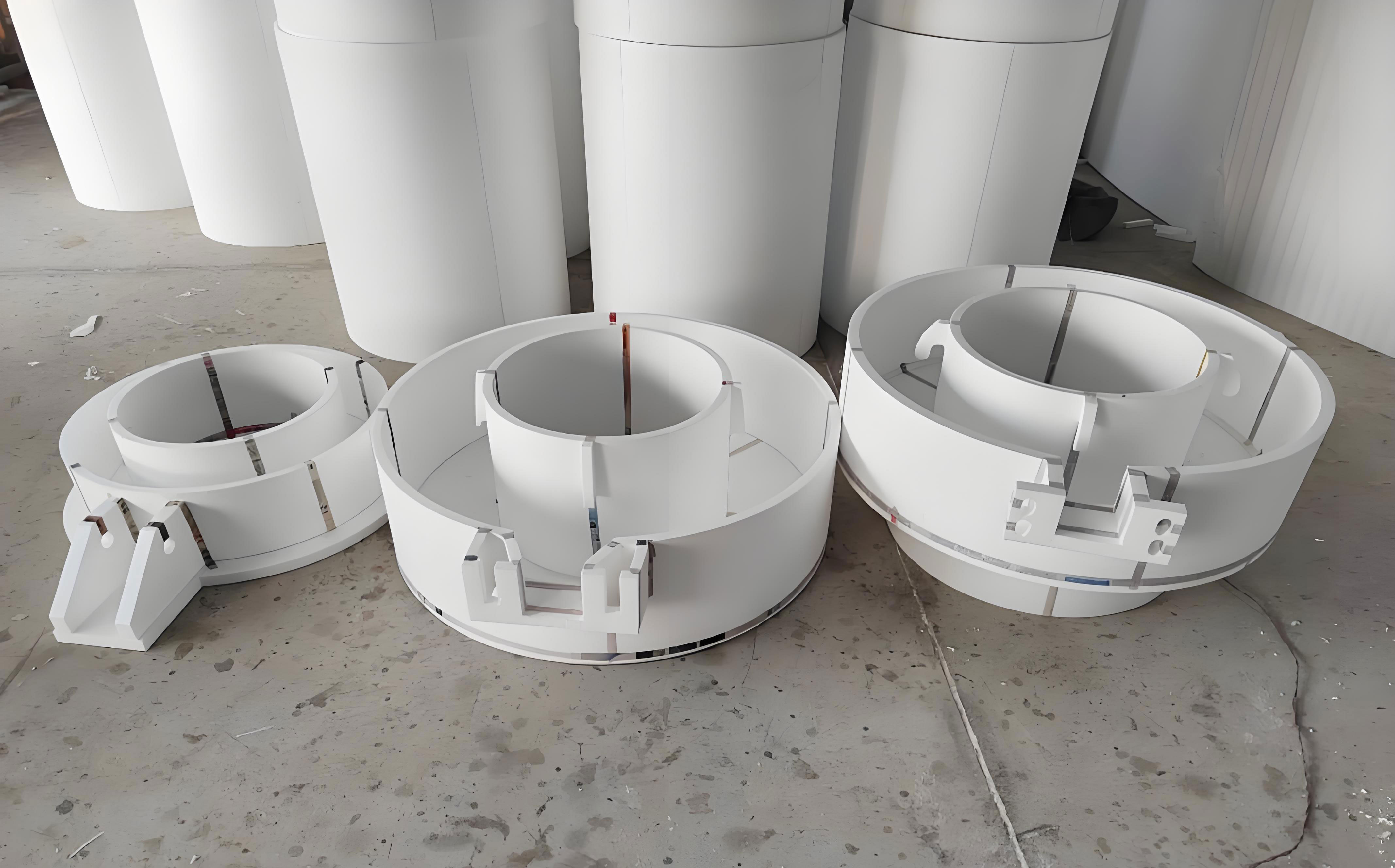
Wear-resistant castings produced by lost foam casting typically fall into two material categories: austenitic manganese steel (often referred to as Hadfield steel) and medium-low alloy steels. Each has distinct characteristics that influence defect formation and performance. In this article, I will analyze the common defects in these castings, discuss countermeasures, and elaborate on process design methods and key points for lost foam casting, aiming to provide a comprehensive reference for developing robust lost foam casting processes.
Common Defects in Wear-Resistant Steel Castings via Lost Foam Casting
The lost foam casting process involves evaporating a foam pattern with molten metal, which can lead to unique defects if not properly controlled. Based on my observations, the primary defects relate to inadequate wear resistance and premature failure of the castings.
Low Wear Resistance in Austenitic Manganese Steel Castings
The wear resistance of austenitic manganese steel depends heavily on its ability to work-harden under impact. Several factors in lost foam casting can compromise this:
- Incorrect Composition Design: The Mn/C ratio is critical. For high toughness, Mn/C ≥ 10 is often required, while for high wear resistance, Mn/C ≤ 8.5 may be preferable. The Cr/C ratio also plays a significant role. A general formula for optimizing wear resistance can be expressed as:
$$ \text{Optimal Wear Resistance Index} = k_1 \left(\frac{\text{Mn}}{\text{C}}\right) + k_2 \left(\frac{\text{Cr}}{\text{C}}\right) $$
where $k_1$ and $k_2$ are empirical constants dependent on specific service conditions.
- Improper Microalloying: Additions like chromium improve hardenability, while rare earths, titanium, and boron refine grains and enhance work-hardening capacity. Insufficient or excessive amounts can negate benefits.
- Low Initial Hardness: Surface decarburization during casting or heat treatment, and the absence of a work-hardened layer, reduce initial wear resistance.
- Porous As-Cast Structure: The solidification mode in lost foam casting, often intermediate, promotes segregation and hot tearing, hindering feeding and densification.
- Coarse Grain Structure: The low thermal conductivity and inherent properties of austenitic manganese steel lead to coarse grains if cooling is not controlled.
- Unfavorable Service Conditions: Insufficient impact or compressive stress in service fails to promote adequate work-hardening.
- Impure Steel Melt: Highly dispersed non-metallic inclusions remain due to inadequate refining.
- Incomplete Pattern Gasification: Use of non-casting grade expandable polystyrene (EPS) beads or too short filling times can leave residual foam, causing defects.
Failure of Austenitic Manganese Steel Castings
Failure often manifests as cracking or fracture, primarily due to:
- High Phosphorus Content: P content above 0.03% significantly embrittles the steel. This stems from high-P charge materials or weak dephosphorization during melting.
- Poor Gating System Design: Improper ingate location can create stress concentrations during solidification and cooling.
- High Pouring Temperature: Leads to columnar grains and increased thermal stress.
- Excessive Carbon Content: Promotes the formation of excessive and coarse carbide networks, creating weak paths.
- Incorrect Water Quenching (Solution Treatment): Too rapid heating causes thermal stress spikes; insufficient cooling allows carbide reprecipitation.
- Turbulent Mold Filling: Poor gating design causes chaotic flow, promoting erosion and inclusion entrapment.
- High Hot Tearing Tendency: Inherent to the alloy’s solidification characteristics and exacerbated by poor melt quality.
- Poor Casting Design: Inappropriate material selection or geometries that induce stress concentration.
Low Wear Resistance in Medium-Low Alloy Steel Castings
For these steels, wear resistance is achieved through heat treatment to form hard microstructures like martensite. Key issues include:
- Surface Decarburization during Heat Treatment: Reduces surface hardness.
- Inadequate Cooling Medium or Intensity: Fails to achieve the required quench hardness.
- Insufficient Cooling Capacity: The volume of quenchant is too small, reducing cooling efficiency.
- Porous Microstructure: Lack of feeding during solidification leaves microporosity.
Failure of Medium-Low Alloy Steel Castings
- Poor Gating System Design: Similar to austenitic steels, improper ingate placement causes stress concentrations.
- Incorrect Heat Treatment Process: Rapid heating induces thermal stress; too fast or uneven cooling creates high transformation stresses.
To summarize these defect causes, I have compiled the following tables:
| Defect Category | Specific Cause | Key Influencing Factor |
|---|---|---|
| Low Wear Resistance | Incorrect Mn/C & Cr/C Ratio | Alloy Design |
| Improper Microalloying | Addition Elements | |
| Low Initial Hardness | Surface Decarburization | |
| Coarse Grains & Porosity | Solidification Control | |
| Failure (Cracking/Fracture) | High P Content (>0.03%) | Melt Quality |
| High Pouring Temperature | Process Parameter | |
| Poor Gating Design | Process Design | |
| Incorrect Heat Treatment | Post-Casting Process |
| Defect Category | Specific Cause | Key Influencing Factor |
|---|---|---|
| Low Wear Resistance | Inadequate Quenching | Heat Treatment Parameters |
| Failure (Cracking/Fracture) | Stress Concentration from Gating/Design | Process & Casting Design |
Production Countermeasures for Defect Mitigation in Lost Foam Casting
Addressing the defects requires targeted strategies integrated into the lost foam casting process.
Improving Wear Resistance of Austenitic Manganese Steel
- Composite Refining and Nano-Modification: Implementing combined refining techniques—such as argon bottom blowing, slag cover refining, and ladle injection—significantly improves melt cleanliness. Nano-modification via powder injection or wire feeding enhances grain refinement.
- Optimizing Mn/C and Cr/C Ratios: For a given carbon content, experimental determination of the optimal ratios is crucial. The relationship can be modeled as:
$$ \text{Wear Performance} = f\left(\frac{\text{Mn}}{\text{C}}, \frac{\text{Cr}}{\text{C}}, \text{Microalloy}\right) $$
where $f$ represents a function determined through regression analysis of experimental data.
- Effective Microalloying: Precise additions: Cr for hardenability; RE, Ti, B for grain refinement and work-hardening enhancement.
- Enhancing Surface Hardness: In lost foam casting, a wear-resistant alloy layer can be cast onto working surfaces using a coating on the foam pattern. The coating may contain high-carbon ferrochromium as reinforcement, nano-scale iron powder as a regulator, Ce as a surfactant, PAF-modified starch as a binder, and borax as a solvent. After drying and coating with a high-permeability refractory paint, the assembly is cast under vacuum.
- Ensuring Complete Pattern Gasification: Use casting-grade EPS beads and optimize filling time to ensure full decomposition.
Improving Wear Resistance of Medium-Low Alloy Steels
- Melt Refining and Modification: Similar composite refining ensures a clean melt.
- Proper Heat Treatment: Correct selection of quenchant (e.g., polymer solutions, oil) and ensuring sufficient volume and agitation for uniform cooling.
- Optimized Feeding: Use of insulating sleeves on risers in lost foam casting improves feeding efficiency, reducing porosity.
Preventing Failure in Austenitic Manganese Steel
- Control Phosphorus: Maintain P < 0.03% through charge selection and refining.
- Lower Pouring Temperature: Reduce to minimize columnar grains and thermal stress. An empirical rule: $T_{\text{pour}} \approx T_{\text{liquidus}} + \Delta T$, where $\Delta T$ should be minimized based on casting geometry.
- Optimize Gating Design: Design gating to promote tranquil filling and avoid hot spots that cause stress concentration. Use simulation software if available.
- Proper Heat Treatment: Follow a controlled heating rate (especially during initial stages) and ensure rapid, uniform quenching.
Preventing Failure in Medium-Low Alloy Steels
- Gating and Risering Design: Consider not only feeding but also temperature distribution and stress minimization. Use multiple ingates to balance thermal gradients.
- Stress Relief Design: Incorporate fillets and avoid abrupt section changes in the casting design to reduce stress concentration during solidification and cooling.
The following table summarizes key countermeasures:
| Material | Target | Countermeasures | Process Stage |
|---|---|---|---|
| Austenitic Manganese Steel | Wear Resistance | Composite Refining, Optimized Mn/C, Surface Alloying | Melting, Pattern Making, Casting |
| Failure Prevention | P Control, Low Pour Temp, Optimized Gating | Melting, Process Design | |
| Both | Proper Heat Treatment | Post-Casting | |
| Medium-Low Alloy Steel | Wear Resistance | Effective Quenching, Feeding Optimization | Heat Treatment, Process Design |
| Failure Prevention | Stress-Minimizing Design, Controlled HT | Casting & Gating Design, Post-Casting |
Process Design Methods and Key Points for Lost Foam Casting
A successful lost foam casting process hinges on meticulous design. Here are the essential elements I consider:
- Sand Selection: For high pouring temperature steel castings, artificial sands like Ceramic Bead Sand (CBS) or Olivine sand are preferred. CBS offers low dust, good flowability, and environment friendliness. Olivine sand works well for austenitic manganese steel due to its chemical stability. Fine-mesh olivine sand is also an excellent refractory aggregate in coatings. The choice affects mold stability and surface finish.
- Use of Resin Sand Cores: For complex sections prone to sand inclusion or collapse during vibration, resin sand cores can be incorporated locally to ensure dimensional accuracy.
- Pattern Aging (Curing): Foam patterns must be fully aged to eliminate residual stresses and improve surface quality. Natural aging takes about 200 hours; artificial aging (in ovens at controlled temperature) reduces this to around 12 hours. Incomplete aging can lead to pattern deformation and casting defects.
- Pattern Assembly: Manual or semi-automatic assembly using cold glue and tape is common. Employing simple jigs improves accuracy and efficiency. Post-assembly, repair any glue gaps and allow for further aging to strengthen the pattern cluster, preventing sand erosion and slag defects.
- Insulating Risers: Using insulating sleeves on risers can increase yield by approximately 15%, as they prolong feeding time. The efficiency can be estimated by:
$$ \eta_{\text{riser}} = \frac{V_{\text{feeding}}}{V_{\text{riser}}} \times 100\% $$
where insulating materials increase $V_{\text{feeding}}$.
$$ K \propto \frac{1}{\mu \cdot \delta} $$
where $\mu$ is viscosity and $\delta$ is coating thickness, optimized for the specific metal and pattern size.
Process Design for Single-Station Vibration Compaction and Molding
In this setup, the pattern cluster is assembled outside the flask. Sand filling in the lost foam casting flask involves three zones:
- Base Sand: About 200 mm high, it supports the metal weight and anchors the pattern cluster.
- Molding Sand: The main body surrounding the pattern, directly exposed to thermal and chemical attack.
- Cover Sand: Supports the sprue, pouring cup, and plastic film for vacuum, also acting as a weight.
The process design must comprehensively consider the interactions among the casting, gating system, vacuum system, pattern cluster layout, and mold expansion forces. Key parameters include vibration frequency $f_v$, amplitude $A_v$, and time $t_v$ for compaction, which influence sand density $\rho_s$:
$$ \rho_s = g(f_v, A_v, t_v, \text{sand properties}) $$
Optimal compaction ensures mold rigidity without pattern distortion.
Vacuum level $P_v$ and duration are critical for removing decomposition gases and supporting the mold. A typical range is 0.04–0.06 MPa. The filling time $t_f$ should balance turbulence avoidance and complete pattern gasification:
$$ t_f \approx \frac{V_{\text{metal}}}{Q_{\text{pouring}}} $$
where $Q_{\text{pouring}}$ is the flow rate, designed via gating system calculations.
Discussion and Future Directions
To further advance the application of lost foam casting for premium wear-resistant castings, several areas warrant deeper investigation:
- Integrated Casting Process Simulation: Building a design system centered on casting simulation software can predict flow, solidification, stress, and defect formation in lost foam casting, enabling virtual optimization before production.
- Application of Regression Orthogonal Experimental Design: Using this statistical method to establish empirical engineering models for lost foam casting parameters (e.g., pouring temperature, vacuum level, coating properties) and casting quality outputs (e.g., hardness, defect rate). A generic model form could be:
$$ Y = \beta_0 + \sum \beta_i X_i + \sum \beta_{ii} X_i^2 + \sum \sum \beta_{ij} X_i X_j $$
where $Y$ is a quality metric, $X_i$ are process parameters, and $\beta$ are coefficients determined from experiments. - Advanced Composite Refining Techniques: Enhancing melt purity through improved argon stirring, slag engineering, and filtration specific to lost foam casting conditions.
- Advanced Surface Engineering: Perfecting nano-modification techniques and wear-resistant alloy casting-on (cast-in composite layers) methods for producing high-end, large wear parts via lost foam casting.
- Sustainability Aspects: Research into biodegradable foam patterns and sand reclamation systems to improve the environmental footprint of lost foam casting.
Conclusion
In conclusion, lost foam casting is a viable and advantageous process for manufacturing medium and large wear-resistant steel castings, primarily austenitic manganese steel and medium-low alloy steels. Each material requires specific strategies to enhance wear resistance and prevent failure, rooted in understanding their alloy characteristics and the unique aspects of the lost foam casting process. Key to success is achieving high melt purity, which forms the foundation for exploiting material properties. Upon this foundation, techniques like nano-modification and surface alloying via the lost foam process gain significant practical value. Meticulous process design—encompassing sand selection, pattern handling, gating and risering, compaction, and vacuum control—is paramount. Future efforts should focus on integrating simulation, advanced statistical modeling, and refining technologies to push the boundaries of quality and performance in lost foam casting for demanding wear applications. Through continuous improvement and adherence to sound engineering principles, the full potential of lost foam casting for producing reliable, high-performance wear-resistant castings can be realized.