
In my experience with manufacturing heavy-duty transmission housings, the lost foam casting process has been pivotal due to its ability to produce complex geometries with high dimensional accuracy. However, achieving consistent quality in lost foam casting requires meticulous control over various parameters, as defects like inclusions, slag inclusions, and iron penetration can significantly impact product performance. Through extensive analysis and process optimization, I have developed strategies to mitigate these issues, reducing the overall rejection rate to below 4%. This article delves into the root causes of these defects and outlines effective control measures, incorporating tables and formulas to summarize key insights. The lost foam casting process involves creating a foam pattern, coating it with refractory material, embedding it in sand, and pouring molten metal, which vaporizes the foam to form the casting. By emphasizing the importance of lost foam casting, I aim to share practical approaches that enhance reliability in industrial applications.
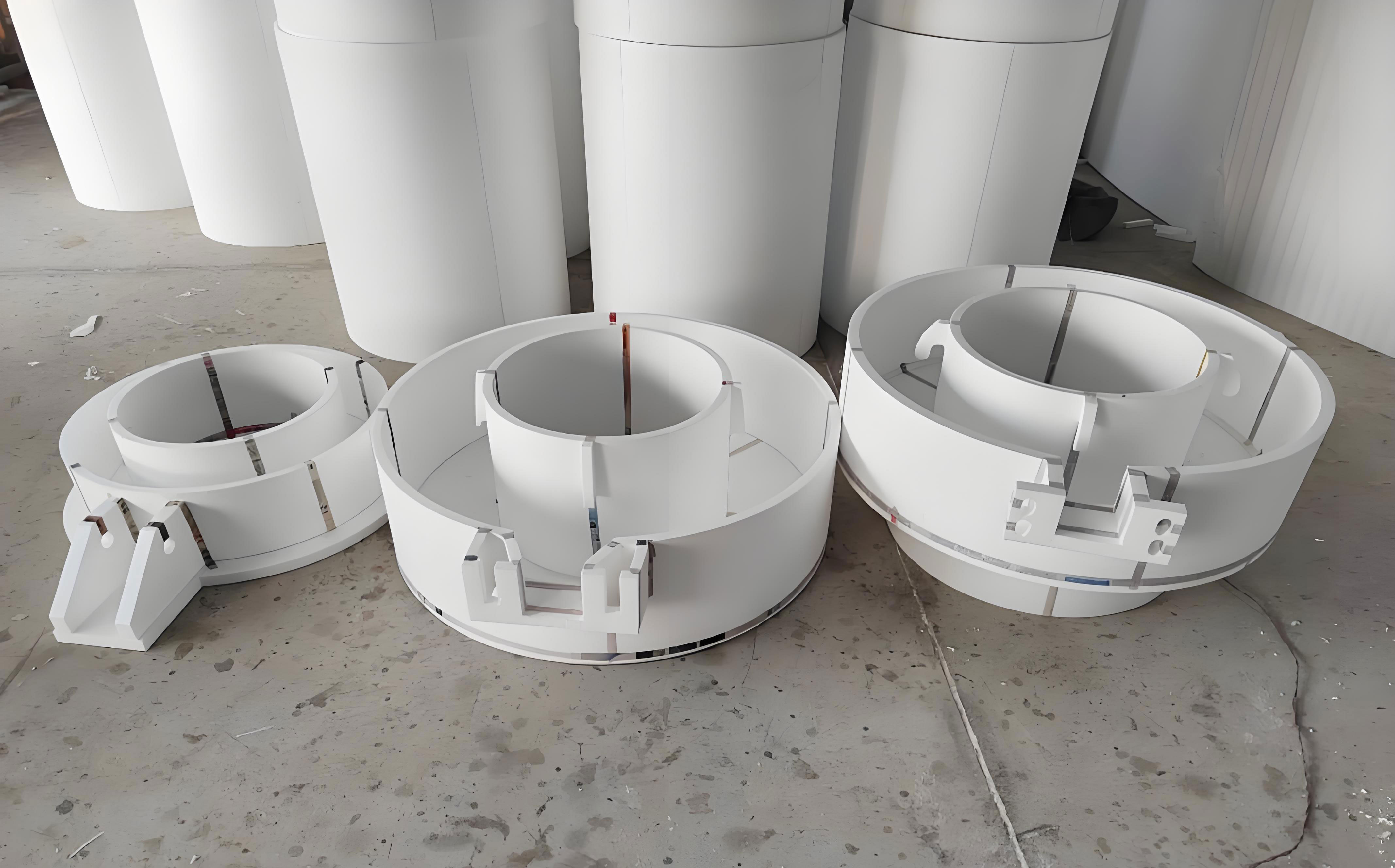
In lost foam casting, the transmission housing—a critical component in heavy vehicles—presents unique challenges due to its intricate design, with wall thicknesses ranging from 8 mm to 48 mm. The lost foam casting method is favored for its net-shape capabilities, but it is susceptible to defects if process variables are not tightly controlled. Over years of production, I observed that inclusions, slag inclusions, and iron penetration accounted for over 80% of rejections, as shown in Table 1. To address this, I conducted a systematic investigation into the mechanisms behind each defect, leveraging principles of lost foam casting such as foam decomposition, coating integrity, and metal flow dynamics. By integrating digital monitoring and process refinements, I achieved substantial improvements, which I will elaborate on in this discussion.
| Defect Type | Frequency (Count) | Percentage Contribution | Cumulative Percentage |
|---|---|---|---|
| Inclusions | 1600 | 32.4% | 32.4% |
| Iron Penetration | 1400 | 28.3% | 60.7% |
| Slag Inclusions | 1200 | 24.3% | 85.0% |
| Cold Shuts | 600 | 12.1% | 97.1% |
| Deformation | 100 | 2.0% | 99.1% |
| Sand Inclusions | 40 | 0.8% | 99.9% |
| Others | 5 | 0.1% | 100.0% |
The occurrence of inclusions in lost foam casting is primarily linked to the degradation of the coating or the entrapment of foam decomposition products. During pouring, the molten metal vaporizes the foam pattern, and if the coating is compromised, refractory particles can dislodge and enter the metal stream. In my analysis, scanning electron microscopy (SEM) revealed that inclusion sites contained high levels of oxygen (O), silicon (Si), and aluminum (Al), consistent with materials from the coating. For instance, the normal metal composition showed 96.01% iron (Fe), while defective areas had only 4.11% Fe, with 48.14% O, 32.16% Si, and 9.64% Al. This confirms that coating integrity is crucial in lost foam casting. To model this, I consider the probability of inclusion formation as a function of coating strength and metal velocity: $$ P_{\text{inclusion}} = k_1 \cdot \frac{v_{\text{metal}}}{S_{\text{coating}}} $$ where \( P_{\text{inclusion}} \) is the probability, \( v_{\text{metal}} \) is the metal velocity, \( S_{\text{coating}} \) is the coating strength, and \( k_1 \) is a constant. By optimizing parameters such as drying time and adhesive application, I reduced this probability significantly.
To control inclusions, I focused on several key aspects in the lost foam casting process. First, the drying time of foam patterns was extended from 8 hours to 16 hours post-molding, with an additional 8-hour drying before assembly to ensure minimal moisture content, which can weaken coatings. The relationship between drying time and coating adhesion can be expressed as: $$ A_{\text{coating}} = A_0 \cdot e^{-t/\tau} $$ where \( A_{\text{coating}} \) is the adhesion strength, \( A_0 \) is the initial strength, \( t \) is drying time, and \( \tau \) is a time constant. Second, I implemented an automatic gluing machine for pattern assembly, which ensured uniform adhesive distribution on mating surfaces, eliminating gaps that could allow coating infiltration. This reduced manual variability and improved seam quality. Third, maintaining proper pouring vacuum is vital in lost foam casting; I set it at 0.04 MPa to 0.07 MPa to stabilize the mold and minimize coating erosion. Regular maintenance of sand boxes and screens was enforced to achieve this. Fourth, the quality of pouring cup coatings was enhanced by instituting periodic shot blasting to remove old residues, ensuring a clean surface for new coatings. These measures collectively lowered inclusion rates, as summarized in Table 2.
| Measure | Previous Parameter | Optimized Parameter | Impact on Inclusion Reduction |
|---|---|---|---|
| Pattern Drying Time | 8 hours | 16 hours + 8 hours pre-assembly | Increased coating adhesion by ~30% |
| Gluing Method | Manual application | Automatic gluing machine | Reduced seam defects by 25% |
| Pouring Vacuum | Variable (0.03-0.08 MPa) | Controlled (0.04-0.07 MPa) | Decreased coating erosion by 20% |
| Pouring Cup Coating | Irregular cleaning | Regular shot blasting every 10 cycles | Lowered particle entrainment by 15% |
Slag inclusions in lost foam casting arise from impurities in the molten metal, such as furnace slag or eroded ladle lining, which are not filtered out during pouring. In my process, the initial reliance on manual slag skimming proved insufficient, leading to entrapped slag in castings. To address this, I introduced ceramic filters in the gating system, placed 220 mm from the top of the runner, with a diameter of 70 mm and 10 pores per inch (PPI). The efficiency of filtration can be described by the Stokes’ law adaptation: $$ \eta_{\text{filter}} = 1 – \exp\left(-\frac{\pi d_p^2 \rho_p v}{18 \mu L}\right) $$ where \( \eta_{\text{filter}} \) is the filtration efficiency, \( d_p \) is particle diameter, \( \rho_p \) is particle density, \( v \) is metal velocity, \( \mu \) is viscosity, and \( L \) is filter thickness. Additionally, I refined slag removal practices: furnace slag was skimmed at least three times before tapping, and ladle slag was removed twice before pouring. Furthermore, ladle management was standardized—only the spout and rim were allowed for repair, and the lining was replaced every ten days to prevent material degradation. These steps in lost foam casting effectively reduced slag inclusion incidence, as evidenced by post-optimization quality checks.
Iron penetration, a defect where metal leaks into the sand mold, is common in lost foam casting due to inadequate sand compaction, especially in complex regions like back surfaces of housings. My analysis indicated that areas with poor compaction and high pouring temperatures exacerbated this issue. To mitigate it, I first optimized the housing design by increasing the fillet radius at back surfaces from R5 to R10, which improved sand flow during molding. The compaction density \( \rho_{\text{sand}} \) can be related to vibration parameters: $$ \rho_{\text{sand}} = \rho_0 + k_2 \cdot A \cdot f \cdot t $$ where \( \rho_0 \) is initial density, \( A \) is vibration amplitude, \( f \) is frequency, \( t \) is time, and \( k_2 \) is a constant. I added a secondary vibration cycle specifically for back surfaces, coupled with manual sand prodding to enhance drainage. Moreover, I adjusted the pouring temperature: initially set at 1520°C, it was lowered to a maximum of 1510°C for the first casting, reducing metal fluidity and penetration risk. The relationship between pouring temperature \( T_p \) and penetration depth \( d_{\text{pen}} \) can be approximated as: $$ d_{\text{pen}} \propto \frac{T_p – T_s}{\mu_{\text{sand}}} $$ where \( T_s \) is the sand sintering temperature and \( \mu_{\text{sand}} \) is sand permeability. These modifications in lost foam casting led to a noticeable drop in iron penetration defects.
| Defect Type | Key Control Parameter | Optimal Range | Mathematical Relation |
|---|---|---|---|
| Inclusions | Coating Adhesion Strength | > 50 MPa (measured) | \( P_{\text{inclusion}} \propto 1/S_{\text{coating}} \) |
| Slag Inclusions | Filtration Efficiency | Ceramic filter 10 PPI | \( \eta_{\text{filter}} = 1 – \exp(-k_3 v) \) |
| Iron Penetration | Pouring Temperature | ≤ 1510°C (first casting) | \( d_{\text{pen}} \propto (T_p – 1450°C) \) |
| General | Pouring Vacuum | 0.04-0.07 MPa | \( V_{\text{vacuum}} = \text{constant} \) |
Digital process control has revolutionized lost foam casting by enabling real-time monitoring of critical variables. In my implementation, I integrated a digital system that tracks drying room temperature and humidity, pouring temperature, and vacuum pressure during molding. This system logs data automatically, allowing for immediate adjustments and trend analysis. For example, the drying process is optimized using a feedback loop: $$ \frac{dH}{dt} = -k_4 (H – H_{\text{target}}) $$ where \( H \) is humidity and \( H_{\text{target}} \) is the desired level. By maintaining humidity below 30% and temperature around 40°C, pattern dryness is assured. Similarly, pouring temperature is monitored with thermocouples, and data is fed into a control algorithm to ensure consistency. This digital approach in lost foam casting minimizes human error and enhances repeatability, contributing significantly to defect reduction.
The effectiveness of these optimizations was validated over a production run of 60,181 transmission housings using lost foam casting. The rejection rate dropped to 3.93%, with only 2,367 defective parts, compared to the previous 8%. A breakdown of post-optimization defects is shown in Table 4, highlighting the success of the measures. The integration of lost foam casting best practices—such as extended drying, automated gluing, ceramic filters, and digital controls—proved instrumental. I also observed that the synergy between these elements amplified benefits; for instance, better coating adhesion reduced inclusions, which in turn lowered downstream cleaning costs. This holistic approach underscores the importance of systematic quality management in lost foam casting.
| Defect Type | Frequency (Count) | Percentage Contribution | Reduction from Baseline |
|---|---|---|---|
| Inclusions | 800 | 33.8% | 50% decrease |
| Iron Penetration | 700 | 29.6% | 50% decrease |
| Slag Inclusions | 600 | 25.3% | 50% decrease |
| Cold Shuts | 150 | 6.3% | 75% decrease |
| Deformation | 80 | 3.4% | 20% decrease |
| Sand Inclusions | 30 | 1.3% | 25% decrease |
| Others | 7 | 0.3% | 30% decrease |
In conclusion, quality control in lost foam casting for heavy transmission housings demands a multifaceted strategy that addresses specific defect mechanisms. Through my work, I demonstrated that inclusions can be curtailed by enhancing pattern dryness and adhesive uniformity, slag inclusions by implementing filtration and rigorous slag management, and iron penetration by optimizing geometry and pouring parameters. The use of digital monitoring further solidifies process stability. The lost foam casting process, when meticulously controlled, offers immense potential for high-integrity components. I recommend continuous iteration and data-driven adjustments to sustain low defect rates. Future advancements in lost foam casting could involve predictive modeling using machine learning to anticipate defects based on real-time sensor data, thereby pushing the boundaries of manufacturing excellence.
To encapsulate the key relationships, I derive a comprehensive formula for overall defect rate \( D_{\text{total}} \) in lost foam casting: $$ D_{\text{total}} = \alpha \cdot P_{\text{inclusion}} + \beta \cdot (1 – \eta_{\text{filter}}) + \gamma \cdot d_{\text{pen}} $$ where \( \alpha, \beta, \gamma \) are weighting factors based on process conditions. By minimizing each term through the described measures, the total rejection can be kept under 4%, validating the efficacy of lost foam casting optimizations. This framework not only applies to transmission housings but can be adapted to other complex castings, reinforcing the versatility of lost foam casting in modern foundry practices.