
From the depths of cultural history emerges the Chinese zodiac, a cycle of twelve animal signs that has fascinated humanity for millennia. My journey into blending this ancient tradition with modern metalcasting began with a spark of inspiration from cinematic art and archaeological discoveries. The zodiac, comprising the Rat, Ox, Tiger, Rabbit, Dragon, Snake, Horse, Goat, Monkey, Rooster, Dog, and Pig, is not merely a timekeeping system but a rich tapestry of symbolism, personality traits, and artistic expression. In this narrative, I share my first-person exploration of creating a unique set of zodiac sculptures through the innovative technique of lost foam casting, a process that allowed me to fuse creative design with industrial craftsmanship.
The origins of the zodiac trace back to ancient texts, with evidence suggesting its conceptualization during the Spring and Autumn period. Over centuries, it evolved into a cultural cornerstone, inspiring artworks ranging from tomb reliefs to monumental statues. In my research, I encountered various forms of zodiac sculptures across China, from stone carvings in Jiangyin’s Huaxi Village to bronze casts in Xuzhou’s Yunlong Park. However, many of these works, while impressive, were often static or prone to damage—stone sculptures could fracture irreparably, while bronze ones, though durable, required extensive resources. This led me to ponder: could a more accessible, versatile method like lost foam casting offer a new avenue for artistic expression? Lost foam casting, also known as evaporative pattern casting, involves creating a foam pattern that vaporizes when molten metal is poured, leaving a precise metal replica. This technique intrigued me for its ability to produce complex shapes with fine details, making it ideal for sculptural work.
My foray into lost foam casting for zodiac sculptures started with a serendipitous encounter. I recall viewing a cast iron ox, crafted through lost foam casting, which showcased the method’s potential for large, solid forms. This ox, weighing 220 kg, demonstrated how lost foam casting could handle substantial mass while retaining intricate features. Inspired, I envisioned a full set of twelve zodiac sculptures, each embodying the animal’s spirit through a blend of beast-head and human-body motifs—a style reminiscent of Sui dynasty artifacts I had studied. These historical pieces, such as gray pottery figurines, combined animal heads with human postures, adding a whimsical, narrative quality that I sought to reinterpret in metal.
To embark on this project, I focused on the creative design of foam patterns, the heart of lost foam casting. The process begins with pattern-making, where foam blocks are shaped into the desired sculpture. For some zodiac signs, like the Monkey, I collaborated with skilled artisans who hand-carved foam prototypes, ensuring each curve and expression captured the animal’s essence. For others, such as the Rabbit and Dog, I guided students in using digital tools like 3D scanning and CNC machining to create initial forms, which were then refined by hand. This hybrid approach—merging technology with traditional craftsmanship—allowed for precision and artistry. The Dragon, as the most challenging symbol, required special attention. I sourced a 3D model of a dragon head online, processed it with software like Geomagic to convert point clouds into smooth surfaces, and combined it with a cartoonish human body in a digital environment. The foam pattern was then assembled from separately machined parts, showcasing the adaptability of lost foam casting for complex assemblies.
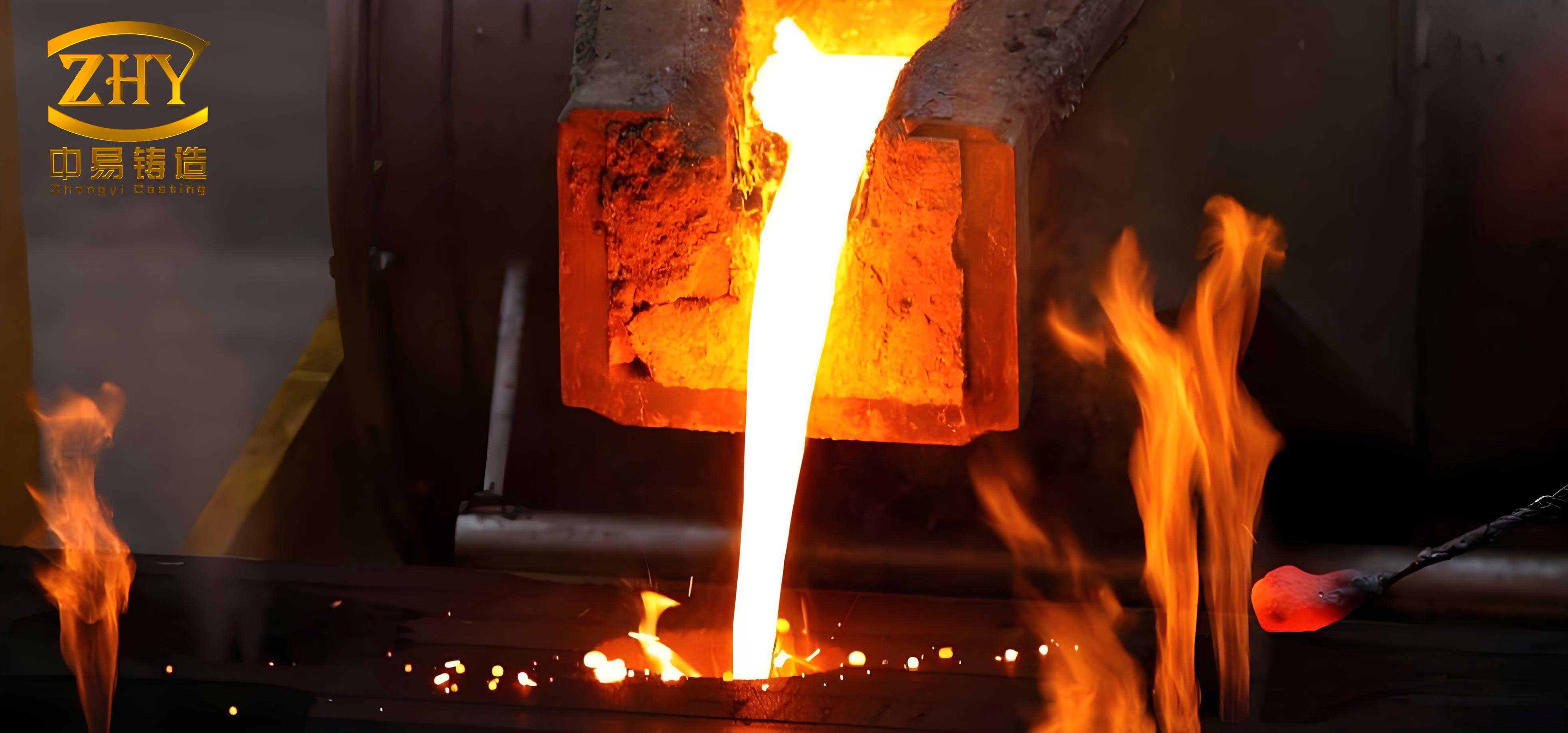
The lost foam casting process itself is a fascinating interplay of physics and chemistry. When molten metal is poured into a mold containing the foam pattern, the heat causes the foam to decompose, primarily through pyrolysis and vaporization. This can be summarized by a simplified chemical reaction for polystyrene foam, a common material used in lost foam casting: $$ C_nH_m (s) + O_2 (g) \rightarrow CO_2 (g) + H_2O (g) + \text{residues} $$ where $C_nH_m$ represents the hydrocarbon polymer. The rapid gas evolution must be managed to prevent defects, requiring careful control of pouring temperature and mold permeability. In my project, I used both cast iron and aluminum alloys, each with its own considerations. For instance, cast iron, with its high fluidity and shrinkage rate, demanded patterns with adequate gating systems. The volume change during solidification can be approximated by: $$ V_{final} = V_{pattern} \cdot (1 – \beta) $$ where $V_{final}$ is the volume of the casting, $V_{pattern}$ is the volume of the foam pattern, and $\beta$ is the shrinkage factor, typically ranging from 2% to 4% for cast iron. This equation highlights the need for pattern oversizing to compensate for contraction.
To systematize the project, I developed a table summarizing key parameters for each zodiac sculpture. This table encapsulates the materials, weights, and specific lost foam casting techniques employed, underscoring the method’s versatility.
| Zodiac Sign | Material | Approximate Weight (kg) | Casting Method Details | Pattern Creation Approach |
|---|---|---|---|---|
| Rat | Cast Iron | 60 | Lost foam casting with sand mold | CNC machining + hand carving |
| Ox | Cast Iron | 200 | Lost foam casting, solid structure | Hand-carved foam prototype |
| Tiger | Cast Iron | 150 | Lost foam casting, intricate detailing | Digital design + manual refinement |
| Rabbit | Aluminum Alloy | 40 | Lost foam casting, lightweight design | 3D scanning and CNC |
| Dragon | Aluminum Alloy | 70 | Lost foam casting with assembly | Digital model fusion, welded parts |
| Snake | Cast Iron | 80 | Lost foam casting, curved forms | Hand-sculpted foam |
| Horse | Cast Iron | 180 | Lost foam casting, dynamic pose | Combination of techniques |
| Goat | Cast Iron | 90 | Lost foam casting, textured surface | Artisanal carving |
| Monkey | Cast Iron | 50 | Lost foam casting from hand-carved pattern | Direct hand carving |
| Rooster | Cast Iron | 55 | Lost foam casting, fine features | Digital design aided |
| Dog | Cast Iron | 65 | Lost foam casting, robust structure | Student-led CNC project |
| Pig | Cast Iron | 100 | Lost foam casting, bulky form | Traditional foam shaping |
The lost foam casting process for these sculptures involved several stages: pattern creation, cluster assembly, coating application, molding, pouring, and finishing. Each stage required meticulous attention. For example, the coating applied to foam patterns serves multiple functions: it enhances surface finish, prevents sand erosion, and facilitates gas permeability. The coating thickness, often optimized through empirical models, can be expressed as: $$ \delta_c = k \cdot \sqrt{t} $$ where $\delta_c$ is the coating thickness, $t$ is time, and $k$ is a material constant. This ensured smooth metal flow and reduced defects. In my project, I experimented with different coating compositions, such as refractory slurries, to achieve the desired results for both cast iron and aluminum castings. The versatility of lost foam casting allowed me to produce sculptures ranging from the heavy, formidable Ox to the delicate, expressive Rabbit, all with consistent quality.
Beyond technical aspects, the artistic arrangement of the zodiac sculptures added a narrative layer. Instead of a linear display, I opted for a dynamic, interactive setup where sculptures were placed in pairs, facing each other as if engaged in silent dialogue. This arrangement, set in a community garden, transformed the space into a cultural landscape. For instance, the Rat and Ox were positioned in a confrontational yet playful stance, while the Snake and Dragon shared a moment of reverence. The lost foam casting technique enabled this flexibility, as the solid metal structures could be easily transported and arranged. The sculptures, weathered by snow and sun, became a beloved feature, especially for children and elders who interacted with them daily. This outcome highlighted how lost foam casting could bridge art and community, making metal sculpture accessible and engaging.
Reflecting on the project, the advantages of lost foam casting for artistic endeavors became clear. Unlike traditional methods, lost foam casting minimizes tooling costs and allows for rapid prototyping. The ability to create complex geometries without cores or multiple mold parts is a significant benefit, summarized by the formula for mold complexity reduction: $$ C_m = \frac{N_{parts}}{N_{patterns}} $$ where $C_m$ represents mold complexity, $N_{parts}$ is the number of separate mold components, and $N_{patterns}$ is the number of foam patterns. In lost foam casting, $C_m$ often approaches 1, as a single pattern can yield intricate shapes. Additionally, the environmental aspect of lost foam casting, with its reduced waste compared to other casting methods, aligns with sustainable art practices. However, challenges such as pattern distortion and gas evolution required careful management, often addressed through iterative testing and collaboration with foundries.
To further illustrate the technical nuances, I developed another table comparing lost foam casting with other sculpture techniques, emphasizing its relevance for zodiac artworks.
| Technique | Material Compatibility | Detail Resolution | Cost Efficiency | Suitability for Zodiac Sculptures |
|---|---|---|---|---|
| Lost Foam Casting | Iron, Aluminum, Bronze | High (fine details achievable) | Moderate (low tooling cost) | Excellent (versatile for complex forms) |
| Stone Carving | Granite, Marble | Moderate (limited by stone grain) | High (material and labor intensive) | Good but fragile |
| Bronze Casting (Sand) | Bronze, Brass | High | Low (high pattern and mold cost) | Excellent but expensive |
| 3D Printing (Metal) | Various alloys | Very High | Low for large pieces | Good for prototypes |
The success of this zodiac sculpture series through lost foam casting has inspired further explorations. I am now investigating the integration of digital technologies, such as generative design algorithms, to optimize patterns for weight reduction and structural integrity. The potential formula for optimizing wall thickness in lost foam cast sculptures could involve: $$ t_w = \frac{\sigma_{allowable}}{\rho \cdot g \cdot L} $$ where $t_w$ is wall thickness, $\sigma_{allowable}$ is the allowable stress of the material, $\rho$ is density, $g$ is gravity, and $L$ is a characteristic length. This could lead to lighter, more economical sculptures without compromising strength. Moreover, the cultural impact of these works extends beyond aesthetics; they serve as educational tools, sparking conversations about heritage and technology. The lost foam casting process, with its blend of simplicity and sophistication, democratizes metal art, allowing artists and communities to engage in creative expression.
In conclusion, my journey with lost foam casting for zodiac sculptures has been a transformative experience, merging historical inspiration with modern innovation. The lost foam casting technique proved invaluable for realizing detailed, durable, and expressive metal artworks. From the initial foam pattern creation to the final arranged display, every step underscored the method’s flexibility and potential. As I continue to refine my approach, I envision expanding this project to include interactive elements or larger installations, always leveraging the principles of lost foam casting. The zodiac, as a timeless symbol, finds new life through this process, reminding us that tradition and technology can coexist harmoniously. Through lost foam casting, art becomes not just an object but a story—one that invites viewers to ponder, play, and connect.
The mathematical and technical insights shared here, from chemical equations to optimization formulas, highlight the depth of lost foam casting as a discipline. For artists and engineers alike, it offers a toolkit for innovation. As I look at the completed sculptures, standing in pairs under the sky, I am reminded of the power of creative perseverance. The lost foam casting method, though industrial at its core, enables poetic expressions, turning foam into enduring metal and ideas into shared joy. This project, a testament to collaboration and curiosity, hopes to inspire others to explore the intersections of culture, art, and manufacturing through techniques like lost foam casting.