
The pursuit of lightweight materials with high performance is a constant driver in advanced manufacturing sectors such as automotive, aerospace, and defense. Aluminum and magnesium alloys are primary candidates due to their excellent strength-to-weight ratios. Combining these alloys to create an Al/Mg bimetal presents a promising route to achieve synergistic properties, merging the specific strength of magnesium with the formability and corrosion resistance of aluminum. However, a significant challenge arises during the fabrication of such bimetals: the formation of brittle intermetallic compounds (IMCs) at the interface. These phases, primarily Al3Mg2 and Al12Mg17, are hard and brittle, leading to stress concentration and poor bonding strength, which severely limits the practical application of Al/Mg composite components.
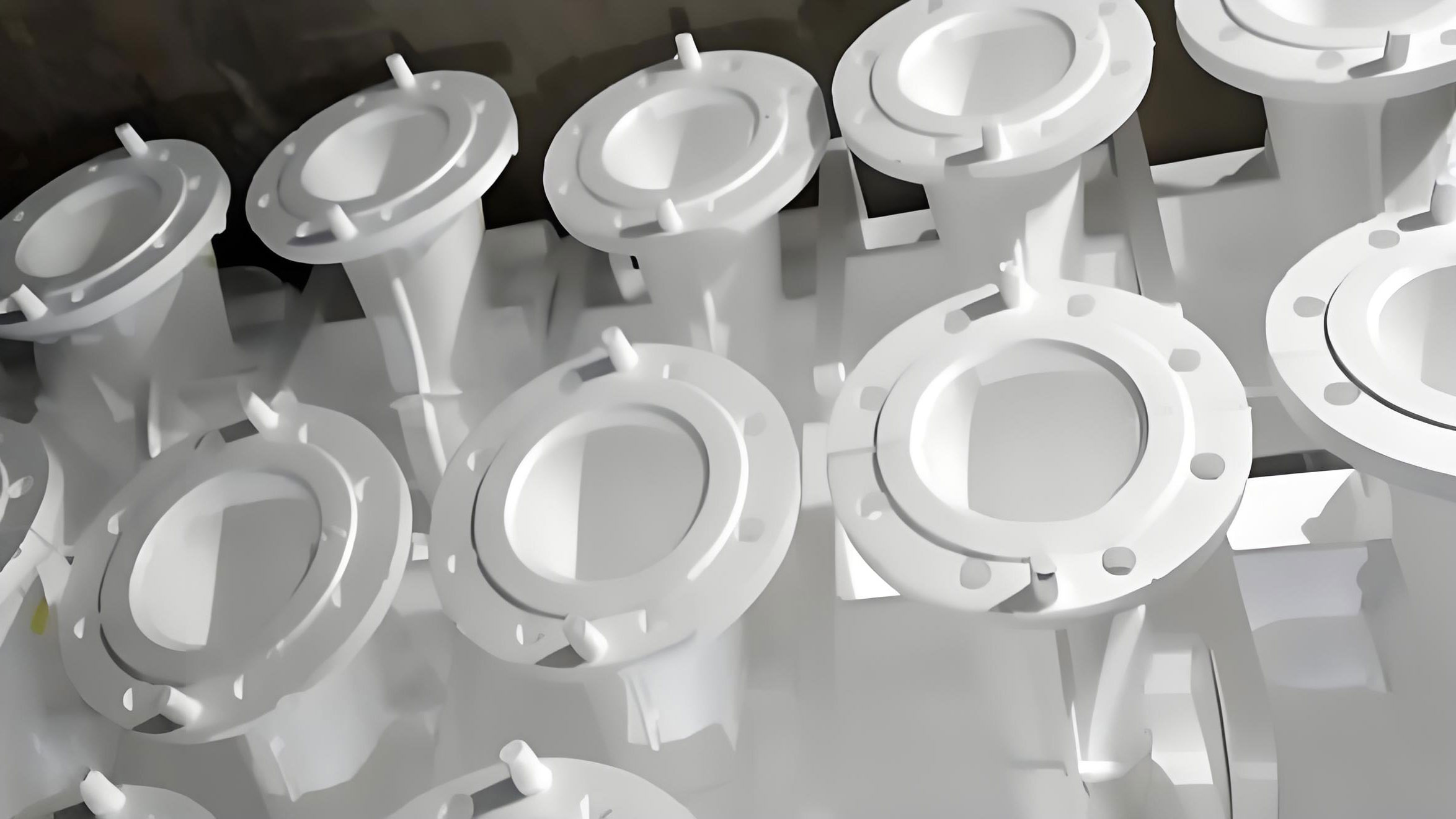
Various techniques have been employed to fabricate Al/Mg bimetals, including welding, extrusion, rolling, and compound casting. Among these, lost foam casting (LFC) stands out as a near-net-shape process offering unique advantages for bimetal fabrication. The process provides exceptional design freedom, allows for easy fixation of solid inserts (like an Al preform), and creates a reducing atmosphere from the decomposing foam pattern that helps prevent oxidation of both the insert and the molten metal. Despite these benefits, controlling the deleterious interfacial IMC layer remains a critical issue.
Current strategies to mitigate brittle interface formation include adding alloying elements or applying coatings to the insert surface. An alternative, cost-effective method gaining attention is the application of external vibration during the casting process. Vibration-assisted lost foam casting is believed to influence interfacial reactions, potentially reducing IMC layer thickness and refining microstructure. Nevertheless, a comprehensive understanding of how vibration parameters affect the interfacial morphology and resultant mechanical properties of Al/Mg bimetals, particularly with high-Si aluminum inserts, is still evolving. This study investigates the effect of mechanical vibration applied during the lost foam casting process on the interfacial characteristics and shear strength of an Al-18Si/AZ91D bimetal, aiming to provide new insights for strengthening such composite structures.
1. Experimental Materials and Methodology
The bimetal was fabricated using a solid-liquid compound lost foam casting process. A cylindrical Al-18Si alloy insert (solid) was placed within a foam pattern, around which molten AZ91D magnesium alloy was poured. The chemical compositions of the base materials are summarized in Table 1.
| Alloy | Al | Si | Mg | Zn | Mn | Fe | Cr |
|---|---|---|---|---|---|---|---|
| AZ91D | 9.08 | – | Bal. | 0.62 | 0.23 | – | – |
| Al-18Si | Bal. | 17.36 | – | 0.024 | – | 0.283 | 0.012 |
The Al-18Si insert (ø10 mm × 110 mm) was meticulously prepared by grinding, ultrasonic cleaning in ethanol, and chemical etching in HCl and NaOH solutions to remove surface oxides and contaminants. The foam pattern assembly, containing the insert, sprue, runner, and riser, was coated with a refractory wash and dried. The experimental setup for vibration-assisted lost foam casting is schematically represented in Figure 1b in the original text. The AZ91D alloy was melted at 730°C under a protective atmosphere (0.5% SF6 + CO2). The sand-filled flask containing the pattern was evacuated to 0.03 MPa. Vibration was initiated prior to pouring and maintained during pouring and initial solidification. The molten AZ91D was poured at 720°C. The vibration and process parameters used are consolidated in Table 2.
| Parameter | Value |
|---|---|
| Casting Temperature (AZ91D) | 720 °C |
| Vibration Frequency | 50 Hz |
| Vibration Acceleration | 1.0 g |
| Vibration Duration | 300 s |
| Sand Mold Vacuum | 0.03 MPa |
Samples for microstructural analysis were sectioned from the interfacial region. Standard metallographic procedures were employed: grinding, polishing, and etching with 4% nitric acid in ethanol. Microstructural characterization was performed using scanning electron microscopy (SEM) equipped with energy-dispersive X-ray spectroscopy (EDS). Electron probe microanalysis (EPMA) was used for elemental mapping across the interface. The thickness of different interfacial layers was measured using image analysis software. Microhardness profiles across the interface were obtained using a Vickers hardness tester. The bonding strength was evaluated by shear tests, with the schematic shown in Figure 2 of the original text. The shear strength was calculated as the average of six tests. Fracture surface and subsurface analysis were conducted using SEM.
2. Results and Analysis
2.1 Influence of Vibration on Interfacial Microstructure
The interfacial region of the Al-18Si/AZ91D bimetal, both with and without vibration, exhibited a multi-layer structure, as shown in the SEM micrographs (Figure 3, original text). Based on morphology and EDS/EPMA analysis, four distinct zones were identified from the Mg-side to the Al-side:
- Zone I (Eutectic Layer): Adjacent to the AZ91D substrate, consisting of Al12Mg17 + δ-Mg eutectic.
- Zone II (Transition Layer): A mixture of Al12Mg17 + δ-Mg eutectic and Mg2Si particles.
- Zone III (IMC Layer – Al12Mg17 + Mg2Si): Dominated by the Al12Mg17 phase with embedded Mg2Si.
- Zone IV (IMC Layer – Al3Mg2 + Mg2Si): Closest to the Al-18Si insert, consisting of the Al3Mg2 phase and Mg2Si.
The application of mechanical vibration during lost foam casting induced profound changes in the thickness and morphology of these layers. Quantitative measurements are presented in Table 3.
| Interfacial Layer | Without Vibration | With Vibration | Change |
|---|---|---|---|
| Eutectic Layer (I) | 589.7 ± 25.3 | 1028.0 ± 41.7 | +74.3% |
| Transition Layer (II) | 182.5 ± 15.1 | 300.7 ± 18.9 | +64.8% |
| Al12Mg17+Mg2Si Layer (III) | 396.4 ± 20.5 | 273.2 ± 16.8 | -31.1% |
| Al3Mg2+Mg2Si Layer (IV) | 309.3 ± 18.2 | 302.2 ± 17.5 | -2.3% |
| Total IMC Layer (III+IV) | 705.7 ± 27.4 | 575.4 ± 24.3 | -18.5% |
Microstructural details (Figure 5, original text) revealed further critical effects of vibration:
- IMC Refinement and Si Transformation: Without vibration, the Al3Mg2 layer contained coarse primary Si particles surrounded by dense Mg2Si. Vibration eliminated these primary Si particles, promoting their complete conversion into finer, more uniformly dispersed Mg2Si particles throughout the IMC layers.
- Oxide Film Disruption: In the non-vibrated sample, a continuous oxide film (Al2O3/MnO) was present at the boundary between the transition layer and the eutectic layer, acting as a diffusion barrier and potential defect initiator. Vibration effectively disrupted and dispersed this oxide film, as confirmed by the O element map in EPMA (Figure 6, original text).
- Eutectic Structure Modification: The coarse columnar/dendritic structure in the eutectic layer was fragmented into a more equiaxed morphology under vibration.
2.2 Influence of Vibration on Elemental Distribution
EPMA elemental mapping (Figure 6, original text) provided clear evidence of vibration-enhanced diffusion. The profiles of Al, Mg, and Si across the interface can be conceptually described by Fick’s second law under transient conditions. The interdiffusion flux, $J_i$, for element i is given by:
$$J_i = -D_i \frac{\partial C_i}{\partial x}$$
where $D_i$ is the interdiffusion coefficient and $\frac{\partial C_i}{\partial x}$ is the concentration gradient. Vibration-induced fluid flow and interfacial perturbation effectively increase the apparent diffusion coefficient ($D_{app}$) at the solid-liquid reaction front, promoting elemental exchange. This is observed as:
- A broader and more gradual Al concentration gradient extending into the Mg-side.
- Enhanced Mg penetration towards the Al-side.
- A more homogeneous distribution of Si within the IMC layer, contrasting with the segregated patches found without vibration.
The removal of the oxide film is a direct consequence of the shear forces imposed by vibration, which can be related to the vibration acceleration $a$ and the properties of the oxide layer. The disruption likely occurs when the shear stress $\tau_v$ exceeds the cohesive or adhesive strength of the oxide film.
$$\tau_v \propto \rho \cdot a \cdot \delta$$
where $\rho$ is the melt density and $\delta$ is a characteristic boundary layer thickness.
2.3 Influence of Vibration on Mechanical Properties
The microhardness profile across the interface (Figure 7, original text) showed that the IMC layers were the hardest regions (>250 HV). With vibration, the overall hardness of the interfacial zone decreased slightly, which can be attributed to the reduction in the volume fraction of the hard, continuous IMC network and its replacement with a more mixed transition zone.
The most significant improvement was in the shear strength. The results are summarized in Table 4.
| Condition | Average Shear Strength (MPa) | Standard Deviation (MPa) | Improvement |
|---|---|---|---|
| Without Vibration | 49.7 | 3.2 | – |
| With Vibration | 65.2 | 2.8 | +31.2% |
The enhancement in bonding strength, $\Delta \sigma_{shear}$, is directly correlated to the microstructural changes induced by vibration during lost foam casting.
Fracture path analysis (Figure 9, original text) revealed the failure mechanism. Cracks consistently initiated in the brittle Al3Mg2-rich layer near the Al insert. In the non-vibrated sample, the crack propagated preferentially along the weak oxide film at the transition/eutectic layer boundary, leading to a low-energy interfacial failure. In the vibrated sample, the absence of the continuous oxide film and the presence of a thicker, more mechanically integrated transition layer forced the crack to deflect and branch into the eutectic layer, indicating a higher fracture energy absorption. The refined and dispersed Mg2Si particles also acted as crack deflectors, contributing to toughening.
2.4 Mechanism Analysis
The application of mechanical vibration during lost foam casting introduces two primary, competing effects on the interfacial reaction: enhanced cooling and promoted diffusion.
1. Enhanced Cooling Rate: Vibration increases forced convection, accelerating heat extraction from the interface. The cooling rate $dT/dt$ can be estimated from the thermal analysis curve (Figure 10c, original text):
$$\frac{dT}{dt} \bigg|_{vib} \approx 0.684 \, ^\circ\text{C/s} > \frac{dT}{dt} \bigg|_{no\,vib} \approx 0.538 \, ^\circ\text{C/s}$$
This higher cooling rate reduces the time available for diffusion-controlled growth of IMCs ($t_{IMC}$), leading to a thinner total IMC layer. The thickness $L$ of a diffusion-controlled layer scales with the square root of time: $L \propto \sqrt{D \cdot t}$. A reduction in effective reaction time $t$ directly reduces $L_{IMC}$.
2. Promoted Elemental Diffusion and Oxide Disruption: Concurrently, vibration-induced perturbation at the solid-liquid interface enhances atomic transport. The effective interdiffusion coefficient can be considered as $D_{eff} = D_{thermal} + D_{vib}$, where $D_{vib}$ represents the vibration-enhanced contribution. This promotes the interdiffusion of Al and Mg, leading to the expansion of diffusion-affected zones like the eutectic and transition layers. For the Al-18Si/AZ91D system, the high Si content plays a crucial role. The conversion of primary Si to Mg2Si is more complete under vibration due to improved Mg transport, described by the reaction:
$$2\text{Mg}_{(l)} + \text{Si}_{(s)} \rightarrow \text{Mg}_2\text{Si}_{(s)}$$
The kinetic rate of this reaction is increased under vibration.
The most critical effect in this specific lost foam casting process is the physical disruption of the oxide film on the Al insert. This removes a major barrier to metallurgical bonding and eliminates a primary source of interfacial weakness. The combined effects can be visualized in the schematic (Figure 11, original text) and summarized by their impact on the final shear strength $\sigma_{shear}$:
$$\sigma_{shear} = f(\frac{1}{L_{IMC}}, \frac{A_{Mg2Si}}{A_{IMC}}, \eta_{oxide}, \chi_{defect})$$
where:
- $L_{IMC}$ is the thickness of the continuous brittle IMC layer (reduced by vibration).
- $\frac{A_{Mg2Si}}{A_{IMC}}$ represents the relative area of toughening Mg2Si particles (increased and optimized by vibration).
- $\eta_{oxide}$ is a factor for oxide film continuity (vibration reduces it to near zero).
- $\chi_{defect}$ represents other defects like porosity (reduced by vibration-enhanced feeding and oxide removal).
Vibration during lost foam casting positively influences all these parameters, leading to the net increase in bonding strength.
3. Conclusion
This investigation into vibration-assisted lost foam casting of Al-18Si/AZ91D bimetal leads to the following conclusions:
- Interfacial Structure: The interface in the Al-18Si/AZ91D system comprises a Mg-side eutectic layer (Al12Mg17+δ-Mg), a central transition layer (Al12Mg17+δ-Mg+Mg2Si), and an Al-side IMC layer subdivided into Al12Mg17+Mg2Si and Al3Mg2+Mg2Si zones.
- Effect of Vibration on Microstructure: Mechanical vibration during lost foam casting significantly modifies the interface.
- It reduces the total thickness of the brittle IMC layer by approximately 18.5%, thereby diminishing the volume of detrimental phases.
- It promotes the complete conversion of coarse primary Si particles into finely dispersed Mg2Si within the IMC layer.
- It effectively disrupts and disperses the oxide film on the Al insert, eliminating a major diffusion barrier and source of defects.
- It enhances elemental interdiffusion, resulting in a thicker eutectic layer and a more substantial, uniform transition layer.
- Effect of Vibration on Mechanical Properties: The microstructural improvements directly translate to enhanced mechanical performance.
- The average shear strength of the bimetal joint increases by 31.2%, from 49.7 MPa to 65.2 MPa.
- The fracture mechanism shifts from a low-energy interfacial crack propagation along an oxide film to a higher-energy path involving crack deflection and branching into the bulk eutectic structure.
The study confirms that mechanical vibration is a highly effective, low-cost, and easily controllable auxiliary technique for the lost foam casting of Al/Mg bimetals. By simultaneously reducing brittle phase thickness, refining interfacial constituents, and破除 oxidation barriers, vibration fundamentally improves the integrity and strength of the bimetal joint. This provides a robust theoretical and practical foundation for manufacturing high-performance lightweight Al/Mg composite components via the lost foam casting process. Future work may focus on optimizing vibration parameters (frequency, amplitude, mode) for specific alloy combinations and on modeling the complex thermo-fluid-mechanical interactions at the vibrating interface.