
As an engineer deeply involved in the field of lost foam casting, I have witnessed the evolution of production lines from rudimentary setups to sophisticated, digitally controlled systems. The journey toward intelligent lost foam casting production lines is not merely a trend but a necessity for enhancing efficiency, quality, and sustainability in modern foundries. In this article, I will share my reflections and experiences on the design, implementation, and benefits of intelligent systems in lost foam casting, emphasizing the integration of advanced technologies to achieve seamless operation. The core of this discussion revolves around the keyword “lost foam casting,” which I will reiterate throughout to underscore its centrality in this manufacturing process.
The lost foam casting process, known for its ability to produce complex geometries with high dimensional accuracy, has seen diverse production line configurations over the years. However, the key to unlocking its full potential lies in transitioning from traditional methods to intelligent, automated systems. An intelligent lost foam casting production line must embody several critical attributes: a rational process flow, operational stability, consistent product quality, and a robust智能化 framework. Below, I delve into these aspects, incorporating tables and formulas to summarize key concepts and enhance understanding.
Requirements and Expectations for a Lost Foam Casting Production Line
A superior lost foam casting production line should be designed with a holistic approach, ensuring that all components work in harmony. Based on my observations, the following elements are paramount:
Rational Process Flow
The process flow in lost foam casting must facilitate smooth logistics and无缝连接 between different stages. This begins with an assessment of the铸件 types and technical characteristics, aiming for a production capacity that exceeds the target by at least 30% to accommodate fluctuations. Key considerations include:
- Efficient model cluster handling: From the white area (foam pattern preparation) to the black area (molding and casting), systems like overhead conveyors should enable seamless transfer, minimizing manual intervention.
- Optimal molten metal delivery: The route for transporting铁水 should be unobstructed, with environments conducive to safe浇注. This can be enhanced by automatic pouring machines or robotic浇铸 systems.
- Streamlined workpiece extraction: Post-casting, the removal of castings should be efficient, using technologies like robotic extraction,鳞板 conveyors, or智能转运小车 to ensure no interference with other processes.
Additionally, the process must prioritize safety, energy efficiency, environmental protection, and high productivity. For instance, combining风冷 and水冷 in砂 cooling systems can reduce energy consumption, while heat recovery from vertical coolers to drying rooms—coupled with low-energy air-source heat pumps for dehumidification—enhances sustainability. Emission control is also crucial; for example, catalytic combustion methods can treat可燃性气体 economically by adsorbing and burning them on catalyst surfaces.
To summarize these requirements, Table 1 outlines the key components of a rational process flow in lost foam casting.
| Component | Description | Benefits |
|---|---|---|
| Model Cluster Transfer | Use of overhead conveyors or悬链 for seamless white-to-black area movement | Reduces manual handling, improves efficiency |
| Molten Metal Delivery | Automated pouring systems and optimized浇注 environments | Enhances safety and浇注 accuracy |
| Workpiece Extraction | Robotic取件,鳞板 conveyors, or智能转运小车 | Prevents interference, speeds up production |
| Cooling Systems | Combination of风冷 and水冷 for砂 cooling | Energy-efficient, maintains砂 quality |
| Emission Control | Catalytic combustion for gas treatment | Reduces pollution, cost-effective operation |
Operational Stability
Stability in a lost foam casting production line is非-negotiable. It requires reliable mechanical and electrical systems that can sustain continuous operation over extended periods. From my experience, the following criteria are essential:
- Mechanical robustness: Structures must have adequate strength, with precise positioning and guidance mechanisms to ensure accuracy. The reliability should persist for at least two years without major failures.
- Electrical design: Systems should be comprehensive and rational, minimizing failure points. Operations should be简化 to one-touch controls, paving the way for数字化 control—a precursor to智能化. The故障提示率 should exceed 90%, with maintenance limited to under 5 hours per month and single repair times under 1 hour.
This stability can be quantified using reliability metrics. For example, the mean time between failures (MTBF) can be expressed as:
$$ \text{MTBF} = \frac{\text{Total Operational Time}}{\text{Number of Failures}} $$
In an intelligent lost foam casting line, targeting an MTBF of over 10,000 hours is advisable to ensure minimal downtime.
Key Equipment: Multi-Dimensional CNC Vibration Table
The vibration table is a cornerstone of quality in lost foam casting. A multi-dimensional CNC vibration table allows for precise control during molding, using high frequency and small amplitude to direct砂 flow dynamically. This ensures uniform filling of model cavities without deformation, leading to higher and more consistent砂 density. Key features I have implemented include:
- Adjustable激震力 and filling angles via touchscreen数控, with stepless speed variation for optimal振实效果.
- High-frequency filling combined with low-frequency compaction to reduce model变形.
- Directional control of砂 flow by altering filling angles, beneficial for complex cavities.
- Segmented and precise control of compaction processes, with memory functions for storing multiple product profiles.
- Capability for无人值守 operation, reducing labor costs.
The vibration parameters can be modeled mathematically. For instance, the砂 flow velocity \( v \) during filling can be related to frequency \( f \) and amplitude \( A \):
$$ v = k \cdot f \cdot A \cdot \sin(\theta) $$
where \( k \) is a material constant, and \( \theta \) is the filling angle. This formula highlights how intelligent control of \( f \), \( A \), and \( \theta \) optimizes the lost foam casting process.
Table 2 summarizes the capabilities of a multi-dimensional CNC vibration table in lost foam casting.
| Feature | Function | Impact on Lost Foam Casting |
|---|---|---|
| Adjustable Parameters | Control of激震力, angle, frequency, and amplitude via CNC | Customizable compaction for different patterns |
| Frequency Modulation | High-frequency filling, low-frequency compaction | Minimizes foam model deformation |
| Directional砂 Flow | Angle adjustment to guide砂 movement | Ensures complete cavity filling in complex designs |
| Process Memory | Storage of multiple振实 profiles | Facilitates quick changeovers and repeatability |
| Automation | Unattended operation capability | Reduces labor and enhances efficiency |
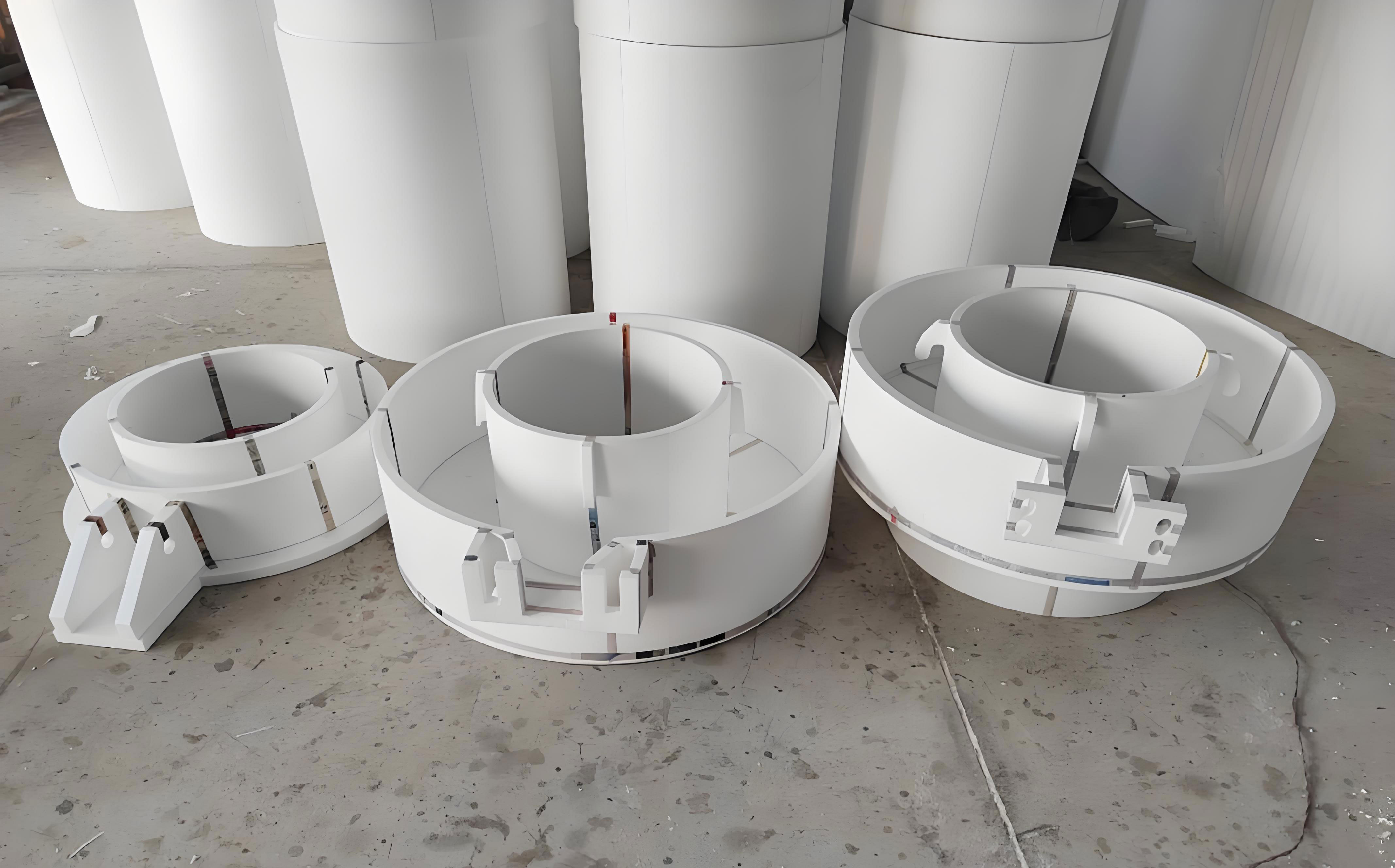
Intelligent System Control in Lost Foam Casting
The intelligence of a lost foam casting production line stems from an integrated control system that encompasses five main parts: remote and self-learning systems, a lost foam casting数控 unit, production line数控,砂处理数控, and电炉理化检验数控. Each component plays a vital role in achieving a smart, adaptive operation.
Remote and Self-Learning System
In my practice, I have developed systems that leverage networks and terminals (e.g.,北斗 or 5G) for remote monitoring and control. As shown in Figure 1 (conceptual representation), the self-learning system collects data from various production stages to build empirical models. Over time, through continuous data aggregation from multiple lost foam casting lines, the system evolves into an “experienced old engineer,” capable of recommending optimized process routes. For instance, by analyzing图形 and实物照片, an AI agent (e.g., “Xiao Wei”) can quickly formulate reliable工艺路线 for lost foam casting, which, once validated, are executed autonomously.
The self-learning process can be described using a reinforcement learning framework. Let the state \( S \) represent production parameters (e.g., temperature, pressure), actions \( A \) denote control adjustments, and rewards \( R \) reflect quality outcomes. The system aims to maximize the cumulative reward:
$$ \max \sum_{t=0}^{T} \gamma^t R(S_t, A_t) $$
where \( \gamma \) is a discount factor. This approach enables the lost foam casting line to adapt dynamically to changing conditions.
Lost Foam Casting数控 Unit
This unit serves as the digital brain of the operation, utilizing touchscreens, PLCs, and encoders to enable数字化 control. It allows for one-button startup and includes three sub-units: production line数控,砂处理数控, and电炉理化检验数控. The integration of these units ensures that every aspect of lost foam casting is coordinated efficiently.
Production Line数控 Unit
Focused on overall production management, this unit controls and统计 daily output, operational rates, casting yield, and运行时间. It also governs the multi-dimensional CNC vibration table, allowing precise adjustment of angles, vibration duration, sand addition times, and force patterns. Moreover, it monitors转运小车 in real-time, enabling reset from any point. The control logic can be expressed as a function:
$$ \text{Control Output} = f(\text{Product Type}, \text{Sand Properties}, \text{Environmental Conditions}) $$
where \( f \) is optimized through the self-learning system. Table 3 details the functions of this unit in lost foam casting.
| Function | Description | Benefits for Lost Foam Casting |
|---|---|---|
| Production Monitoring | Tracks output, operational rates, and yield | Provides real-time insights for decision-making |
| Vibration Table Control | CNC adjustment of parameters like angle and frequency | Ensures optimal compaction for each casting |
| Vehicle Monitoring | Real-time tracking of转运小车 | Enhances logistics and reduces delays |
| Data Logging | Records process parameters for analysis | Supports quality追溯 and improvement |
Sand Handling数控 Unit
Sand quality is critical in lost foam casting, and this unit manages砂处理 through segmented and combined operations. By analyzing equipment run times, temperatures, and operational statuses, it makes intelligent judgments to ensure continuous, safe operation. For example, it may enforce强制休息 for equipment like bucket elevators after prolonged use if砂库 levels are adequate, thereby preventing wear and tear. The control strategy can be modeled as:
$$ \text{Action} = \begin{cases} \text{Rest Mode} & \text{if } t_{\text{run}} \geq t_{\text{threshold}} \text{ and } V_{\text{sand}} \geq V_{\text{mid}} \\ \text{Operational Mode} & \text{otherwise} \end{cases} $$
where \( t_{\text{run}} \) is运行时间, \( t_{\text{threshold}} \) is a set limit (e.g., 2 hours), and \( V_{\text{sand}} \) is砂 volume. This proactive approach enhances the longevity of lost foam casting lines.
Electric Furnace and Physical-Chemical Inspection数控 Unit
This unit controls and collects data on material parameters during melting and浇注, such as负压度,保压,浇注温度, and孕育时间. By精确控制 these factors, it ensures铸件材质 consistency. For instance, the relationship between浇注温度 \( T \) and defect rate \( D \) in lost foam casting can be approximated as:
$$ D = \alpha e^{-\beta T} + \gamma $$
where \( \alpha \), \( \beta \), and \( \gamma \) are constants derived from historical data. Monitoring \( T \) helps minimize defects, showcasing how intelligence improves lost foam casting quality.
Conclusion
In my experience, the adoption of数字化 and intelligent systems in lost foam casting production lines has transformative effects. These systems enable precise control, high-quality output, efficiency, energy savings, and environmental compliance. With advancements like北斗 and 5G, the era of intelligent lost foam casting is dawning, making production more accessible and reliable. The journey from traditional lost foam casting to smart factories is not without challenges, but the benefits—summarized in enhanced process stability, reduced labor, and improved sustainability—make it a worthwhile pursuit. As we continue to innovate, lost foam casting will undoubtedly remain at the forefront of modern manufacturing techniques.
To encapsulate, the intelligent lost foam casting production line represents a synergy of rational design, advanced equipment, and smart control. By embracing these elements, foundries can achieve a competitive edge in today’s dynamic market. I encourage further exploration and implementation of such systems to unlock the full potential of lost foam casting.