
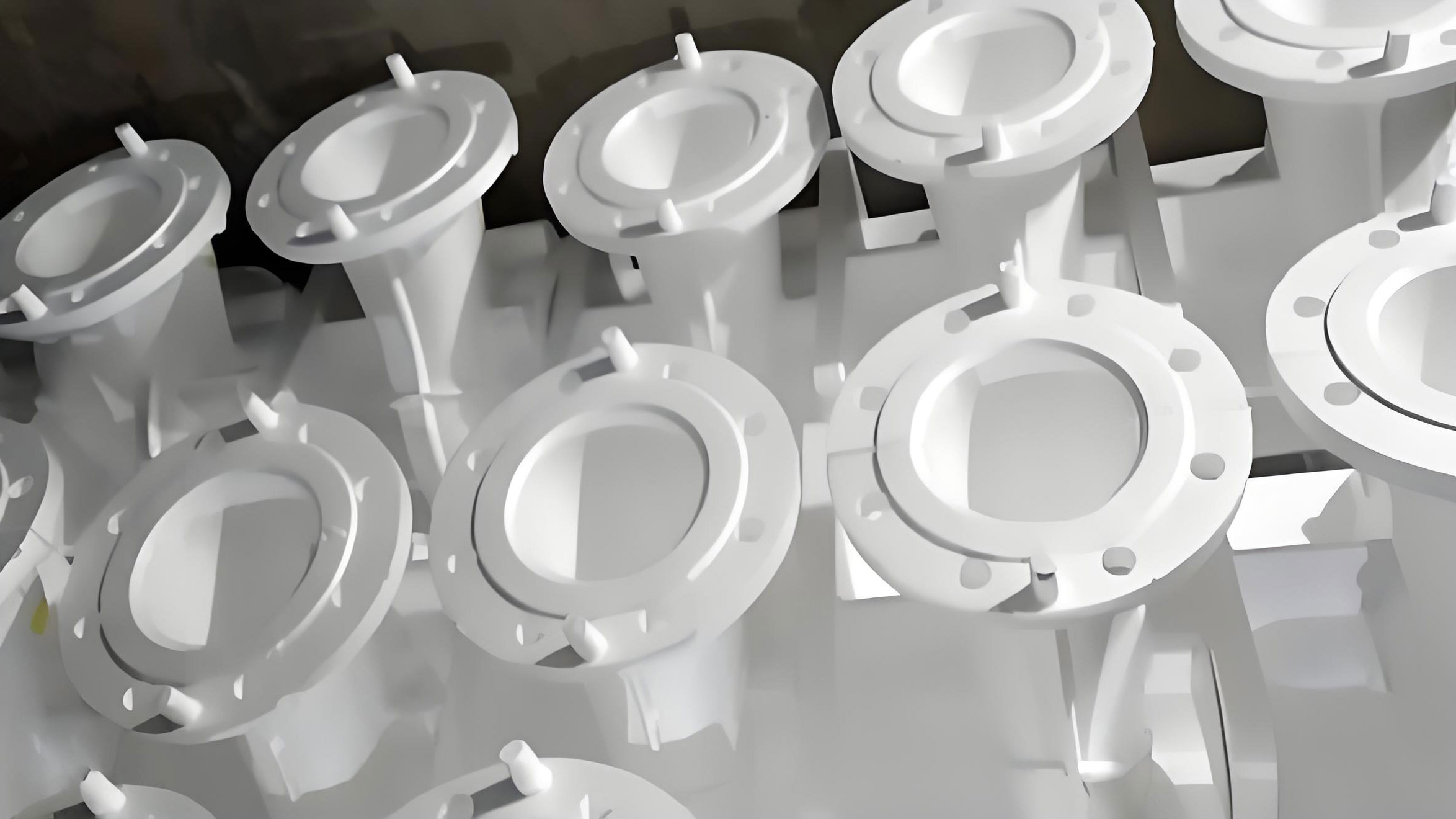
In the evolving landscape of modern foundry practices, lost foam casting has emerged as a cornerstone for precision and sustainability. This near-net-shape, exact-forming green casting process eliminates flash, burrs, and draft angles, minimizes dimensional errors, and significantly reduces machining time and costs. The absence of chemical binders in the sand and the environmental benignity of foam patterns at low temperatures further cement lost foam casting as a preferred method for high-quality, eco-conscious production. Central to the success of any lost foam casting operation is the automated sand handling and reclamation line, which performs casting shakeout, impurity screening, magnetic separation of iron beads, and the conveyance and cooling of used sand. Achieving an old sand recovery and reuse rate exceeding 95% is not just a target but a necessity for economic and environmental viability. At the heart of this system lies the magnetic separator, a device whose performance directly dictates the automation efficiency, cooling efficacy, and overall success of sand reclamation. Its ability to promptly and effectively remove ferrous contaminants, primarily iron beads (or “iron beans”), is paramount. Any failure in this function can cripple the entire production line, leading to forced downtime, increased operational costs, and compromised product quality. This article, drawn from first-hand experience, chronicles a comprehensive journey of identifying, analyzing, and solving critical failures in a magnetic separator within a high-volume lost foam casting facility, culminating in a series of transformative modifications that restored and enhanced system performance.
The context for this intervention was a lost foam casting line designed for an annual output of 10,000 tons, commissioned in April 2018. Within a mere three months of operation, severe systemic issues surfaced, threatening the line’s continuity. The most glaring symptom was the excessive accumulation of iron beads within the used sand cycle. These metallic particles, failing to be extracted by the magnetic separator, inundated the downstream fluidized bed cooler. Their presence was so pervasive that manual cleaning of the cooler became a weekly ritual, accompanied by labor-intensive secondary magnetic separation of the dredged mixture. This was not an isolated nuisance; it triggered a cascade of failures. The iron beads settled on the fluidized bed deck, impeding proper air fluidization and clogging air nozzles. This severely degraded the cooling capacity, causing sand temperatures to remain stubbornly high, often exceeding 152°C. Since the lost foam casting process requires tightly controlled sand temperatures for proper molding, this led to recurring production halts solely to allow sand to cool naturally—a grossly inefficient practice. Concurrently, equipment reliability plummeted. The magnetic separator itself suffered from sand ingress into the bearing housings and the magnetic滚筒 interior, leading to frequent bearing failures, shaft wear, and persistent material leakage. This constellation of problems—poor separation, inadequate cooling, and chronic mechanical breakdowns—formed a stranglehold on productivity, directly constraining the facility’s operational and financial development.
A meticulous root cause analysis was initiated, focusing on the sand treatment flowchart and the intrinsic design of the magnetic separator. The process flow is straightforward: After pouring and cooling, molds are flipped and shaken out. Castings are removed, and the sand falls through a vibratory screen for initial impurity separation. The sand is then elevated to the magnetic separator for ferrous removal before entering the fluidized bed cooler for temperature regulation. Finally, the cooled sand is conveyed to storage for reuse. The bottleneck was unequivocally the magnetic separator. Its original design, as deployed, harbored several critical flaws when subjected to the demanding realities of a high-throughput lost foam casting environment.
The separator’s core component is the magnetic滚筒. The original design utilized a standard magnetic system with blocks made of Y20 material, offering a surface magnetic flux density of approximately 0.175 Tesla (or 1750 Gauss). Its operational temperature ceiling was specified at 80°C, with a momentary tolerance up to 100°C. However, the incoming sand temperature in our lost foam casting process consistently measured above 150°C. The impact of temperature on magnetic strength is governed by the material’s intrinsic properties and can be described by its temperature coefficient of remanence (αBr) and intrinsic coercivity (αHcj). For standard ferrite magnets like Y20, the reversible temperature coefficient is typically around -0.2% per °C. The loss in magnetic flux density (B) at an elevated temperature (T) compared to a reference temperature (T0) can be approximated by:
$$ B(T) = B(T_0) \times [1 + \alpha_{Br} (T – T_0)] $$
With αBr ≈ -0.002 /°C, and ΔT = (150 – 20) = 130°C (assuming ambient reference of 20°C), the magnetic strength at operating conditions could be衰减ed by roughly 26%. This significant reduction directly compromised the separator’s ability to capture and hold iron beads, especially the finer or more massive ones. Furthermore, the magnetic circuit design was simplistic, offering a single, uniform magnetic field along the滚筒’s arc of contact. This did not promote optimal segregation of sand and iron.
Mechanically, the feed and discharge arrangements were suboptimal. The feed chute directed material almost directly onto the top of the滚筒, with a substantial 40mm gap between the last baffle plate and the滚筒 surface. This allowed a portion of the sand to short-circuit, bypassing the intended trajectory and falling directly into the iron discharge chute, contaminating the extracted iron stream. Similarly, at the non-magnetic discharge zone, a 50mm gap existed between the滚筒 and the housing. This gap, coupled with the滚筒’s rotation, created air currents that carried lightweight, fine sand particles from the lost foam casting process over the divider and into the iron discharge chute. The discharge chute itself, constructed from magnetic mild steel (Q235), would become magnetized over time. This caused extracted iron beads to adhere to its walls, particularly at upward-bent sections, creating blockages that required manual intervention.
The lost foam casting process uses relatively fine sand (approximately 425–850 μm). After multiple cycles of reuse, thermal and mechanical degradation reduces the grain size further. This finely divided, low-mass sand is inherently more susceptible to being entrained in airflows. The original system lacked effective means to control the material curtain thickness over the滚筒 or to manage the internal air pressure differentials. Additionally, the initial screening stage upstream used a 6-mesh screen (4mm apertures), which allowed smaller iron beads to pass through and enter the magnetic separator, increasing its load and the chance of failure.
The改造 strategy was holistic, targeting every identified weakness to create a robust, high-temperature-capable magnetic separator tailored for the lost foam casting environment.
| Component | Original Design / Issue | Modified Design / Solution | Expected Impact |
|---|---|---|---|
| Magnetic滚筒 Core | Y20 ferrite blocks, 1750 Gs, max 80-100°C, uniform magnetic field. | NdFeB (Neodymium) blocks, >3000 Gs, rated for 200°C. Implemented a “jumping” or multi-pole magnetic系 with varying intensity zones. | Higher magnetic force, stable performance at high sand temperatures, improved separation via multiple capture/release actions. |
| 滚筒 Shell | 3mm thick stainless steel. | 4mm thick stainless steel for increased durability and better heat dissipation. | Enhanced mechanical strength and longevity. |
| Feed Baffle Plate | Short, leaving 40mm gap to滚筒. | Extended by 40mm to fully overhang the滚筒’s top centerline. | Prevents sand short-circuiting into iron discharge, ensures all material follows designed trajectory. |
| Discharge Zone | Large 50mm gap, no sealing. | Added a adjustable rubber or polyurethane curtain/sealing strip at the sand discharge point. | Minimizes air entrainment and sand carry-over into the iron discharge chute. |
| Iron Discharge Chute | Magnetic Q235 steel, prone to bending and blockage. | Re-fabricated from non-magnetic stainless steel, ensured slope ≥50°, kept straight without upward bends. | Eliminates magnetic adhesion of iron, ensures free-flowing discharge, prevents blockages. |
| Feed Control | Fixed flow rate. | Added an adjustable flow regulator/plate in the feed chute. | Allows optimization of material layer thickness on the滚筒 for maximum separation efficiency. |
| Inspection & Air Management | Limited access, fixed除尘 venting. | Added inspection doors on the housing. Installed adjustable damper on the除尘 extraction duct. | Enables visual monitoring and adjustment. Allows creation of a slight negative pressure inside the housing to control dust without pulling sand. |
| Upstream Screening | 6-mesh screen (4mm aperture). | Upgraded to 12-mesh screen (1.7mm aperture). | Pre-filters smaller iron debris, reducing load on magnetic separator and improving overall system purity. |
| Drive Orientation | Left-side installation. | Re-oriented to right-side installation based on the new magnetic pole arrangement. | Ensures the滚筒 rotation direction aligns with the optimized magnetic系 for proper iron discharge. |
The most transformative change was the滚筒 core. The new magnetic系 was engineered with alternating zones of high and medium intensity. As material cascades over the滚筒, the high-intensity zones capture ferrous particles. As the滚筒 rotates and the particles move, they pass through a lower-intensity zone where weakly held sand grains are released back into the sand stream, while the iron remains held until it reaches the true zero-field discharge point. This “jumping” effect enhances purity. The magnetic force (Fm) on a spherical iron bead can be simplified as:
$$ F_m \approx \frac{V \cdot \chi \cdot B \cdot \nabla B}{\mu_0} $$
Where \( V \) is the particle volume, \( \chi \) is its magnetic susceptibility, \( B \) is the magnetic flux density, \( \nabla B \) is the field gradient, and \( \mu_0 \) is the permeability of free space. By switching to NdFeB magnets, both \( B \) and \( \nabla B \) were dramatically increased, raising \( F_m \) well above competing forces like gravity and drag for target particle sizes. The high Curie temperature of modern NdFeB grades ensures this force is maintained even at 150-200°C, a critical requirement for sand coming from the hot shakeout stage in lost foam casting.
Operational procedures were also refined. Using the new inspection doors, operators can now visually confirm a uniform, thin curtain of sand flowing over the滚筒. The adjustable feed gate is used to achieve this. The除尘 damper is tuned to create a slight negative pressure (ΔP ≈ -10 to -20 Pa) inside the separator housing, calculated to balance dust extraction without perturbing the falling sand:
$$ \Delta P = \frac{1}{2} \rho v^2 \cdot C_d $$
Here, \( \rho \) is air density, \( v \) is the induced air velocity near apertures, and \( C_d \) is a drag coefficient. This微负压 environment ensures that the very fine silica dust prevalent in lost foam casting sand reclamation is effectively captured without stealing valuable sand grains.
The impact of these modifications on the lost foam casting production line was profound and multi-faceted. The performance metrics shifted dramatically, as summarized below.
| Performance Indicator | Before 改造 | After 改造 | Improvement / Notes |
|---|---|---|---|
| Iron Removal Efficiency | < 70% (estimated) | > 98% | Near-complete elimination of iron beads from sand stream to cooler. |
| Fluidized Bed Cooler Cleaning Frequency | Weekly (≥ 47 times/year) | Once every 5+ months (≈ 2 times/year) | Reduction of over 45 interventions annually. |
| Sand Temperature at Cooler Inlet | 152°C – 160°C | Stabilized at 100°C – 110°C | Cooler can now effectively bring sand to target molding temperature (≈ 35-50°C). |
| Forced Downtime for Sand Cooling/Cleaning | ~22.5 production days/year | ~1 production day/year | Recovery of ~21.5 days of productive capacity. |
| Iron Bead Recovery for Re-melting | Low, contaminated with sand | High-purity, estimated 24+ tons/year recovered | Direct raw material savings. |
| Bearing / Mechanical Failures | Monthly occurrences | Rare, aligned with scheduled maintenance | Dramatic increase in MTBF (Mean Time Between Failures). |
| Sand Loss via Iron Chute | Significant (~3-5% of flow) | Negligible (< 0.5%) | Improved old sand recovery rate, now consistently >97%. |
The economic benefits are substantial. The regained production time allows for the casting of additional tonnage. If the line produces at its designed rate, recovering 21.5 days translates to approximately 681 additional metric tons of lost foam castings annually. The value of this output, combined with the savings from reduced maintenance labor, spare parts, and reclaimed iron, yields a direct annual financial benefit exceeding $85,000 (or approximately 610,000 RMB based on typical valuation). The formula for annual cost saving (S) can be expressed as:
$$ S = (P_d \cdot R_c) + (Q_{Fe} \cdot P_{Fe}) + (C_{maint}^{old} – C_{maint}^{new}) $$
Where \( P_d \) is regained production days, \( R_c \) is the daily production revenue rate, \( Q_{Fe} \) is the quantity of reclaimed iron, \( P_{Fe} \) is its price, and \( C_{maint} \) represents maintenance costs. The indirect benefits for lost foam casting quality are equally crucial. Minimizing iron bead contamination in the recirculating sand drastically reduces the risk of these inclusions being embedded in subsequent castings, thereby lowering defect rates, reducing finishing and grinding work, and enhancing overall product integrity and customer satisfaction.
Looking forward, the role of such optimized auxiliary equipment will only grow in importance. As the global foundry industry marches towards greater automation, digitalization, and smart manufacturing under Industry 4.0 paradigms, the reliability and intelligence of every subsystem become critical. The transformation described here is a stepping stone. Future iterations of magnetic separators for lost foam casting lines could integrate IoT sensors to monitor magnetic field strength, bearing temperature, and discharge purity in real-time. Predictive maintenance algorithms could use this data to schedule interventions before failures occur. Furthermore, advanced magnetic materials and adaptive magnetic systems that can adjust field strength based on feed composition or temperature are on the horizon. The continuous pursuit of efficiency in sand reclamation is not merely about cost; it is a fundamental enabler of the sustainable, high-precision, and competitive future of lost foam casting. This process, with its inherent green advantages, demands supporting technologies that match its ambition—technologies that ensure every grain of sand and every ounce of metal is used to its fullest potential, driving the circular economy within the modern foundry.
In conclusion, the journey from chronic failure to robust performance underscores a vital lesson for lost foam casting practitioners: the sand reclamation system, and the magnetic separator within it, is not a peripheral utility but a core determinant of productivity and profitability. The comprehensive改造—encompassing material science, mechanical design, and operational control—transformed a liability into an asset. It ensured that the promise of lost foam casting as a near-net-shape, precise, and green process could be consistently fulfilled. By sharing this detailed account, the hope is to provide a framework for others in the lost foam casting community to diagnose similar challenges and embark on their own paths of innovation, ensuring that this remarkable casting technology continues to evolve and thrive in an increasingly demanding industrial landscape.