
In the intricate world of manufacturing, lost wax casting stands out as a precision method for producing complex metal parts with excellent surface finish and dimensional accuracy. However, the process is long and involves numerous steps, making it susceptible to various defects. As someone deeply involved in the field, I have seen how defect analysis in lost wax casting is crucial for maintaining quality, preventing costly failures, and ensuring customer satisfaction. This article delves into the methods, procedures, and real-world cases of defect analysis in lost wax casting, emphasizing the importance of a systematic approach. I will share insights based on years of experience, aiming to provide a comprehensive guide that blends theory with practical applications. Through this, I hope to highlight how mastering defect analysis can transform challenges into opportunities for improvement in lost wax casting operations.
The lost wax casting process, also known as investment casting, involves creating a wax pattern, coating it with a ceramic shell, melting out the wax, and pouring molten metal into the cavity. Despite its advantages, defects like cracks, porosity, and inclusions can occur due to the complexity of the process. Defect analysis in lost wax casting is not just about identifying flaws; it is a multidisciplinary activity that combines metallurgy, engineering, and quality management. In my work, I have found that a proactive approach to defect analysis can significantly reduce scrap rates and enhance product reliability. This article will explore the intuitive analysis method, which is widely used in lost wax casting for its effectiveness in tackling common defects. By incorporating tables and formulas, I aim to summarize key concepts and provide actionable strategies for practitioners in the lost wax casting industry.
Defect analysis in lost wax casting begins with understanding the root causes. Each defect has a unique fingerprint—its visual characteristics, location, and frequency. Through intuitive analysis, we can decode these fingerprints to diagnose problems accurately. This method relies on firsthand observation, data collection, and logical reasoning, all grounded in the context of lost wax casting. I will outline the basic requirements and procedures for intuitive analysis, drawing from real cases to illustrate its application. Additionally, I will discuss how tools like PDCA cycles and cause-and-effect diagrams can streamline the analysis process in lost wax casting. The goal is to empower foundries to not only correct defects but also prevent their recurrence, thereby optimizing the lost wax casting process for better outcomes.
In lost wax casting, defects such as hot tearing, shrinkage cavities, and gas porosity are common challenges. To address these, we must adopt a holistic view that considers human factors, equipment, materials, methods, environment, and management. This comprehensive perspective is essential for effective defect analysis in lost wax casting. I will share a detailed case study on hot cracks in a lost wax casting component, demonstrating how intuitive analysis led to successful resolution. Along the way, I will emphasize the repeated use of key terms like “lost wax casting” to reinforce learning. By the end of this article, readers should have a deeper appreciation for the art and science of defect analysis in lost wax casting, equipped with practical knowledge to apply in their own facilities.
Intuitive Analysis Method in Lost Wax Casting
Intuitive analysis is the cornerstone of defect diagnosis in lost wax casting. It involves using visual inspection as the primary tool, supplemented by advanced techniques like metallography or scanning electron microscopy when necessary. In my experience, this method is highly effective for lost wax casting because it allows for quick response and deep insights into process anomalies. The intuitive analysis method for lost wax casting defects can be broken down into four key steps: defect description, defect identification, cause finding, and corrective action. Each step requires careful execution to ensure accurate results in lost wax casting operations.
First, defect description in lost wax casting entails going to the production site—the heart of where defects occur. In lost wax casting, the site includes areas where wax patterns are made, shells are built, and metal is poured. I always stress the importance of collecting comprehensive data here: record the defect’s size, location, quantity, and frequency. For instance, in lost wax casting, hot cracks might appear near gates or thick sections. Using statistical tools like Pareto charts or histograms can help analyze this data in lost wax casting contexts. Sometimes, additional tests are needed in lost wax casting to clarify defect features. For example, chemical tests can distinguish between mechanical and chemical penetration in lost wax casting shells, while acid etching can reveal shrinkage versus expansion defects in lost wax castings.
Second, defect identification in lost wax casting relies on matching visual characteristics with known defect types. In lost wax casting, common defects include hot tears, cold shuts, and inclusions. I recommend referencing defect atlases specific to lost wax casting for accurate identification. For example, hot cracks in lost wax casting often exhibit a dark, oxidized surface and occur in areas of high stress concentration. By comparing observations with standard descriptions, we can pinpoint the defect in lost wax casting processes.
Third, finding the root cause in lost wax casting involves investigating all contributing factors. In lost wax casting, this might include reviewing material quality, process parameters, and environmental conditions. I often use cause-and-effect diagrams (fishbone diagrams) to brainstorm potential causes in lost wax casting. For instance, for hot cracks in lost wax casting, causes could range from low mold temperature to improper gating design. By prioritizing the most likely causes—typically no more than three—we can focus our efforts in lost wax casting defect analysis.
Fourth, implementing corrective actions in lost wax casting requires a structured approach. The PDCA (Plan-Do-Check-Act) cycle is invaluable here for lost wax casting improvements. I advocate for a “three-in-one” team approach in lost wax casting, involving managers, engineers, and experienced workers, to ensure buy-in and effective implementation. Corrective actions in lost wax casting should be theoretically sound, practically feasible, and economically reasonable. For example, adjusting the mold temperature in lost wax casting might involve experiments to find the optimal range.
To summarize the intuitive analysis method for lost wax casting, I have created the following table that outlines the key steps and their components:
| Step | Description | Tools/Techniques | Application in Lost Wax Casting |
|---|---|---|---|
| Defect Description | Collect data on defect features at the production site. | Visual inspection, statistical analysis, chemical tests | Record crack size and location in lost wax casting parts; use acid etching to identify shrinkage. |
| Defect Identification | Match features to known defect types. | Defect atlases, metallography, SEM | Identify hot cracks in lost wax casting by their dark, oxidized appearance. |
| Cause Finding | Investigate factors like materials, methods, and environment. | Fishbone diagrams, 5 Whys analysis | Analyze mold temperature and gating design in lost wax casting for hot crack causes. |
| Corrective Action | Implement and verify solutions. | PDCA cycles, team collaboration | Adjust mold temperature in lost wax casting and monitor results. |
In lost wax casting, the intuitive analysis method is not just a technical exercise; it requires a mindset of curiosity and perseverance. I have found that involving seasoned professionals—often called the “three olds” (old leaders, old engineers, and old workers)—can accelerate problem-solving in lost wax casting. Their experience with lost wax casting processes provides invaluable insights that complement formal analysis. Moreover, using tools like the 5 Whys helps drill down to the core issue in lost wax casting defects. For instance, if a lost wax casting has porosity, asking “why” repeatedly might reveal issues with shell permeability or metal cleanliness. This iterative process is key to refining lost wax casting operations.
Formulas can also aid in defect analysis for lost wax casting. For example, the thermal stress in a lost wax casting component can be approximated using: $$ \sigma = E \alpha \Delta T $$ where $\sigma$ is the thermal stress, $E$ is the Young’s modulus of the metal, $\alpha$ is the coefficient of thermal expansion, and $\Delta T$ is the temperature difference during cooling. In lost wax casting, this formula helps explain hot crack formation when stress exceeds the material’s strength at high temperatures. Another useful formula for lost wax casting is the solidification time, which can be estimated with Chvorinov’s rule: $$ t = B \left( \frac{V}{A} \right)^2 $$ where $t$ is solidification time, $B$ is a mold constant, $V$ is volume, and $A$ is surface area. In lost wax casting, this relates to defect formation in thick sections where cooling is slower. By applying such formulas, we can quantify factors in lost wax casting defect analysis and make data-driven decisions.
The image below illustrates a typical lost wax casting process, highlighting the precision involved. It serves as a visual reminder of the complexity that necessitates rigorous defect analysis in lost wax casting.
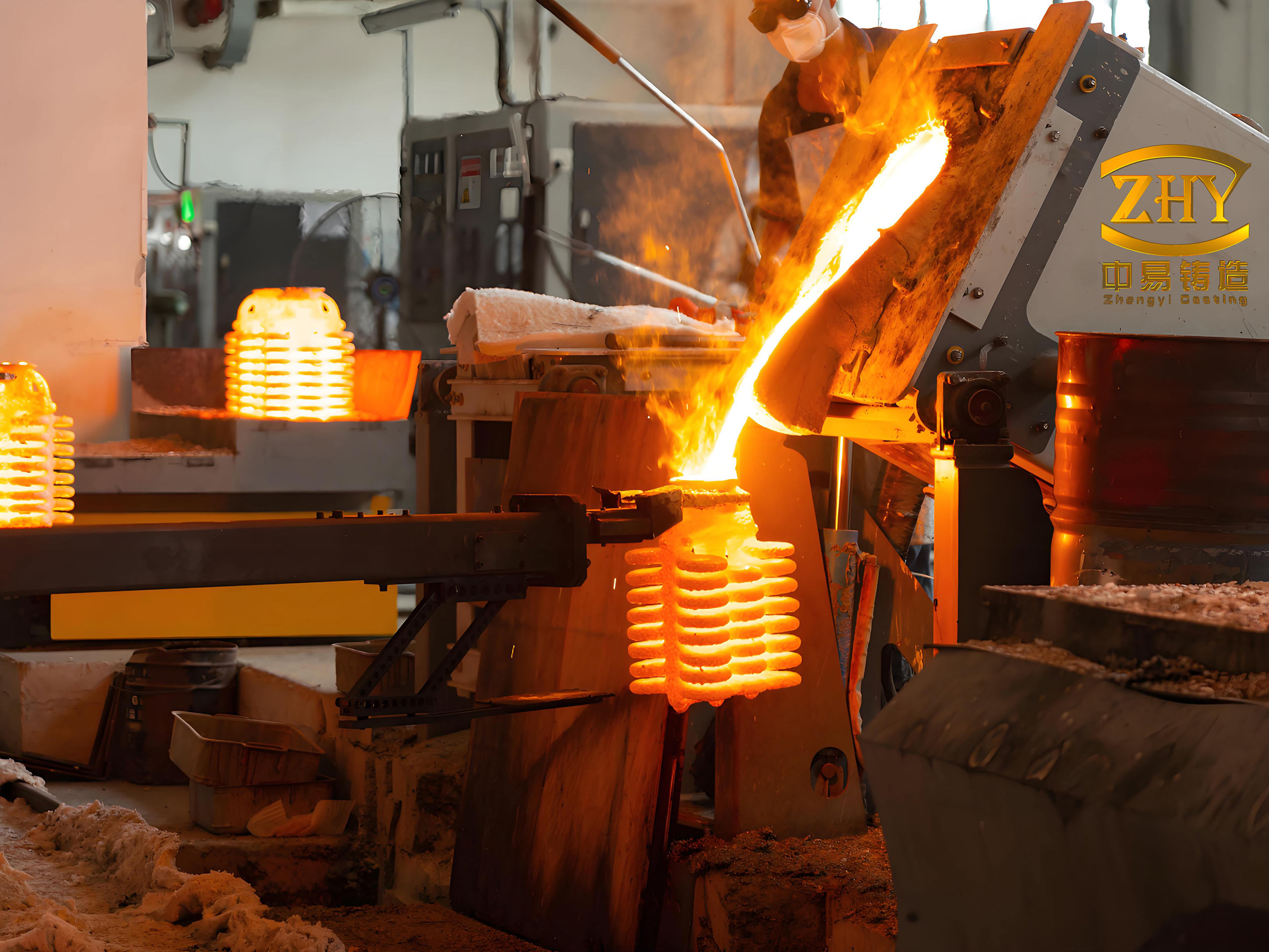
As we delve deeper into lost wax casting defect analysis, it’s clear that intuition must be backed by science. The intuitive method for lost wax casting thrives on direct observation, but it also benefits from technological aids. In modern lost wax casting facilities, tools like 3D scanning and simulation software can predict defect-prone areas, complementing on-site analysis. However, the human element remains critical in lost wax casting—trained eyes can spot nuances that machines might miss. I encourage lost wax casting practitioners to balance tradition with innovation, leveraging both experience and technology for optimal results.
Case Study: Hot Cracks in a Lost Wax Casting Component
To demonstrate the intuitive analysis method in lost wax casting, I will share a detailed case study from my experience. This involves a component called “Left Handle” produced via lost wax casting, made from ZG45 steel (a cast carbon steel). The lost wax casting process used quartz sand and water glass-based shells. Initially, the rejection rate for this lost wax casting part was as high as 97% due to hot cracks, presenting a significant challenge in the lost wax casting operation.
In lost wax casting, hot cracks are thermal tears that occur when casting stress exceeds the material’s strength at elevated temperatures. For this lost wax casting component, the cracks appeared in areas of stress concentration, such as sharp corners and near gates. Macroscopically, the cracks in the lost wax casting part were dark and oxidized, indicating high-temperature formation. Microscopic examination revealed intergranular fracture with decarburization, typical of hot cracks in lost wax casting. The formation temperature range for such cracks in lost wax casting is near the solidus line, which for ZG45 steel is approximately $$ T_{solidus} \approx 1400^\circ \text{C} $$ based on its carbon content. In lost wax casting, this insight guides analysis toward factors affecting solidification.
Using intuitive analysis for this lost wax casting defect, I started with defect description. The hot cracks in the lost wax casting component were primarily located at section A, a thermal junction where material accumulated. Data showed that the mold temperature during pouring in lost wax casting was 180–200°C, which seemed low relative to the metal pouring temperature of 1540–1560°C. This mismatch in lost wax casting likely contributed to high thermal stress. I collected production records and performed metallographic analysis on samples from the lost wax casting part, confirming the crack characteristics.
Next, for defect identification in this lost wax casting case, I compared the features with standard hot crack descriptions. The cracks were curved and dark, aligning with hot crack definitions in lost wax casting. This step eliminated other defects like cold cracks or porosity in the lost wax casting component.
For cause finding in this lost wax casting problem, I employed a fishbone diagram to explore potential factors. The main categories included: materials (e.g., steel composition in lost wax casting), methods (e.g., pouring temperature in lost wax casting), machines (e.g., furnace condition), environment (e.g., workshop temperature), and management (e.g., process controls in lost wax casting). Through the 5 Whys analysis focused on lost wax casting, I drilled down to the root cause: the low mold temperature in lost wax casting was reducing shell flexibility, increasing stress during solidification. Specifically, in lost wax casting, a cold shell expands rapidly when contacted by hot metal, restraining contraction and promoting cracks. This was identified as the primary cause for this lost wax casting defect.
To address this in lost wax casting, I implemented corrective actions using PDCA cycles. The first PDCA cycle in lost wax casting involved experimenting with higher mold temperatures. I adjusted the lost wax casting process by pouring into hotter shells, taken from the furnace at 860–880°C and used within 3–8 minutes. This improved shell yield in lost wax casting, but cracks shifted to section B, another stress concentration area, with an 83.9% rejection rate. The formula for thermal stress $$ \sigma = E \alpha \Delta T $$ explained this in lost wax casting: reducing $\Delta T$ by heating the shell lowered stress at A but not enough at B due to geometric constraints.
The second PDCA cycle in lost wax casting focused on design modification. I revised the gating system for this lost wax casting component to redirect solidification stresses to less critical areas. By making section B solidify earlier and the handle later, the lost wax casting part could contract more freely. After implementation in lost wax casting, the rejection rate dropped to 2.23%. This success in lost wax casting was validated over two months, with sustained low defect rates.
The following table summarizes the case study steps for this lost wax casting defect analysis:
| Phase | Action in Lost Wax Casting | Result | Key Learning for Lost Wax Casting |
|---|---|---|---|
| Initial State | Standard lost wax casting process with low mold temperature. | 97% rejection due to hot cracks. | Mold temperature is critical in lost wax casting for stress management. |
| First PDCA | Increased mold temperature in lost wax casting; poured into hot shells. | Cracks reduced but shifted; 83.9% rejection. | Geometry affects stress distribution in lost wax casting; holistic design needed. |
| Second PDCA | Modified gating design in lost wax casting to alter solidification sequence. | Rejection rate dropped to 2.23%. | Integrating process and design optimizes lost wax casting outcomes. |
| Validation | Monitored lost wax casting production over two months. | Consistent low defect rate; met customer lifespan requirements. | Sustained improvement in lost wax casting requires ongoing monitoring. |
This case underscores the value of intuitive analysis in lost wax casting. By combining observation, data, and iterative testing, we transformed a high-rejection lost wax casting part into a reliable product. The economic impact was substantial—saving thousands annually in scrap costs for this lost wax casting component. Moreover, it reinforced that lost wax casting defect analysis is not a one-time fix but a continuous improvement journey. Tools like PDCA and formulas provide structure, but the creativity to adapt solutions—such as redesigning gates—is what truly advances lost wax casting practices.
In lost wax casting, hot crack prevention can also be informed by computational models. For instance, simulating solidification in lost wax casting using finite element analysis can predict stress fields. The stress intensity factor $$ K_I = \sigma \sqrt{\pi a} $$ where $a$ is crack length, might be used to assess crack propagation risk in lost wax casting. However, in many lost wax casting foundries, practical approaches like intuitive analysis remain accessible and effective. I advocate for a blended strategy in lost wax casting: use simulations for design validation, but rely on hands-on analysis for daily troubleshooting.
Advanced Techniques and Tools for Lost Wax Casting Defect Analysis
Beyond intuitive analysis, lost wax casting defect analysis can benefit from advanced techniques that provide deeper insights. In my work with lost wax casting, I have integrated methods like scanning electron microscopy (SEM) with energy-dispersive X-ray spectroscopy (EDS) to examine defect morphology and composition. For example, in lost wax casting, inclusions causing brittleness can be identified as aluminum compounds or carbides through EDS, guiding corrective actions in lost wax casting alloy formulation. Similarly, non-destructive testing (NDT) methods such as ultrasonic testing or X-ray radiography are invaluable for inspecting lost wax casting parts without destruction, ensuring quality in critical applications.
Statistical process control (SPC) is another powerful tool for lost wax casting defect analysis. By monitoring key parameters like pouring temperature, shell thickness, and cooling rate in lost wax casting, we can detect trends and prevent defects proactively. Control charts for lost wax casting data can signal when a process is drifting, allowing for timely adjustments. For instance, if the mean pouring temperature in lost wax casting deviates, it might lead to shrinkage defects, which can be corrected before mass rejection. I recommend implementing SPC in lost wax casting operations to complement intuitive analysis, creating a robust quality system.
Formulas play a role here too. In lost wax casting, the quality index $Q$ for a casting might be expressed as a function of multiple variables: $$ Q = f(T, P, C, S) $$ where $T$ is temperature, $P$ is pressure, $C$ is composition, and $S$ is shell properties. Optimizing $Q$ in lost wax casting requires balancing these factors through defect analysis. Additionally, the probability of defect occurrence in lost wax casting can be modeled using Weibull distributions, helping predict failure rates. By quantifying risks, lost wax casting foundries can prioritize resources effectively.
The integration of digital twins in lost wax casting is an emerging trend. A digital twin simulates the lost wax casting process in real-time, allowing virtual defect analysis. For example, it can predict hot spots where cracks might form in lost wax casting, based on thermal simulations. This technology enhances traditional lost wax casting defect analysis by providing predictive insights, though it requires investment in software and training. For small to medium lost wax casting enterprises, starting with intuitive analysis and gradually adopting digital tools is a practical path.
To summarize advanced tools for lost wax casting defect analysis, consider this table:
| Technique | Description | Application in Lost Wax Casting | Benefit for Lost Wax Casting |
|---|---|---|---|
| SEM-EDS | Microscopic imaging and elemental analysis. | Identify inclusions or phases in lost wax casting defects. | Pinpoints material-related issues in lost wax casting. |
| NDT (e.g., X-ray) | Non-invasive inspection of internal structures. | Detect porosity or cracks in lost wax casting parts. | Ensures integrity without damaging lost wax casting products. |
| SPC | Statistical monitoring of process variables. | Track pouring temperature and shell quality in lost wax casting. | Prevents defects through early detection in lost wax casting. |
| Digital Twins | Virtual simulation of the casting process. | Predict hot tears or shrinkage in lost wax casting designs. | Reduces trial-and-error in lost wax casting development. |
In lost wax casting, combining these advanced methods with intuitive analysis creates a comprehensive defect analysis framework. I have seen lost wax casting foundries thrive by adopting a phased approach: first, master intuitive analysis for rapid response; then, incorporate SPC for control; and finally, explore digital tools for optimization. This progression aligns with the evolving demands of lost wax casting industries, where quality and efficiency are paramount. Moreover, training personnel in these techniques ensures that lost wax casting defect analysis becomes ingrained in the organizational culture.
Another aspect is the role of material science in lost wax casting defect analysis. Understanding alloy behavior is crucial for lost wax casting. For instance, the hot tearing susceptibility index $HTS$ for steels in lost wax casting can be approximated by: $$ HTS = \frac{(C + Mn)}{(Si + P)} $$ where elements are in weight percent. A higher $HTS$ indicates greater risk of hot cracks in lost wax casting. By calculating this for lost wax casting alloys, we can select compositions that minimize defects. Similarly, for gas porosity in lost wax casting, the solubility of hydrogen in molten metal follows Sievert’s law: $$ C = k \sqrt{P} $$ where $C$ is concentration, $k$ is a constant, and $P$ is partial pressure. In lost wax casting, controlling atmosphere during melting can reduce porosity. These formulas empower lost wax casting engineers to make informed decisions during defect analysis.
Ultimately, lost wax casting defect analysis is a dynamic field that blends art and science. Whether using simple visual checks or complex simulations, the goal remains the same: to produce flawless lost wax casting components. I urge practitioners to continuously learn and adapt, leveraging both traditional wisdom and modern technology. By doing so, lost wax casting can achieve higher quality standards, meeting the ever-increasing demands of industries like aerospace, automotive, and medical devices.
Conclusion: The Future of Defect Analysis in Lost Wax Casting
Defect analysis in lost wax casting is more than a technical necessity; it is a strategic imperative for sustainable manufacturing. Through this article, I have explored the intuitive analysis method, illustrated with a case study, and discussed advanced tools, all within the context of lost wax casting. The key takeaway is that effective defect analysis in lost wax casting requires a systematic, hands-on approach rooted in observation and data. By following steps like defect description, identification, cause finding, and corrective action, lost wax casting foundries can turn defects into opportunities for improvement.
The repeated emphasis on “lost wax casting” throughout this article underscores its centrality to the discussion. In lost wax casting, defects are inevitable, but with robust analysis, they become manageable. I have shared how formulas and tables can summarize complex concepts, aiding in lost wax casting defect diagnosis. For example, thermal stress formulas help explain hot cracks, while tables organize analysis steps for clarity. The integration of images, like the one provided, visually reinforces the lost wax casting process, reminding us of the precision involved.
Looking ahead, the future of lost wax casting defect analysis lies in digitalization and AI. Machine learning algorithms can analyze historical lost wax casting data to predict defects, offering proactive solutions. However, the human element—embodied in intuitive analysis—will remain vital for lost wax casting, as it brings context and creativity to problem-solving. I encourage lost wax casting professionals to embrace a hybrid model: combine AI insights with on-ground expertise for comprehensive defect analysis.
In conclusion, mastering defect analysis in lost wax casting is a journey of continuous learning. From intuitive methods to advanced techniques, each tool adds value to the lost wax casting process. By adopting the principles outlined here—such as PDCA cycles, team collaboration, and scientific formulas—lost wax casting operations can enhance quality, reduce costs, and delight customers. As I reflect on my experiences, I am confident that investing in defect analysis is investing in the future of lost wax casting. Let us move forward with curiosity and commitment, making every lost wax casting component a testament to excellence.
To encapsulate, here is a final formula representing the holistic approach to lost wax casting defect analysis: $$ \text{Success in Lost Wax Casting} = \text{Intuitive Analysis} + \text{Advanced Tools} + \text{Continuous Improvement} $$ This equation symbolizes the synergy needed to overcome challenges in lost wax casting, driving innovation and quality in this timeless craft.