
In the field of investment casting, surface pitting has long been a significant quality issue affecting precision cast components. I have encountered this defect repeatedly in my work, particularly with 200 series stainless steel, 400 series stainless steel, carbon steel, and low-alloy steel castings. After processes like shot blasting or sandblasting, these castings often exhibit gray-black spots, pits, or even deeper cavities. Remedying these defects is challenging; minor cases require grinding with tools, while severe instances lead to scrap, increasing production costs and delaying deliveries. Through extensive research and practical experience, I have identified that pitting results from the accumulation of metallic oxide inclusions on the casting surface. Key factors include gating system design, shell-making materials, shell firing, and melting and pouring practices. In this article, I will analyze these causes in detail and propose preventive measures to help fellow practitioners avoid such issues.
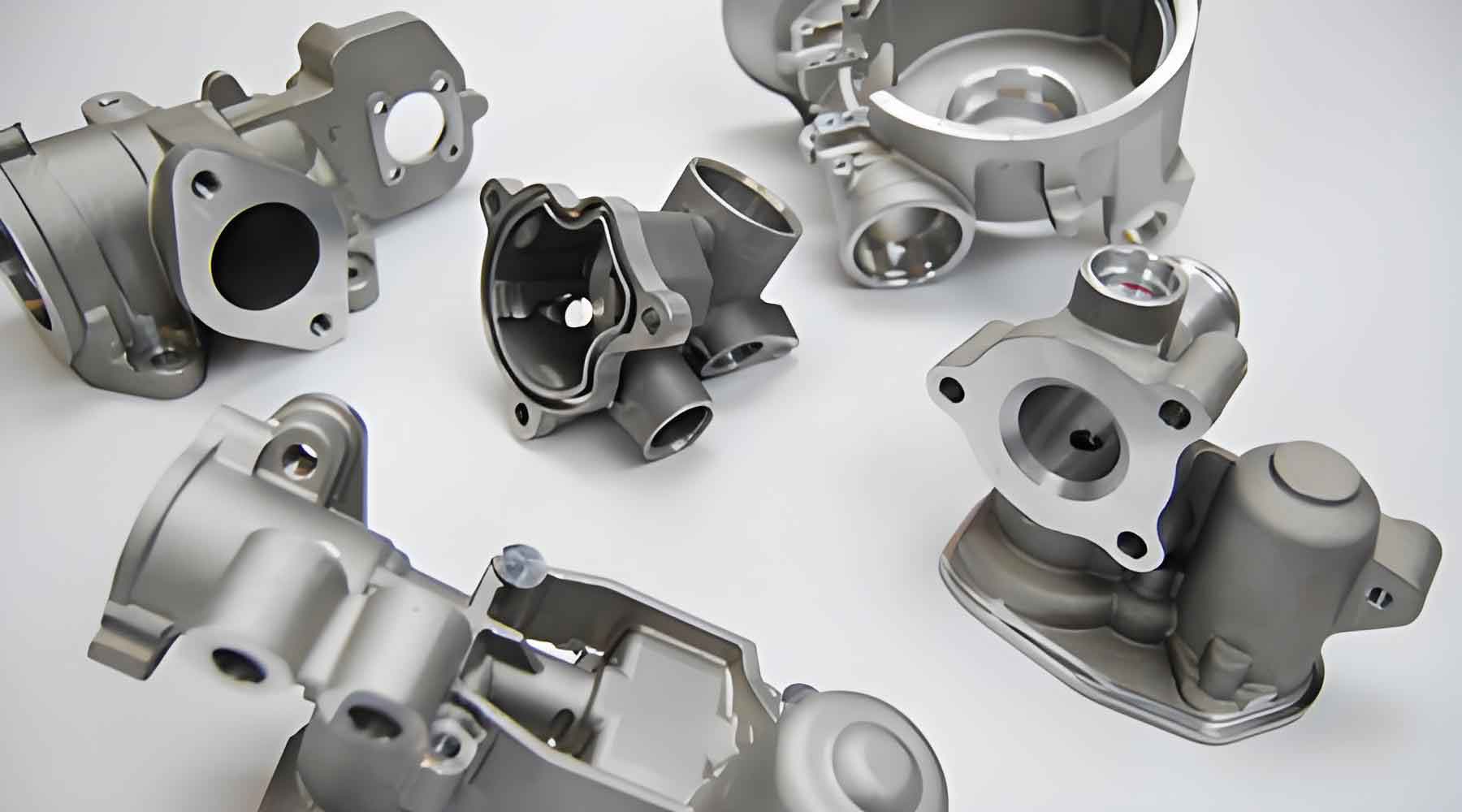
Pitting defects manifest as numerous small depressions on the casting surface, commonly observed in materials like 200 and 400 series stainless steels, as well as carbon and low-alloy steels. These imperfections arise from complex interactions during the precision casting process, where metallic oxides accumulate and react with the shell materials. Understanding the root causes is essential for effective prevention in investment casting operations.
Defect Characteristics and Mechanisms
Surface pitting in precision casting typically appears as localized凹坑 after post-casting treatments. The primary mechanism involves the segregation of oxide inclusions, such as those of iron, chromium, silicon, and aluminum, at the metal-mold interface. These inclusions form due to oxidation reactions, which can be described by fundamental equations. For instance, the oxidation of chromium in stainless steel can be represented as: $$ \text{Cr} + \frac{3}{4}\text{O}_2 \rightarrow \text{Cr}_2\text{O}_3 $$ Similarly, for iron: $$ \text{Fe} + \frac{1}{2}\text{O}_2 \rightarrow \text{FeO} $$ These oxides interact with shell materials, leading to pit formation. The severity depends on factors like alloy composition and process parameters in investment casting.
Causes of Pitting Defects
In my analysis, pitting in precision casting stems from multiple sources, each contributing to oxide formation and accumulation.
Gating System Design Flaws
Improper gating design is a common culprit in investment casting. For example, placing ingates directly at thermal centers can cause localized overheating, promoting oxidation. Instead, offsetting ingates from hot spots reduces overheating and improves yield. Additionally, inadequate wax removal due to poor tree assembly orientation leaves residues that carbonize during firing, reacting with molten metal to form oxides. To quantify this, consider the relationship between gating design and oxide formation: $$ \text{Oxide Formation Rate} \propto \frac{\text{Thermal Overheat}}{\text{Cooling Rate}} $$ A well-designed system minimizes this rate. Practical steps include adding wax drainage channels or process ribs, and for high-quality castings, employing secondary dewaxing and cleaning.
Impurities in Shell Refractory Materials
The quality of refractory materials, especially for the face coat, critically impacts pitting in precision casting. Zircon sand, commonly used for its high thermal conductivity and refractoriness, can degrade if contaminated with oxides like Fe2O3, CaO, or K2O. For instance, the decomposition temperature of zircon sand drops significantly with impurities: $$ \text{ZrSiO}_4 \xrightarrow{\text{impurities}} \text{ZrO}_2 + \text{SiO}_2 $$ The reactive SiO2 then interacts with alloy elements (e.g., Cr, Ni), causing pitting. To address this, I recommend using high-purity materials with strict impurity limits, as summarized in Table 1.
| Material | Main Composition (%) | Fe2O3 (%) | FeO (Free Iron) (%) | CaO+MgO+Na2O+K2O (%) | Grit Size (Mesh) | Loss on Ignition (%) |
|---|---|---|---|---|---|---|
| Zircon Sand | ZrSiO4 ≥ 65 | ≤ 0.10 | ≤ 0.05 | ≤ 0.30 | 80/120 | ≤ 0.5 |
| Zircon Flour | ZrSiO4 ≥ 66 | ≤ 0.07 | ≤ 0.02 | ≤ 0.10 | 325 | ≤ 0.5 |
| Fused Alumina | Al2O3 ≥ 99 | ≤ 0.05 | ≤ 0.02 | ≤ 0.50 | 80/120 | ≤ 0.5 |
| Mulite Sand | Al2O3 40-46 | ≤ 1.00 | ≤ 0.50 | ≤ 1.20 | 50/100 | ≤ 0.5 |
Neutral refractories like white alumina or mulite are preferable for precision casting of susceptible alloys, as they reduce secondary oxidation. Additionally, backcoat materials should be free of low-melting-point compounds like 2FeO·SiO2, which can infiltrate the casting surface.
Inadequate Shell Firing
Shell firing is crucial in investment casting to remove volatiles like water, organics, and salts. Under-fired shells retain these substances, which gasify during pouring, introducing oxygen and promoting oxidation. The firing process should follow specific parameters: for silicate-bonded shells, fire at 950–1050°C for 0.5–2 hours; for silica sol-bonded shells, 1050–1200°C for at least 30 minutes. The reaction during firing can be modeled as: $$ \text{H}_2\text{O} + \text{Organics} \xrightarrow{\Delta} \text{Gases} + \text{Oxides} $$ Incomplete firing increases gas evolution, accelerating interfacial reactions. I advise post-pouring practices like covering with insulating agents to prevent reoxidation.
Incomplete Deoxidation During Melting
Melting practices are pivotal in precision casting for minimizing oxides. Key issues include using rusty charge materials or excessive revert, insufficient deoxidation, and poor process control. Deoxidation involves sequential additions: first manganese iron, then silicon iron, followed by silicon calcium, and finally aluminum. The reactions can be expressed as: $$ \text{Mn} + \text{O} \rightarrow \text{MnO} $$ $$ \text{Si} + 2\text{O} \rightarrow \text{SiO}_2 $$ $$ 2\text{Al} + 3\text{O} \rightarrow \text{Al}_2\text{O}_3 $$ The goal is to form low-melting-point oxides that float out. Aluminum residuals should be controlled between 0.015% and 0.020%; excess aluminum exacerbates pitting. Table 2 outlines a typical deoxidation sequence for investment casting.
| Step | Deoxidant | Addition Amount (%) | Purpose | Reaction Product |
|---|---|---|---|---|
| Pre-deoxidation | Manganese Iron | 0.2–0.5 | Initial oxygen removal | MnO (melts at ~1785°C) |
| Secondary Deoxidation | Silicon Iron | 0.1–0.3 | Further reduction | SiO2 (melts at ~1723°C) |
| Tertiary Deoxidation | Silicon Calcium | 0.05–0.15 | Complex oxide formation | Calcium Silicates |
| Final Deoxidation | Aluminum | 0.10–0.12 (furnace), 0.02–0.05 (ladle) | Terminal oxygen scavenging | Al2O3 (melts at ~2072°C) |
Additionally, holding the melt for 2 minutes after deoxidation allows inclusions to float, and practices like vacuum pouring can prevent reoxidation in investment casting.
Binder Selection and Pouring Parameters
Acidic binders (e.g., silica sol, hydrolyzed ethyl silicate) contribute to pitting in precision casting by generating reactive SiO2. For critical alloys, neutral or basic binders are better. Pouring temperature and shell temperature also play roles; excessive temperatures prolong metal-mold interaction, increasing oxidation risk. The relationship can be described by: $$ \text{Pitting Risk} = k \cdot e^{\frac{-E_a}{RT}} $$ where \( k \) is a constant, \( E_a \) is activation energy, \( R \) is gas constant, and \( T \) is temperature. Controlling these parameters within optimal ranges is essential for investment casting quality.
Preventive Measures for Specific Alloys
Based on my experience, tailored approaches are needed for different materials in precision casting.
Carbon and Low-Alloy Steels
For these alloys, focus on melt quality and shell firing. Use clean, dry charge materials with limited revert. Implement full deoxidation as per Table 2, and ensure shell firing at 950–1200°C with adequate hold times. Post-pouring, immediate sealing with materials like waste wax creates a reducing atmosphere, preventing reoxidation.
Stainless Steels (200 and 400 Series)
These are prone to pitting due to high chromium content. In investment casting, employ high-purity refractories and consider additives like graphite in backup coats. For instance, adding 0.3–0.5% graphite powder to backup slurries has reduced pitting in my practice. Recently, petroleum coke granules (graphite sand) have shown promise as a shell material for transition layers, enhancing surface quality in precision casting.
Advanced Strategies for Mitigation
To further combat pitting in investment casting, I recommend integrated measures. First, optimize gating using simulation software to predict thermal profiles. The heat transfer can be modeled with Fourier’s law: $$ q = -k \nabla T $$ where \( q \) is heat flux, \( k \) is thermal conductivity, and \( \nabla T \) is temperature gradient. Second, adopt statistical process control to monitor key variables like Fe2O3 content in refractories and deoxidation efficiency. For example, the effectiveness of deoxidation can be quantified as: $$ \text{Deoxidation Efficiency} = \frac{[\text{O}]_{\text{initial}} – [\text{O}]_{\text{final}}}{[\text{O}]_{\text{initial}}} \times 100\% $$ Aim for efficiencies above 95% in precision casting.
Additionally, for large castings (≥10 kg), use pre-fired, dry mulite sand for investing instead of moist sands to avoid gas evolution. After pouring, seal the mold within 5 seconds to maintain a reducing environment. This is particularly critical for alloys with low nickel content or high chromium, where secondary oxidation is rapid.
Conclusion
In summary, surface pitting in precision casting is a multifaceted defect driven by oxide inclusions. Through systematic analysis, I have highlighted that complete deoxidation, proper shell firing, and prevention of secondary oxidation are paramount. The use of high-quality refractories and innovative materials like graphite sand in investment casting shells can significantly reduce occurrences. By adhering to these practices, foundries can enhance surface quality, reduce scrap, and meet delivery commitments in precision casting operations. Continuous improvement and attention to detail are essential for mastering investment casting processes.