
In the realm of precision investment casting, particularly for stainless steel components, achieving high-integrity thin-wall castings is a significant challenge. As an engineer specializing in this field, I have observed that shrinkage defects—namely shrinkage cavities and porosity—account for a substantial proportion of failures, especially in thin-wall sections. These defects severely compromise internal quality, leading to increased scrap rates and production costs. This article delves into the root causes of shrinkage in thin-wall precision investment casting, presents practical improvement strategies derived from hands-on experience, and offers comprehensive preventive measures, all aimed at enhancing the reliability of this advanced manufacturing process.
Precision investment casting, often referred to as lost-wax casting, is a versatile method for producing complex, near-net-shape components with excellent surface finish and dimensional accuracy. However, when it comes to thin-wall designs—typically defined as sections less than 5 mm thick—the inherent challenges of solidification and feeding become magnified. The limited mass of metal in these sections cools rapidly, often hindering the establishment of favorable temperature gradients necessary for directional solidification and effective feeding. Consequently, shrinkage defects emerge as a predominant concern, necessitating tailored approaches in both design and process control.
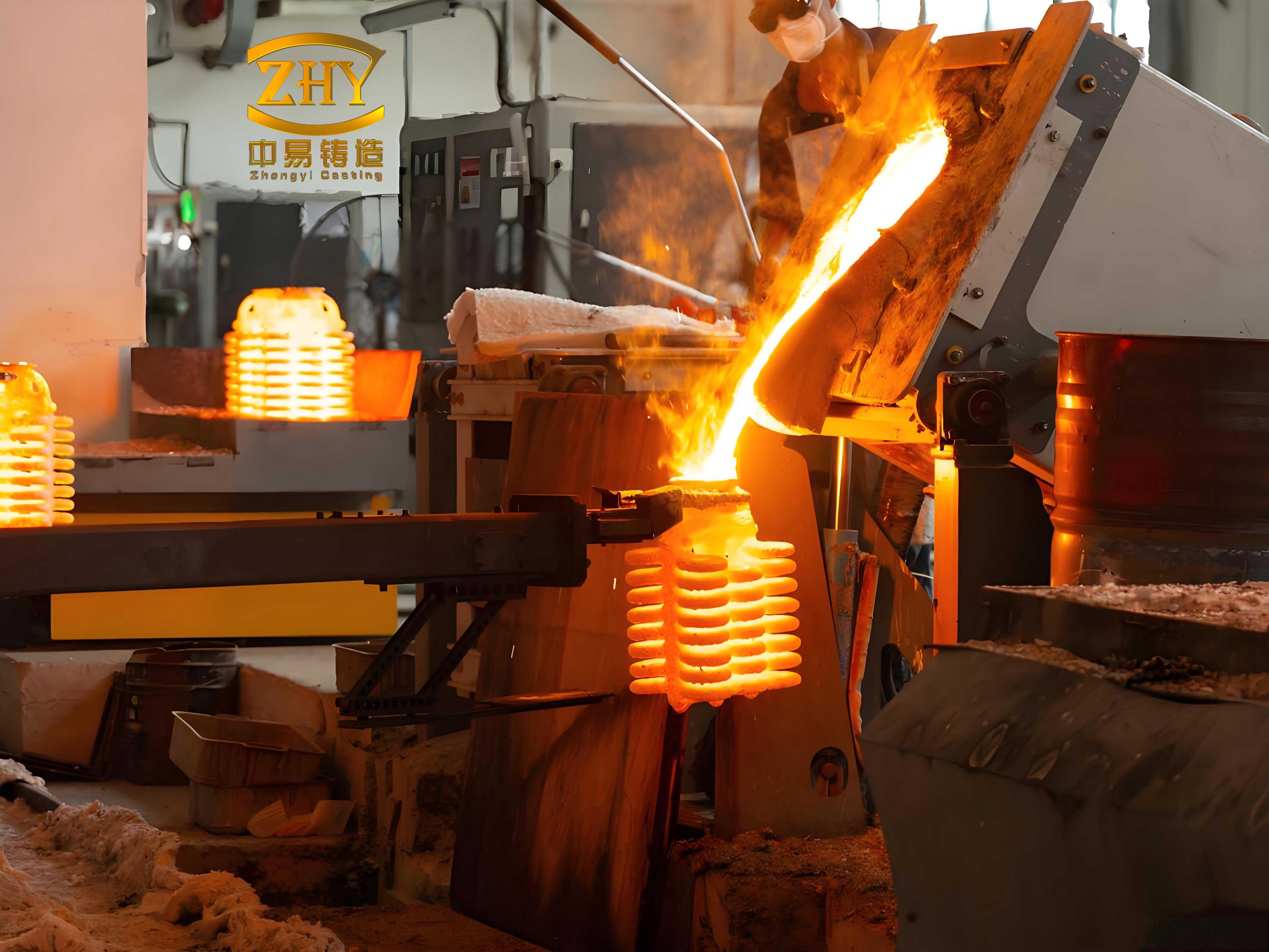
Fundamental Mechanisms of Shrinkage Cavity and Porosity Formation
To effectively address shrinkage defects in precision investment casting, a thorough understanding of their formation mechanisms is essential. Shrinkage occurs primarily due to the volumetric contraction of metal during two key phases: liquid contraction as the metal cools from pouring temperature to liquidus temperature, and solidification contraction during the phase change from liquid to solid. When this contraction is not compensated by adequate feeding from residual liquid metal, voids form within the casting.
A shrinkage cavity is a macroscopic void typically located at thermal centers or hot spots—regions that solidify last. It arises when the feeding path is interrupted, often due to premature solidification of channels. The condition for cavity formation can be described by considering the volume change. The total volumetric shrinkage, $\Delta V_{total}$, can be expressed as:
$$ \Delta V_{total} = V_0 (\alpha_l \Delta T_l + \beta_s) $$
where $V_0$ is the initial volume of liquid metal, $\alpha_l$ is the coefficient of liquid thermal contraction, $\Delta T_l$ is the temperature drop from pouring to liquidus, and $\beta_s$ is the solidification shrinkage coefficient (typically around 3-6% for stainless steels). For feeding to be effective, the feeding flow rate must satisfy:
$$ Q_{feed} \geq \frac{d(\Delta V_{total})}{dt} $$
where $Q_{feed}$ is the volumetric feeding rate through the feeding system.
Shrinkage porosity, on the other hand, consists of numerous dispersed micro-voids. It is prevalent in alloys with a wide freezing range, where solidification occurs over a broad temperature interval in a “mushy” or pasty manner. In precision investment casting of stainless steels like 304 or 316, which have appreciable freezing ranges, this mode is common. During this volumetric solidification, dendritic grains nucleate and grow, eventually interconnecting to form a solid network that isolates small pockets of liquid. These isolated pools solidify without external feeding, resulting in micro-porosity. The solid fraction, $f_s$, as a function of temperature, $T$, can be approximated by the Scheil equation for non-equilibrium solidification:
$$ f_s = 1 – \left( \frac{T_m – T}{T_m – T_l} \right)^{\frac{1}{k_0 – 1}} $$
where $T_m$ is the melting point of the pure solvent, $T_l$ is the liquidus temperature, and $k_0$ is the partition coefficient. Porosity forms when $f_s$ reaches a critical value (often around 0.6-0.7), at which the liquid becomes entrapped. The propensity for porosity can be related to the temperature gradient, $G$, and the solidification rate, $R$. A criterion for sound casting is often given by the $G/R$ ratio; higher values promote directional solidification and reduce porosity risk.
For thin-wall castings in precision investment casting, the rapid heat extraction by the ceramic shell exacerbates these issues. The solidification time, $t_f$, for a thin plate of thickness $d$ can be estimated using Chvorinov’s rule:
$$ t_f = B \left( \frac{V}{A} \right)^n = B \left( \frac{d}{2} \right)^n $$
where $B$ and $n$ are constants dependent on mold material and metal properties, $V$ is volume, and $A$ is surface area. The short solidification time limits the window for effective feeding, making traditional risering less effective and demanding innovative solutions.
Strategies for Process Improvement: Lessons from Practical Applications
Through extensive involvement in precision investment casting projects, I have implemented and refined various strategies to combat shrinkage in thin-wall stainless steel castings. The following discussion synthesizes key approaches, illustrated with generalized case examples without reference to specific diagrams. These examples underscore the adaptability required in precision investment casting.
| Casting Feature | Initial Challenge | Implemented Solution | Key Principle Applied | Outcome |
|---|---|---|---|---|
| Uniform thin-wall plate (2.5 mm thick) | Shrinkage at wall junctions due to long feeding distance | Relocated and added multiple ingates near thermal centers | Reducing feeding distance to ensure timely liquid supply | Significant reduction in shrinkage defects |
| Pump housing with thin legs (5-10 mm) | Major shrinkage at leg-body junctions | Ingates placed at leg ends with application of insulation | Maintaining open feeding channels via thermal control | Elimination of shrinkage cavities |
| Tubular fitting with localized hot spot | Intermittent micro-porosity around a critical region | Increased pouring temperature from 1580°C to 1670°C | Enhancing fluidity and feeding capacity through superheat | Resolution of porosity issues |
| Pedal component with multiple thin sections | Shrinkage scattered across several thin areas | Post-pouring quenching by partial immersion in water | Promoting simultaneous solidification via controlled cooling |
Gating System Design and Optimization: In precision investment casting, the gating system not only conveys metal but also governs solidification patterns. For thin-wall castings, conventional gating might place ingates too far from thermal centers, leading to inadequate feeding. As seen in the first example, adding auxiliary ingates near junction areas drastically shortens the feeding path. The feeding distance, $L_f$, for a thin section can be empirically related to section thickness, $d$, and alloy characteristics. For stainless steels, a rule of thumb is $L_f \approx 4.5 \sqrt{d}$ for unrestrained feeding, but this must be adjusted based on geometry. Computational simulations can optimize ingate placement to ensure that the temperature gradient favors feeding.
Thermal Management Techniques: Controlling the cooling rate is pivotal in precision investment casting. Insulating feeders or applying exothermic materials to ingates helps maintain a thermal gradient that keeps feeding channels open longer. Conversely, for large thin-wall areas where directional solidification is impractical, promoting simultaneous solidification is key. This can be achieved by insulating thin sections or using chill plates strategically. The heat transfer equation governs this balance:
$$ \rho c_p \frac{\partial T}{\partial t} = \nabla \cdot (k \nabla T) + \dot{q} $$
where $\rho$ is density, $c_p$ is specific heat, $k$ is thermal conductivity, and $\dot{q}$ is heat source (e.g., exothermic reaction). By modifying boundary conditions via insulation or chilling, the solidification front can be controlled.
Pouring Temperature Adjustment: Raising the pouring temperature, as in the tubular fitting case, increases the superheat, which extends the liquidus-to-solidus time, allowing better feeding. However, excessive temperature can cause shell cracking or gas dissolution. The optimal temperature balances fluidity and defect minimization. For austenitic stainless steels in precision investment casting, temperatures around 1600-1700°C are common. The effect on fluidity can be modeled as:
$$ \text{Fluidity length} \propto \frac{\Delta T_{superheat}}{\sqrt{t_f}} $$
where $\Delta T_{superheat}$ is the temperature above liquidus.
Post-Pouring Interventions: Techniques like partial quenching—dipping the assembly into water after pouring—accelerate cooling in specific regions to induce simultaneous solidification. This requires precise control over immersion timing and depth to avoid thermal shock cracks. The cooling rate during quenching can be estimated using Newton’s law of cooling:
$$ \frac{dT}{dt} = -h (T – T_{\text{medium}}) $$
where $h$ is the heat transfer coefficient, significantly higher for water contact.
Comprehensive Preventive Measures for Shrinkage Defects
Building on empirical successes, a systematic set of preventive measures can be established for thin-wall precision investment casting. These measures are interrelated and should be selected based on component geometry, alloy, and production constraints.
| Measure Category | Specific Actions | Underlying Principle | Applicability in Thin-Wall Castings |
|---|---|---|---|
| Design Modifications | Increase fillet radii at junctions; avoid sharp corners; optimize wall thickness uniformity | Reduce stress concentration and local hot spots; improve feeding geometry | High—directly addresses thermal center formation |
| Gating and Feeding System | Add multiple ingates or feeders near thermal centers; use tapered runners; implement feeding aids like filters | Shorten feeding distance; ensure pressurized feeding; filter inclusions that may block flow | Critical—feeding system design is paramount for thin sections |
| Thermal Control | Apply insulating sleeves to feeders; use chills at thick sections; control shell preheat temperature | Manage temperature gradients to promote directional or simultaneous solidification as needed | Very High—enables control over solidification mode |
| Process Parameter Optimization | Adjust pouring temperature and shell temperature based on trials; control cooling rate | Optimize fluidity and solidification kinetics to match geometry | Essential—parameters must be fine-tuned for each casting |
| Advanced Casting Techniques | Employ vacuum-assisted gravity casting; use centrifugal casting for thin sections | Enhance metal feeding through external pressure; improve density | Moderate—requires equipment but highly effective |
| Shell Engineering | Modify shell composition or thickness to alter heat transfer; use conductive coatings | Control heat extraction rates to achieve desired solidification pattern | High—shell is primary heat sink in precision investment casting |
Design for Manufacturability: In precision investment casting, collaboration between design and process engineers is vital. Increasing fillet radii at intersections reduces the severity of hot spots, as the thermal modulus (V/A) becomes more uniform. For example, doubling the fillet radius can decrease the local solidification time by up to 30%, mitigating shrinkage risk. Where possible, wall thickness transitions should be gradual, following guidelines such as maintaining a thickness ratio below 2:1 between adjacent sections.
Advanced Feeding Systems: Beyond simple ingates, pressurized gating systems can improve feeding efficiency. The pressure head, $P$, available for feeding is given by $P = \rho g h$, where $\rho$ is metal density, $g$ is gravity, and $h$ is the effective height of the feeding column. In vacuum-assisted precision investment casting, additional atmospheric pressure can be applied, effectively increasing $P$. This technique is particularly beneficial for thin-wall castings where natural feeding pressure is low due to small thermal gradients.
Thermal Regulation through Shell Design: The ceramic shell in precision investment casting is not merely a mold; it is a thermal barrier that can be engineered. By varying layer composition or thickness, local heat transfer coefficients can be modulated. For instance, adding zirconia to the face coat reduces thermal conductivity, acting as an insulator. Conversely, incorporating graphite flakes can enhance conductivity. The overall heat transfer coefficient, $U$, for the shell-metal interface influences cooling:
$$ \frac{1}{U} = \frac{1}{h_i} + \sum \frac{\delta_j}{k_j} $$
where $h_i$ is the interfacial heat transfer coefficient, $\delta_j$ and $k_j$ are thickness and conductivity of shell layers.
Vacuum-Assisted Gravity Casting: This method involves applying a partial vacuum to the mold cavity during pouring, which helps draw metal into thin sections and reduces gas entrapment. The pressure differential, $\Delta P$, enhances feeding by effectively increasing the head pressure. For thin-wall precision investment casting, this can be a game-changer, as it compensates for the limited fluidity in narrow channels. The flow rate, $Q$, under vacuum assistance can be described by:
$$ Q = C_d A \sqrt{\frac{2 \Delta P}{\rho}} $$
where $C_d$ is discharge coefficient and $A$ is cross-sectional area.
The Role of Simulation and Data Analytics in Defect Prediction
Modern precision investment casting heavily relies on computational tools to predict and prevent shrinkage defects. Finite element analysis (FEA) and computational fluid dynamics (CFD) simulations model temperature fields, solidification sequences, and feeding patterns. By inputting material properties and process parameters, engineers can visualize potential hot spots and adjust designs virtually.
Key simulation outputs include the Niyama criterion, often used to predict porosity in steels. The criterion states that porosity is likely when:
$$ \frac{G}{\sqrt{\dot{T}}} < C $$
where $G$ is temperature gradient, $\dot{T}$ is cooling rate, and $C$ is a material constant. For thin-wall castings, this criterion helps identify regions at risk even before tooling is made. Additionally, feed metal availability can be tracked using mass conservation equations coupled with shrinkage models.
Data analytics from production runs further refine these models. By correlating defect occurrences with process variables—such as shell preheat temperature, pouring speed, and ambient humidity—predictive maintenance and real-time adjustments become possible. This data-driven approach is transforming precision investment casting into a more reliable and efficient process.
Material-Specific Considerations for Stainless Steels
Stainless steels used in precision investment casting, such as the 300 series (304, 316), have distinct solidification behaviors that influence shrinkage. Austenitic grades solidify as primary austenite, with a freezing range of approximately 30-50°C. This range contributes to mushy zone formation, making them prone to micro-porosity. The solidification path can be analyzed using phase diagrams; for example, the Fe-Cr-Ni system dictates the sequence of phase formation.
The shrinkage behavior also depends on alloy composition. Elements like silicon and manganese affect fluidity and shrinkage volume. The following formula approximates the solidification shrinkage factor, $\beta_s$, for stainless steels:
$$ \beta_s \approx 0.06 – 0.002 \times (\%Cr + \%Ni) + 0.001 \times \%Si $$
This highlights the need for composition control within specifications to ensure consistent feeding requirements in precision investment casting.
Moreover, the presence of delta ferrite in the solidification structure can influence feeding characteristics. A small amount of ferrite (5-10%) is often desirable to reduce hot tearing, but it may alter shrinkage patterns. Metallurgical analysis, including Schaeffler diagrams, helps in alloy selection and modification for thin-wall applications.
Economic and Quality Implications of Defect Reduction
Reducing shrinkage defects in thin-wall precision investment casting directly impacts profitability and product reliability. Scrap reduction lowers material and energy costs, while improved internal quality enhances performance in critical applications like aerospace, medical devices, and automotive components.
A cost-benefit analysis can quantify the value of implemented measures. For instance, adding extra ingates increases wax pattern complexity and may raise tooling costs, but the reduction in scrap rate often justifies the investment. The total cost per casting, $C_{total}$, can be modeled as:
$$ C_{total} = C_{material} + C_{labor} + C_{overhead} + C_{scrap} $$
where $C_{scrap}$ is the cost attributable to defective castings. By minimizing $C_{scrap}$ through effective defect prevention, overall competitiveness in precision investment casting is strengthened.
Furthermore, achieving consistent quality enables manufacturers to meet stringent industry standards, such as those in investment casting for surgical implants or turbine blades, where internal integrity is non-negotiable.
Future Trends and Innovations in Precision Investment Casting
The evolution of precision investment casting continues with advancements in materials, automation, and process monitoring. Additive manufacturing of wax patterns allows for unprecedented design freedom, enabling optimized gating systems tailored to each casting’s thermal needs. Real-time thermal imaging during solidification provides instant feedback, allowing for dynamic process adjustments.
Research into novel shell materials with tunable thermal properties promises better control over cooling rates. For example, functionally graded shells that vary in conductivity along the casting geometry could precisely direct solidification fronts. Additionally, the integration of IoT sensors in foundries enables predictive analytics, further reducing defect rates in thin-wall precision investment casting.
Another promising area is the use of controlled atmosphere melting and pouring to minimize gas porosity, which often coexists with shrinkage defects. By maintaining low hydrogen and oxygen levels, the metal’s feeding characteristics improve, complementing shrinkage prevention strategies.
Conclusion
In summary, addressing shrinkage cavities and porosity in thin-wall precision investment casting requires a multifaceted approach rooted in understanding solidification principles and leveraging practical experience. From optimizing gating design and thermal management to employing advanced techniques like vacuum assistance, each measure contributes to enhancing casting integrity. The key lies in recognizing that no single solution fits all; rather, a combination of strategies, tailored to the specific geometry, alloy, and production environment, yields the best results. As precision investment casting technology advances, continued innovation and adaptation will further mitigate these persistent defects, ensuring the production of high-quality thin-wall stainless steel components for demanding applications.
Through persistent experimentation and application of scientific principles, the challenges posed by shrinkage in thin-wall precision investment casting can be effectively managed, leading to more reliable and economical manufacturing outcomes. The journey from defect analysis to robust process control exemplifies the dynamic nature of modern foundry engineering, where tradition and technology converge to achieve excellence.