
In my extensive experience within the precision casting industry, hot tearing remains one of the most persistent and economically detrimental defects encountered in investment casting production. The high scrap rates associated with this defect, sometimes exceeding significant percentages, not only escalate production costs but also disrupt delivery schedules, severely impacting overall operational profitability. Therefore, understanding, preventing, and mitigating hot tears is a paramount objective for any practitioner involved in investment casting. This article delves deep into the nature, causes, and, most importantly, the practical strategies to combat hot tearing in investment castings, drawing from firsthand observations and technical analysis.
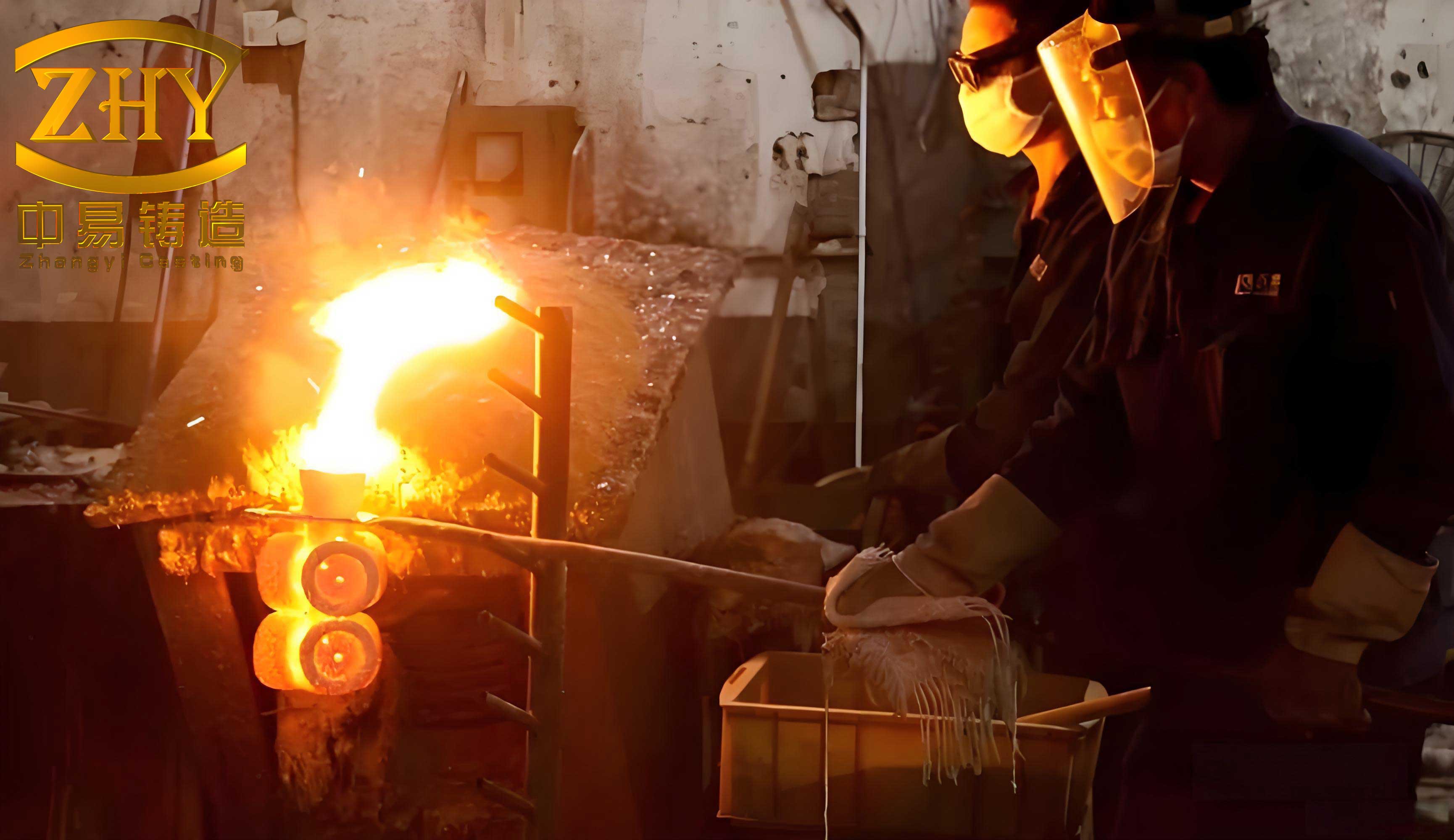
The fundamental process of investment casting, known for its ability to produce complex, near-net-shape components with excellent surface finish, is nevertheless susceptible to solidification defects like hot tearing. This defect typically manifests in regions that solidify last and are prone to stress concentration, such as thermal junctions, sharp corners, and areas adjacent to gates. In investment casting, the interplay between the solidifying metal and the ceramic shell is critical, and any imbalance can lead to hot tearing.
1. Overview and Characteristics of Hot Tears
Hot tears, or hot cracks, are intergranular fractures that occur during the final stages of solidification or shortly thereafter in the investment casting process. They are broadly categorized into two types:
| Type | Location | Macroscopic Features | Microscopic Features |
|---|---|---|---|
| Internal Hot Tear | Inside the casting, at last-solidifying zones. | Often difficult to distinguish from interdendritic shrinkage porosity without non-destructive testing. | Intergranular propagation, may be associated with micro-shrinkage. |
| External Hot Tear | On the casting surface, extending inward. | Irregular, jagged path; surface is oxidized, appearing dark brown or black. | Clearly intergranular; decarburization layers adjacent to crack; coarse grains and Widmanstätten structure may be present. |
From a microstructural perspective, the crack path follows grain boundaries, which are weakened by the presence of liquid films or low-melting-point phases at elevated temperatures. This is a hallmark of hot tearing in investment casting alloys.
2. The Temperature Range of Hot Tear Formation
A central debate in metallurgy concerns the exact temperature at which hot tears form in investment castings. Based on experimental studies, particularly on steel castings, the consensus leans toward a temperature range very close to the solidus line. The formation can be described by the following relation:
$$ T_{ht} = T_{solidus} \pm \Delta T_{brittle} $$
Where \( T_{ht} \) is the hot tearing temperature, \( T_{solidus} \) is the alloy’s solidus temperature, and \( \Delta T_{brittle} \) is a small temperature interval defining the “brittle temperature range” (BTR). Within this range, the alloy possesses minimal strength and ductility. Research indicates that for carbon steels, regardless of carbon content, hot tearing occurs within a narrow band near the solidus, as approximated by:
$$ T_{ht} \approx (0.9 \text{ to } 1.0) \times T_{solidus} $$
This temperature range is critical for understanding the thermal stresses involved in investment casting.
3. Root Causes of Hot Tearing in Investment Casting
The primary causes of hot tearing in investment castings are intrinsically linked to the conditions during solidification. They can be summarized by two interrelated factors:
| Primary Cause | Description | Key Influencing Factors in Investment Casting |
|---|---|---|
| Low High-Temperature Strength and Ductility | The alloy lacks sufficient cohesive strength at grain boundaries in the semi-solid state. | Alloy composition (e.g., S, P content); inclusion type and distribution; grain size; deoxidation practice. |
| Excessive Casting Stress | Tensile stresses developed during restricted contraction exceed the alloy’s hot strength. | Cast design (wall thickness variations, sharp corners); gating system design; shell restraint; cooling rate gradients. |
Mathematically, the condition for hot tear initiation can be expressed as:
$$ \sigma_{thermal}(T) \geq \sigma_{strength}(T) $$
where \( \sigma_{thermal}(T) \) is the thermally induced tensile stress at temperature \( T \) (within the BTR), and \( \sigma_{strength}(T) \) is the alloy’s fracture strength at that same temperature. In investment casting, \( \sigma_{thermal} \) is heavily influenced by the restraint imposed by the ceramic shell.
The thermal stress can be approximated for constrained contraction by:
$$ \sigma_{thermal} \approx E(T) \cdot \alpha(T) \cdot (T_{solidus} – T_{shell}) $$
Here, \( E(T) \) is the temperature-dependent Young’s modulus, \( \alpha(T) \) is the coefficient of thermal expansion, and \( (T_{solidus} – T_{shell}) \) represents the temperature difference driving contraction. A high modulus and expansion coefficient, coupled with a cool shell, dramatically increase stress.
4. Preventive Measures and Mitigation Strategies
Combating hot tearing in investment casting requires a multi-faceted approach targeting both material properties and process-induced stresses.
4.1 Enhancing High-Temperature Strength and Ductility
Material Selection and Melting Practice: The foundation lies in alloy choice and melt quality. For steel investment castings, sulfur is particularly detrimental. Its presence promotes the formation of low-melting-point FeS films at grain boundaries. The effect can be quantified by the hot cracking susceptibility index, which for simple systems relates to composition. A key practice is the addition of rare earth (RE) elements as strong desulfurizers and modifiers. The efficiency of desulfurization can be represented as:
$$ \eta_{S} = \frac{[S]_{initial} – [S]_{final}}{[S]_{initial}} \times 100\% $$
With proper RE addition, \( \eta_{S} \) can exceed 50%, significantly reducing hot tear tendency. Furthermore, RE elements refine grains and spheroidize inclusions, improving ductility. The relationship between grain size (d) and hot tear resistance is often inverse; finer grains generally improve resistance.
Control of Harmful Elements: A clean melt is essential. The combined effect of sulfur and phosphorus can be assessed using empirical formulas for crack susceptibility. For example, a simplified index for carbon steels might be:
$$ CSI = [\%S] + [\%P] + k \cdot [\%C] $$
where a higher CSI indicates greater susceptibility. Therefore, meticulous charge selection, slag control, and proper deoxidation (e.g., controlling aluminum content to avoid detrimental alumina clusters) are vital steps in investment casting.
4.2 Improving Shell Collapsibility and Reducing Casting Stress
This is often the most actionable area for an investment casting engineer.
Casting Design Modifications: Redesigning parts to minimize stress risers is crucial. This includes:
- Avoiding abrupt changes in wall thickness.
- Using adequately sized fillet radii (R). An optimal radius can be estimated based on adjacent wall thicknesses (t1, t2): $$ R_{opt} \approx 0.5 \times (t1 + t2) $$. Too small a radius causes stress concentration; too large creates a new thermal node.
- Simplifying geometry to promote uniform cooling.
Gating and Feeding System Design: The gating system in investment casting must facilitate favorable thermal gradients. Concentrated feeding at thick sections can create large temperature differentials. Switching from directional solidification to a more simultaneous solidification pattern by using multiple, smaller gates can reduce thermal stress. The decision involves a trade-off with feeding requirements for shrinkage porosity.
Pouring Parameters: Pouring temperature (\(T_{pour}\)) and speed must be optimized. For thin-section investment castings, a higher \(T_{pour}\) and faster fill help equalize temperature. For thick sections, a lower \(T_{pour}\) and slower fill are preferred to minimize total contraction and grain growth. The thermal gradient (\(G\)) can be conceptually modeled as:
$$ G \propto \frac{T_{pour} – T_{shell}}{L} $$
where \(L\) is a characteristic length. Minimizing \(G\) in stress-prone areas helps.
Shell Engineering for Collapsibility: The ceramic shell’s resistance to contraction is a major stress source. Improving collapsibility involves:
- Using refractory materials with lower high-temperature strength or higher thermal shock susceptibility.
- Modifying shell recipes: Adding organic fibers (e.g., wood flour) to backup layers creates porosity that enhances collapsibility upon burnout.
- Reducing the number of shell layers to the minimum required for mechanical stability during handling and pouring.
A critical, often overlooked factor is the timing of shell collapsibility. For quartz-based shells, the destructive \( \beta \)- to \( \alpha \)-quartz transformation occurs around 573°C with a volume contraction of about 1.4%. If the shell is below this temperature during metal pouring, it will expand rapidly as the metal heats it, imposing severe stress on the solidifying skin. Therefore, a “hot shell” practice is advocated: preheating the shell to a temperature above this transformation point before pouring. This ensures the shell is dimensionally stable or even contracting slightly when the metal contracts.
| Strategy Category | Specific Action | Primary Effect |
|---|---|---|
| Material & Melt | Alloy selection for better castability | Increases inherent hot ductility |
| Desulfurization & inclusion control (e.g., RE addition) | Strengthens grain boundaries | |
| Process & Design | Casting redesign (fillets, uniform walls) | Reduces stress concentration |
| Multigate or distributed gating | Promotes uniform temperature, reduces thermal stress | |
| Optimized pouring parameters (\(T_{pour}\), speed) | Controls thermal gradients and solidification mode | |
| Enhanced shell collapsibility (additives, fewer layers) | Decreases mechanical restraint | |
| Thermal Management | Hot shell pouring (\(T_{shell} > 600^\circ C\)) | Prevents shell expansion during metal contraction |
5. A Practical Case Study in Investment Casting
I recall a specific production challenge involving an investment-cast lock ring component, made from a low-alloy steel similar to AISI 4140. The initial process used a quartz-based shell with sodium silicate binder, poured at a shell temperature of approximately 150-200°C. The scrap rate due to hot tearing averaged 12%, with peaks near 20%. The crack consistently originated at an internal sharp corner adjacent to a thermal junction.
A systematic investigation was undertaken, focusing on shell temperature at pouring. The shell was焙烧 at 850-900°C and poured after different holding times at room temperature (as a proxy for shell temperature). The results were revealing:
| Pouring Delay (min) | Estimated Shell Temp. at Pour | As-Cast Scrap Rate (Visual) | Post-Heat Treatment Scrap Rate | Inferred Conclusion |
|---|---|---|---|---|
| 2-3 | >600°C | 0% | 0% | Hot shell prevents tear initiation. |
| 5 | ~500-600°C | 0% | ~2% | Minor tears form and expand during HT. |
| 8 | ~400-500°C | ~4% | ~8% | Significant tear formation and growth. |
| 10 | <400°C | >10% | >15% | Severe tearing due to shell expansion stress. |
The thermal stress at the critical juncture can be conceptually modeled. With a cold shell, the temperature difference \( \Delta T \) driving metal contraction is large, leading to high stress. With a hot shell, \( \Delta T \) is minimized. The implemented hot shell process specification became: shell焙烧 at 880°C, minimum 2-minute hold before pour (ensuring \(T_{shell} > 600^\circ C\)), combined with a slight enlargement of the problematic fillet radius. This integrated approach, fundamental to advanced investment casting practice, reduced the chronic scrap rate for this component to below 1.5%.
Mechanical testing (torque and crush tests) confirmed the integrity of components made with the hot-shell investment casting process, and field trials showed no failures in service. This case underscores that hot tearing is not an inevitable defect but a manageable one through controlled process parameters.
6. Conclusion and Holistic Approach
In conclusion, hot tearing in investment casting is a complex defect arising from the confluence of material vulnerability and process-induced stress at a critical stage of solidification. There is no single silver bullet. Effective prevention requires a holistic strategy that addresses both sides of the inequality \( \sigma_{thermal} \geq \sigma_{strength} \).
The key pillars for success in investment casting are:
- Material Optimization: Selecting alloys with good castability and employing rigorous melt metallurgy to purify and refine the structure.
- Intelligent Design: Designing castings and gating systems for uniform cooling and minimal stress concentration.
- Shell Technology: Engineering the ceramic shell to provide necessary strength but yield (collapse) at the right moment during cooling. The hot shell practice is particularly powerful for silica-based systems.
- Precise Process Control: Tightly controlling pouring temperatures, speeds, and most critically, shell temperatures at the time of metal introduction.
The investment casting process offers unparalleled design freedom, but it demands a deep understanding of solidification mechanics to avoid defects like hot tearing. By systematically applying the principles and practices outlined—enhancing high-temperature properties, maximizing shell collapsibility, and minimizing stress—foundries can dramatically reduce scrap rates, improve yield, and enhance the reliability of their investment cast products. Continuous research and adaptation of these strategies are essential for advancing the capabilities and economic viability of the investment casting industry.