
In the realm of internal combustion engine design, the tappet (or cam follower) and camshaft constitute one of the most critical yet tribologically challenged friction pairs. Operating under conditions of marginal lubrication and high contact stresses, this interface is frequently plagued by failure modes such as pitting, spalling, scuffing, and abnormal wear. These failures directly compromise the engine’s valve timing characteristics, overall performance, and longevity. Consequently, the development of durable camshafts and tappets remains a focal point of research and development for major engine manufacturers and component suppliers alike. Our extensive experience in this field has led us to champion a specific manufacturing solution: the production of chilled alloy iron tappets via precision lost wax casting.
Over recent years, chilled alloy铸铁 tappets have emerged as an exceptionally ideal wear-resistant material due to their unique microstructural architecture. They are increasingly adopted by engine manufacturers to meet the stringent demands of modern, high-speed, high-output engines characterized by elevated contact stresses. The production of these chilled铸铁 tappets can be achieved through several methods, including green sand casting with integral chills, core assembly casting with单体冷铁, and precision lost wax casting with单体冷铁. After years of rigorous production practice and evaluation, we have firmly established that precision lost wax casting is not only a viable but a superior工艺 for this application. The adoption of precision lost wax casting confers significant advantages, primarily through the achievement of high dimensional accuracy in the毛坯, minimal machining allowances, and the realization of near-net-shape or even net-shape manufacturing. For cylindrical tappets, this process allows for the direct casting of the internal bore and oil holes, which dramatically reduces machining工时 and eliminates the need for specialized cutting tools.
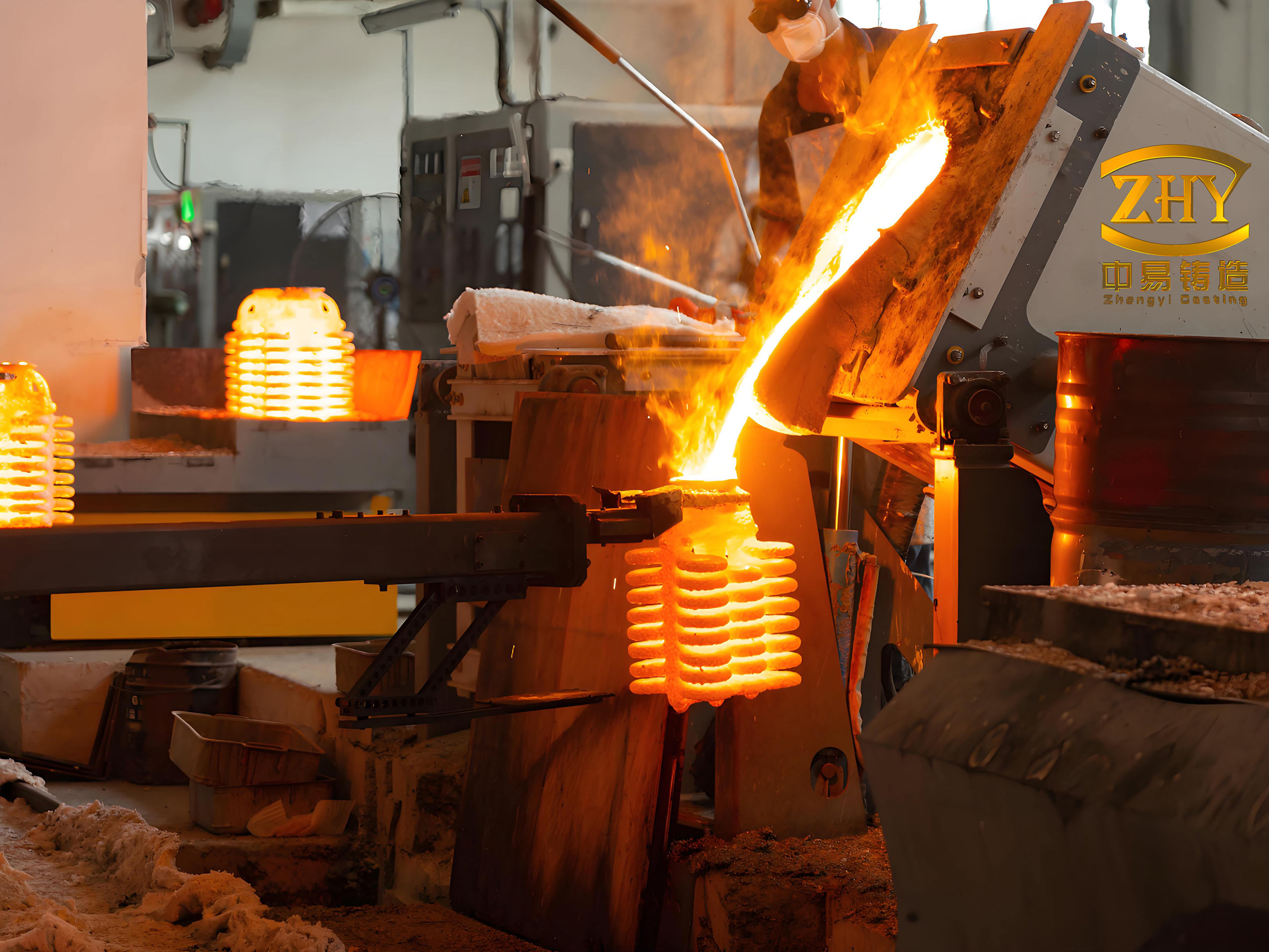
The defining characteristics of tappets produced via precision lost wax casting are multifaceted and directly contribute to their superior performance. Firstly, the chilled white iron layer exhibits a remarkably fine and dense microstructure, resulting in high hardness. The minimal machining allowance inherent to precision lost wax casting, particularly for cylindrical tappets where the internal bore is cast, leads to a reduced wall thickness at the chilled region. This diminishes the thermal mass or hot spot, thereby significantly enhancing the chilling effect during solidification. The rapid heat extraction promotes the formation of a细密 network of carbides within the white iron layer. The hardness of this layer typically exceeds $$HRC 55$$, often reaching values between $$HRC 58$$ and $$62$$, which is crucial for wear resistance. The relationship between chilling rate ($V_c$), secondary dendrite arm spacing ($\lambda_2$), and hardness ($H$) can be approximated by:
$$ \lambda_2 = A \cdot V_c^{-n} $$
$$ H = H_0 + k \cdot (C_{carbide})^{1/2} $$
where $A$ and $n$ are material constants, $H_0$ is the base hardness, $k$ is a proportionality constant, and $C_{carbide}$ is the volume fraction of carbides, which is directly influenced by the cooling rate during precision lost wax casting.
Secondly, the transition zone between the fully white iron layer and the gray iron matrix is exceptionally sharp and narrow. The ceramic shell used in precision lost wax casting possesses superior insulating properties, leading to a generally slower cooling rate for the bulk of the casting. However, for cylindrical tappets, the shell core forming the internal bore acts as a rapid heat sink during initial pouring, yet later provides some insulation during the结晶 phase. This dynamic thermal gradient suppresses the growth of the intermediate mottled (麻口) region toward the tappet’s body, confining it to a narrow band. This results in a清晰, abrupt transition. A narrow mottled zone is highly desirable as it ensures the integrity of the hard white layer while maintaining machinability in the non-chilled regions. The width of this transition zone ($W_t$) can be modeled as a function of the temperature gradient ($G$) and the solidification velocity ($R$):
$$ W_t \propto \frac{G}{R} $$
The precision lost wax casting process allows for excellent control over these parameters through shell design and冷铁 placement.
Thirdly, substantial savings in machining costs are realized. With the tappet top surface hardness ranging from $$HRC 55$$ to $$62$$, machining is inherently difficult. The near-net-shape capability of precision lost wax casting drastically reduces the volume of material that must be removed by grinding or other abrasive processes. For instance, the cast internal bore eliminates the need for deep-hole drilling, a costly and time-consuming operation. The economic benefit can be summarized by the reduction in specific machining energy ($E_m$):
$$ E_m = \int_{V_{matl}} \sigma_{cut} \cdot dV $$
where $V_{matl}$ is the volume of material removed and $\sigma_{cut}$ is the specific cutting stress, which is very high for chilled white iron. By minimizing $V_{matl}$ through precision lost wax casting, $E_m$ and associated costs are minimized.
The successful application of precision lost wax casting for chilled tappets hinges on a meticulously controlled production工艺, encompassing alloy design, process design, and rigorous quality verification.
Alloy Chemistry Design for Chilled Iron Tappets
We produce valve tappets tailored to various engine models and manufacturer specifications, which fall into three primary alloy series: Copper-Chromium铸铁, Copper-Chromium-Molybdenum铸铁, and Nickel-Chromium-Molybdenum铸铁. The foundational elements, carbon and silicon, are critically managed to achieve the desired chilling response and microstructure. Carbon promotes the formation of hard carbides but must be balanced to avoid excessive primary carbides that can embrittle the material. Silicon, a graphitizer, is kept low to enhance chill depth and prevent carbide dissociation during subsequent heat treatments. The interplay of alloying elements is summarized in Table 1, and their effects are often described using carbide-forming equivalents and graphitizing potentials. For example, a simplified carbide-forming equivalent (CFE) might be expressed as:
$$ CFE = \%Cr + 2\%Mo + … $$
while a graphitizing coefficient (S_i) could involve silicon and copper.
| Element | Typical Range (wt.%) | Primary Function & Metallurgical Effect |
|---|---|---|
| Carbon (C) | 3.2 – 3.6 | Primary constituent of cementite (Fe3C) and alloy carbides. Increases hardness and wear resistance of chilled layer. High content increases carbide volume fraction but risk of primary carbides if excessive. |
| Silicon (Si) | 1.8 – 2.2 | Moderate graphitizer. Controlled to balance chill depth (lower Si promotes white iron) and castability. Also strengthens ferrite in the matrix. |
| Manganese (Mn) | 0.6 – 0.9 | Neutralizes sulfur’s harmful effects by forming MnS. Increases strength and hardness of the matrix through solid solution strengthening. |
| Chromium (Cr) | 0.3 – 0.6 | Strong carbide stabilizer, inhibits graphitization, refines carbides. Significantly enhances hardness, wear resistance, and thermal stability of the chilled zone. |
| Molybdenum (Mo) | 0.2 – 0.4 | Refines microstructure, improves high-temperature strength and toughness. Enhances hardenability for tappets requiring subsequent quenching. |
| Copper (Cu) | 0.8 – 1.2 | Mild graphitizer, refines pearlite, strengthens ferrite. Improves overall strength and corrosion resistance. |
| Nickel (Ni) | 0.8 – 1.2 (in Ni-Cr-Mo series) | Similar to Cu: pearlite refiner, ferrite strengthener. Improens toughness and hardenability. |
| Phosphorus (P) | < 0.10 | Forms hard, brittle phosphide eutectic (steadite). While hard, it severely reduces overall mechanical properties and fatigue strength. Its contribution to wear resistance is marginal in alloyed chilled irons. |
| Rare Earth (RE) | 0.02 – 0.04 | Powerful inoculant and microstructure refiner. Modifies carbide morphology from sharp needles to blunter, shorter forms, reducing internal stress concentration and improving fatigue resistance, thereby mitigating pitting and spalling. |
The target microstructure in the chilled zone is a uniform dispersion of fine alloy carbides in a transformed matrix (martensite or fine pearlite, depending on heat treatment). The volume fraction of carbides ($f_c$) is a key parameter determining hardness and wear rate. It can be estimated from chemistry using a lever rule approximation based on the Fe-C-X phase diagram, though in practice it is controlled through precise melting and inoculation practice during precision lost wax casting.
Process Design in Precision Lost Wax Casting for Chilled Tappets
The precision lost wax casting of chilled white iron tappets deviates from standard精密铸造 due to the necessity of incorporating a chill to locally accelerate solidification. Our工艺 design meticulously addresses every step to integrate this critical feature.
Pattern and Tree Assembly: We employ conventional medium-temperature wax patterns. To facilitate the placement of individual chills and subsequent investment with backing material, tappet wax patterns are mounted on a runner system in a single plane. Typically, clusters of 4 to 6 patterns are assembled, as schematically represented. The design ensures proper gating for feed metal and allows clear access to the tappet’s face where the chill will be applied.
Shell Building: The ceramic shell is constructed using a sodium silicate (water glass) binder system. The first two slurry coats use a refractory flour and stucco sand based on silica (quartz). From the third coat onward, we switch to a slurry based on aluminosilicate (mulite or铝钒土) flour and stucco sand. A total of 4.5 coats are applied. Crucially, the area预留 for the chill on the pattern face is masked during stuccoing to prevent sand adherence, creating a smooth cavity. Shell hardening is achieved using ammonium chloride solution. This shell system, particularly the aluminosilicate layers, offers good permeability and thermal shock resistance, which is vital for the subsequent thermal cycles.
Dewaxing and Firing: Autoclave dewaxing with high-pressure steam is used. Prior to dewaxing, any accidental slurry intrusion into the chill预留 cavity is carefully removed to ensure a clean interface. The fired shells are then subjected to a high-temperature焙烧 in a box-type electric furnace. The firing cycle ramps to approximately 950°C and is held for 2 hours to fully combust residual pattern material and sinter the ceramic, developing adequate high-temperature strength and thermal stability.
Chill Design and Placement: This is the cornerstone of the process. We use individual chills machined from gray cast iron. The chill diameter is slightly larger than the tappet’s chilled face diameter to ensure complete coverage and a slight radial heat extraction gradient. The chill thickness is empirically determined to be 2.5 to 3 times the desired white iron layer depth, ensuring sufficient thermal mass to sustain the high heat flux without becoming saturated. The working face of the chill is coated with a thin layer of graphite-based dressing to improve thermal contact and prevent welding to the casting. A critical aspect of process control is chill maintenance. Due to cyclic thermal shock, chills develop surface龟裂 and oxidation, degrading their chilling efficiency. Therefore, a strict schedule for chill inspection and replacement is enforced. The thermal interaction can be modeled using the heat transfer coefficient ($h$) at the metal-chill interface:
$$ q = h \cdot (T_{melt} – T_{chill}) $$
where $q$ is the heat flux. The resulting temperature profile determines the solidification morphology.
Molding and Pouring: After焙烧 and cooling to room temperature, the individual chills are precisely positioned against the prepared cavities in the shell. The entire assembly is then invested in dry silica sand within a flask to provide mechanical support during pouring. We employ a “cold shell” pouring practice. Although contrary to some钢 casting practices, this is feasible for铸铁 due to its lower surface tension and better fluidity compared to molten steel. The excellent wettability of the fired aluminosilicate shell by molten iron ensures complete filling and good surface finish even with a cold mold. This practice also improves working conditions. The alloy is melted in a medium-frequency induction furnace with an acidic lining. The tapping temperature is controlled between 1450°C and 1480°C, with a pouring temperature targeted at 1380°C ± 10°C.
Inoculation and Chill Depth Control: Melt chemistry is initially prepared to have a strong chilling tendency (i.e., low silicon equivalent). Near tapping temperature, a sample is taken for a wedge chill test or similar to assess the inherent white iron tendency. Based on this, a primary inoculation is performed by adding ferrosilicon (FeSi) to the ladle during tapping. This both inoculates the melt and begins adjusting the chill depth. After transferring to the pouring ladle, a second verification test is conducted by pouring a sample tappet geometry, which is then water-quenched and fractured to macroscopically measure the白口 depth. Final adjustments are made: if白口 is too deep, additional FeSi is added; if too shallow, additions of FeCr or a portion of higher-temperature铁水 are made. To ensure effective inoculation, the base iron is always formulated to require a minimum FeSi addition of 0.4 wt.%. The chill depth ($d_c$) is a function of several variables and can be estimated empirically:
$$ d_c = K \cdot (CE_{eff})^{-m} \cdot (T_{pour} – T_{chill})^{1/2} \cdot t^{1/2} $$
where $K$ and $m$ are constants, $CE_{eff}$ is an effective carbon equivalent that accounts for alloying elements’ graphitizing/promoting power, $T_{pour}$ and $T_{chill}$ are temperatures, and $t$ is a characteristic time related to the chill’s thermal properties.
| Process Stage | Parameter | Typical Value/Range | Remarks |
|---|---|---|---|
| Pattern Making | Wax Type | Medium-Temperature Blend | Good dimensional stability, easy to handle. |
| Shell Building | Binder System | Sodium Silicate | Cost-effective, adequate strength for铸铁. |
| Shell Building | Refractory (1st-2nd coat) | Silica (Quartz) | Provides initial strength and detail reproduction. |
| Refractory (3rd+ coats) | Aluminosilicate | Better high-temperature properties, permeability. | |
| Shell Building | Number of Coats | 4.5 | Balance between strength, insulation, and cost. |
| Firing | Temperature / Time | 950°C / 2 hours | Complete wax removal, shell sintering. |
| Chill | Material | Gray Cast Iron | Good thermal conductivity, thermal mass, machinable. |
| Chill | Thickness Rule | ~2.8 x Desired白口 Depth | Empirical rule for sufficient heat sink capacity. |
| Melting | Furnace Type | Medium-Frequency Induction | Precise temperature control, clean melting. |
| Melting | Tapping Temperature | 1450 – 1480°C | Ensures sufficient superheat for fluidity and inoculation. |
| Pouring | Pouring Temperature | 1380°C ± 10°C | Optimized for fill and controlled solidification. |
| Inoculation | Primary Addition (FeSi) | ≥ 0.4 wt.% | Ensures adequate nucleation sites for graphite/carbide control. |
Production Verification and Quality Assurance
Our deployment of precision lost wax casting for tappet production spans many years, supplying nearly one million components annually for over a dozen different engine platforms. Whether the tappets are used in the as-cast chilled condition or undergo subsequent quenching for further hardness development, they consistently demonstrate exceptional wear resistance, fully satisfying engine durability requirements. We have identified the quality metrics of paramount importance: the morphological state of the carbides in the白口 layer, the白口 depth consistency, and the carbide volume fraction. Our quality control protocol is multi-layered. First, real-time process control is exercised through the炉前 inoculation and chill test described earlier. Second, post-casting, we perform systematic metallurgical evaluation on samples from each heat or ladle. This involves preparing cross-sections for microscopic examination to assess carbide morphology (using quantitative image analysis to determine aspect ratio and distribution) and to measure the precise白口 depth. Third, during machining, after the rough grinding of the tappet’s top face, each and every component undergoes 100% hardness testing using Rockwell or Vickers methods to ensure the hardened surface meets the specified range, typically $$HRC 55-62$$. Statistical Process Control (SPC) charts are maintained for key variables like白口 depth ($d_c$) and surface hardness ($H$). The process capability index ($C_{pk}$) for these characteristics is consistently monitored to ensure robust production. The relationship between wear volume loss ($V_w$) and material parameters often follows an Archard-type law, modified for abrasive/adhesive conditions in engines:
$$ V_w = k_w \frac{N \cdot L}{H} $$
where $k_w$ is a wear coefficient, $N$ is the normal load, $L$ is the sliding distance, and $H$ is the hardness. By guaranteeing high and consistent $H$ through precision lost wax casting, we minimize $V_w$.
The precision lost wax casting process provides an unmatched level of control over the geometric and metallurgical features of chilled iron tappets. The synergy between the near-net-shape capabilities of精密铸造 and the targeted thermal management via engineered chills results in a component with optimized performance and manufacturability. The ability to cast complex features like internal bores and cross-holes eliminates several costly and difficult machining operations, presenting a compelling economic advantage. Furthermore, the fine, controlled microstructure achieved through this method directly translates to enhanced fatigue resistance and durability under the severe服役 conditions of the valve train. As engine technologies continue to advance toward higher power densities and longer service intervals, the role of advanced manufacturing techniques like precision lost wax casting for critical components such as chilled iron tappets will only become more central. Our ongoing work continues to refine the process parameters, explore new alloy variants, and further integrate digital simulation tools to predict and optimize the solidification and thermal history during precision lost wax casting, ensuring我们 remain at the forefront of this specialized manufacturing领域.