
In the realm of manufacturing large steel castings, the adoption of ester-cured alkaline phenolic resin sand has revolutionized traditional practices, particularly in enhancing quality and environmental sustainability. As someone deeply involved in the foundry industry, I have witnessed the shift from conventional furan resin sand methods to this innovative approach, which originated in the United Kingdom and was subsequently introduced globally. The primary motivation for this transition lies in the superior performance of ester-cured alkaline phenolic resin sand, which eliminates harmful gases like nitrogen, phosphorus, and sulfur during production, thereby aligning with eco-friendly initiatives. This article delves into the characteristics of this technology, its pivotal role in steel casting, and comprehensive quality control strategies. Throughout, I will emphasize the term “steel casting” to underscore its relevance, while incorporating tables and formulas to summarize key insights. The goal is to provide a detailed, first-person perspective on optimizing large steel casting processes using this resin sand system.
Traditional methods for producing large steel castings, such as self-hardening furan resin sand, often led to defects like surface porosity and irregular patterns due to gas evolution. These issues compromised the integrity and aesthetics of the final steel castings, posing challenges in competitive markets. In contrast, ester-cured alkaline phenolic resin sand offers a robust solution by mitigating these problems through its unique chemical and physical properties. From my experience, this technology not only improves the quality of steel castings but also streamlines production efficiency. In this analysis, I will explore the core features of this resin sand, its functional benefits, and practical quality control measures, drawing on industry applications to illustrate its effectiveness. By focusing on “steel casting,” I aim to highlight how this method transforms the manufacturing landscape for large components, such as those used in infrastructure and heavy machinery.
The ester-cured alkaline phenolic resin sand exhibits several distinctive characteristics that make it ideal for large steel casting production. Firstly, the sand quality is easily controllable, which is crucial for consistent steel casting outcomes. The base sand, often silica-based, requires precise granulometry and purity to ensure optimal bonding with the resin. Secondly, the sand demonstrates excellent moldability; upon temperature increase during curing, it hardens rapidly, facilitating easy shaping and demolding. This characteristic ensures dimensional accuracy in large steel castings, reducing post-processing needs. Thirdly, the resin sand resists oxidation, preventing surface wrinkles and enhancing the smoothness of steel castings. Below, I summarize these properties in a table to provide a clear overview.
| Property | Description | Impact on Steel Casting |
|---|---|---|
| Sand Quality Control | Easy to monitor and adjust; typically uses high-purity silica sand with SiO₂ content >98%. | Ensures uniformity and reduces defects in steel castings. |
| Moldability | Rapid hardening at elevated temperatures; allows for quick pattern formation. | Improves dimensional precision and surface finish of steel castings. |
| Oxidation Resistance | Minimal reaction with atmospheric oxygen during pouring. | Prevents surface irregularities and enhances the durability of steel castings. |
| Environmental Safety | No emission of N, P, S gases; aligns with green manufacturing. | Reduces pollution and supports sustainable steel casting production. |
To quantify the hardening behavior, the curing kinetics can be expressed using a simplified equation. The hardening rate $R_h$ depends on temperature $T$ and resin content $C_r$, often modeled as:
$$ R_h = k \cdot C_r \cdot e^{-E_a / (RT)} $$
where $k$ is a rate constant, $E_a$ is the activation energy, $R$ is the gas constant, and $T$ is the absolute temperature. This formula highlights how controlled parameters influence the steel casting process, ensuring consistent mold strength.
The role of ester-cured alkaline phenolic resin sand in large steel casting production is multifaceted, primarily revolving around its water solubility, adhesiveness, and high hardness. In my practice, these attributes have proven critical for achieving high-quality steel castings. The water solubility stems from the alkaline nature of the resin, which allows phenolic compounds to remain in a free state, facilitating easy cleaning and recycling. This property is vital for maintaining sand reusability in steel casting operations. Adhesiveness, on the other hand, ensures strong bonding between sand grains, even under varying temperatures, which minimizes mold erosion and improves casting integrity. High hardness contributes to better mold stability, reducing issues like sand sticking and deformation during pouring. I have compiled these functions in a table to elucidate their significance.
| Function | Mechanism | Benefit for Steel Casting |
|---|---|---|
| Water Solubility | Alkaline components liberate phenols; enhances resin washability and reduces moisture sensitivity. | Improves sand regeneration and consistency in steel casting molds. |
| Adhesiveness | Strong intermolecular bonds form between resin and sand particles; temperature-independent. | Prevents mold collapse and ensures precise steel casting geometry. |
| High Hardness | Dense sand structure with minimal friability; resists mechanical stress during pouring. | Enhances surface quality and reduces defects in steel castings. |
The adhesive strength $\sigma_a$ can be approximated by the formula:
$$ \sigma_a = \alpha \cdot C_r + \beta \cdot S_d $$
where $\alpha$ and $\beta$ are material constants, $C_r$ is the resin concentration, and $S_d$ is the sand density. This relationship underscores how optimizing mix proportions directly impacts steel casting quality. Additionally, the hardness $H$ of the cured sand often follows a logarithmic trend with curing time $t$:
$$ H = H_0 \cdot \ln(1 + \gamma t) $$
with $H_0$ as initial hardness and $\gamma$ as a curing factor. Such models aid in predicting mold performance for steel casting applications.
Quality control in ester-cured alkaline phenolic resin sand processes is paramount for producing defect-free large steel castings. From my involvement in foundry operations, I have identified five key control areas: regenerated sand quality, raw material quality, sand mixing quality, process parameters, and production monitoring. Each aspect interplays to ensure the final steel casting meets stringent standards. For regenerated sand, controlling properties like loss on ignition and fines content is essential; deviations can lead to poor steel casting surfaces. Raw materials, including base sand and resin, must adhere to specifications—for instance, silica sand with grain sizes between 0.59 mm and 0.3 mm is ideal for most steel castings. Sand mixing requires automated equipment to maintain consistent resin and hardener ratios, while process controls involve optimizing curing cycles and venting systems. Production monitoring entails real-time adjustments to mitigate issues like gas entrapment. Below, I detail these controls with tables and formulas to guide implementation.
First, regenerated sand quality directly influences steel casting outcomes. After decoating and recycling, the sand should exhibit low combustibles and minimal dust. Based on empirical data, the optimal ranges are: loss on ignition ≤ 2.0% and dust content (200 mesh) ≤ 0.5%. These criteria ensure adequate bonding and reduce gas defects in steel castings. The relationship between sand quality and casting defects can be expressed as:
$$ D_d = f(I_g, F_c) $$
where $D_d$ is the defect density, $I_g$ is the ignition loss, and $F_c$ is the fines content. Minimizing $I_g$ and $F_c$ through controlled regeneration lowers $D_d$, enhancing steel casting integrity.
| Parameter | Target Value | Tolerance | Effect on Steel Casting |
|---|---|---|---|
| Loss on Ignition | ≤ 2.0% | ± 0.5% | Reduces gas porosity in steel castings. |
| Dust Content (200 mesh) | ≤ 0.5% | ± 0.1% | Improves mold strength and surface finish of steel castings. |
| Moisture Content | < 0.2% | ± 0.05% | Prevents humidity-related hardening issues in steel casting molds. |
Second, raw material quality control focuses on base sand and resin selection. For large steel castings, high-purity silica sand with SiO₂ > 98% is preferred, as impurities can react adversely during pouring. The resin, specifically ester-cured alkaline phenolic type, should have free phenol ≤ 1% and aldehyde content ≤ 0.2%, as per industry standards. These limits minimize toxic emissions and ensure consistent curing for steel casting. The resin’s performance can be modeled using a quality index $Q_r$:
$$ Q_r = \frac{C_p \cdot C_a}{\rho_r} $$
where $C_p$ is phenol concentration, $C_a$ is aldehyde concentration, and $\rho_r$ is resin density. Lower $C_p$ and $C_a$ values yield higher $Q_r$, benefiting steel casting environmental and mechanical properties.
Third, sand mixing quality is governed by automated systems that regulate resin and hardener flow. In my experience, maintaining a resin-to-sand ratio of 1.0-1.5% by weight optimizes mold strength for steel casting. The mixing efficiency $E_m$ can be calculated as:
$$ E_m = \frac{M_h}{M_t} \times 100\% $$
where $M_h$ is the homogeneous mix mass and $M_t$ is the total mass. High $E_m$ values (above 95%) correlate with uniform steel casting molds. Regular equipment maintenance, such as screen cleaning, is crucial to sustain this efficiency.
Fourth, process control involves tailoring curing and venting strategies. Since ester-cured alkaline phenolic resin sand is hygroscopic, pre-drying regenerated sand at 150-200°C is recommended to prevent moisture uptake. Venting design is critical for steel casting; adequate排气孔 placement reduces gas pressure, modeled by:
$$ P_g = \frac{n \cdot R \cdot T}{V} $$
where $P_g$ is gas pressure, $n$ is moles of gas, $R$ is the gas constant, $T$ is temperature, and $V$ is mold volume. Increasing vent count lowers $P_g$, minimizing blows in steel castings. Additionally, allowing molds to air-dry before coating avoids premature hardening disruptions.
Fifth, production monitoring entails real-time adjustments during pouring and cooling. For large steel castings, controlling pouring temperature between 1550°C and 1600°C ensures fluidity without sand erosion. The solidification time $t_s$ can be estimated using Chvorinov’s rule:
$$ t_s = k \cdot \left( \frac{V}{A} \right)^2 $$
where $k$ is a constant, $V$ is casting volume, and $A$ is surface area. Optimizing $t_s$ through mold design reduces shrinkage defects in steel castings. Furthermore, post-casting inspections, such as non-destructive testing, validate the quality of each steel casting component.
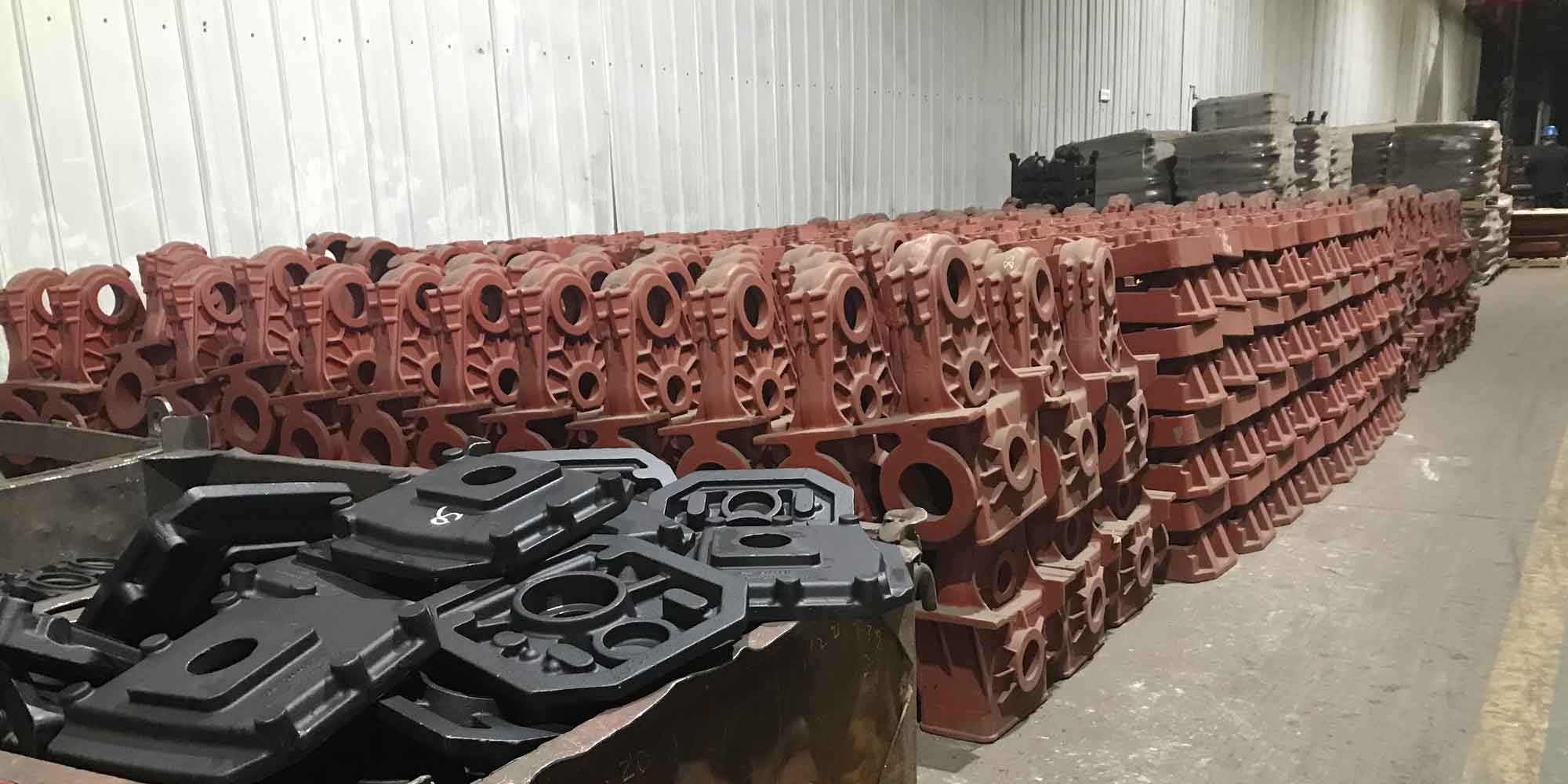
The application of ester-cured alkaline phenolic resin sand in large steel casting production has yielded significant successes globally. Since its introduction in the early 2000s, this technology has been adopted for critical components like turbine runners and aerospace parts. In my observation, one notable example is the production of upper crowns for turbine runners in hydropower projects, where the resin sand enabled低碳 steel castings with superior mechanical properties. Another instance involves aluminum industry equipment, where large steel castings manufactured using this method demonstrated enhanced durability and precision. These applications underscore the versatility of ester-cured alkaline phenolic resin sand for diverse steel casting needs, though ongoing refinements are necessary to address limitations like lower sand reclamation rates. By sharing these cases, I aim to illustrate the practical benefits of this approach for high-performance steel castings in demanding environments.
To further elaborate, the environmental advantages of this steel casting method cannot be overstated. Unlike traditional furan systems, ester-cured alkaline phenolic resin sand eliminates noxious fumes, creating safer workplaces and reducing ecological footprints. This aligns with global trends toward sustainable manufacturing, making it a preferred choice for steel casting foundries aiming for green certification. From a technical perspective, the resin sand’s consistency across batch productions ensures repeatability in steel casting quality, which is vital for mass production of large components. However, challenges such as higher material costs and specialized equipment requirements persist, necessitating continuous research into optimizing formulations and processes for steel casting applications.
In conclusion, the use of ester-cured alkaline phenolic resin sand represents a paradigm shift in large steel casting production, offering a blend of quality enhancement and environmental stewardship. Through detailed quality control measures—spanning regenerated sand, raw materials, mixing, process parameters, and production monitoring—foundries can achieve superior steel castings with minimal defects. The incorporation of tables and formulas in this article provides a structured framework for implementing these controls, while repeated emphasis on “steel casting” highlights the method’s relevance. As technology evolves, further innovations in resin chemistry and sand reclamation will likely expand the horizons of steel casting manufacturing. From my first-hand experience, adopting this approach not only improves product outcomes but also fosters a culture of precision and sustainability in the foundry industry, paving the way for advanced steel casting solutions in the future.