
In the demanding environment of ship repair, modification, and maintenance, encountering cracks and defects in critical components is a common challenge. Among these, failures in large steel casting components present a particularly complex problem. Replacing such massive steel casting parts is often prohibitively expensive and leads to significant project delays. Therefore, developing and implementing a robust, reliable welding repair procedure is not just an alternative but a necessity for operational and economic efficiency. Based on extensive field experience, this article delves into the complete welding repair methodology for marine-grade steel casting, focusing on material ZG230-450 (comparable to Grade WCA). The discussion will cover material science, preparation, execution, post-weld treatment, inspection, and a comparative analysis of welding processes, supplemented with technical data tables and engineering formulas.
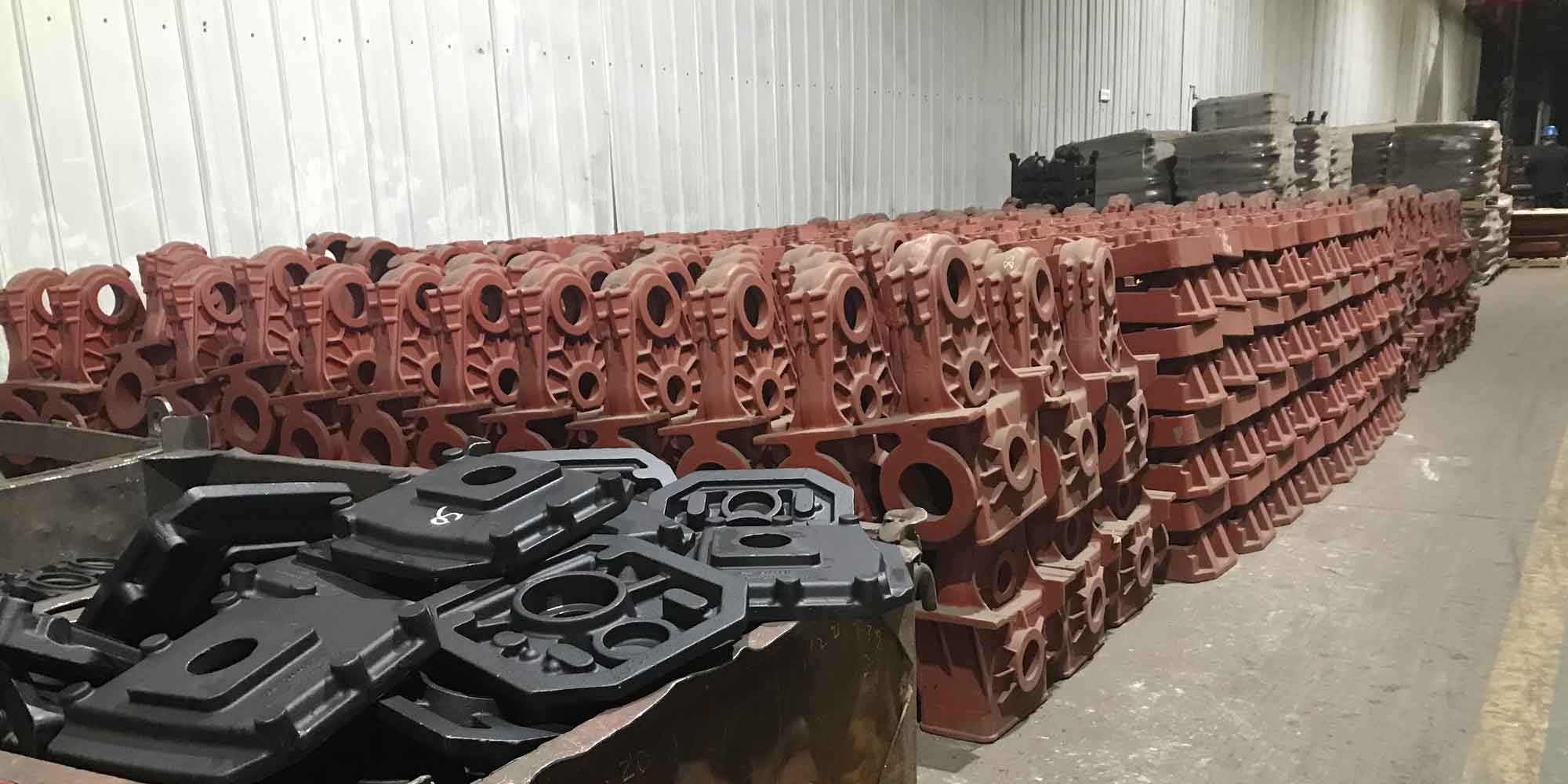
The integrity of a ship’s structure heavily relies on numerous cast components, from stern frames and rudder horns to large bracket supports. These steel casting parts are chosen for their ability to form complex, load-bearing geometries. However, the very nature of the casting process, combined with cyclic operational loads and harsh marine corrosion, makes them susceptible to cracking over time. A successful repair must restore the component to its original design strength and durability, requiring a deep understanding of the steel casting metallurgy and welding engineering principles.
1. Material Characteristics and Welding Metallurgy
The foundation of any successful weld repair lies in understanding the base material. The subject material, ZG230-450, is a carbon-manganese cast steel with a minimum yield strength of 230 MPa and a minimum tensile strength of 450 MPa. While its weldability is generally good, similar to hot-rolled steels, the inherent characteristics of a steel casting introduce specific challenges:
- Chemical Inhomogeneity: Segregation of elements like carbon, sulfur, and phosphorus can occur during solidification, creating localized zones with higher susceptibility to hot cracking and embrittlement.
- Coarse Grain Structure: The slow cooling rate in large sand molds results in a coarse as-cast grain structure, which can reduce toughness and promote crack propagation.
- Internal Discontinuities: Shrinkage porosity, micro-shrinkage, and non-metallic inclusions are inherent risks in steel casting, which can act as stress concentrators and crack initiators.
- High Residual Stress: The casting process itself generates significant internal (residual) stresses.
During welding, the localized intense heat creates a complex thermal cycle—rapid heating followed by rapid cooling. This cycle can induce several phenomena in the steel casting heat-affected zone (HAZ):
- Formation of hard, brittle microstructures (like martensite) if the cooling rate is too high, especially in higher carbon zones.
- Exacerbation of existing residual stresses, leading to cold (hydrogen-induced) cracking.
- Liquation cracking in the partially melted zone adjacent to the fusion line.
Therefore, the primary objective of the repair procedure is to manage this thermal cycle to prevent these defects. The key controlling parameters are preheat temperature ($T_p$), interpass temperature ($T_i$), heat input ($Q$), and post-weld heat treatment (PWHT). Heat input can be calculated as:
$$ Q = \frac{\eta \cdot V \cdot I}{v} $$
where $Q$ is the heat input (kJ/mm), $\eta$ is the arc efficiency (0.8 for SMAW, ~0.85 for FCAW), $V$ is voltage (V), $I$ is current (A), and $v$ is travel speed (mm/s). Controlling $Q$ is critical for managing HAZ microstructure and cooling rates.
2. Welding Consumable Selection and Handling
Choosing the correct filler metal is paramount to match the mechanical properties and composition of the steel casting. Two primary processes are evaluated: Shielded Metal Arc Welding (SMAW) and Flux-Cored Arc Welding (FCAW-G) using CO2 shielding gas.
| Welding Process | Consumable Designation | Diameter | Key Characteristics & Handling Requirements |
|---|---|---|---|
| SMAW (Manual) | E7015/7016 (e.g., J507)* AWS A5.1 / A5.5 |
3.2 mm, 4.0 mm | Low-hydrogen basic coated electrode. Requires baking at 350-400°C for 1-2 hours, stored at 100-150°C in holding ovens. Exposure time at ambient should be limited to 4 hours maximum before re-baking. |
| FCAW-G (Semi-Automatic) | E71T-1C/M (e.g., HTW-711)* AWS A5.20 |
1.2 mm | Rutile-based gas-shielded flux-cored wire. Excellent operability and high deposition rate. Spools must be kept in dry, sealed packaging to prevent moisture absorption. Requires CO2 gas purity ≥ 99.9%. |
*Note: Specific brand names (e.g., J507, HTW-711) are for technical reference; equivalent AWS-classified consumables must be used as per procedure qualification.
The low-hydrogen characteristic of both consumables is non-negotiable for steel casting repair to minimize the risk of hydrogen-assisted cold cracking (HACC). The diffusible hydrogen content should typically be verified to be below 5 ml/100g of deposited metal.
3. Pre-Weld Preparation: The Critical First Step
Approximately 60% of a repair’s success is determined before the first arc is struck. For a cracked steel casting, preparation follows a stringent sequence.
3.1 Defect Removal and Verification
- Non-Destructive Testing (NDT): The exact location and full extent of the crack must be mapped using Magnetic Particle Testing (MT) or Ultrasonic Testing (UT). The visible crack is often just the tip of the flaw.
- Drilling Stop-Holes: Holes with a minimum diameter of 10 mm or the casting thickness (whichever is greater) are drilled at both ends of the crack. This physically blunts the crack tip, relieving stress concentration and preventing propagation during subsequent gouging. The stress concentration factor $K_t$ for a hole is significantly lower than for a sharp crack tip.
- Crack Removal: The crack is completely removed using air carbon arc gouging (CAC-A), grinding, or controlled thermal gouging. The groove must be taken back to sound metal, confirmed by a second NDT (MT) of the gouged surface.
- Groove Preparation: The gouged cavity is then machined or ground into a smooth, regular weld groove (V, U, or J-profile) with adequate included angle (typically 60° for V-groove) to ensure proper root penetration and sidewall fusion. A minimum root face of 1-2 mm is often retained for backing.
- Cleaning: A zone of at least 25 mm on either side of the groove must be meticulously cleaned of all paint, rust, scale, moisture, and gouging slag using grinding and solvents. Contaminants are a primary source of hydrogen and porosity.
3.2 Preheat Strategy
Preheating is mandatory for welding steel casting. Its purposes are: to reduce the cooling rate, preventing martensite formation; to allow hydrogen to diffuse out of the HAZ; and to reduce thermal shrinkage stresses. The required preheat temperature ($T_p$) depends on the carbon equivalent (CE) of the steel casting and its thickness. A common formula for carbon-manganese steels is the IIW formula:
$$ CE = C + \frac{Mn}{6} + \frac{(Cr+Mo+V)}{5} + \frac{(Ni+Cu)}{15} $$
For ZG230-450 with typical composition (C~0.20%, Mn~1.00%), the CE is approximately 0.37-0.40%. Based on this and thickness, the preheat is determined. A standard practice is:
| Casting Thickness (t) | Minimum Preheat ($T_p$) | Interpass Temp ($T_i$) | Heating Band Width (W) |
|---|---|---|---|
| t ≤ 25 mm | 100 – 150 °C | Shall not fall below $T_p$. Maximum limit is typically 200-250°C to avoid excessive grain growth. | $W = min(100 mm, 2t)$ on each side of the joint. |
| 25 mm < t ≤ 50 mm | 150 – 200 °C | ||
| t > 50 mm | 200 – 250 °C |
Heating methods include resistance heating mats, induction coils, or oxy-fuel torches. Temperature must be verified using contact pyrometers or thermal crayons. The heating should be uniform across the specified band width $W$.
4. Welding Execution: Process Control and Techniques
During welding, stringent control over parameters and technique is maintained to ensure weld quality and manage stresses in the steel casting.
| Process | Pass Type | Current (I) | Voltage (V) | Travel Speed (v) | Approx. Heat Input (Q)* |
|---|---|---|---|---|---|
| SMAW (Electrode: E7015, 4.0 mm) DC+ |
Root | 140 – 160 A | 22 – 24 V | 12 – 15 cm/min | 0.9 – 1.1 kJ/mm |
| Fill | 160 – 180 A | 24 – 26 V | 14 – 18 cm/min | 1.0 – 1.3 kJ/mm | |
| Cap | 150 – 170 A | 26 – 28 V | 12 – 16 cm/min | 1.1 – 1.4 kJ/mm | |
| FCAW-G (Wire: E71T-1, 1.2 mm) DC- |
Root | 180 – 200 A | 24 – 26 V | 20 – 25 cm/min | 0.8 – 1.0 kJ/mm |
| Fill | 200 – 230 A | 26 – 28 V | 18 – 22 cm/min | 1.2 – 1.6 kJ/mm | |
| Cap | 180 – 210 A | 25 – 28 V | 20 – 24 cm/min | 0.9 – 1.2 kJ/mm |
*Calculated using mid-range values and $\eta$=0.8 (SMAW), 0.85 (FCAW).
4.1 Critical In-Process Controls:
- Interpass Temperature Monitoring: As critical as preheat. Temperature is measured within the defined band ($W$) before starting each new pass. If it drops below $T_p$, heating must be reapplied.
- Interpass Cleaning: After each pass, all slag (SMAW) or spatter must be completely removed using needle scalers, chipping hammers, and wire brushing. Any trapped slag becomes a defect.
- Weld Sequencing for Distortion Control: For long seams (>500mm), a back-stepping or block welding sequence is employed. The general principle is to balance heat distribution to minimize angular distortion and shrinkage stress. The aim is to keep the net resultant force vector as close to zero as possible. Symmetrical welding from both sides of a joint is ideal.
- Weld Bead Placement: Stringer beads are preferred over wide weave beads for better HAZ toughness and lower stress. Starts and stops must be staggered between layers.
- Wind Protection: For FCAW-G, wind speeds above 4 m/s (Beaufort 3) will disrupt the gas shield, requiring the use of portable windbreaks.
5. Post-Weld Heat Treatment and Stress Relief
After completion of welding, the repaired steel casting contains high residual stresses. For small, shallow repairs (depth < 25 mm or 1/4 thickness), a simple post-heat and slow cool in insulating material may suffice. However, for major repairs, a full stress relief heat treatment (SRHT) is mandatory. The objectives are: to reduce residual stresses to a safe level, to temper any hard martensitic zones in the HAZ, and to enhance dimensional stability.
The standard SRHT involves heating the entire component, or a large localized region around the weld, to a temperature where the steel’s yield strength is significantly reduced, allowing creep relaxation of stresses. For ZG230-450, this is typically:
$$ T_{SR} \geq 550^\circ C \quad \text{but} \quad T_{SR} \leq (T_{\text{Temper}} – 25^\circ C) $$
where $T_{\text{Temper}}$ is the original tempering temperature of the steel casting (if known). The soaking time is usually 1 hour per 25 mm of thickness, with a minimum of 1 hour.
The cooling rate in the critical range from 550°C down to 300°C must be controlled to prevent introducing new thermal stresses. A typical specification is:
$$ \text{Cooling Rate}_{(550\to300^\circ C)} \leq 50^\circ C / \text{hour} $$
The component is then allowed to cool in still air. Failure to perform timely SRHT on a large steel casting repair can lead to delayed cracking under residual stress alone, a serious failure mode witnessed in practice.
6. Post-Repair Inspection and Performance Evaluation
After slow cooling from SRHT, the weld reinforcement is ground flush with the base steel casting contour to avoid stress raisers. The final repair is subjected to rigorous NDT:
- 100% Magnetic Particle Testing (MT) of the weld and adjacent HAZ to detect surface-breaking defects.
- 100% Ultrasonic Testing (UT) to detect internal volumetric and planar defects (porosity, lack of fusion, cracks).
The ultimate validation of the repair procedure is a Welding Procedure Qualification Record (WPQR). The following table summarizes the results of qualifying both processes for ZG230-450, demonstrating their fitness for purpose.
| Qualified Process | Charpy V-Notch Impact @ 20°C (J) | Tensile Strength | Hardness HV10 | Bend Test | ||||
|---|---|---|---|---|---|---|---|---|
| Weld Metal | Fusion Line | FL + 2mm | (MPa) | Weld | HAZ | Base | (180°) | |
| SMAW (E7015) |
137, 127, 145 | 87, 90, 85 | 93, 80, 72 | 490 (min) | 175-189 | 176-241 | 176-191 | Pass |
| FCAW-G (E71T-1) |
157, 150, 148 | 85, 147, 95 | 100, 95, 85 | 550 (min) | 165-189 | 178-195 | 171-192 | Pass |
The data confirms both processes produce welds exceeding the base material’s specified tensile strength (450 MPa) with adequate toughness. The FCAW-G process shows consistently higher impact values in the weld metal, indicating potentially better toughness.
7. Comparative Analysis and Selection Guidelines
Based on the procedural development and qualification data, a clear comparative analysis emerges for repairing marine steel casting.
| Criteria | Shielded Metal Arc Welding (SMAW) | Flux-Cored Arc Welding (FCAW-G) |
|---|---|---|
| Deposition Rate & Efficiency | Lower. Frequent electrode changes increase arc time. Slag removal is slower. | Higher. Continuous wire feed allows longer arcing time and faster deposition. Higher duty cycle. |
| Heat Input Control | Good control, but lower travel speeds can lead to higher overall heat input for a given bead size. | Excellent. Higher travel speeds allow for desired bead shape with optimal, often lower, heat input. |
| Heat-Affected Zone (HAZ) | Generally wider due to lower travel speeds and slightly lower arc efficiency ($\eta$). | Narrower HAZ due to higher energy density, faster travel, and higher $\eta$. Beneficial for minimizing metallurgical damage to the steel casting. |
| Weld Metal Quality & Mechanical Props | Produces sound welds with good properties, as qualified. Risk of slag inclusions or starts/stops if technique is poor. | Produces excellent weld metal with superior impact toughness, as data shows. Less susceptible to slag inclusions. Smooth bead profile. |
| Operational Flexibility | Excellent. Highly portable, usable in all positions, and tolerant of drafts and confined spaces. Ideal for field repairs, onboard (voyage repairs), and complex access. | Good. Requires gas cylinders and wire feeder, less portable. Sensitive to wind. Best suited for workshop or sheltered dock-side repairs. |
| Skill Requirement | Requires high manual skill for consistent root passes and out-of-position welding. | Easier to learn and master, especially for fill and cap passes. Offers better visibility of the arc and pool. |
| Recommended Application | Repairs with limited access, offshore/onboard emergency repairs, all-position welding, and for shipyards with limited gas-shielded welding infrastructure. | The preferred process for most dock-side or workshop repairs of steel casting due to higher quality, productivity, and better HAZ properties. |
8. Conclusion and Key Technical Takeaways
The welding repair of marine steel casting components is a highly disciplined engineering activity. It is not merely a joining operation but a comprehensive metallurgical intervention aimed at restoring structural integrity. The successful outcome hinges on a systematic approach:
- Respect the Material: Acknowledge and mitigate the inherent inhomogeneity and residual stress state of the steel casting through controlled thermal cycles.
- Meticulous Preparation is Non-Negotiable: Complete defect removal, verified by NDT, and immaculate joint cleaning are the bedrock of a defect-free repair.
- Thermal Management is Paramount: Strict adherence to specified preheat, interpass temperature, and post-weld stress relief protocols is critical to prevent hydrogen cracking and manage residual stresses in the steel casting.
- Process Choice is Contextual: While FCAW-G demonstrates superior productivity, weld metal toughness, and a more favorable narrow HAZ, SMAW retains vital importance for its unparalleled flexibility in challenging repair scenarios common in shipyards.
- Validation Through Qualification: Every repair procedure must be backed by a qualified WPQR, providing objective evidence that the weld joint meets or exceeds the required mechanical properties of the parent steel casting.
By integrating these principles—supported by precise parameter control, skilled execution, and rigorous inspection—shipyards can reliably and economically extend the service life of critical steel casting assets, ensuring vessel safety and operational availability.