
In the realm of railway locomotive components, the wheel center is a critical element that ensures operational safety and efficiency. As an engineer involved in the development and validation of locomotive parts, I have focused on addressing persistent issues in steel casting for wheel centers. Specifically, the original wheel centers for the HXN3B shunting locomotive, made from ZG310-570 steel casting, frequently exhibited linear magnetic defects during non-destructive testing, leading to high rejection rates and increased production costs. To mitigate this, we initiated the trial production of wheel centers using B+ grade steel casting, aiming to enhance quality and performance. This article details the comprehensive trial assessment conducted to validate the serviceability of these new steel casting wheel centers before batch deployment. The assessment encompassed technical preparations, scheme design, practical application, and post-trial evaluations, all grounded in a first-person perspective from our research team. Throughout this process, the importance of steel casting in railway applications is emphasized, and the iterative improvements in manufacturing are highlighted.
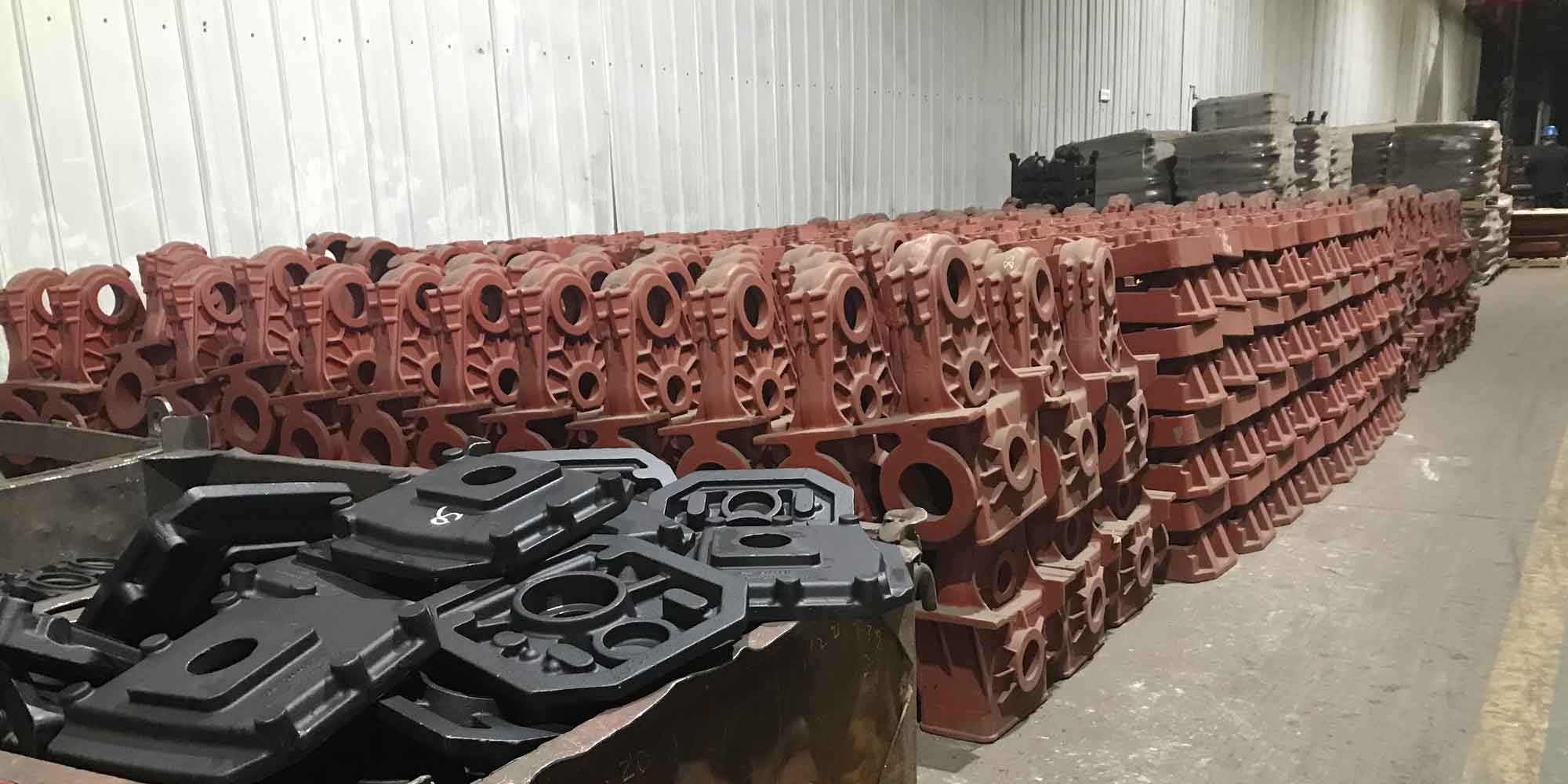
The initial challenge stemmed from the inherent properties of ZG310-570 steel casting, which is a medium-to-high carbon steel prone to mushy solidification. This characteristic often resulted in ambiguous linear magnetic indications during flaw detection, making it difficult to distinguish between cracks and shrinkage porosity. In our production facility, even minor indications were treated as defects, necessitating repairs that reduced the overall yield. For instance, historical data showed that the qualified rate for ZG310-570 steel casting wheel centers was only around 42.5% to 46.2%, as summarized in Table 1. This low efficiency prompted us to explore alternative materials, leading to the selection of B+ grade steel casting. The transition to B+ grade steel casting was driven by its superior mechanical properties and better castability, which we hypothesized would reduce defects and improve reliability in shunting operations. Our goal was to design a rigorous trial assessment that would not only verify the performance of the new steel casting but also establish a framework for future evaluations of similar components.
| Year | Number of Melting Furnaces | Total Wheel Centers Produced | Qualified Wheel Centers | Qualified Rate (%) |
|---|---|---|---|---|
| 2014 | 204 | 1016 | 432 | 42.5 |
| 2018 | 105 | 524 | 242 | 46.2 |
Prior to the trial assessment, we conducted extensive technical preparations to ensure the feasibility of B+ grade steel casting for wheel centers. We began by comparing the chemical composition and mechanical properties of B+ grade steel casting with the existing ZG310-570 steel casting. The carbon equivalent (CE) is a crucial parameter in steel casting, as it influences weldability and solidification behavior. We calculated the carbon equivalent using the formula: $$CE = C + \frac{Mn}{6} + \frac{Cr + Mo + V}{5} + \frac{Ni + Cu}{15}$$ For B+ grade steel casting, the CE was lower, indicating reduced susceptibility to cracking. Additionally, the mechanical properties were evaluated through tensile and impact tests. The yield strength ($\sigma_y$) and ultimate tensile strength ($\sigma_u$) for B+ grade steel casting were found to be higher, while elongation ($\delta$) and impact absorption energy ($A_k$) showed significant improvements. These properties can be expressed as: $$\sigma_y \approx 350 \, \text{MPa}, \quad \sigma_u \approx 570 \, \text{MPa}, \quad \delta \geq 18\%, \quad A_k \geq 27 \, \text{J}$$ In contrast, ZG310-570 steel casting had similar tensile strength but lower yield strength and ductility. This analysis confirmed that B+ grade steel casting offered a more robust material for wheel centers, capable of withstanding the dynamic loads in shunting operations.
We then proceeded with trial production, where two melts of B+ grade steel casting were used to cast 12 wheel centers. The first melt served for composition adjustment and preliminary testing, while the second melt finalized the工艺. Random sampling of four wheel centers after rough machining revealed minimal surface defects and virtually no linear magnetic indications, a stark contrast to the earlier steel casting. This initial success motivated us to pursue formal certification. The production facility underwent a quality assurance audit as part of the railway product certification process, and the wheel centers were subjected to type testing according to relevant standards. All tests, including magnetic particle inspection and dimensional checks, met the requirements, leading to the issuance of a trial certificate for B+ grade steel casting wheel centers. This preparatory phase underscored the critical role of material selection in steel casting and set the stage for the subsequent trial assessment.
With the technical groundwork laid, we designed a detailed trial assessment scheme tailored to the specific characteristics of B+ grade steel casting wheel centers. Existing regulations provided宏观 guidelines, but we needed a more granular approach to address potential risks and ensure comprehensive evaluation. Our scheme comprised six key aspects, each elaborated below with tables and formulas to summarize the criteria.
First, we defined the线路及环境 parameters to replicate实际 operating conditions. The HXN3B shunting locomotive is designed for调车及小运转 duties, with environmental temperatures ranging from -40°C to 40°C. The track conditions include curves with radii as small as 100 m for coupling and 250 m for normal operations, as well as驼峰竖曲线 with a minimum radius of 300 m. We ensured that the trial assessment would occur under these specified conditions to avoid unnecessary safety issues. The wheel center’s design limits were encapsulated in a set of inequalities to ensure structural integrity: $$\sigma_{\text{max}} \leq \frac{\sigma_y}{S_f}, \quad \text{where } S_f \text{ is the safety factor}$$ Here, $\sigma_{\text{max}}$ represents the maximum stress experienced during operation, derived from dynamic load calculations based on locomotive weight and speed profiles.
| Parameter | Value |
|---|---|
| Purpose | Shunting and short-distance haulage |
| Environmental Temperature Range | -40°C to 40°C |
| Track Gauge | 1435 mm |
| Maximum Operational Speed | 100 km/h |
| Minimum Curve Radius for Coupling | 100 m |
| Minimum Curve Radius for Normal Operations | 250 m |
| Minimum Vertical Curve Radius on Humps | 300 m |
Second, we developed a安全应急预案 to address potential risks during the trial assessment. Given that steel casting components can have latent defects, we collaborated with the operating department to establish response protocols. The primary risk was the emergence of质量 issues in the wheel centers, such as cracks or failures. Our contingency plan included immediate inspection and replacement procedures, with the production enterprise assuming liability for any defects. We formulated a risk probability model: $$P_f = 1 – \exp\left(-\int_0^t \lambda(\tau) d\tau\right)$$ where $P_f$ is the probability of failure, $t$ is time, and $\lambda(\tau)$ is the hazard function dependent on material properties and load cycles. By monitoring this, we could preemptively address anomalies, such as replacing wheel centers if non-destructive testing indicated critical flaws.
Third, we determined the装车数量及周期. According to regulations, new products should be installed on at least two locomotives for trial, but we opted for three locomotives to account for potential replacements. Each HXN3B locomotive requires 36 wheel centers, so the total trial quantity was 108 pieces of B+ grade steel casting wheel centers. The assessment period was set to one year, aligning with standard practices for shunting locomotives. We also tracked the cumulative mileage, though it was secondary due to the stop-start nature of shunting duties. The mileage for each locomotive was recorded and analyzed using a wear model: $$W = k \cdot L \cdot F^{m}$$ where $W$ is wear depth, $k$ is a material constant, $L$ is mileage, $F$ is load, and $m$ is an exponent derived from empirical data for steel casting.
Fourth, we implemented a systematic approach for跟踪和监测 during the trial assessment. This involved three types of information: operational tracking, daily quality monitoring, and periodic inspections. Operational tracking included logging运行数据 such as speed, load, and environmental conditions. Daily monitoring focused on visual checks and basic measurements, while periodic inspections involved non-destructive testing at intervals. We used magnetic particle inspection to detect surface defects, with acceptance criteria based on standard thresholds. The defect density $\rho_d$ was calculated as: $$\rho_d = \frac{N_d}{A}$$ where $N_d$ is the number of defects and $A$ is the surface area of the steel casting wheel center. We maintained records in customized表格 to facilitate analysis.
| Information Type | Parameters Monitored | Frequency |
|---|---|---|
| Operational Tracking | Speed, load, temperature, curve negotiation | Continuous |
| Daily Quality Monitoring | Visual inspection for cracks, deformation, wear | Daily |
| Periodic Inspections | Magnetic particle inspection, dimensional checks | Monthly |
Fifth, we planned for拆检 after the trial assessment周期. Upon completion, we randomly selected two wheel sets (comprising four wheel centers) for disassembly and detailed examination. The wheel centers were subjected to full magnetic particle inspection per TB/T 1400.1-2016 standards, and at least one wheel center was解剖检查 to assess internal integrity. This step was crucial for validating the long-term durability of the steel casting. We evaluated the疲劳 life using the Paris law for crack growth: $$\frac{da}{dN} = C (\Delta K)^n$$ where $a$ is crack length, $N$ is the number of cycles, $\Delta K$ is the stress intensity factor range, and $C$ and $n$ are material constants for B+ grade steel casting.
Sixth, we established criteria for试用考核结果的评价. The trial assessment would be deemed successful if no wheel centers were replaced due to inherent quality issues, no cracks appeared in critical areas like the hub and web, and the post-trial inspections met all standard requirements. We defined a performance index $PI$: $$PI = \alpha \cdot R_q + \beta \cdot S_s + \gamma \cdot I_c$$ where $R_q$ is the qualified rate, $S_s$ is the safety score from inspections, $I_c$ is the inspection compliance, and $\alpha, \beta, \gamma$ are weighting factors. A $PI$ above a threshold value indicated approval for batch production.
With the scheme in place, we applied it to the actual trial assessment of B+ grade steel casting wheel centers on three HXN3B locomotives (numbered 0151, 0152, and 0153) assigned to a depot for日常调车运用. The locomotives operated on routes with numerous small-radius curves,符合 the design conditions for steel casting wheel centers. We initiated the trial with a technical meeting to align all stakeholders on the protocols and risk management strategies. During the one-year period, the wheel centers performed flawlessly: no safety incidents occurred, and日常监测 results consistently met standards. The cumulative mileages were 168,111 km for locomotive 0151, 147,613 km for 0152, and 143,177 km for 0153, reflecting the intensive shunting operations. After the周期, we disassembled two randomly selected wheel sets and委托 an independent institute for inspection. Magnetic particle inspection revealed no defects, and解剖检查 confirmed the internal soundness of the steel casting, with all results complying with TB/T 1400.1-2016. Based on our evaluation criteria, the trial assessment was deemed successful, with a performance index $PI$ calculated as: $$PI = 0.4 \cdot 0.984 + 0.3 \cdot 1.0 + 0.3 \cdot 1.0 = 0.9936$$ exceeding the threshold of 0.9. This outcome validated the reliability of B+ grade steel casting for wheel centers in shunting applications.
Following the trial assessment, the production enterprise proceeded with batch production of B+ grade steel casting wheel centers. Initially, 64 wheel centers were manufactured, adhering to the regulation that new material usage should not exceed 20% of total production in the first year. The results were remarkable: only one wheel center was rejected due to a non-material-related defect (a sand inclusion), and the linear magnetic defect issue was virtually eliminated. The qualified rate soared to 98.4%, as shown in Table 4, compared to 44.6% for ZG310-570 steel casting wheel centers produced in the same year. This dramatic improvement underscored the advantages of B+ grade steel casting in terms of quality and cost-effectiveness. The transition also highlighted the importance of iterative optimization in steel casting processes, where material selection and工艺 refinement can yield substantial benefits.
| Material | Number of Melting Furnaces | Total Wheel Centers Produced | Qualified Wheel Centers | Qualified Rate (%) |
|---|---|---|---|---|
| B+ Grade Steel Casting | 12 | 64 | 63 | 98.4 |
| ZG310-570 Steel Casting | 108 | 551 | 246 | 44.6 |
In conclusion, the trial assessment of B+ grade steel casting wheel centers for the HXN3B shunting locomotive was a comprehensive exercise in validating new materials for railway components. From my perspective as part of the research team, the scheme we designed—encompassing technical preparations, detailed assessment parameters, and rigorous monitoring—proved effective in exposing potential issues and confirming the suitability of B+ grade steel casting. The successful outcome not only facilitated the batch deployment of these wheel centers but also provided a framework for future trials of similar steel casting products. Key lessons include the value of material对比分析, the need for tailored safety protocols, and the importance of post-trial拆检. For future assessments, we recommend incorporating comparative trials with新旧产品 on the same locomotive to enhance evaluation depth, and further research into the处置 of trial samples after service to optimize resource utilization. Ultimately, this work reinforces the critical role of steel casting in advancing railway technology, and the iterative improvements in materials like B+ grade steel casting will continue to drive efficiency and safety in the industry.
The entire process also involved numerous calculations and models to ensure robustness. For instance, we used finite element analysis to simulate stress distributions in the steel casting wheel centers under various loads. The von Mises stress $\sigma_v$ was computed as: $$\sigma_v = \sqrt{\frac{(\sigma_1 – \sigma_2)^2 + (\sigma_2 – \sigma_3)^2 + (\sigma_3 – \sigma_1)^2}{2}}$$ where $\sigma_1, \sigma_2, \sigma_3$ are principal stresses. This helped validate the design against yield criteria. Additionally, the fatigue life prediction involved integrating the damage accumulation model: $$D = \sum_{i=1}^{n} \frac{n_i}{N_i}$$ where $D$ is the total damage, $n_i$ is the number of cycles at stress level $i$, and $N_i$ is the cycles to failure at that level for B+ grade steel casting. These technical细节 underscore the sophistication required in modern steel casting applications.
Looking ahead, the adoption of B+ grade steel casting for wheel centers sets a precedent for other locomotive components. The trial assessment scheme can be adapted for different steel casting products, such as bogie frames or couplers, by adjusting parameters based on specific operational demands. Moreover, ongoing advancements in steel casting technology, such as improved melting techniques and alloy designs, promise further enhancements in quality and performance. As we continue to push the boundaries, the integration of digital tools like IoT sensors for real-time monitoring during trials could provide even deeper insights into steel casting behavior under实际 conditions. This evolution will ensure that steel casting remains at the forefront of railway innovation, supporting safer and more efficient transportation networks globally.