
The expansion into international markets, particularly those governed by Russian technical standards (GOST), presented a significant materials engineering challenge for my organization. As we undertook the development and production of bolster and side frame steel castings for Russian railway freight cars, a critical performance criterion emerged from the unique operational demands of the region. Beyond the standard requirements for tensile strength, yield strength, and elongation, the GOST standard mandates a stringent low-temperature impact toughness: a minimum of 20 J/cm² at -60°C in the normalized condition. This requirement far exceeds the capabilities of conventional railway steel casting grades, such as China’s B+ grade steel, necessitating a dedicated research and development program to create a new material. This article details the first-person perspective of that development journey, focusing on the alloy design, processing, and metallurgical principles behind achieving exceptional low-temperature performance in a structural steel casting.
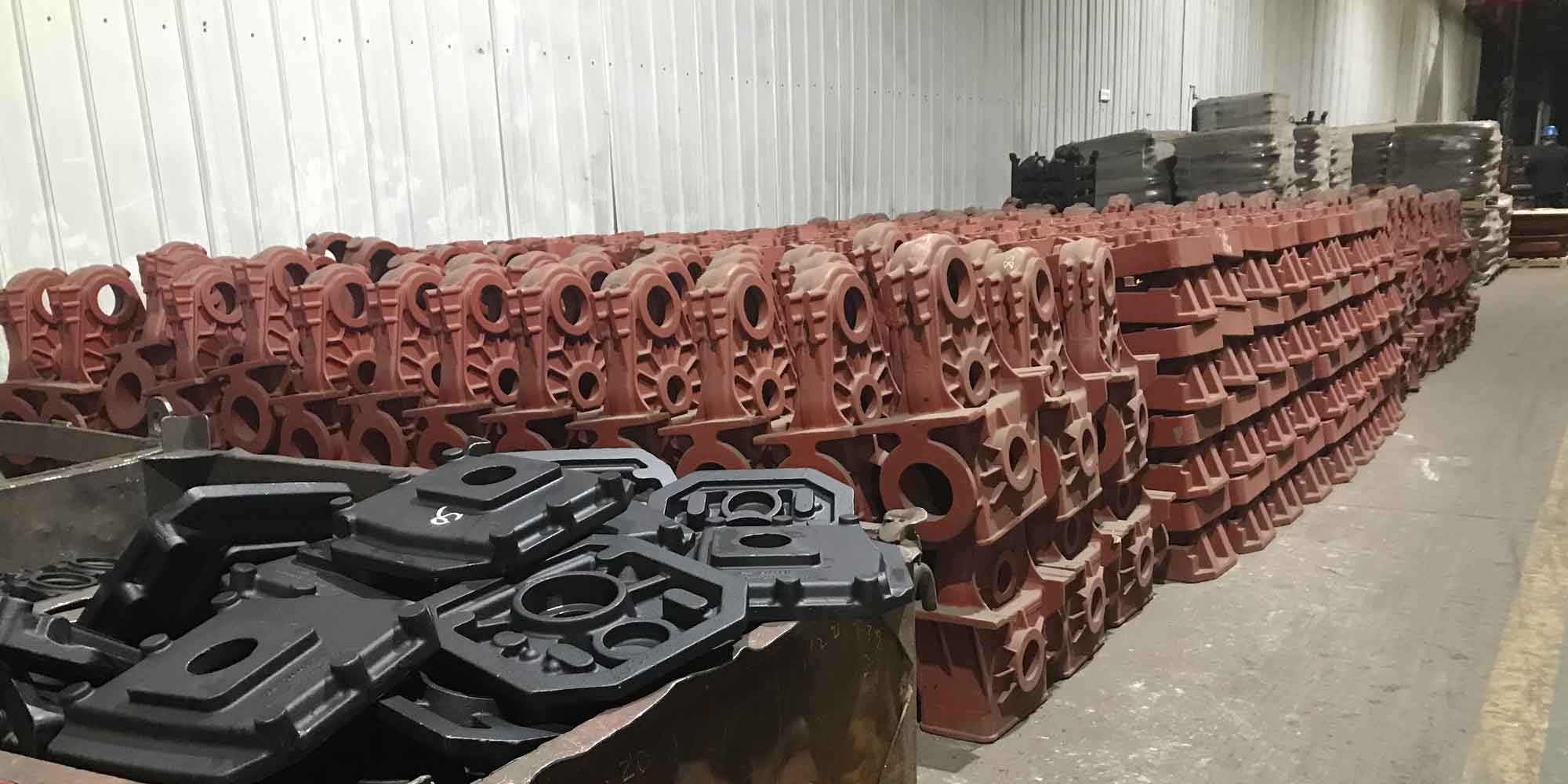
The bolster and side frame are critical, structurally complex medium-sized steel castings that form the core of a freight wagon bogie. They operate perpetually in exposed environments, bearing the weight of the car body, absorbing dynamic loads, vibrations, and facilitating guidance on curves. Their integrity is paramount to operational safety. In the harsh climates typical of Russia, where temperatures can plunge far below -40°C, the propensity for brittle fracture increases dramatically. At these temperatures, a material’s ductility and toughness can severely diminish, making impact toughness the paramount property for ensuring fracture resistance under shock loading. Therefore, the primary research objective was not merely to meet strength metrics but to engineer a significant reserve of toughness at extreme sub-zero temperatures.
The overall technical strategy was built on two synergistic pillars: advanced melting practice and targeted microalloying. First, we leveraged the capability of a 20-ton Electric Arc Furnace (EAF) coupled with a 25-ton Ladle Furnace (LF) for secondary refining. This duplex process is essential for producing a clean melt by drastically reducing the levels of detrimental elements and gases like Sulfur (S), Phosphorus (P), Nitrogen (N), and Oxygen (O). A clean steel matrix is the foundational prerequisite for high toughness. Second, and central to this work, was the application of Rare Earth (RE) element microalloying. The unique physicochemical properties of rare earth elements, primarily from the lanthanide series (light rare earths), are known to confer several benefits: they act as powerful deoxidizers and desulfurizers, modify the morphology and distribution of non-metallic inclusions, refine the as-cast grain structure, and most importantly for this application, significantly enhance impact toughness, particularly at low temperatures. The challenge was to quantitatively integrate this technology into a specific steel casting chemistry to reliably hit the -60°C target.
The baseline composition was dictated by the Russian standard GOST 32400, as shown in Table 1. However, preliminary trials confirmed that simply adhering to this composition, which treats elements like Nickel (Ni) and Chromium (Cr) as mere residuals, was insufficient to achieve the required low-temperature toughness. A new compositional philosophy was required for our steel casting alloy, which we designated as EB steel.
| C | Si | Mn | S (max) | P (max) | Cu (max) | Ni (max) | Cr (max) |
|---|---|---|---|---|---|---|---|
| 0.17-0.25 | 0.30-0.50 | 1.10-1.40 | 0.020 | 0.020 | 0.60 | 0.30 | 0.30 |
The design of the EB steel chemistry involved strategic adjustments and tightening of controls, as outlined in Table 2. Key changes included: stricter control of S and P to ≤0.015% each to minimize embrittling effects; intentional, though modest, alloying with Ni (0.20-0.30%) and Cr (0.20-0.30%) to strengthen the ferrite matrix and enhance hardenability without compromising weldability or toughness; control of residual Molybdenum (Mo) to ≤0.12%; and the defined addition of RE elements (as Ferro-Silicon-RE alloy) at a rate targeting a residual content in the steel of ≤0.20%. The carbon and manganese ranges were maintained to ensure adequate strength and hardenability. The core formula for the desired property balance can be conceptually framed by considering the contributions to yield strength, often described by a linear sum of strengthening mechanisms:
$$ \sigma_y = \sigma_0 + \sigma_{ss} + \sigma_{gb} + \sigma_{disp} + \sigma_{ppt} $$
Where $\sigma_y$ is the overall yield strength, $\sigma_0$ is the lattice friction stress of pure iron, $\sigma_{ss}$ is solid solution strengthening (from Si, Mn, Ni, etc.), $\sigma_{gb}$ is grain boundary strengthening (Hall-Petch effect, enhanced by RE), $\sigma_{disp}$ is dispersion strengthening, and $\sigma_{ppt}$ is precipitation strengthening. While not all terms are dominant in this low-alloy steel, the design aimed to optimize $\sigma_{ss}$ for strength while maximizing $\sigma_{gb}$ through grain refinement for toughness. The detrimental effect of inclusions on toughness, which is not a strengthening term but a potent toughening reduction factor, was targeted for minimization via RE modification.
| C | Si | Mn | S (max) | P (max) | Ni | Cr | Mo (max) | RE (Added) |
|---|---|---|---|---|---|---|---|---|
| 0.17-0.25 | 0.30-0.50 | 1.10-1.40 | 0.015 | 0.015 | 0.20-0.30 | 0.20-0.30 | 0.12 | ≤ 0.20 |
The melting and refining process was meticulously controlled. After melting and oxidation in the EAF, the steel was tapped into the LF for secondary refining. Here, desulfurization, deoxidation, and precise temperature and composition homogenization were achieved under a protective argon atmosphere. The final, critical step was the RE addition. Using an “injection” method, the RE alloy was introduced into the ladle after final deoxidation. The bath was then stirred with argon for a minimum of 3 minutes to ensure uniform distribution and promote floatation of reaction products. The effectiveness of this clean steel practice was verified by measuring gaseous impurities, as shown in Table 3 for trial heats. The low levels of oxygen and nitrogen are indicative of a high-purity melt, a crucial foundation for achieving high toughness in the final steel casting.
| Heat ID | [O] (ppm) | [N] (ppm) |
|---|---|---|
| 1# | 26 | 55 |
| 2# | 29 | 58 |
| 3# | 27 | 60 |
The casting process produced test blocks and prototype components. The subsequent heat treatment was designed to develop an optimal microstructure of refined ferrite and pearlite. The normalized and tempered cycle was employed, with parameters detailed in Table 4. Normalizing at 900-920°C was intended to erase the casting structure, homogenize the alloy, and achieve a fine austenite grain size. The subsequent air cooling and tempering at 600-650°C were conducted to relieve stresses, improve ductility and toughness, and stabilize the microstructure.
| Process | Charge Temp. (°C) | Soak Temp. (°C) | Soak Time (min) | Cooling Medium |
|---|---|---|---|---|
| Normalizing | ≤ 540 | 900-920 | 210-240 | Air |
| Tempering | ≤ 500 | 600-650 | 210-270 | Air |
The mechanical performance results from the trial heats were unequivocally successful, as tabulated in Table 5. All strength and ductility requirements were comfortably met. Most significantly, the -60°C Charpy V-notch (KV) impact energy values substantially exceeded the target of 20 J/cm², with results consistently in the mid-30 J/cm² range. This demonstrated a robust safety margin for the steel castings operating in extreme cold.
| Heat ID | Tensile Strength (MPa) | Yield Strength (MPa) | Elongation (%) | Reduction of Area (%) | Impact at -60°C (J/cm²) |
|---|---|---|---|---|---|
| 1# | 571 | 350 | 29.5 | 66 | 33, 38 |
| 2# | 555 | 345 | 30.0 | 65 | 36, 34 |
| 3# | 560 | 347 | 31.0 | 69 | 37, 35 |
Metallographic analysis provided the microstructural justification for this performance, summarized in Table 6. The microstructure consisted of a fine ferrite-pearlite aggregate. The grain size was consistently refined to an ASTM number of 8.5, a direct consequence of the RE addition’s ability to inhibit austenite grain growth during normalizing. Perhaps even more critical was the analysis of non-metallic inclusions. Instead of the elongated, brittle Type II MnS stringers commonly found in conventional steel castings, the inclusions were predominantly globular, fine, and uniformly dispersed. These were identified as complex RE oxy-sulfides (e.g., RE2O2S). This morphological change is the cornerstone of the improved toughness. Sharp, elongated inclusions act as potent stress raisers and crack initiation sites, severely degrading impact energy, especially at low temperatures. The spherical RE inclusions are less detrimental, blunting crack propagation and contributing to a higher fracture energy absorption.
The mechanism of RE action can be described through a sequence of metallurgical reactions. Upon addition to the liquid steel, the highly reactive RE elements (denoted as [RE]) first scavenge any residual oxygen and sulfur:
$$ 2[RE] + 3[O] \rightarrow (RE_2O_3) $$
$$ [RE] + [S] \rightarrow (RES) $$
They can also form complex compounds like (RE2O2S). These compounds have a high melting point and form early in the solidification process, serving as heterogeneous nucleation sites for the primary austenite grains, thereby refining the as-cast structure. Furthermore, by removing sulfur from forming MnS, they prevent the formation of the harmful elongated sulfide inclusions during solidification and subsequent hot working of the ingot. The fine, spherical RE-containing inclusions are less likely to coalesce and are relatively inert. The grain refinement effect persists through heat treatment, as RE solutes or fine precipitates at the austenite grain boundaries can exert a Zener pinning force, retarding grain coarsening during the normalizing soak. The pinning pressure $P_z$ can be expressed as:
$$ P_z = \frac{3f_v\gamma}{2r} $$
where $f_v$ is the volume fraction of pinning particles, $\gamma$ is the grain boundary energy, and $r$ is the particle radius. The fine, dispersed RE compounds contribute to this pinning, maintaining a fine austenite grain size which transforms into a fine final microstructure, enhancing both strength (via the Hall-Petch relationship $\sigma_{gb} = k_y d^{-1/2}$) and, more importantly, low-temperature toughness by increasing the grain boundary area that can deflect or arrest cleavage cracks.
In conclusion, the research successfully developed a new grade of railway bogie steel casting material, EB steel, capable of meeting the rigorous -60°C impact toughness requirement of Russian operational standards. The achievement was the result of a holistic materials engineering approach: a carefully balanced chemical composition with controlled Ni and Cr, stringent impurity control via EAF-LF duplex refining, and the strategic microalloying with rare earth elements. The RE technology proved transformative, fundamentally altering the inclusion morphology from deleterious stringers to benign globules and refining the microstructure. This dual effect provided the necessary ductility reserve at extreme low temperatures. The EB steel composition and processing parameters have been successfully scaled for full production, with over 400 sets of bolsters and side frames supplied for service in Russia, Kazakhstan, and Mongolia, validating the robustness and reliability of this advanced steel casting material for demanding cryogenic applications.