
The development of high-performance composite materials for extreme environments, such as bridge construction in alpine regions, drives the exploration of advanced joining techniques. The combination of corrosion-resistant austenitic stainless steel 06Cr18Ni11Ti with a robust low-alloy steel casting like 20Mn offers a promising solution. However, conventional welding methods often struggle with the inherent characteristics of steel castings, particularly their weldability and pre-existing microstructural features like porosity. Explosive welding, a solid-state impact welding process, presents a viable alternative by enabling metallurgical bonding across large areas without a conventional heat-affected zone. This study investigates the microstructural characteristics and mechanical performance of an explosive weld between 06Cr18Ni11Ti stainless steel and 20Mn steel casting. Emphasis is placed on understanding the interfacial phenomena and the response of the steel casting to the intense, transient thermomechanical loading.
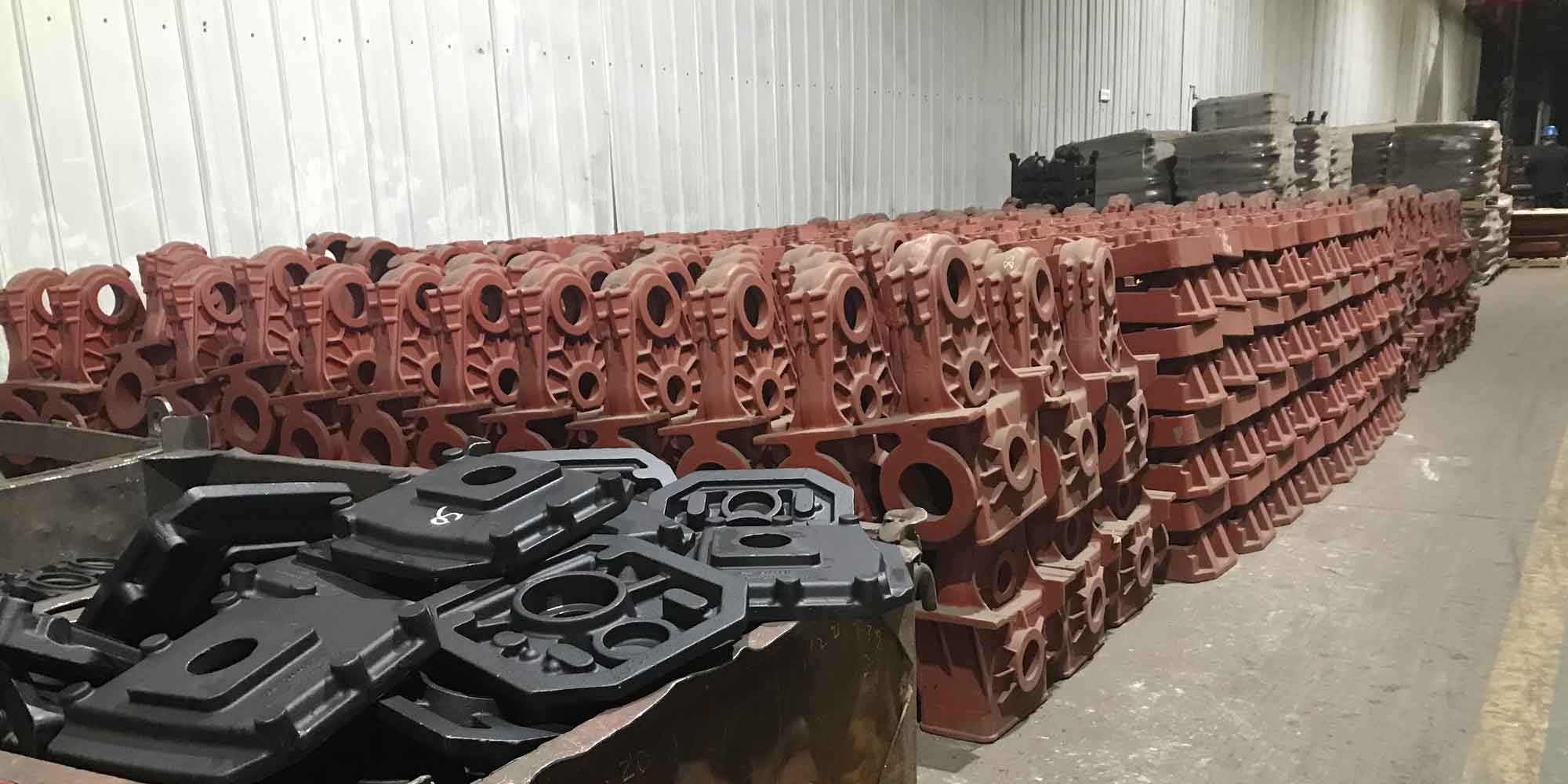
Steel casting is a fundamental manufacturing process for creating complex, high-strength components. The 20Mn grade, a manganese-enriched low-alloy steel casting, is valued for its favorable mechanical properties and is commonly employed in applications demanding toughness and wear resistance, such as in mining machinery and heavy-duty structural parts. The microstructural integrity of a steel casting, including potential defects like shrinkage pores, is crucial for its performance under dynamic loading. When such a steel casting is subjected to explosive welding, understanding the interaction between the welding dynamics and its cast microstructure becomes essential.
Experimental Methodology and Welding Parameters
The base materials consisted of a 4mm thick 06Cr18Ni11Ti stainless steel flyer plate and a 100mm thick 20Mn steel casting base plate. The bonding surfaces were meticulously polished prior to welding. The explosive welding configuration employed a parallel setup with a fixed explosive thickness (hexp) of 30 mm and a detonation velocity (VD) of 2300 m/s. The primary variable was the stand-off distance (S), which was set at 4 mm and 10 mm for two separate weld trials, designated as Sample 1 and Sample 2 respectively. The key welding parameters were calculated using established explosive welding formulae. The flyer plate velocity (Vp) and dynamic collision angle (β) are critical for bond formation and are given by:
$$V_p = 2V_D \sin(\frac{\beta}{2})$$
The polytropic exponent of the explosive (K) can be estimated from its detonation velocity:
$$K = 1 + \left( \frac{D}{1067} \right)^2$$
Using these relationships, the calculated parameters for the two conditions are summarized in the table below.
| Sample | Stand-off (mm) | VD (m/s) | Calculated β (degrees) | Calculated Vp (m/s) | Weld Interface Morphology |
|---|---|---|---|---|---|
| 1 | 4 | 2300 | ~10.7 | ~428.9 | Straight/Flat |
| 2 | 10 | 2300 | ~13.0 | ~520.7 | Wavy |
The higher stand-off distance in Sample 2 resulted in a significantly higher collision angle and flyer plate velocity, which directly influenced the interfacial energy deposition and the resulting microstructure.
Interfacial Microstructural Characterization
Optical microscopy examination revealed a stark contrast in the interfacial morphology between the two samples. The interface in Sample 1 (4 mm stand-off) was predominantly straight, while Sample 2 (10 mm stand-off) exhibited a distinct periodic wavy pattern. This transition from a flat to a wavy interface is a classic response to increased collision energy, governed by fluid-like instability mechanisms at the collision point. Notably, inherent porosity from the steel casting process was observed within the 20Mn matrix in both samples. Crucially, these pre-existing pores did not act as crack initiation sites under the explosive impact, demonstrating a degree of microstructural stability in this steel casting under the specific loading conditions.
Further analysis of the interfacial region using scanning electron microscopy (SEM) provided insights into the localized melting phenomena. A thin, discontinuous molten layer was present at the bond interface in both cases. However, the thickness and continuity of this layer were more pronounced in Sample 2, particularly at the crests of the waves. This is attributed to the greater frictional heating and higher strain rates associated with the larger collision parameters. The chemistry across this interface, analyzed via energy-dispersive X-ray spectroscopy (EDS) line scans, showed a sharp but interdiffused transition. The Fe content increased rapidly from the stainless steel side into the steel casting, while Cr and Ni gradients decreased correspondingly from the stainless steel into the bond interface and the steel casting substrate.
Metallographic etching of the steel casting side adjacent to the weld interface revealed significant microstructural evolution. A refined grain structure was evident near the interface due to severe plastic deformation. Furthermore, a distinct zone enriched in austenite was observed immediately at the weld line on the steel casting side. This is likely a result of localized heating and rapid cooling, causing a transient phase transformation in the steel casting’s near-surface region. A critical observation was the presence of mechanical twins within the grains of the 20Mn steel casting in Sample 2, particularly in areas slightly away from the immediate interface. In contrast, Sample 1 showed minimal twinning. The formation of these twins is a direct consequence of the high-strain-rate deformation imposed during explosive welding. The higher interfacial energy and strain rate in Sample 2 made twinning, a preferred deformation mechanism under these conditions, more prevalent compared to the lower-energy weld of Sample 1. This highlights the strain-rate sensitivity of the steel casting’s deformation behavior.
Mechanical Property Evaluation
The mechanical integrity of the explosive welds was assessed through shear tension, bending, and hardness tests. Shear tension specimens were machined perpendicular to the weld interface. The results were unequivocal: in all tests, fracture occurred within the body of the 20Mn steel casting, not along the welded interface. The measured shear strengths are tabulated below.
| Sample | Specimen | Shear Strength (MPa) | Fracture Location |
|---|---|---|---|
| 1 (S=4mm) | 1-1 | 394.1 | 20Mn Steel Casting |
| 1-2 | 383.6 | ||
| 1-3 | 386.0 | ||
| 2 (S=10mm) | 2-1 | 408.4 | 20Mn Steel Casting |
| 2-2 | 396.3 | ||
| 2-3 | 394.3 |
The strength values for both weld conditions exceed the typical base metal strength of the 20Mn steel casting, confirming that the interfacial bond strength is superior. The marginally higher average strength for Sample 2 may be linked to a more extensive intermixed zone. Fractography of the broken shear tension specimens revealed a river pattern morphology on the fracture surface, characteristic of a ductile, cleavage-influenced fracture mode within the steel casting.
Bend testing to 90 degrees, with the weld interface subjected to tensile and compressive stresses, was conducted. Both samples, whether bent with the stainless steel or the steel casting in tension, survived the test without any sign of interfacial delamination, cracking, or separation. This demonstrates excellent ductility and bond integrity under bending loads. The load-displacement curves indicated that bending with the steel casting in tension required a higher load, consistent with its different mechanical properties.
Microhardness traverses across the weld interface provided a map of work hardening. A significant increase in hardness was observed in both materials near the interface due to the severe plastic deformation. The peak hardness and the hardness gradient were more pronounced on the steel casting side compared to the stainless steel side. This is attributed to the greater strain-rate sensitivity and work-hardening capacity of the steel casting. The data is summarized in the following comparison.
| Property / Sample | Sample 1 (S=4mm) | Sample 2 (S=10mm) |
|---|---|---|
| Max Hardness in 20Mn (HV0.2) | ~268 | ~355 |
| Max Hardness in 06Cr18Ni11Ti (HV0.2) | ~413 | ~408 |
| Hardening Gradient in 20Mn | Moderate | Steep |
The substantially higher peak hardness in the 20Mn steel casting for Sample 2 correlates with the more intense plastic deformation and twin formation observed microstructurally.
Discussion: Behavior of Steel Casting under Explosive Welding
The explosive welding process imposes a unique combination of high pressure, high strain rate, and transient thermal cycles on the materials. The response of the 20Mn steel casting to this extreme environment is central to understanding the composite’s performance.
First, the stability of pre-existing porosity within the steel casting is noteworthy. The high-pressure pulse from the explosion appears to have closed or at least not propagated these defects, which is a positive attribute for the steel casting’s suitability for this process. Second, the microstructural refinement and the formation of an austenite-enriched zone at the interface indicate complex thermo-mechanical-metallurgical interactions. The brief but intense heating can locally austenitize the steel casting surface, which subsequently quenches by conduction into the cold bulk of the steel casting, leading to a hard, transformed microstructure.
The most significant observation is the activation of deformation twinning in the steel casting under the higher-energy welding condition (Sample 2). Twinning is a strain-rate sensitive mechanism. The relationship between flow stress ($\sigma$), strain rate ($\dot{\epsilon}$), and temperature (T) can be conceptually framed by thermally activated deformation models. At very high strain rates, the stress required for dislocation slip increases dramatically, making alternative mechanisms like twinning energetically favorable. This can be qualitatively related to an equation of the form:
$$\dot{\epsilon} = A \sigma^n \exp\left(-\frac{Q}{RT}\right)$$
where a high $\dot{\epsilon}$ necessitates a high $\sigma$, promoting twinning. The presence of twins significantly contributes to the pronounced work hardening observed in the hardness profile of the steel casting in Sample 2. This twin-induced hardening enhances the local strength but may also influence the fracture toughness of the heat-affected zone in the steel casting.
From a bonding perspective, the fact that all mechanical failures occurred in the steel casting substrate is the ultimate validation of the weld quality. It indicates that the explosive weld interface, whether flat or wavy, creates a bond that is stronger than the parent steel casting material itself. The wavy interface in Sample 2, with its larger surface area and mechanical interlocking, likely provides better resistance to shear and peel stresses, contributing to its robust performance in bending.
Conclusion
This investigation successfully demonstrates the viability of explosive welding for joining 06Cr18Ni11Ti stainless steel to 20Mn steel casting. Two distinct interfacial morphologies—straight and wavy—were produced by varying the stand-off distance, which directly controlled the collision energy. The steel casting exhibited a complex response to the explosive loading, including microstructural refinement, localized phase changes, and, under high-energy conditions, widespread deformation twinning. These microstructural features directly correlated with a significant increase in hardness near the interface.
Mechanically, the explosive weld interface proved to be exceptionally strong, with shear and bend test failures consistently occurring within the 20Mn steel casting body, not at the bond line. The composite plates exhibited excellent ductility and interfacial integrity. The study underscores that explosive welding is a highly effective technique for fabricating stainless-steel-to-steel-casting composites. The process parameters must be carefully optimized, considering the specific response of the steel casting to high-strain-rate deformation, to achieve the desired balance of a defect-free, high-strength bond and acceptable levels of work hardening in the steel casting component. This makes such composites promising candidates for demanding structural applications where corrosion resistance from the stainless steel cladding must be combined with the bulk strength and toughness of a steel casting.