
From years of hands-on experience in the cement industry, the quality of large, low-alloy steel castings remains a paramount factor influencing the installation, commissioning, and long-term operational stability of core equipment such as rotary kilns and grinding mills. These critical components, including kiln girth gears, riding rings, support rollers, thrust rollers, and mill girth gears, are subjected to extreme mechanical and thermal stresses. Consequently, any inherent defect can lead to catastrophic failure, unplanned downtime, and significant economic loss. This discussion synthesizes practical field observations and engineering conclusions to explore the root causes, assessment, and proper remediation of flaws in these vital steel castings.
The lifecycle of a reliable casting begins long before it arrives on site. While final product standards like JC/T 333-2006 for rotary kilns and JC/T 334.1-2006 for tube mills govern acceptance, the journey is defined by a series of interconnected processes: design specification, foundry practice, heat treatment, and machining. Discrepancies or suboptimal execution in any of these stages can introduce defects that compromise integrity. The prevalent use of low-alloy steels, such as ZG270-500, ZG310-570, or proprietary grades with additions of Mn, Cr, Mo, and Ni, offers improved strength and toughness over carbon steels but also introduces complexity in processing.
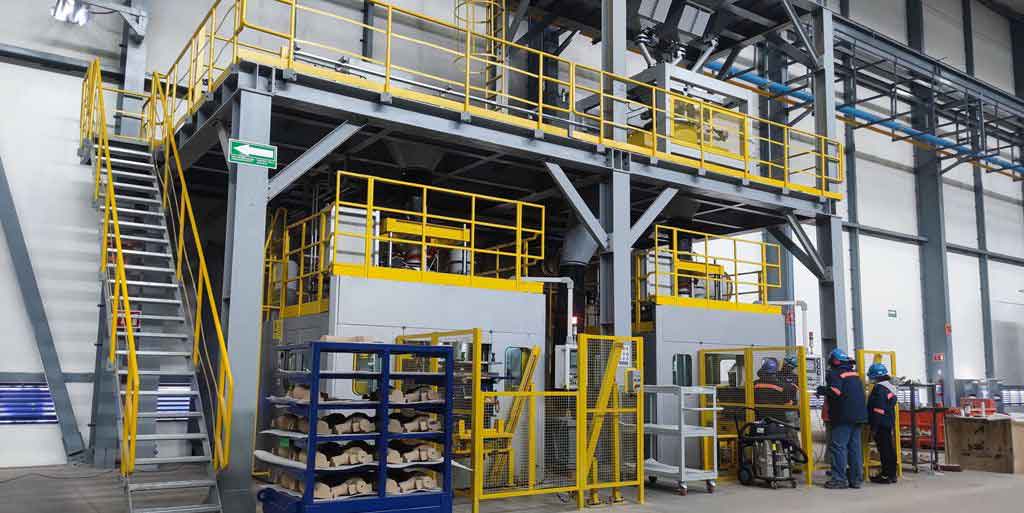
The chemical composition of these steel castings is typically verified per standards like JB/T 6402-2006 using spectroscopic analysis. However, chemistry alone is insufficient. Mechanical properties—tensile strength, yield strength, impact toughness (often tested via Charpy V-notch at various temperatures), and hardness—are the true indicators of performance. Standard practice requires tension and impact tests from separately cast coupons. For critical castings, it is prudent to retain larger master test blocks (e.g., 200mm cubes) for potential future analysis, including metallography. A crucial, often debated, point is whether test coupons adequately represent the properties of the actual casting, especially in sections with differing wall thicknesses or complex geometries. The cooling rate in a heavy section versus a standard coupon can lead to vastly different microstructures and mechanical properties, a factor that must be considered during specification and review.
Casting methodology itself is a primary source of potential flaws. While modern electric arc furnaces (EAF) with ladle furnace (LF) refinement are common for large, high-integrity steel castings, induction furnaces may be used for smaller components. Regardless of the melting technique, the casting process (sand molding, pouring temperature, gating and risering design) inherently risks introducing discontinuities. Common defects include:
- Porosity/Gas Holes: Entrapped gas during solidification.
- Shrinkage Cavities/Porosity: Inadequate feeding of liquid metal to compensate for solidification shrinkage.
- Inclusions (Slag/Sand): Non-metallic particles entrapped in the metal matrix.
- Cold Shuts/Misruns: Incomplete fusion of metal streams due to low temperature.
- Cracks (Hot Tears & Cold Cracks): The most severe defects. Hot tears form during solidification due to restricted contraction, while cold cracks can form during cooling, heat treatment, or even machining due to residual stresses.
Defect prevention starts in the foundry, but detection is key. After heat treatment (normalizing, quenching, and tempering), castings are often covered in scale and sand. A thorough abrasive blast cleaning (shot or grit blasting) is non-negotiable before any visual inspection. Many sub-surface defects lurking beneath a layer of scale are only revealed after this cleaning, saving immense cost and time compared to discovery during later machining stages.
The allowable limits for defects in steel castings are codified in standards such as JC/T 401.3-2013. Defects are categorized into those that are unacceptable, those acceptable without repair, and those that can be repaired. For large kiln and mill castings, repair by welding is generally permitted before final machining, followed by appropriate stress relief or even full re-heat treatment. The following table summarizes typical non-repairable defect limits on non-machined (as-cast) surfaces.
| Defect Type | Evaluation Area (mm) | Max. Diameter (mm) | Max. Depth (mm) | Max. Quantity | Area Limit |
|---|---|---|---|---|---|
| Gas Hole / Cavity | 250 x 250 | 5 | 3 | 5 | ≤ 2% of area |
| Sand Inclusion | 250 x 250 | 30 | 2 | 1 | – |
| Cracks | Any | NOT PERMITTED | NOT PERMITTED | 0 | 0% |
For defects that require repair, the standards define acceptable volumes and locations. However, for high-stress components like kiln gears and riding rings, project specifications, especially in international contracts, often impose stricter criteria than the generic standard. A comparative view is shown below.
| Component Surface | General Standard (JC/T 401.3) | Typical Domestic Project | Stringent Int’l Project (Example) |
|---|---|---|---|
| Critical Work Surface | Defect area ≤ 6% of zone; Depth ≤ 1/3 wall th. | Grind width ≤ 15% surface width; Depth ≤ 30mm; Area ≤ 2.5-4%. | Repair if: Grind width >5% surface width AND Depth >6mm AND Aspect Ratio >0.5; Total defects ≤ 10. |
The most critical phase for defect assessment is after rough machining and before final finish machining. At this stage, Non-Destructive Testing (NDT) is indispensable. Ultrasonic Testing (UT) is the primary volumetric method. For large ring-shaped steel castings, a comprehensive UT scan should be performed from all accessible surfaces: both end faces, the outer radial surface, and, if possible, the inner bore. The following equation often guides the sensitivity calibration for disc-shaped forgings/castings, which can be adapted for large gear blanks:
$$ \Delta dB = 20 \log_{10}\left(\frac{\pi D^2}{4 \lambda S}\right) $$
where \( \Delta dB \) is the gain difference, \( D \) is the flat-bottomed hole diameter, \( \lambda \) is the wavelength, and \( S \) is the sound path distance. For near-surface defect detection (crucial for machining surfaces), dual-crystal TR probes are recommended to eliminate the initial pulse dead zone. A significant practical challenge is surface roughness; UT requires a finish of approximately Ra 6.3µm (12.5 µin) for reliable coupling. Cast surfaces often require localized grinding to achieve this, ensuring no critical defect is masked by surface condition.
Magnetic Particle Testing (MT) or Liquid Penetrant Testing (PT) is mandatory on all final machined surfaces to reveal surface-breaking defects like cracks, seams, or laps. The evaluation of defects found during machining follows strict guidelines. The table below outlines defects that may be deemed acceptable without repair on machined surfaces of gear teeth, a highly critical area.
| Component | Location | Evaluation Zone | Max Length (mm) | Max Width/Depth (mm) | Max Qty per zone | Additional Rules |
|---|---|---|---|---|---|---|
| Gear | Tooth Flank | Per tooth | 0.2 x Module (≤5) | 0.3 x Module (≤5) | 1 | Not on 3 consecutive teeth; Total defective teeth ≤ 1/15 of all teeth. |
| Tooth Root | Per tooth | 0.3 x Module (≤5) | 0.3 x Module (≤5) | 1 | ||
| Rim Face | 200mm edge length | Rim thickness | 6 | 5 | 1 | – |
When a defect exceeding the “as-is” limits is detected but is deemed repairable, a strict and controlled repair welding procedure must be followed. The goal is to restore mechanical integrity without creating new problems like excessive residual stress or localized brittle zones. The generalized repair protocol for large steel castings involves:
- Defect Removal & Preparation: The defect is completely removed by grinding or arc gouging to sound metal, verified by PT/MT. The cavity is shaped with smooth, tapered walls for proper weld access and fusion.
- Preheating: The local area is uniformly heated using controlled resistance heating pads. The preheat temperature \( T_p \) is critical and must be below the lower transformation temperature AC1 to avoid phase change. It is a function of the steel’s carbon equivalent \( CE \), often calculated as:
$$ CE = C + \frac{Mn}{6} + \frac{Cr + Mo + V}{5} + \frac{Ni + Cu}{15} $$
For many low-alloy casting steels, \( T_p \) is typically in the range of 150°C to 300°C, with stricter controls for higher CE values. - Welding: Use low-hydrogen electrodes or flux-cored wires (FCAW) with strength matching or slightly exceeding the base metal. Welding parameters use a “low voltage, high current” technique to ensure deep penetration and good fusion. Interpass temperature \( T_i \) is meticulously controlled, usually held within a range close to \( T_p \) (e.g., \( T_p \pm 50°C \) ).
- Post-Weld Heat Treatment (PWHT): Immediately after welding, the area is subjected to controlled thermal stress relief. The temperature is raised slowly (e.g., at 80°C/hr) to a soaking temperature \( T_s \) again below AC1 (commonly 550-600°C for many alloys). The soak time \( t_s \) is determined by thickness, often 1 hour per inch (25mm). Cooling is controlled at a slow rate (e.g., 60°C/hr) to room temperature. This process reduces residual stresses to acceptable levels. The thermal cycle can be modeled by the heat diffusion equation:
$$ \frac{\partial T}{\partial t} = \alpha \nabla^2 T $$
where \( \alpha \) is the thermal diffusivity, emphasizing the need for slow rates to minimize thermal gradients. - Final Inspection & Acceptance: After PWHT and cooling, the repaired zone is ground flush. It is then inspected via UT (including dual-crystal probes for near-surface), PT/MT, and hardness testing. The hardness of the weld and Heat-Affected Zone (HAZ) should be within a specified range of the base metal, typically not exceeding a 20% mean difference or 40 HB points.
In rare cases where a defect is discovered on a finished, precision-machined surface and repair is authorized, specialized “cold welding” or precision TIG repair techniques with minimal heat input may be employed. These require extreme skill and are always followed by localized stress relief and comprehensive NDT. The fundamental principle remains: the repair must restore the load-bearing capability and fatigue resistance of the component.
In conclusion, large low-alloy steel castings are indispensable in cement industry heavy machinery. Their reliability hinges on a multi-faceted approach integrating robust design, optimized foundry and heat treatment processes, and a rigorous, scientifically grounded quality assurance protocol. Early and thorough NDT, coupled with a disciplined, engineering-critical approach to defect evaluation and repair, is essential. By adhering to stringent standards and implementing controlled repair methodologies—prioritizing full re-heat treatment for major repairs—the cement industry can significantly enhance the delivery quality and in-service performance of these critical components, ensuring operational continuity and safety. The continuous refinement of these practices, driven by practical field experience, remains key to advancing equipment longevity and plant efficiency.