
In the realm of nonferrous metal production, the zinc ingot mold serves as a critical consumable tool for solidifying molten zinc. During service, these molds endure severe thermal shock from repeated cycles of rapid heating and cooling, as well as mechanical impacts during the demolding process. The quality of the zinc ingot mold directly influences the surface finish of the final zinc ingots and the overall productivity of the casting line. Traditionally, these molds have been produced using resin sand casting, which often results in rough surface finishes, deformation of lifting lugs, and a predisposition to porosity that causes adhesion of zinc to the mold cavity, thereby complicating demolding operations. In our ongoing quest for process improvement, we turned to the lost foam castings technique, a near-net-shape technology renowned for superior dimensional accuracy, excellent surface quality, cost-effectiveness, and shortened production cycles. This article details our comprehensive production practice, from mold design through to final inspection, demonstrating the viability of applying lost foam castings to the manufacture of zinc ingot molds.
Our investigation began with a thorough analysis of the zinc ingot mold geometry and the fundamental principles of the lost foam castings process. The mold itself is a relatively simple, trough-shaped component with overall dimensions of 630 mm in length, 305 mm in width, and a wall thickness varying between a maximum of 46 mm and a minimum of 22 mm. The cast weight is approximately 55 kg. The specified material was a compacted graphite iron, RuT300, chosen for its ability to improve surface roughness, reduce the formation of pinholes and surface defects associated with oxidation, and provide suitable linear shrinkage to avoid hot tearing. The most stringent requirement was for a smooth, defect-free internal cavity, completely free from blowholes, sand inclusions, cracks, or surface irregularities. Furthermore, all identification markings on the mold cavity had to be sharply defined, and a final heat treatment was mandatory to achieve the desired mechanical properties. Confronted with these specifications, we designed a dedicated lost foam castings system and optimized the entire production flow.
| Element | Standard Range (wt%) | Sample 1 | Sample 2 | Sample 3 | Sample 4 | Sample 5 |
|---|---|---|---|---|---|---|
| $C$ | 3.4 – 3.6 | 3.487 | 3.456 | 3.542 | 3.454 | 3.565 |
| $Si$ | 2.4 – 3.0 | 2.624 | 2.780 | 2.750 | 2.645 | 2.884 |
| $Mn$ | 0.4 – 0.6 | 0.520 | 0.601 | 0.450 | 0.550 | 0.545 |
| $Cr$ | 2.2 – 2.5 | 2.245 | 2.321 | 2.325 | 2.254 | 2.487 |
| $P\ (max)$ | ≤ 0.07 | 0.062 | 0.061 | 0.055 | 0.065 | 0.068 |
| $S\ (max)$ | ≤ 0.06 | 0.033 | 0.048 | 0.035 | 0.032 | 0.031 |
In the lost foam castings process, the gating system design is paramount because the molten metal must displace and vaporize the foam pattern in a controlled manner. We opted for a simultaneous solidification approach for the zinc ingot mold, which required the mold to be cast in a vertical orientation within the flask. Given that the minimum wall thickness of the mold is only 22 mm and the length exceeds 400 mm, this vertical arrangement facilitates better filling and temperature distribution. Two ingates were used per mold, positioned on the side, to ensure smooth and complete filling without turbulent flow that could entrap foam decomposition products. The ingates were designed as frustums, with top dimensions of 25 mm × 40 mm and bottom dimensions of 40 mm × 40 mm, standing 60 mm high. We clustered two molds per group, connected by a runner bar measuring 40 mm × 40 mm in cross-section and 100 mm in length. The sprue was designed with a 40 mm × 40 mm cross-section and a height of 500 mm to provide adequate ferrostatic head pressure essential for driving the metal through the foam pattern. The cross-sectional area ratios for the gating system were calculated based on established hydraulic principles for lost foam castings, ensuring that the flow front velocity remained below critical limits to avoid pattern damage or incomplete gasification. The design relied on the fundamental relationship:
$$A_{sprue} : A_{runner} : A_{ingate} = 1.0 : 1.2 : 1.5$$
This ratio was adjusted empirically for the specific geometry and alloy. The total ingate area per mold was calculated to ensure a pouring time between 10 and 15 seconds, given the mold mass and the desired filling rate. The pattern assembly was carefully checked to guarantee that the foam pattern, made of EPS (expandable polystyrene) with a density of 16–20 g/cm³, had no defects such as dents, protrusions, or deformations. The casting shrinkage allowance was set at 1.0%, which was incorporated into the foam tooling. Small imperfections were repaired by filling and sanding to ensure the surface quality of the final iron casting.
The white pattern assembly was then subjected to a multi-layer coating process. We used a commercial refractory coating specifically formulated for lost foam castings of iron. The coating, applied in three layers, was carefully controlled to achieve a final thickness of 2.0–2.5 mm. The Baume degree of the coating slurry was maintained between 60 and 70°Bé. During the first application, special attention was given to removing any air bubbles entrapped on the pattern surface, as these could lead to surface pinholes on the final casting. Large solid particles in the coating were also filtered out to prevent lumps. After each application, the coating was dried to a moisture content of less than 5.0%, measured with an SK-100 moisture meter. A coating that is not fully dried can generate excessive gas during pouring, leading to blowholes in the casting. The dried coating layer was inspected for cracks; any cracks were touched up before the next coat, as cracks would otherwise result in vermicular ridges or “veining” on the cast surface.
| Parameter | Specification / Value |
|---|---|
| Pattern Material | EPS (Expandable Polystyrene) |
| Pattern Density | 16 – 20 g/cm³ |
| Casting Shrinkage Allowance | 1.0% |
| Coating Thickness (final) | 2.0 – 2.5 mm |
| Coating Drying (moisture content) | < 5.0% |
| Embedding Sand | Dry Silica Sand (AFS 40-50) |
| Vibration Cycles & Duration | 4 cycles, min. 3 min each |
| Pouring Temperature | 1450 – 1460 °C |
| Pre-pour Vacuum Level | 0.60 – 0.70 MPa |
| Pouring Vacuum Level | 0.40 – 0.60 MPa |
| Pouring Time | 10 – 15 seconds |
| Shakeout Holding Time (post-pour) | ~12 minutes, then 12 hours cooling |
The embedding stage in the lost foam castings process is critical for preventing mold collapse and ensuring dimensional accuracy. We filled the flask with dry silica sand of AFS 40-50 fineness, applying vibration in four distinct sequences. The first vibration step was performed after a base layer of sand was placed in the flask. The second vibration was applied once the sand reached approximately two-thirds of the mold height. The third vibration was conducted after the sand filled up to the riser height. Finally, a fourth vibration was applied after the flask was completely filled and covered with a plastic sheet to maintain vacuum. Each vibration cycle lasted no less than three minutes. This careful procedure ensured dense packing of the sand around the pattern cluster, preventing sand collapse during the pouring phase of the lost foam castings process.
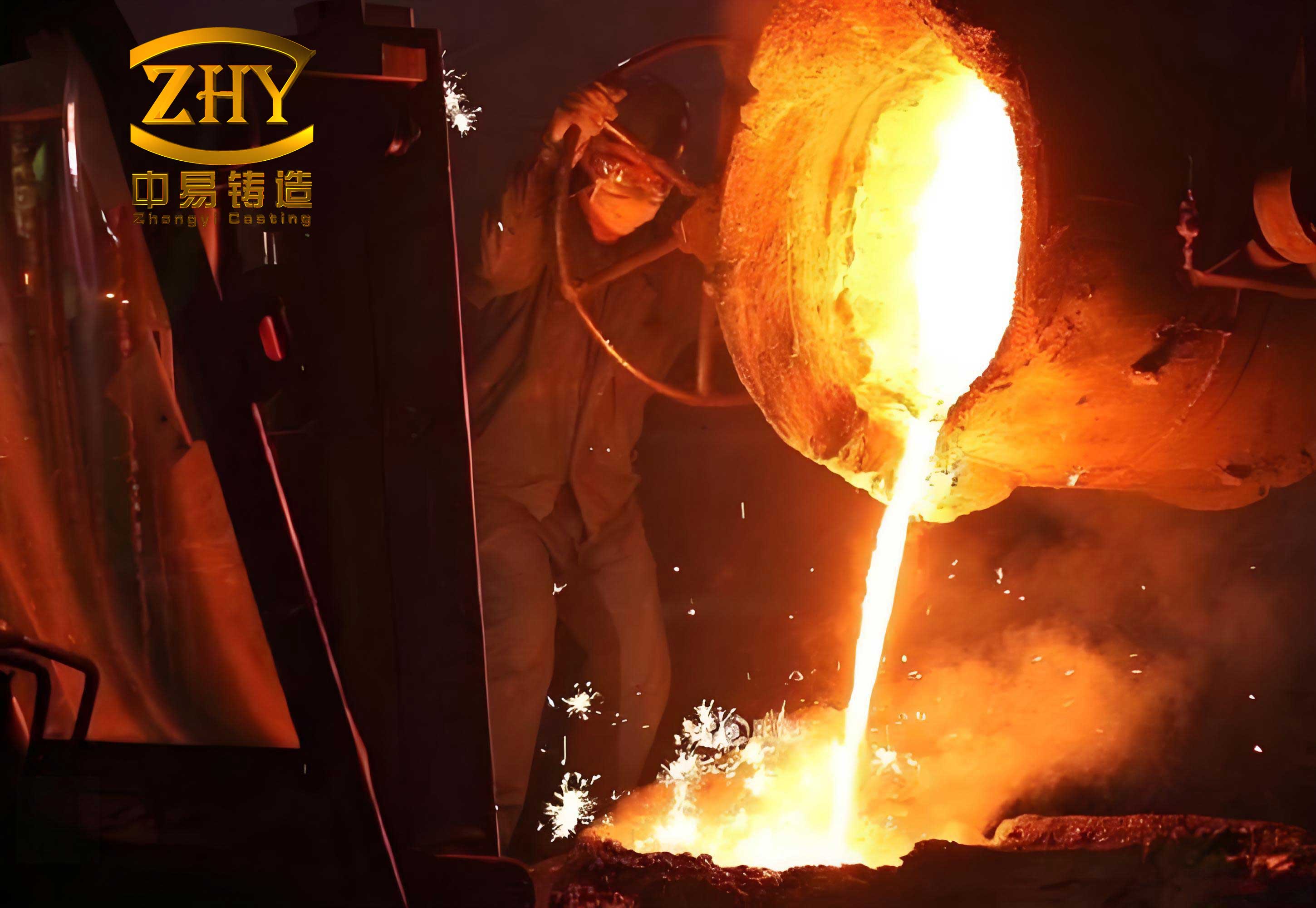
Melting was performed in an induction furnace. The charge materials, consisting of selected pig iron and structural steel scrap, were precisely weighed to meet the RuT300 specification. The molten iron was tapped at a temperature of 1520–1530 °C into a preheated ladle containing 40 kg per ton of inoculant. The pouring temperature was carefully controlled between 1450 °C and 1460 °C. This temperature window was optimized for lost foam castings to ensure complete degradation of the EPS pattern without causing excessive gas evolution or metal oxidation. Before pouring, the vacuum system was activated for ten minutes. The vacuum level in the flask was set to 0.60–0.70 MPa prior to pouring, and maintained between 0.40 and 0.60 MPa during the entire pouring operation, which lasted 10–15 seconds. The vacuum assists in drawing off the gaseous decomposition products of the foam through the permeable sand and coating layers. After pouring, the vacuum was maintained for roughly 12 minutes before the flask was allowed to cool. Shakeout was performed after a 12-hour holding period. The castings were then shot-blasted to remove any residual sand and coating, followed by removal of the gating system remnants. A mandatory heat treatment was then applied: the molds were heated to 900 °C, held for 2 hours, and water-quenched. This was followed by a tempering treatment at 360 °C for 4 hours, with furnace cooling.
The mechanical properties of the zinc ingot molds produced by the lost foam castings method were evaluated and compared to those produced by the conventional resin sand casting process. The results showed a significant improvement in all key parameters. The average Brinell hardness of the lost foam castings reached 174 HB, compared to 134 HB for the resin sand castings. The average ultimate tensile strength was 374 MPa for our process versus 192 MPa for the traditional method. The elongation also increased from 2.0% to 3.85%, indicating better ductility, which is critical for resisting thermal fatigue. The surface roughness was measured at an average of 3.2 μm Ra for the lost foam castings molds, compared to 6.3 μm Ra for the resin sand molds. This smoother surface directly contributes to easier demolding of the zinc ingots. The micromechanisms behind these improvements are linked to the unique cooling conditions and gas-mold interactions in the lost foam castings process.
| Property | Lost Foam Castings | Resin Sand Casting |
|---|---|---|
| Tensile Strength, $R_m$ (MPa) | 374 | 192 |
| Elongation, $A$ (%) | 3.85 | 2.00 |
| Brinell Hardness (HB) | 174 | 134 |
| Surface Roughness, $Ra$ (μm) | 3.2 | 6.3 |
A critical observation was made regarding the cast microstructure. The as-cast matrix of our lost foam castings exhibited a mixed structure of metal matrix with vermicular and some spheroidal graphite, achieving a vermicularity rating of 65 (per GB/T 26656-2023). The enhanced surface hardness of the lost foam castings was attributed partially to a surface carburization phenomenon. During the pouring operation, the EPS foam pattern thermally decomposes, generating carbonaceous gases. These gases partially react with the iron surface and deposit carbon, especially at the mold-metal interface where the coating is permeable. This localized carburization elevates the carbon content at the surface layer, increasing the hardness and providing superior wear resistance. The theoretical basis for this can be expressed by the relationship between the carbon potential gradient and the resulting hardness profile near the surface. The diffusion depth can be approximated by:
$$ x = \sqrt{D t} $$
Where $x$ is the diffusion depth, $D$ is the diffusion coefficient of carbon in austenite at the pouring temperature, and $t$ is the effective contact time of the carbon-rich gas. This mechanism is unique to the lost foam castings technique and is absent in the resin sand process, explaining the 30% increase in surface hardness.
The practical benefit of these improved properties was confirmed by feedback from end users. The lost foam castings zinc ingot molds exhibited an average service life of approximately eight months under normal production conditions, representing a 15% increase compared to the traditional resin sand castings. This is a direct consequence of the combination of higher hardness, better surface finish, and improved thermal shock resistance. Furthermore, the yield of the lost foam castings process was highly satisfactory. The first-pass acceptance rate exceeded 75%, meaning that more than three-quarters of the castings met all dimensional and surface quality specifications directly after shakeout and shot blasting. After minor grinding and finishing operations, the overall acceptance rate rose to above 80%. This high yield is a testament to the robustness of the process parameters we developed.
The correlation between process parameters and final quality can be further analyzed using thermodynamic principles. In lost foam castings, the pouring temperature must be high enough to gasify the foam completely before the metal solidifies. The heat required for gasification is given by:
$$ Q = m_{EPS} \cdot (C_p \cdot \Delta T + L_{vap}) $$
Where $m_{EPS}$ is the mass of the foam pattern, $C_p$ is the specific heat of EPS, $\Delta T$ is the temperature rise to the gasification point, and $L_{vap}$ is the latent heat of vaporization. This quantity of heat must be supplied by the superheat of the liquid iron. The temperature drop of the liquid metal during pouring can be estimated by balancing this heat demand. By controlling the pouring temperature within the narrow window of 1450–1460 °C, we ensured that sufficient thermal energy was available for complete foam elimination without causing the metal to solidify prematurely or become excessively superheated, which could lead to oxidation or excessive shrinkage.
The vacuum level during pouring also plays a vital role. A higher vacuum assists in removing the gaseous by-products, reducing backpressure and allowing faster filling. However, too high a vacuum can cause sand fluidization or collapse of the coating. The optimal range we established (0.40–0.60 MPa) balances these competing effects. The volumetric flow rate of gas removal can be described by Darcy’s law applied to gas flow through the porous sand bed:
$$ Q_g = \frac{k A}{\mu} \frac{\Delta P}{L} $$
Where $Q_g$ is the gas flow rate, $k$ is the permeability of the sand, $A$ is the surface area of the pattern, $\mu$ is the gas viscosity, $\Delta P$ is the pressure difference (vacuum level), and $L$ is the thickness of the sand layer. By maintaining a steady vacuum, we ensured that the decomposition gases were evacuated at a rate matching their generation, preventing pressure buildup that could cause surface defects like fold lines or blowholes.
The mechanical properties of the lost foam castings can be also related to the cooling rate, which is influenced by the sand thermal properties. The heat transfer coefficient at the sand-metal interface in lost foam castings is typically lower than that in resin sand molds due to the presence of the coating and the gas layer. This slower cooling can promote graphitization and reduce the formation of carbides, leading to improved machinability and toughness. The cooling rate $R$ can be approximated by:
$$ R = \frac{T_{pour} – T_{amb}}{t_{sol}} $$
Where $T_{pour}$ is the pouring temperature, $T_{amb}$ is the ambient temperature, and $t_{sol}$ is the solidification time. For our geometry, the solidification time was calculated using Chvorinov’s rule:
$$ t_{sol} = C \left( \frac{V}{A} \right)^2 $$
Where $V$ is the volume of the casting, $A$ is its surface area, and $C$ is a constant related to mold material and alloy properties. The combination of slower cooling and the surface carburization effect explains the superior combination of hardness and strength in our castings.
In summary, our comprehensive production practice confirmed the feasibility and advantages of using the lost foam castings process for manufacturing high-quality zinc ingot molds. Through systematic optimization of pattern making, coating application, embedding, pouring, and heat treatment, we achieved a surface roughness of 3.2 μm Ra, a Brinell hardness of 174 HB, and an average tensile strength of 374 MPa. The first-pass acceptance rate exceeded 75%, and the service life of the molds was extended by 15% compared to those made by resin sand casting. The unique metallurgical features of lost foam castings, including the carburization effect and controlled cooling, are the primary contributors to these improvements. This work provides a practical reference for foundries seeking to adopt lost foam castings for producing high-durability, high-precision mold components in the nonferrous metals industry.