
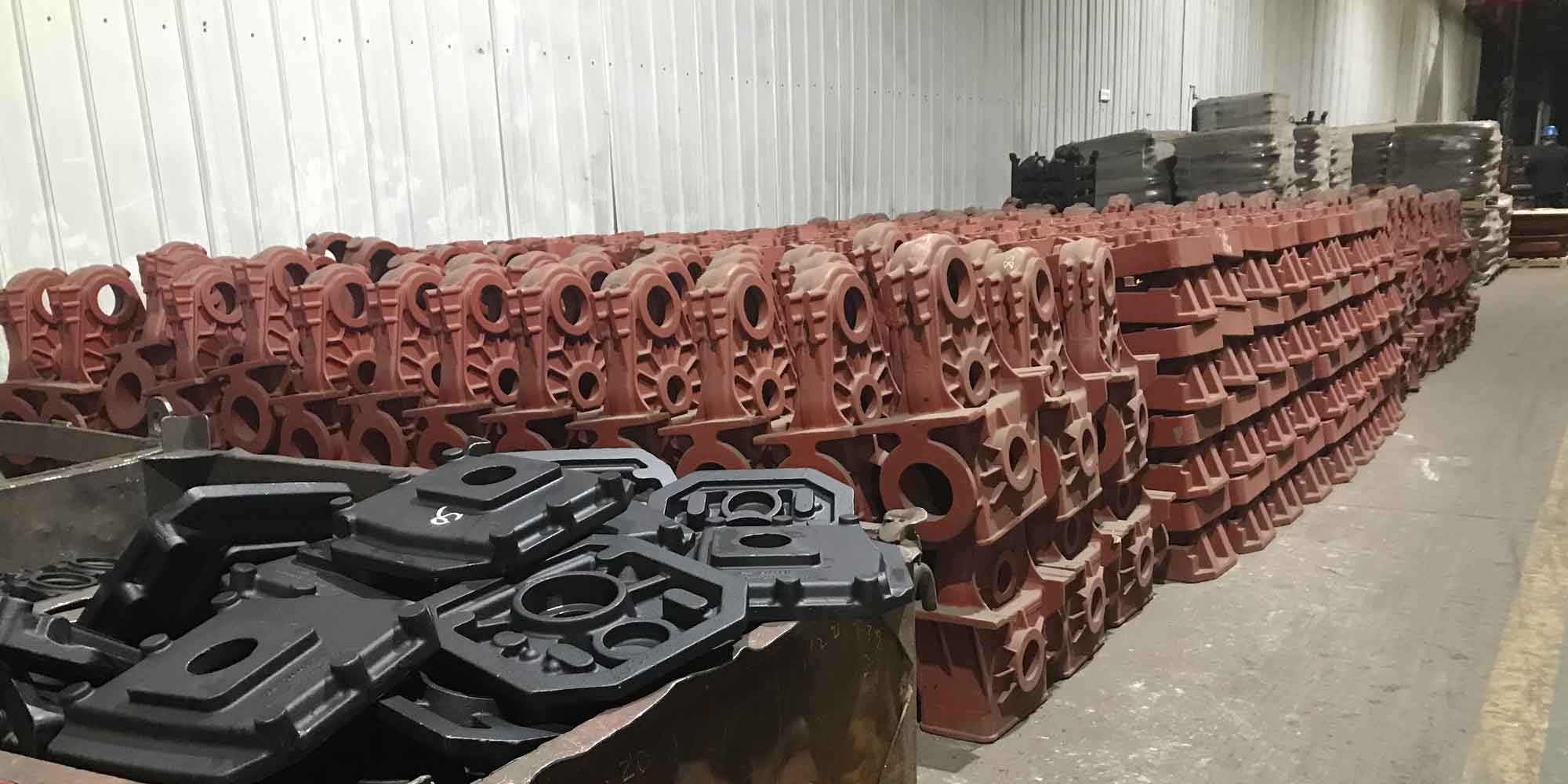
In my professional capacity, I had the opportunity to be deeply involved in the commissioning and operational launch of a new lost foam casting line dedicated to steel castings. This hands-on experience, spanning over half a year, involved navigating numerous technical challenges to stabilize production. While various issues persisted, the potential of the process remained clear. This article details my investigative approach to the prevalent problem of cracking in steel castings after heat treatment, focusing on the root causes, the experimental logic applied, and the final effective solutions developed through systematic trial and analysis.
Lost foam casting is a process where a foam pattern coated with refractory material is placed in a flask and surrounded by unbonded sand. Upon pouring, the molten metal replaces the vaporized pattern, forming the casting. Compared to conventional methods, it offers advantages like higher dimensional accuracy, design flexibility, and a cleaner working environment. However, like any process, it is prone to specific defects that can compromise the quality of steel castings. The key to ensuring quality lies in preventing these defects. For a new production line, a variety of quality issues are inevitable, often arising from a complex interplay of factors rather than a single variable. Therefore, a holistic analysis considering multiple process parameters is essential.
The initial analysis pinpointed three primary, interconnected contributors to quench and temper cracking in our steel castings: carbon pick-up (augmentation), slag inclusion, and gas porosity. The chemical composition, particularly carbon content, is fundamental to the mechanical properties of steel castings. In lost foam casting, the foam pattern, typically made of expandable polystyrene (EPS), decomposes upon contact with molten steel. Incomplete gasification can lead to carbonaceous residues being incorporated into the casting, increasing its carbon content.
This carbon pick-up can cause the final composition to deviate from specifications. Manifestations include elevated hardness, making machining difficult, and non-uniform carbon distribution between the surface and core, which induces internal stresses. These stresses, combined with the thermal shocks of heat treatment, readily initiate cracks. The prevailing industry opinion has often been skeptical about applying lost foam to steel, especially low-carbon grades. Our initial trials focused on ZG27SiMn steel castings (nominal C: 0.24-0.32%) as a test case. We compared the chemical analysis of the molten steel at tap with samples taken from the castings themselves to study the carbon pick-up规律. Concurrently, we modified processes to reduce slag and porosity, integrating this variable into a comprehensive analysis of cracking.
The strategy to combat carbon pick-up was twofold: control the source (reduce carbon ingress) and enhance evacuation (facilitate carbon removal).
Phase One Experiments: Source Control via Foam Density
The first experimental phase aimed to quantify the impact of the source term—the foam pattern itself. The condition involved a closed, blind riser system. Patterns were made from EPS boards with densities ranging from 8 to 18 kg/m³. Pouring vacuum was set at 50 kPa, and tap carbon was controlled at the lower specification limit (0.24-0.27%). Carbon content was analyzed at tap and at multiple points from the surface to the core of the finished steel castings.
Batch 1: Foam density: 18 kg/m³. Tap carbon for three heats (A, B, C) was 0.24%, 0.25%, and 0.22% respectively. Core-to-surface spectroscopy data (points a-e, 5-10mm apart) is summarized below:
| Heat | Point a (Core) %C | Point b %C | Point c %C | Point d %C | Point e (Surface) %C |
|---|---|---|---|---|---|
| A | 0.31 | 0.35 | 0.39 | 0.42 | 0.45 |
| B | 0.33 | 0.36 | 0.40 | 0.44 | 0.48 |
| C | 0.29 | 0.32 | 0.36 | 0.40 | 0.43 |
Conclusion: Severe carbon pick-up occurred, rendering the steel castings’ composition entirely out of specification. A clear gradient existed from core to surface, with the most severe augmentation at the surface. This indicated that the metal at the casting surface solidified first under vacuum, trapping partially pyrolyzed foam residues. The presence of lustrous carbon defects on the surface further confirmed this.
Batch 2: Foam density: 14 kg/m³. Tap carbon: 0.23%, 0.24%, 0.22%.
| Heat | Point a (Core) %C | Point b %C | Point c %C | Point d %C | Point e (Surface) %C |
|---|---|---|---|---|---|
| A | 0.28 | 0.30 | 0.33 | 0.36 | 0.38 |
| B | 0.29 | 0.31 | 0.34 | 0.37 | 0.40 |
| C | 0.27 | 0.29 | 0.31 | 0.34 | 0.36 |
Conclusion: Carbon pick-up remained significant, still above specification limits, with surface lustrous carbon persisting. However, compared to Batch 1, reducing foam density showed a measurable, though insufficient, reduction in carbon augmentation for these steel castings.
Batch 3: Foam density: 8-10 kg/m³. Tap carbon: 0.22%, 0.24%, 0.23%.
| Heat | Point a (Core) %C | Point b %C | Point c %C | Point d %C | Point e (Surface) %C |
|---|---|---|---|---|---|
| A | 0.25 | 0.26 | 0.27 | 0.28 | 0.30 |
| B | 0.27 | 0.28 | 0.29 | 0.30 | 0.32 |
| C | 0.26 | 0.27 | 0.28 | 0.29 | 0.31 |
Conclusion: The overall carbon content met the ZG27SiMn specification. Surface carbon approached the upper limit, while the core composition was good. The gradient, though reduced, was still noticeable, indicating compositional non-uniformity within the steel castings.
Analysis of the three batches confirmed that reducing pattern density effectively diminishes the magnitude of carbon pick-up. However, extremely low-density foam is impractical due to poor structural integrity, difficulty in handling and coating, and the risk of coating penetration leading to internal defects in the final steel castings. Quench and temper tests on castings from all batches revealed cracking, most severe in Batches 1 and 2. Fractography indicated two failure modes: surface network cracks from carbon-induced stress heterogeneity, and large cracks with honeycombed interiors from slag/gas defects. The blind riser system exacerbated the problem by hindering gas evacuation and slag flotation.
Phase Two Experiments: Enhanced Carbon and Slag Evacuation
Based on Phase One, the next strategy focused on accelerating the removal of carbonaceous products and minimizing slag entrapment. Process refinements included thorough slag removal during tapping and ladle treatment, using refractory fiber pads on the ladle for slag collection and insulation, and manual slag skimming during pouring.
Condition: Foam density 14-16 kg/m³, open top riser system (testing both full-mold and hollow shell casting).
Batch 4: Open riser, full-mold (conventional lost foam) casting. Tap carbon at lower limit: 0.23%, 0.23%, 0.25%.
| Heat | Point a (Core) %C | Point b %C | Point c %C | Point d %C | Point e (Surface) %C |
|---|---|---|---|---|---|
| A | 0.24 | 0.25 | 0.25 | 0.26 | 0.27 |
| B | 0.24 | 0.25 | 0.25 | 0.26 | 0.27 |
| C | 0.26 | 0.27 | 0.27 | 0.28 | 0.29 |
Conclusion: The core-to-surface carbon gradient persisted but was significantly flattened. Maximum carbon increase was around 0.04%. All samples from these steel castings were within specification.
Batch 5: Open riser, hollow shell casting. Tap carbon aimed at mid-range specification: 0.28%, 0.27%, 0.25%.
| Heat | Point a (Core) %C | Point b %C | Point c %C | Point d %C | Point e (Surface) %C |
|---|---|---|---|---|---|
| A | 0.28 | 0.28 | 0.28 | 0.28 | 0.29 |
| B | 0.27 | 0.27 | 0.27 | 0.28 | 0.28 |
| C | 0.25 | 0.25 | 0.26 | 0.26 | 0.26 |
Conclusion: Carbon distribution was nearly uniform. Minor fluctuations were attributable to local variations in foam burnout completeness. The carbon pick-up issue was effectively resolved for these steel castings, with all samples compliant.
Steel castings from Phase Two exhibited good machinability post-annealing and no cracking after quench and tempering. Destructive testing revealed no internal defects. The hollow shell casting method with open risers emerged as the optimal solution.
Theoretical Modeling and Formula Integration
To generalize the findings, one can model the carbon pick-up process. The carbon concentration $C(x,t)$ in the solidifying steel casting can be described by a diffusion equation with a source term representing the pyrolysis products at the advancing metal-foam interface. A simplified representation for the final carbon content $C_f$ at a point might be:
$$ C_f = C_0 + \int_{0}^{t_c} S(\tau) \cdot D(T) \cdot f(\tau) \, d\tau $$
Where:
$C_0$ = Initial carbon content of the molten steel.
$t_c$ = Local solidification time.
$S(\tau)$ = Source strength of carbon from foam decomposition (dependent on foam density $\rho_f$). Empirically, $S(\tau) \propto \rho_f^n$ where $n > 0$.
$D(T)$ = Diffusion coefficient of carbon in liquid/solid steel, temperature-dependent.
$f(\tau)$ = A function accounting for the geometry and evacuation efficiency (e.g., riser type, vacuum). For an open riser/hollow shell, $f(\tau)$ is much smaller than for a blind riser.
The stress $\sigma$ induced by non-uniform carbon distribution leading to cracking during heat treatment can be related to the carbon gradient $\frac{dC}{dx}$ and thermal stress $\sigma_{th}$:
$$ \sigma_{total} \approx E \cdot \alpha \cdot \Delta T + E \cdot \beta \cdot \frac{dC}{dx} \cdot \Delta T_q $$
$$ \sigma_{total} > \sigma_{yield}(C_f) \Rightarrow \text{Crack Initiation} $$
Where $E$ is Young’s modulus, $\alpha$ the thermal expansion coefficient, $\Delta T$ the temperature drop, $\beta$ a coefficient relating carbon content to lattice strain, and $\Delta T_q$ the quench severity. This underscores why uniform carbon content is critical for steel castings undergoing heat treatment.
Comprehensive Discussion and Process Optimization
The journey to reliable steel castings via lost foam process highlighted that cracking stems from a synergy of composition (carbon) and integrity (slag/gas) issues. Comparing all five batches of steel castings leads to definitive conclusions. The foam pattern is the primary carbon source. Mitigation requires source control (using optimally dense foam) and pathway optimization for carbon removal (using open riser designs). Hollow shell casting proved to be the most effective overall solution. By combusting the foam pattern before pouring, the carbon ingress is virtually eliminated, solving the composition-based cracking in steel castings. Furthermore, open risers facilitate gas escape and slag flotation more effectively than blind risers, reducing integrity-based defects in steel castings.
However, hollow shell casting presents specific challenges that require careful attention for the production of high-quality steel castings:
- Coating Requirements: The coating must possess high strength and integrity to form a self-supporting shell after foam removal. Cracking or penetration of the coating leads to burn-on/fusion defects. The coating thickness must be optimized—thick enough for strength but not so thick as to impede gas permeability. The relationship can be conceptualized by a coating integrity index $I_c$:
$$ I_c = \frac{S_c \cdot t_c}{P_c} $$
where $S_c$ is coating strength, $t_c$ is thickness, and $P_c$ is permeability. An optimal range for $I_c$ must be determined empirically for different steel casting geometries. - Sand Support and Vacuum Control: After foam removal, the ceramic shell relies on sand compaction and vacuum pressure to resist metallostatic pressure. The necessary vacuum pressure $P_v$ to prevent mold collapse is related to the casting height $h$, metal density $\rho_m$, and sand packing factor $\phi$:
$$ P_v \ge \rho_m \cdot g \cdot h \cdot (1 – \phi) $$
Adequate vacuum equipment and precise control of pressure-hold time after pouring are critical to prevent distortion or poor feeding in steel castings. - Process Synchronization: Precise coordination between foam burnout, mold preparation, and pouring teams is vital to prevent shell degradation or collapse.
- Riser Efficiency and Yield: Open risers, while excellent for evacuation, have limited thermal efficiency. Although we used top-pouring with exothermic riser covers to aid feeding, riser sizes remained relatively large, impacting the yield of finished steel castings. The feeding efficiency $\eta_f$ can be approximated for a top riser:
$$ \eta_f \propto \frac{V_{riser}}{V_{casting}} \cdot \frac{\Delta T_{superheat}}{T_{solidus}} $$
Optimizing this ratio for complex steel castings remains a focus. - Slag Management: A comprehensive slag control regimen—from furnace practice to ladle treatment and pouring—is indispensable to prevent inclusions that act as crack initiators in stressed steel castings.
Summary and Future Outlook for Steel Castings
The experimental work conclusively demonstrated that the crack defects in our lost foam steel castings were primarily driven by carbon pick-up and secondarily by slag/gas entrapment. The implementation of hollow shell casting with open risers, coupled with optimized foam density and rigorous slag control, effectively eliminated post-heat-treatment cracking. This makes the lost foam process viable for producing quality steel castings, including low-carbon grades.
The future work for advancing this technology for steel castings involves several key areas: developing advanced coatings with tailored strength-permeability ratios, creating dynamic vacuum and pressure-hold protocols based on real-time solidification modeling for different steel casting geometries, and designing more efficient riser systems to improve yield. Furthermore, extending this methodology to other alloy grades of steel castings and more complex geometries will be the next frontier. The journey reinforced that solving defects in steel castings requires a systems-thinking approach, constantly balancing and optimizing multiple interactive variables in the lost foam process chain.