
The pursuit of superior wear resistance in demanding industrial applications, particularly within the mining and mineral processing sectors, has long been dominated by the use of austenitic high manganese steel castings. The classic Hadfield steel, with its renowned work-hardening capability under heavy impact, is a cornerstone material. However, its application is not universally optimal, especially in scenarios characterized by non-violent or moderately abrasive conditions. This article details a comprehensive research and development effort into a modified high manganese steel chemistry and its associated processing techniques for the production of jaw plates. The primary objective was to enhance the cost-performance ratio and specific wear resistance for non-severe impact service, moving beyond the traditional paradigm of high manganese steel casting applications.
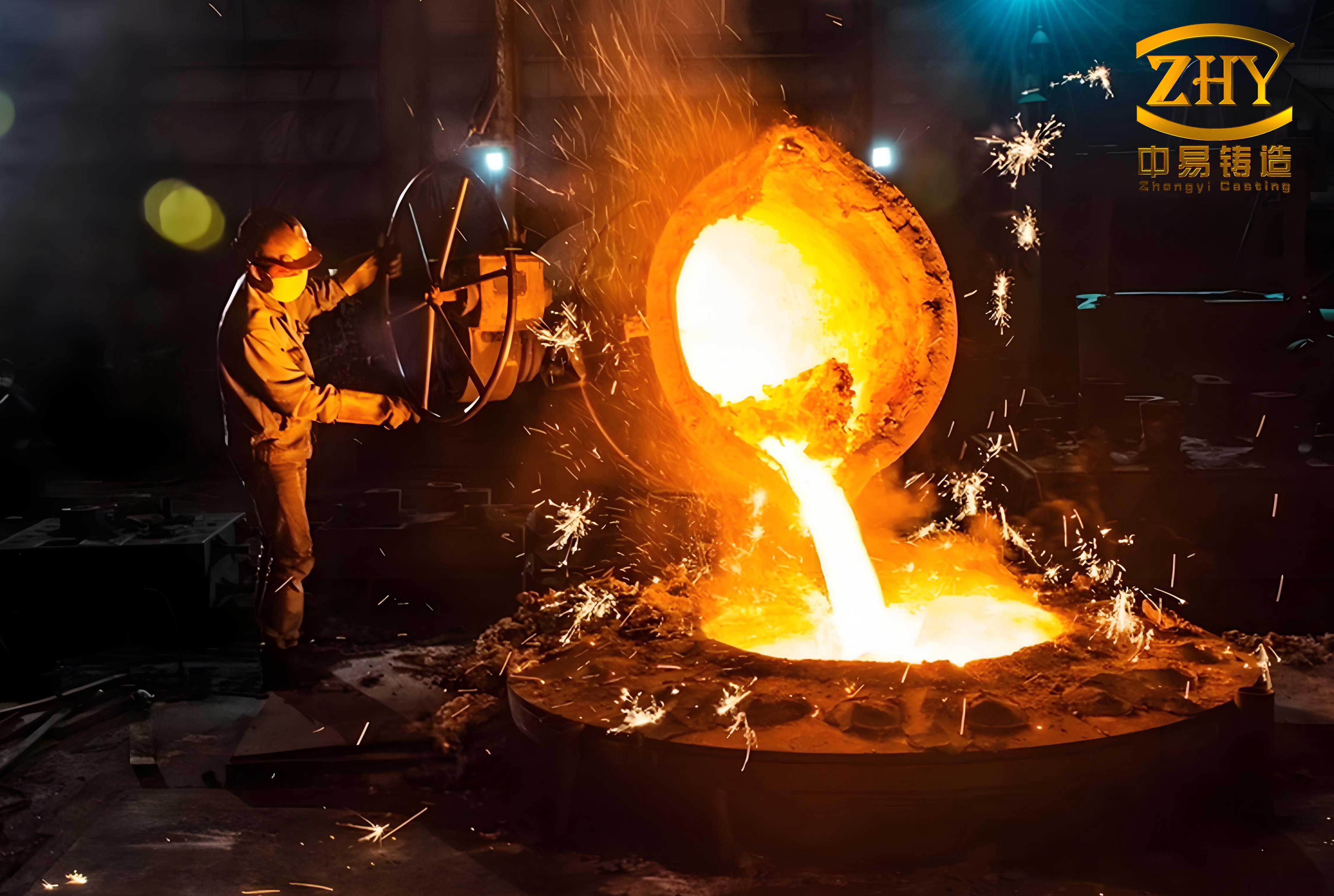
The foundational principle of conventional high manganese steel casting relies on achieving a fully austenitic microstructure after solution heat treatment (water quenching). This single-phase structure exhibits exceptional toughness and the unique ability to work-harden from approximately 200 HB to over 500 HB under intense impact, forming a hardened surface layer while retaining a ductile core. The standard composition typically centers around 1.2% C and 13% Mn. While effective, this high manganese content significantly contributes to material cost. Furthermore, in less severe operating environments, the intense work-hardening mechanism is not fully activated, leaving the material’s inherent abrasion resistance as the primary defense against wear. This insight forms the basis for chemical modification—strategically adjusting the carbon and manganese balance to tailor the properties for specific duty cycles, a critical evolution in high manganese steel casting technology.
The cornerstone of this development was a deliberate and systematic adjustment of the chemical composition. The goal was to reduce reliance on expensive manganese while exploring the potential of increased carbon to enhance as-cast and post-heat treatment hardness. After numerous iterative trials and microstructural analyses, an optimized chemistry was established. The comparison between the standard and modified high manganese steel casting compositions is detailed in Table 1.
| Material Type | C | Mn | Si | P | S | Cr | Other |
|---|---|---|---|---|---|---|---|
| Standard High Mn Steel | 1.10 – 1.25 | 12.0 – 13.5 | 0.30 – 0.60 | < 0.07 | < 0.04 | – | – |
| Modified High Mn Steel | 1.40 – 1.55 | 9.5 – 10.5 | 0.30 – 0.60 | < 0.05 | < 0.04 | 1.5 – 2.0 | Micro-alloys |
The modification is clear: a substantial increase in carbon content and a deliberate reduction in manganese, supplemented with chromium for secondary hardening and carbide stability. This shift in chemistry fundamentally alters the phase equilibrium. The higher carbon content increases the driving force for carbide precipitation during solidification, described by the solubility product formalism. The volume fraction of primary and eutectic carbides in the as-cast state can be approximated by considering the deviation from the eutectic composition, a key consideration in this modified high manganese steel casting process. The relationship governing the total carbide volume fraction \( V_c \) is influenced by the carbon content:
$$ V_c \propto (C_{actual} – C_{solubility}) $$
where \( C_{actual} \) is the actual carbon content and \( C_{solubility} \) is the maximum carbon soluble in austenite at the eutectic temperature for a given manganese level. Lowering manganese reduces austenite stability, further promoting carbide formation. Therefore, the subsequent heat treatment becomes even more critical to dissolve these abundant carbides back into solution.
Casting and Solidification Process for Modified High Manganese Steel
The successful production of high-integrity high manganese steel casting components hinges on meticulous foundry practice. For the modified alloy, particular attention must be paid to fluidity, feeding, and minimizing thermal stresses due to its specific solidification characteristics.
1. Pattern and Molding: The jaw plate patterns were designed with adequate machining allowances. Molds were created using dry sand molds to ensure high dimensional stability and strength, capable of withstanding the metallostatic pressure of the higher-density steel. The mold cavity surfaces were coated with a magnesia-based refractory wash to prevent metal-mold reaction and improve surface finish, a standard yet vital step in quality high manganese steel casting.
2. Gating and Risering System: A carefully designed gating system was employed to achieve smooth, turbulent-free filling. A key innovation was the integration of high-temperature ceramic foam filters within the runner system. These filters serve a triple purpose: skimming slag, filtering out non-metallic inclusions, and promoting laminar flow into the mold cavity, thereby significantly enhancing the cleanliness and soundness of the final high manganese steel casting. The risering strategy utilized side risers or padding on thicker sections to ensure directional solidification towards the feeder, preventing shrinkage porosity in the critical working areas of the jaw plate.
3. Melting and Pouring Practice: Melting was conducted in a medium-frequency induction furnace with a nominal capacity suitable for the batch size. An oxidizing melting practice was initially used to remove impurities. Following slag removal and adjustment to the target chemistry, final deoxidation was performed using aluminum at approximately 1580°C to minimize the formation of gas porosity. After tapping, the ladle was held for a short period (2-5 minutes) to allow inclusions to float out. The pouring temperature was tightly controlled between 1420°C and 1450°C. A lower superheat within this range is beneficial as it reduces total heat content, minimizes grain growth, and promotes a finer as-cast microstructure, all crucial for the subsequent performance of the high manganese steel casting. The critical temperature parameters for the process can be summarized in Table 2.
| Process Stage | Temperature Range (°C) | Objective |
|---|---|---|
| Final Deoxidation (Al-addition) | ~1580 | Gas removal, oxide reduction |
| Ladle Holding | 1520 – 1550 | Inclusion flotation |
| Optimal Pouring Temperature | 1420 – 1450 | Balance fluidity & grain refinement |
| Liquidus (Approx.) | ~1350 | Start of solidification |
The solidification sequence for the modified high manganese steel casting begins with the precipitation of primary austenite dendrites, followed by the formation of an austenite-carbide eutectic in the interdendritic regions. The increased carbon and chromium content result in a more pronounced carbide network compared to the standard grade. The morphology and continuity of this network are critical, as they must be fully dissolved during heat treatment to avoid brittle failure in service.
Heat Treatment: The Quintessential Step in High Manganese Steel Processing
Heat treatment is the transformative process that confers the desired properties upon a high manganese steel casting. For standard Hadfield steel, the goal is to dissolve the carbides formed during solidification to obtain a homogeneous, single-phase austenitic structure. The standard water-quenching (water toughening) process involves heating to 1050-1100°C, holding for sufficient time (typically 1-2 hours per inch of section thickness) to achieve full carbide dissolution, followed by rapid quenching in water. This rapid cooling prevents the re-precipitation of carbides, freezing the carbon in super-saturated solid solution within the austenite.
For the modified high manganese steel casting, this process requires significant adaptation. The higher carbon content increases the amount and stability of carbides (primarily (Fe,Mn,Cr)3C). Their complete dissolution necessitates a higher solution temperature and/or longer holding times to increase carbon diffusion. The kinetics of carbide dissolution can be described by an Arrhenius-type relationship, where the dissolution rate \( k \) is:
$$ k = A \exp\left(-\frac{Q}{RT}\right) $$
where \( A \) is a pre-exponential factor, \( Q \) is the activation energy for carbon diffusion in austenite (which is influenced by alloying elements like Cr), \( R \) is the gas constant, and \( T \) is the absolute temperature. Raising the temperature \( T \) has an exponential effect on accelerating dissolution. Furthermore, the driving force for dissolution, related to the super-saturation, is higher. However, excessive temperatures risk austenite grain growth and surface decarburization. Therefore, a balanced approach is required. For the modified alloy, the established heat treatment cycle is as follows:
- Heating: A controlled heating rate (80-150°C/hr) through the 600-700°C range is critical to avoid thermal stresses cracking the brittle as-cast casting.
- Solutionizing: Heat to 1080-1120°C. The upper end of this range is preferred for thicker sections or higher carbon contents within the specification. Hold at temperature for a duration calculated as 1.5 to 2 hours per inch of maximum section thickness. The extended time compensates for the greater volume of carbides.
- Quenching: Rapid transfer to a agitated water or brine (5-10% brine) quench tank. Brine is preferred for its higher quenching intensity, ensuring cooling rates high enough to suppress carbide re-precipitation during cooling. The critical cooling rate \( \dot{T}_{crit} \) must be exceeded from ~800°C down to ~300°C.
- Tempering (Optional but Recommended): A low-temperature stress relief at 200-250°C for 2-4 hours can be performed to relieve quenching stresses without compromising the austenitic structure or causing embrittlement.
To prevent severe surface decarburization during the prolonged high-temperature soak, which would deplete carbon from the critical surface layer and impair wear resistance, a protective coating based on carbonaceous materials (e.g., graphite-based paints) is applied to the high manganese steel casting prior to furnace loading. The comparative heat treatment cycles are illustrated conceptually in the Table 3 below.
| Parameter | Standard High Mn Steel | Modified High Mn Steel |
|---|---|---|
| Solution Temperature | 1050 – 1070°C | 1080 – 1120°C |
| Soak Time (per inch) | 1.0 – 1.5 hours | 1.5 – 2.0 hours |
| Quenching Medium | Water | Water or Brine |
| Key Challenge | Achieving full solution | Achieving full solution of greater carbide volume; preventing decarb. |
The success of the heat treatment is verified by microstructure examination. A successful water-quenched high manganese steel casting should exhibit a microstructure of equiaxed austenite grains with minimal or no intra-granular or grain boundary carbides. Micro-hardness traverses from surface to core should show uniformity, typically in the range of 200-220 HB for the modified grade in the as-quenched state, slightly higher than the standard grade due to solid solution strengthening from the higher carbon and chromium.
Wear Mechanism and Performance in Non-Severe Impact Conditions
The operational premise for the modified high manganese steel casting is its deployment in environments of high abrasion but low-to-moderate impact, such as in certain jaw crushers, cone crusher liners for finer crushing stages, and pulverizer hammers. In these conditions, the massive work-hardening characteristic of standard Hadfield steel is not fully utilized because the impact energy is insufficient to drive the dislocation multiplication and twinning necessary to rapidly harden the surface to >500 HB.
Instead, wear occurs primarily through micro-cutting, micro-plowing, and fatigue spalling mechanisms by hard abrasive particles. In this regime, the initial hardness and microstructural homogeneity of the material play a more dominant role. The modified high manganese steel casting offers advantages here:
- Higher Initial Hardness: The super-saturated austenite in the modified alloy, due to its higher carbon content, possesses greater solid solution strength and a higher initial hardness (200-220 HB vs. 180-200 HB for standard). This provides immediate resistance to abrasive penetration.
- Controlled Work-Hardening: While the capacity for extreme work-hardening is somewhat reduced due to lower Mn (which stabilizes austenite), the material still work-hardens effectively under moderate stress. The rate of hardening \( dH/d\epsilon \) can be modeled and is sufficient for the intended service.
- Secondary Carbide Precipitation (Potential): In service, the interaction with abrasive particles and moderate stresses can induce strain-induced precipitation of fine, secondary carbides within the austenite matrix. These carbides, pinned by chromium, act as potent strengtheners, further increasing flow stress and wear resistance. This is a form of “in-service tempering” beneficial for wear.
The wear volume \( W_v \) under abrasive conditions can be related to material properties via models such as the Archard’s modified wear equation, where wear resistance is inversely proportional to hardness \( H \):
$$ W_v \propto \frac{K \cdot L}{H} $$
where \( K \) is a wear coefficient and \( L \) is the load. A higher initial \( H \) directly reduces \( W_v \). Additionally, the presence of finely dispersed secondary phases can increase the strain-hardening exponent \( n \), which also improves resistance to deformation and material removal.
Industrial Field Trial and Comparative Analysis
To validate the laboratory and theoretical findings, a controlled industrial field trial was conducted. Pairs of jaw plates—one made from standard high manganese steel casting and the other from the modified high manganese steel casting—were installed in the same jaw crusher operating under consistent, documented conditions of ore type, feed size, and throughput. The crusher was processing gold-bearing ore, a typically abrasive material.
The trial ran for a continuous period, processing a total mass of 50,000 tonnes of ore. Upon completion, the jaw plates were removed, cleaned, and weighed. The mass loss was used as the direct metric for wear performance. The results are presented in Table 4.
| Material | Initial Mass per Plate (kg) | Final Mass per Plate (kg) | Mass Loss (kg) | Relative Wear Resistance (Std. = 1.0) |
|---|---|---|---|---|
| Standard High Mn Steel | 245.6 | 215.8 | 29.8 | 1.00 (Baseline) |
| Modified High Mn Steel | 248.1 | 222.7 | 25.4 | 1.17 |
The data unequivocally demonstrates the superior performance of the modified high manganese steel casting under these specific operating conditions. The modified plates exhibited approximately 17% less mass loss, translating directly to a longer service life and reduced machine downtime for component replacement.
A cost-benefit analysis further solidifies the argument for the modified alloy. While the exact cost savings from reduced manganese content can be variable depending on global raw material prices, the trend is consistently favorable. More significantly, the extended service life reduces the total cost of ownership. The improved performance-to-cost ratio \( \Psi \) can be expressed as:
$$ \Psi = \frac{\text{Service Life}}{\text{Material Cost per Unit}} $$
Even if the material cost per kilogram of the modified high manganese steel casting is slightly lower or similar, its significantly extended service life (inversely proportional to wear rate) results in a substantially higher \( \Psi \) value, making it a more economical choice for non-severe impact applications.
Conclusion and Future Perspectives
The development and application of a modified high manganese steel chemistry for jaw plates represent a successful case of material engineering tailored to specific service conditions. By strategically increasing carbon and decreasing manganese, and complementing with chromium, a new grade of high manganese steel casting was developed. This required concomitant adjustments in foundry practice, most notably the implementation of advanced filtration, and a critically redesigned heat treatment cycle with higher solutionizing temperatures/times and vigorous quenching.
The industrial trial confirmed the theoretical advantages: in non-violent impact, highly abrasive environments, the modified high manganese steel casting delivers superior wear resistance compared to its traditional counterpart. This performance gain, coupled with a favorable shift in the cost structure due to lower manganese usage, presents a compelling value proposition.
The principles established here have broader implications. They open the door for further alloy design within the high manganese steel casting family—using micro-alloying with elements like V, Ti, or Nb to control carbide size and distribution, or exploring intercritical heat treatments to introduce controlled amounts of hard secondary phases. The future of high manganese steel casting lies in this nuanced, application-specific design philosophy, moving beyond the one-size-fits-all approach to create engineered materials that deliver optimal performance and economy for precisely defined operational challenges.