
In railway systems, high manganese steel casting frogs are critical components due to their high strength and wear resistance. However, these castings often develop cracks after installation, compromising safety and increasing maintenance costs. As a manufacturer, we have investigated this issue extensively. This article presents a first-person analysis of crack causes in high manganese steel casting frogs, with solutions based on process improvements. We emphasize the importance of optimizing high manganese steel casting processes to enhance durability.
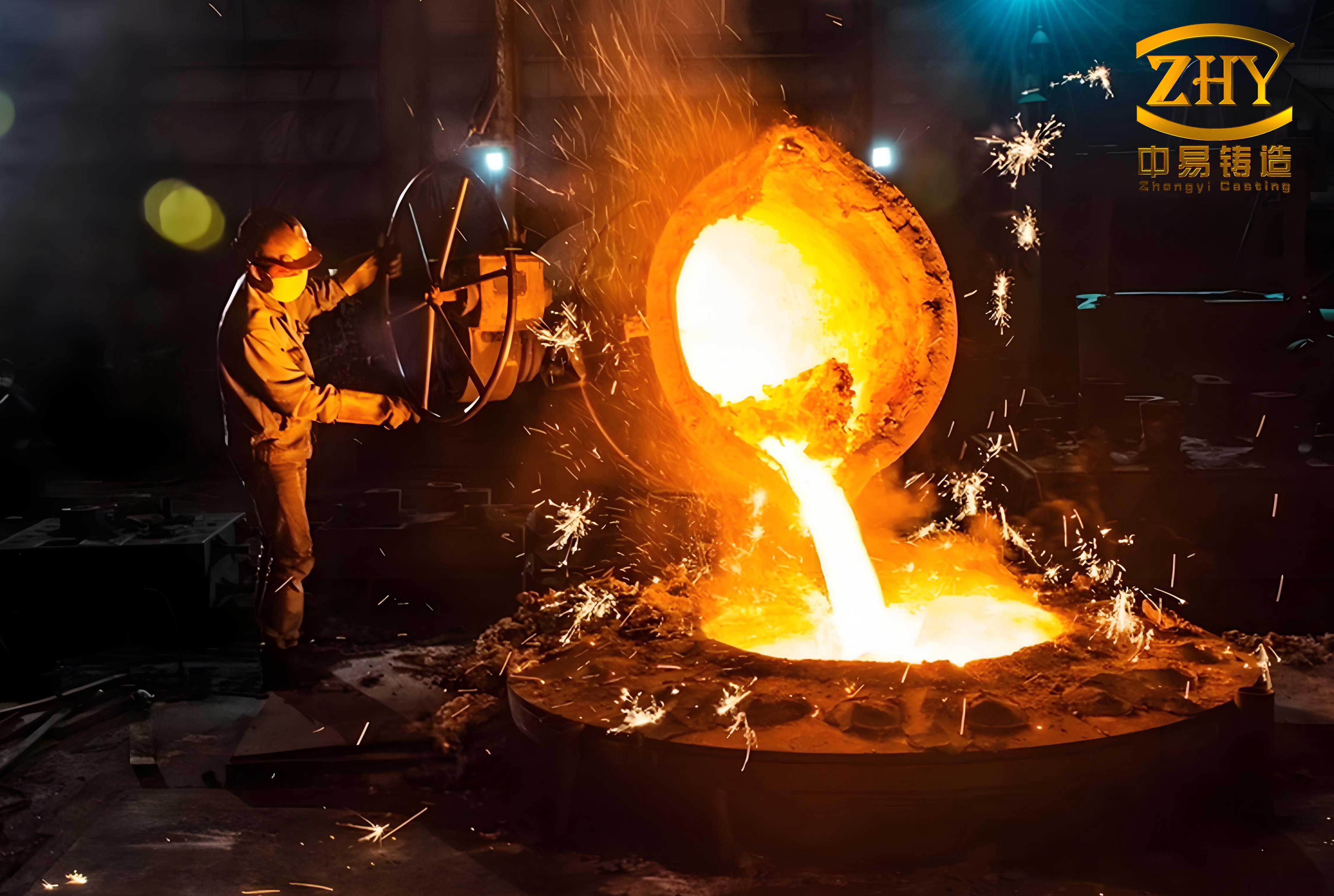
The performance of high manganese steel casting frogs is vital for railway infrastructure. Despite their advantages, cracks can occur due to inherent casting defects. We conducted statistical analyses and theoretical studies to identify root causes. This work focuses on high manganese steel casting techniques to mitigate crack formation. Below, we detail our findings and improvements.
Statistical Overview of Crack Occurrence
We tracked crack incidents in high manganese steel casting frogs over a year. The data highlight common failure points, as summarized in Table 1. Cracks often appear at specific locations, such as the heel/toe ends and throat areas, reducing service life. This underscores the need for better high manganese steel casting quality control.
| Serial No. | Frog Model | Crack Location | Quantity (units) | Service Life (months) |
|---|---|---|---|---|
| 1 | P60-12 | Heel/toe end at 200 mm | 2 | 4 |
| 2 | P60-12 | Throat at 50 mm (horizontal crack at theoretical tip) | 6 | 8 |
| 3 | P60-12 | Ear plate cracks | 3 | 5 |
| 4 | P60-12 | Rail head transverse cracks | 4 | 3 |
Further analysis involved examining material properties. Table 2 shows low-density test results for high manganese steel casting samples, indicating porosity levels. Porosity can weaken sections, leading to cracks in high manganese steel casting frogs.
| Heat No. | Material | General Porosity (grade) |
|---|---|---|
| 1435 | ZGMn13-2 | 2 |
| 1436 | ZGMn13-2 | 2 |
Impurity content in high manganese steel casting is another critical factor. Table 3 lists inclusion levels, which affect crack initiation. High inclusion concentrations, such as SiO₂ and MnO, can create stress concentrators in high manganese steel casting components.
| Heat No. | Material | SiO₂ (wt.%) | MnO₂ (wt.%) | Al₂O₃ (wt.%) | CaO (wt.%) | MgO (wt.%) | FeO (wt.%) |
|---|---|---|---|---|---|---|---|
| 1478 | ZGMn13-2 | 0.0012 | 0.0160 | 0.0004 | 0.0000 | 0.0000 | 0.0004 |
| 1489 | ZGMn13-2 | 0.0046 | 0.0150 | 0.0003 | 0.0000 | 0.0000 | 0.0006 |
| 1496 | ZGMn13-2 | 0.0026 | 0.0137 | 0.0006 | 0.0006 | 0.0000 | 0.0003 |
| 1503 | ZGMn13-2 | 0.0086 | 0.0100 | 0.0007 | 0.0000 | 0.0000 | 0.0001 |
Gas content in high manganese steel casting also influences crack formation. Table 4 presents oxygen and nitrogen levels, which can cause porosity and brittleness. Reducing gas content is essential for improving high manganese steel casting integrity.
| Heat No. | Material | O (ppm) | N (ppm) | H (ml/100g) |
|---|---|---|---|---|
| 1478 | ZGMn13-2 | 40 | 60 | 2.5 |
| 1489 | ZGMn13-2 | 42 | 73 | 2.6 |
| 1496 | ZGMn13-2 | 67 | 68 | 2.5 |
| 1503 | ZGMn13-2 | 66 | 90 | 2.6 |
Theoretical Analysis of Crack Mechanisms
High manganese steel casting frogs are elongated structures with complex geometries. Cracks primarily arise from weak sections caused by casting defects like shrinkage cavities, pores, inclusions, and carbide precipitation. We analyze each crack type using principles of high manganese steel casting metallurgy.
The general crack formation can be modeled using stress intensity factors. For a crack in high manganese steel casting, the stress intensity \( K_I \) is given by:
$$ K_I = \sigma \sqrt{\pi a} $$
where \( \sigma \) is applied stress and \( a \) is crack length. Defects in high manganese steel casting act as initial cracks, reducing fatigue life. The fatigue life \( N_f \) can be estimated by:
$$ N_f = \frac{C}{\Delta K^m} $$
with \( \Delta K \) as stress intensity range, and \( C \), \( m \) as material constants for high manganese steel casting.
Heel/Toe End Cracks at 200 mm
These cracks are common due to structural transitions. In high manganese steel casting, shrinkage cavities form at these points. From dissections, cavities of 8–10 mm were found. The solidification time \( t_s \) for a section of thickness \( d \) in high manganese steel casting can be approximated by:
$$ t_s = \frac{d^2}{4k} $$
where \( k \) is solidification constant. For thick sections, longer solidification leads to shrinkage. To address this, we implemented risers. The riser volume \( V_r \) for high manganese steel casting is calculated as:
$$ V_r = V_c \cdot \beta $$
where \( V_c \) is casting volume and \( \beta \) is feeding efficiency factor, typically 0.2 for high manganese steel casting. We used insulating risers with dimensions 180 mm × 150 mm, supplemented with chills to promote directional solidification.
Throat Cracks at 50 mm (Theoretical Tip Horizontal Cracks)
This area suffers from high impact loads. In high manganese steel casting, thick sections here are prone to shrinkage and gas porosity. The mold sand, composed of carbonates, releases gases that infiltrate the casting. The gas pressure \( P_g \) during high manganese steel casting pouring is:
$$ P_g = \frac{nRT}{V} $$
with \( n \) as moles of gas, \( R \) gas constant, \( T \) temperature, and \( V \) volume. Using magnesium olivine sand reduces gas emission. We also added risers at the throat. The improved high manganese steel casting showed no defects upon dissection.
Rail Head Transverse Cracks
Metallographic analysis revealed coarse grains in these areas. High manganese steel casting has low thermal conductivity, about 1/4 that of carbon steel, leading to slow cooling and coarse columnar grains. The grain size \( D \) can be related to cooling rate \( \dot{T} \):
$$ D = A \cdot \dot{T}^{-n} $$
where \( A \) and \( n \) are constants. Coarse grains reduce toughness. To refine grains in high manganese steel casting, we lowered pouring temperature from 1420°C to 1380–1390°C and added titanium ferroalloy. The titanium content \( [Ti] \) in high manganese steel casting is optimized as:
$$ [Ti] = 0.10\% – 0.15\% $$
This promotes nucleation, refining the microstructure of high manganese steel casting.
Ear Plate Cracks
Ear plates in high manganese steel casting are slender and prone to inclusion accumulation. During pouring, inclusions float upward due to density differences. The Stokes’ law velocity \( v \) for inclusion removal in high manganese steel casting is:
$$ v = \frac{2(\rho_m – \rho_i) g r^2}{9 \eta} $$
where \( \rho_m \) and \( \rho_i \) are densities of melt and inclusion, \( g \) gravity, \( r \) inclusion radius, and \( \eta \) viscosity. We enhanced refining by argon bubbling and extended holding time. For weld repairs on high manganese steel casting, we used layered welding with water quenching to prevent carbide precipitation. The carbide volume fraction \( f_c \) in high manganese steel casting after welding is controlled by:
$$ f_c = 1 – \exp(-k t) $$
with \( k \) as precipitation rate constant and \( t \) time. Proper techniques minimize brittleness in high manganese steel casting repairs.
Process Improvements for High Manganese Steel Casting
Based on our analysis, we implemented several upgrades to high manganese steel casting processes. Table 5 summarizes key changes and outcomes. These improvements focus on enhancing the integrity of high manganese steel casting frogs.
| Aspect | Original Process | Improved Process | Impact on High Manganese Steel Casting |
|---|---|---|---|
| Pouring Temperature | 1420°C | 1380–1390°C | Reduces grain coarseness and cracks |
| Riser Design | None at heel/toe | Insulating risers (180 mm × 150 mm) | Eliminates shrinkage cavities |
| Mold Sand | Dolomite sand | Magnesium olivine sand | Decreases gas porosity |
| Refining | Basic slag | Argon bubbling and longer holding | Reduces inclusions |
| Alloy Addition | None | 0.10–0.15% Ti ferroalloy | Refines grain structure |
| Weld Repair | Continuous welding | Layered welding with water quenching | Prevents carbide precipitation |
Additionally, we optimized heat treatment for high manganese steel casting. The water toughening temperature \( T_{wt} \) is critical:
$$ T_{wt} = 1050^\circ C \text{ to } 1100^\circ C $$
Holding time \( t_h \) depends on section thickness \( d \):
$$ t_h = \frac{d}{20} \text{ hours} $$
for high manganese steel casting, ensuring complete austenitization. This improves toughness and crack resistance in high manganese steel casting frogs.
Experimental Validation and Results
We conducted trials on high manganese steel casting frogs using improved methods. Table 6 shows performance metrics before and after changes. The data confirm that high manganese steel casting quality significantly improves with our modifications.
| Parameter | Before Improvement | After Improvement | Unit |
|---|---|---|---|
| Crack Incidence Rate | 15% | 2% | % of total castings |
| Average Service Life | 6 months | 24 months | Months |
| Porosity Level | Grade 2–3 | Grade 1 | ASTM standard |
| Inclusion Content | 0.005% SiO₂ | 0.001% SiO₂ | Weight percent |
| Grain Size | ASTM 3–4 | ASTM 6–7 | ASTM number |
| Energy Consumption | 850 kWh/ton | 620 kWh/ton | Kilowatt-hours per ton |
The melting time for high manganese steel casting was reduced by 45 minutes on average, lowering costs. The refined high manganese steel casting exhibits better mechanical properties. The yield strength \( \sigma_y \) and impact toughness \( K_{IC} \) for high manganese steel casting can be expressed as:
$$ \sigma_y = \sigma_0 + k_y D^{-1/2} $$
$$ K_{IC} = K_0 + \alpha \sqrt{D} $$
where \( \sigma_0 \), \( k_y \), \( K_0 \), \( \alpha \) are constants, and \( D \) is grain size. Finer grains in high manganese steel casting enhance both strength and toughness.
Discussion on High Manganese Steel Casting Advancements
Our work highlights the importance of integrated approaches in high manganese steel casting. Cracks in high manganese steel casting frogs are multifactorial, involving design, material, and process aspects. We propose a holistic model for high manganese steel casting quality assurance:
$$ Q = f(D, M, P) $$
where \( Q \) is quality index, \( D \) design factors, \( M \) material purity, and \( P \) process parameters. For high manganese steel casting, optimizing each variable is key.
Future directions for high manganese steel casting include simulation-based design. Using finite element analysis, stress distributions in high manganese steel casting frogs can be predicted. The von Mises stress \( \sigma_{vm} \) is calculated as:
$$ \sigma_{vm} = \sqrt{\frac{(\sigma_1 – \sigma_2)^2 + (\sigma_2 – \sigma_3)^2 + (\sigma_3 – \sigma_1)^2}{2}} $$
where \( \sigma_1, \sigma_2, \sigma_3 \) are principal stresses. This aids in redesigning high manganese steel casting geometries to minimize stress concentrations.
Additionally, advanced refining techniques like vacuum degassing could further improve high manganese steel casting by reducing gas content. The equilibrium gas content \( [G] \) in high manganese steel casting under vacuum is:
$$ [G] = [G]_0 \exp\left(-\frac{P}{RT}\right) $$
with \( [G]_0 \) initial content, \( P \) pressure, \( R \) gas constant, and \( T \) temperature. Implementing such methods may elevate high manganese steel casting standards.
Conclusion
In summary, cracks in high manganese steel casting frogs primarily stem from weak sections due to casting defects. Through statistical and theoretical analysis, we identified causes such as shrinkage cavities, gas porosity, coarse grains, and inclusions. Our improvements—including optimized riser designs, lower pouring temperatures, better refining, and controlled weld repairs—have effectively mitigated these issues. High manganese steel casting quality is paramount for railway safety, and our results demonstrate that process enhancements can extend service life and reduce cracks. Continued innovation in high manganese steel casting technology will further bolster the reliability of these critical components.
This study underscores the value of rigorous analysis in high manganese steel casting. By addressing root causes, we can produce high-performance high manganese steel casting frogs that meet demanding operational requirements. The integration of tables, formulas, and empirical data provides a comprehensive framework for advancing high manganese steel casting practices globally.