
In my extensive experience within advanced manufacturing, the pursuit of producing large-scale, thin-walled, and high-strength structural components via sand casting represents a significant technological frontier. The successful creation of complex sand casting products, such as integral cabin shells with internal grid stiffeners, demands a holistic and deeply analytical approach. This narrative details the key technologies and systematic methodologies I have employed to overcome the inherent challenges in this field, focusing on a specific case study of a large, thin-walled aluminum alloy cabin shell. The goal is not merely to cast a part but to achieve a precision-engineered component that meets rigorous structural, dimensional, and performance criteria directly from the mold, minimizing subsequent machining and maximizing integrity.
The component in question is a prime example of pushing the limits of what is achievable with sand casting. Its primary characteristics define the scope of the challenge:
- Dimensions & Scale: Axial length exceeds 1200 mm with a complex cross-section.
- Structural Complexity: An omega-shaped, symmetrical shell integrally cast with an internal network of T-shaped grid stiffeners.
- Extreme Thin-Wall Geometry: The primary skin or “web” thickness is targeted at 2.5 ± 0.5 mm.
- Integrated Design: The stiffener grid, with ribs 20-30 mm high and 6-10 mm wide, is cast monolithically with the skin, eliminating joints and potential weak points found in traditional fabricated assemblies.
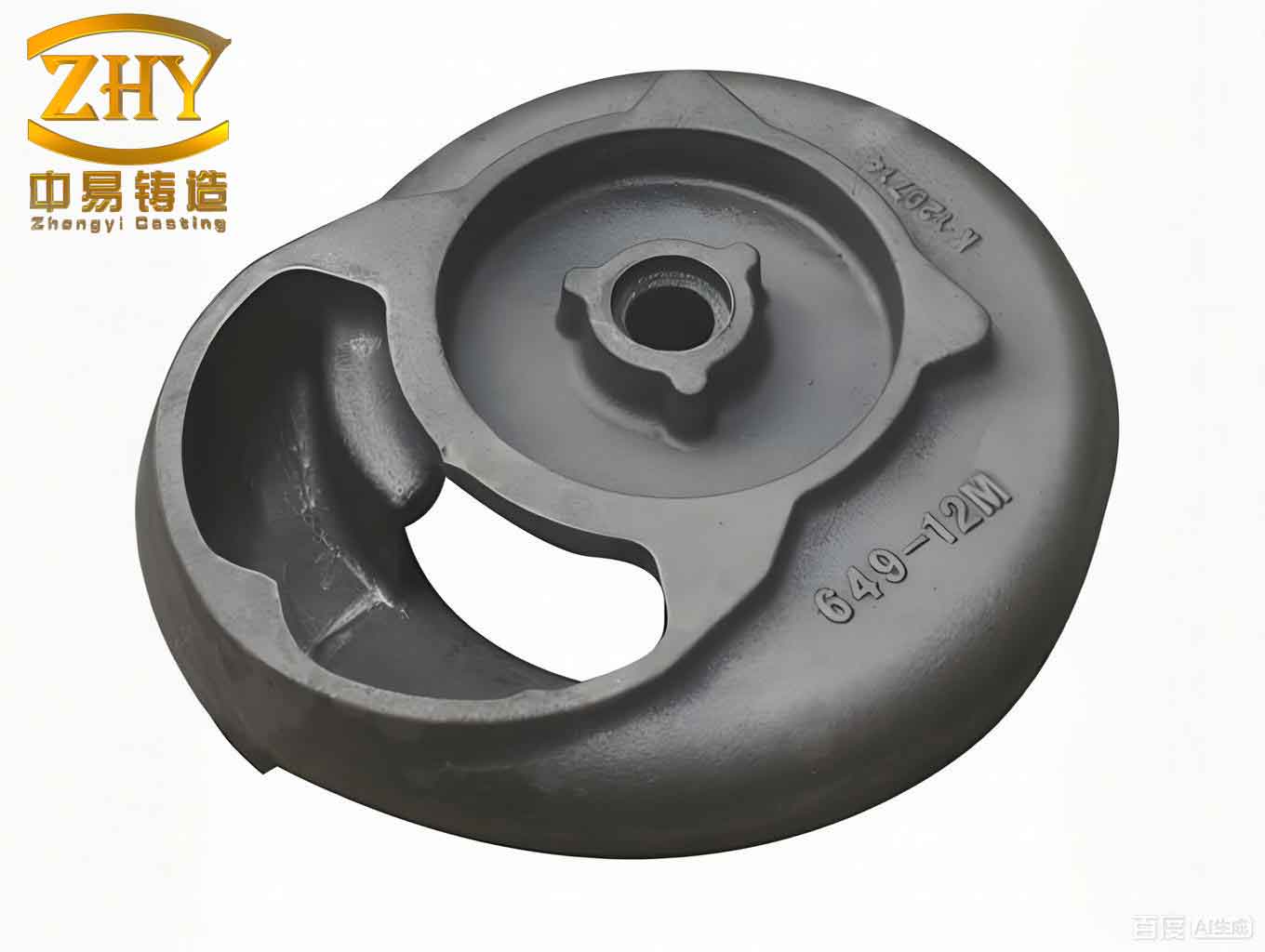
Traditional manufacturing routes like machining from a solid forging are impractical due to massive material waste and tooling challenges. Fabrication via forming and riveting the skin to a separate grid structure introduces weight penalties, stress concentrations, and lengthy assembly times. Therefore, precision sand casting emerges as the optimal solution, offering superior structural integrity, excellent material utilization, and the potential for batch production consistency. The technical specifications for such a critical sand casting product are stringent. The material is ZL114A aluminum alloy (A357 equivalent), heat-treated to the T6 condition. Performance is non-negotiable, requiring high mechanical properties at both room and elevated temperatures, as summarized below:
| Temperature (°C) | Tensile Strength, σb (MPa), min | Yield Strength, σ0.2 (MPa), min | Elongation, δ5 (%), min | Cast Method |
|---|---|---|---|---|
| 20 | 320 | 280 | 6.0 | Sand |
| 150 | 270 | 240 | 4.0 | Sand/Investment |
| 200 | 220 | 180 | 3.5 | Sand/Investment |
Dimensional precision is equally critical: overall length tolerance within ±0.4 mm, wall thickness control within a 1mm total band, coaxiality of ends better than 0.3 mm, and contour accuracy for non-machined internal surfaces targeted below 0.5 mm. Achieving this for a thin-walled sand casting product requires a meticulously controlled and integrated process flow.
Integrated Manufacturing and Foundry Process Flow
The realization of such a component is not a single-step operation but a symphony of interconnected processes. The overarching sequence is designed to ensure quality at every stage:
- Pre-Production Engineering: This involves the meticulous design of the casting drawing (accounting for shrinkage and machining stock), followed by the design, manufacture, and precision validation of the mold patterns and core boxes.
- Foundry Operations:
- Core making and molding using high-quality resin-bonded sand.
- Application of refractory coatings to improve surface finish.
- Core assembly, mold closing, alloy melting and treatment, and the casting process itself (often employing low-pressure or tilt-pour techniques for thin walls).
- Shakeout, cutting of gates and risers, and initial cleaning (shot blasting).
- Post-Casting Treatment & Initial QA:
- Rough machining of critical datums.
- Non-destructive testing (X-ray) to identify internal defects.
- Repair welding if necessary and re-inspection.
- Solution heat treatment (T4 condition) followed by rapid quenching.
- Dimensional inspection and possible straightening/correction.
- Artificial aging (T6 temper).
- Final finishing and comprehensive dimensional inspection.
- Precision Machining: Using 5-axis CNC centers, the process involves:
- Establishing a machining coordinate system based on 3D scan data of the actual casting.
- Rough and finish machining of external surfaces, end faces, and mounting pads.
- In-process scanning to monitor and compensate for any distortion.
- Final operations like drilling, tapping, and non-destructive surface inspection (fluorescent penetrant).
Analysis of Foundry Challenges and Strategic Countermeasures
The path to a sound casting is fraught with specific challenges intrinsic to the geometry and material. A preemptive analysis is crucial:
1. Filling and Feeding Difficulties: The extreme thin sections and long, tortuous flow paths for the molten metal are primary obstacles. Surface tension becomes a dominant force, inhibiting flow. The risk of mistruns and cold shuts is high. Furthermore, the intricate grid structure creates isolated thermal nodes (hot spots) that are difficult to feed, leading to potential shrinkage porosity.
2. Metallurgical Quality Control: To overcome filling challenges, one might increase pouring temperature or velocity, but this exacerbates other problems. Higher temperatures increase gas solubility and the tendency for shrinkage. Turbulent filling can entrap oxides and gases. Achieving a pore-free, dense structure in both the thin webs and the thicker junction points of the grid is a complex optimization problem.
3. Dimensional Fidelity and Distortion Control: The part’s low rigidity makes it highly susceptible to distortion from several sources:
- Restrained Contraction: Differential cooling and resistance from the sand core during solidification generate internal stresses.
- Quench Distortion: The rapid cooling during solution treatment induces severe thermal gradients and associated stresses.
- Stress-Relief Movement: Subsequent machining and even natural aging can cause the part to warp as locked-in stresses rebalance.
Controlling the final contour of the as-cast internal surfaces within a 0.5 mm envelope is perhaps the most daunting task.
To combat these challenges, a multi-pronged strategy is essential, forming the core technological solution for high-integrity sand casting products:
A. Gating and Risering System Design: A judiciously designed filling system is paramount. For this geometry, a combination of bottom gating with vertically oriented “knife-gate” or slot feeders spaced along the part’s length is often effective. This promotes a relatively tranquil, upward fill, reducing turbulence. These vertical feeders also act as thermal risers, positioned to feed the hot spots at the grid intersections. Strategic placement of chilling materials (cast iron or graphite chills) in the mold adjacent to thick sections is critical to control solidification sequence. The goal is to achieve directional solidification towards the feeders, expressed conceptually by Chvorinov’s rule, ensuring feeders solidify last:
$$ t_f = k \left( \frac{V}{A} \right)^2 $$
where \( t_f \) is the local solidification time, \( V \) is volume, \( A \) is cooling surface area, and \( k \) is the mold constant. We design so that \( (V/A)^2 \) of the feeder is greater than that of the casting section it feeds.
B. Process Parameter Optimization: A narrow window of operating parameters must be defined and strictly controlled.
| Parameter | Target Value / Range | Rationale |
|---|---|---|
| Pouring Temperature | 715 – 725 °C | Balances fluidity against gas pickup and shrinkage. |
| Mold Preheat Temperature | 25 – 35 °C | Prevents premature chilling of metal, aids fill. |
| Pouring Time / Velocity | Controlled via low-pressure system (e.g., 60-70 mm/s) | Ensures non-turbulent, laminar fill. |
| Solidification Pressure (Low-Pressure) | 50-60 kPa | Enhances feeding of shrinkage during solidification. |
C. Distortion Mitigation through Design & Tooling:
- Pattern Allowance: Instead of a uniform linear shrinkage factor, anisotropic scaling is applied based on part geometry and constraint analysis (e.g., 0.85% axial, 0.80% radial).
- Machining Stock Allocation: Stock is strategically added, not uniformly, but based on predicted distortion zones from simulation.
| Feature | Planned Stock Allowance (mm) | Consideration |
|---|---|---|
| End Faces | 7.0 | Primary machining datums, account for end bowing. |
| External Skin Surface | 5.0 | Final contour machining, allows for wall thickness variation. |
| Internal Mounting Pads | 3.0 – 5.0 | Localized stock based on predicted movement. |
- Heat Treatment Fixturing: Custom-designed support and constraint fixtures (often made of high-temperature steel) are used during the solution heat treatment and quench. These fixtures physically restrain the part to its nominal shape against the forces of thermal stress, effectively performing a “hot straightening.”
The Indispensable Role of Numerical Simulation
In modern foundry practice, computational simulation is not a luxury but a necessity for first-time-success on complex sand casting products. Software tools like AnyCasting, MagmaSoft, or ProCAST are employed to virtually prototype the process. The simulation workflow is integral to my methodology:
- Model Preparation: A 3D finite element model is built, encompassing the casting, all mold components (sand cores, chills), and the gating/risering system. Accurate thermophysical data for the alloy and mold materials are input.
- Filling Analysis: The software solves Navier-Stokes equations for fluid flow and energy transfer during mold fill.
$$ \rho \left( \frac{\partial \mathbf{v}}{\partial t} + \mathbf{v} \cdot \nabla \mathbf{v} \right) = -\nabla p + \mu \nabla^2 \mathbf{v} + \rho \mathbf{g} $$
This reveals potential cold shuts, air entrapment, or excessive velocity zones. The gating design is iterated until a smooth, progressive fill front is achieved. - Solidification & Cooling Analysis: The software calculates the temperature field over time, predicting shrinkage defects (using the Niyama criterion or similar) and identifying the last points to solidify.
$$ \frac{G}{\sqrt{\dot{T}}} \leq \text{Critical Value} $$
where \( G \) is the temperature gradient and \( \dot{T} \) is the cooling rate. Areas below the critical value are prone to microporosity. This analysis validates the efficacy of chills and risers. - Stress & Distortion Prediction: Coupled thermomechanical analysis simulates the development of stress during cooling and predicts the resulting distortion after shakeout and heat treatment. This data directly informs the anisotropic shrinkage factors and the design of heat treatment fixtures.
The outcome of simulation is a validated and optimized process plan before any metal is poured, dramatically reducing costly trial-and-error cycles. For instance, simulation might reveal that a particular rib junction remains a hot spot. The countermeasure could be to add a small chill, increase the connecting feeder size, or slightly modify the fillet radius in the casting design.
Quality Validation and Continuous Improvement
The ultimate measure of success is the quality of the delivered sand casting product. Validation is multi-faceted:
1. Dimensional Conformance: Post-casting and post-heat-treatment, the part is subjected to full 3D optical scanning. The point cloud data is compared to the nominal CAD model, generating a color-map deviation report. This quantifies the as-cast contour accuracy and verifies the effectiveness of the applied shrinkage factors and distortion control measures. For our target component, achieving over 70% of the internal surface within the 0.5 mm tolerance band on the first trial is a significant success, with the out-of-tolerance areas providing direct feedback for pattern modification.
2. Metallurgical and Mechanical Integrity:
- Non-Destructive Testing (NDT): X-ray radiography is used to inspect for internal shrinkage, gas pores, or inclusions. Fluorescent Penetrant Inspection (FPI) checks for surface discontinuities.
- Mechanical Testing: Test bars cast from the same melt (kept blocks) are tested. More importantly, coupons sectioned from the actual casting itself (e.g., from strategically designed sacrificial extensions on the casting) provide the true measure of in-situ properties. The results, as shown in a representative table, must meet or exceed the specifications.
| Sample Location | Test Temp. (°C) | Ultimate Tensile Strength (MPa) | Yield Strength (MPa) | Elongation (%) | Status vs. Spec |
|---|---|---|---|---|---|
| Casting Body | 20 | 384, 385 | 310, 314 | 6.0, 9.5 | Conforms |
| Casting Body | 150 | 310, 345 | 290, 315 | 4.5, 7.0 | Conforms |
| Casting Body | 200 | 315, 300 | 300, 295 | 7.5, 4.5 | Conforms |
3. The Iterative Loop: The data from the first-off casting is gold. Dimensional scan data feeds back to adjust the pattern allowances. Mechanical test results may fine-tune heat treatment parameters. NDT findings guide adjustments to gating or pouring practice. This closed-loop, data-driven approach is how yield rates for such challenging castings can be systematically raised from an initial 30-50% to a stable 80% or higher in production.
Consolidated Insights and Future Trajectory
The journey to master the precision sand casting of large, thin-walled aluminum structures consolidates into several key insights:
- Integrated Design for Manufacture (DfM): The dialogue between the product designer and the foundry engineer must begin early. Slight modifications to fillet radii, rib transitions, or the addition of minor strengthening ribs on the pattern (removed later) can dramatically improve castability without compromising function.
- Simulation-Driven Process Authority: Numerical simulation is the foundational tool for de-risking the process. It enables scientific design of the feeding and chilling system, moving far beyond empirical rules-of-thumb.
- Holistic Stress Management: Controlling distortion is not a single-step fix but a continuum: designing for balanced contraction, using conforming heat treatment fixtures, and employing intelligent machining sequencing with in-process measurement are all critical links in the chain.
- The Centrality of Data: Every casting produced is a source of data. Implementing rigorous digital capture of process parameters, scan results, and test data builds a knowledge base that accelerates learning and enables predictive quality control.
Looking forward, the potential for these technologies is vast. The focus areas for advancement include:
- Enhanced Simulation Fidelity: Coupling macroscopic casting simulation with microstructural prediction models to directly forecast mechanical properties in different sections of the casting.
- Advanced Tooling and Automation: Utilizing 3D sand printing for cores to create previously impossible internal geometries, and integrating automated, adaptive machining based on real-time scan data.
- Material Development: Tailoring aluminum alloy compositions for even better combination of castability, strength, and toughness in thin sections.
- Broader Application: Transferring this validated technological framework to other industries requiring large, complex, and lightweight metal components, such as aerospace frames, satellite structures, high-performance automotive parts, and advanced energy systems.
In conclusion, the successful production of large, thin-walled, high-strength aluminum sand casting products is a testament to the convergence of advanced design, predictive engineering, meticulous process control, and relentless validation. It transforms sand casting from a traditional art into a precision digital manufacturing discipline, capable of producing structural components that are both geometrically intricate and materially performant, opening new frontiers in lightweight engineering.