
In my extensive work with wear-resistant materials, I have consistently observed that high manganese steel castings remain a cornerstone in demanding applications within the mining, quarrying, and metallurgical industries. Their unparalleled ability to work-harden under severe impact and pressure makes them indispensable for components like crusher jaws, mantles, and, as highlighted in the provided context,破碎齿 (crushing teeth). However, the traditional paradigms governing the production and treatment of these castings are often insufficient to meet the escalating demands of modern machinery, which require even greater durability, resistance to brittle fracture, and overall service life. Through this discussion, I aim to synthesize and elaborate on the critical measures for improving the performance of high manganese steel castings, moving beyond conventional wisdom to explore optimized alloy design, precise heat treatment, and advanced surface engineering.
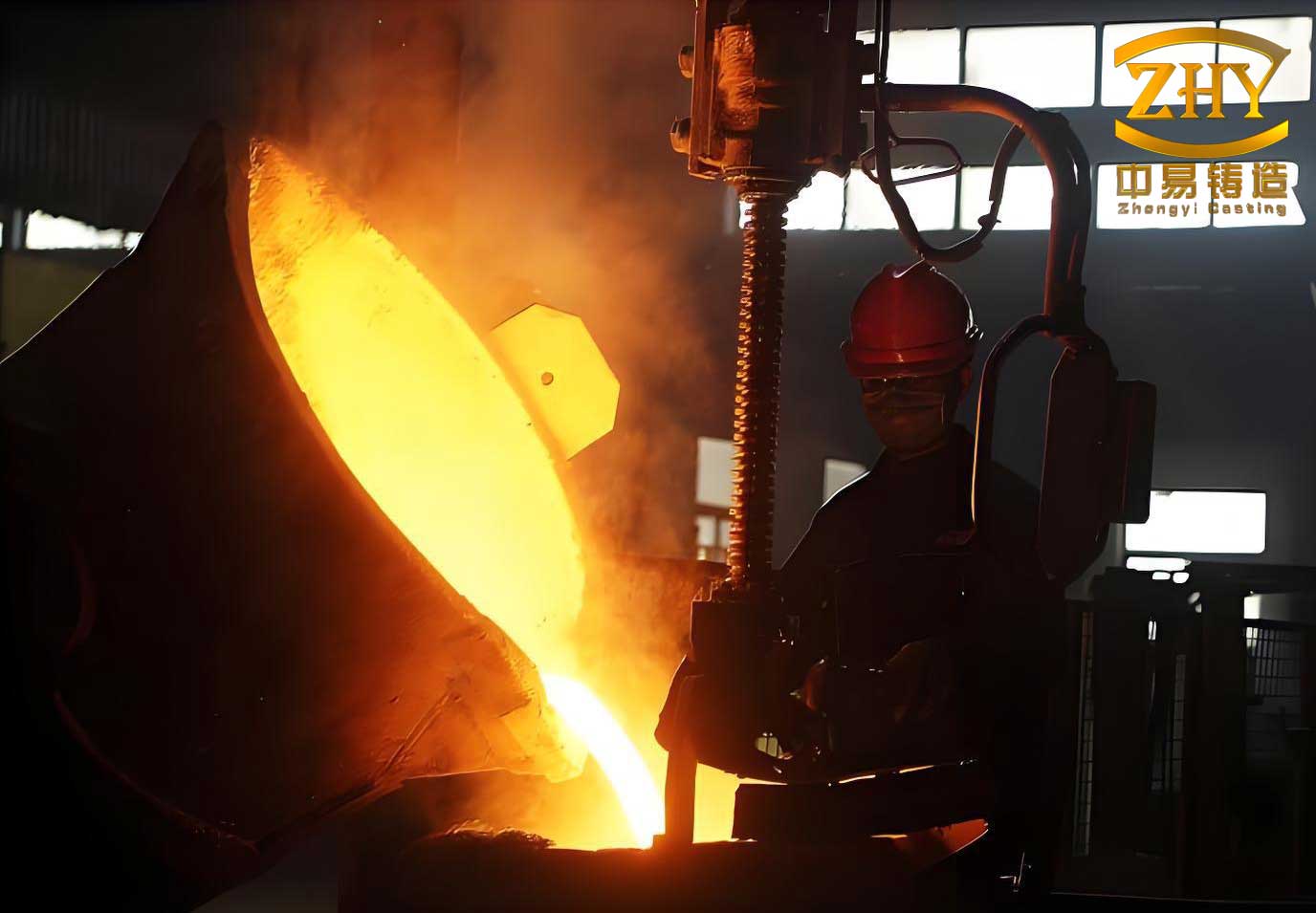
The fundamental challenge with standard high manganese steel castings lies in their inherent characteristics: susceptibility to hot tearing during solidification, the potential for catastrophic brittle failure under certain conditions, and an initial wear period before sufficient work-hardening occurs. To systematically address these issues, I will focus on three interconnected pillars: the precise control and modification of sensitive alloying elements, the science and art of the water toughening (solution treatment) process, and the implementation of pre-service surface strengthening techniques. A holistic approach across these domains is essential for manufacturing a truly superior high manganese steel casting.
1. Mastering the Alloy Chemistry: The Role of Sensitive Elements
The properties of a high manganese steel casting are fundamentally dictated by its chemical composition. Each element plays a specific, and sometimes dual, role. Optimizing this composition is the first and most crucial step in performance enhancement.
| Element | Primary Role & Influence | Optimal/Recommended Range (wt.%) | Mechanistic Explanation & Notes |
|---|---|---|---|
| Carbon (C) | Primary contributor to hardness, strength, and wear resistance. Increases work-hardening capacity. | 1.1 – 1.5 (Standard) Up to 1.6-1.8 (Enhanced Wear) |
Dissolves in austenite to provide solid solution strengthening. Forms (Fe,Mn)3C carbides; excess carbon promotes brittle carbide networks at grain boundaries if not properly dissolved during heat treatment. The relative wear resistance generally follows a positive correlation with carbon content, governed approximately by: $$ \varepsilon_w \propto k_1 \cdot [C] $$ where $\varepsilon_w$ is wear resistance and $k_1$ is a material constant. |
| Manganese (Mn) | Stabilizes the austenitic ($\gamma$) phase at room temperature. Enhances toughness and ductility. | 11.0 – 14.0 (Standard) 16.0 – 18.0 (Low-Temp/Toughness) |
Suppresses the $\gamma \rightarrow \alpha$ transformation, ensuring a fully austenitic matrix after quenching. Higher Mn/C ratios improve toughness and reduce carbide precipitation tendency. For low-temperature applications or very large section castings, a high Mn content (≥16%) is critical. |
| Chromium (Cr) | Carbide former. Refines grain structure, improves yield strength, and enhances wear resistance. | 1.5 – 3.0 | Forms fine, hard (Fe,Cr,Mn)3C or (Cr,Fe)7C3 carbides which pin grain boundaries and impede dislocation motion. It significantly increases hardenability. The improvement in wear resistance $\Delta W$ can be modeled as diminishing returns: $$ \Delta W \approx a \cdot [Cr] – b \cdot [Cr]^2 \quad \text{for } [Cr] \leq 3\% $$ where $a$ and $b$ are positive constants. Beyond ~3%, toughness drops significantly with marginal wear gain. |
| Boron (B) | Powerful hardenability agent. In trace amounts, it refines as-cast structure and boosts impact toughness. | 0.001 – 0.005 | Boron segregates to austenite grain boundaries, reducing interfacial energy and delaying the nucleation of ferrite or pearlite. Its hardenability effect is profound; ~0.001% B can equate to several percent of other alloying elements. The impact toughness $A_k$ shows a peak: $$ A_k([B]) \approx A_{k,0} + c[B] – d[B]^2 $$ Excess B (>0.005%) leads to formation of brittle Fe2B eutectics at boundaries, severely embrittling the high manganese steel casting. |
| Titanium (Ti) | Powerful grain refiner. Forms stable TiN and TiC particles that act as heterogeneous nucleation sites. | 0.08 – 0.15 | Ti additions modify the solidification structure, eliminating columnar grains and promoting a fine, equiaxed morphology. This enhances strength, ductility, and work-hardening response. The final grain size $d$ can be related to Ti content via a Zener-type pinning model: $$ d \approx \frac{k}{[Ti]^{m}} $$ where $k$ and $m$ are constants. Over-addition leads to large, angular Ti(C,N) inclusions which act as stress concentrators. |
| Rare Earths (RE) | Multifunctional modifiers: refine grains, modify sulfide/shape, improve fluidity, reduce hot tearing. | 0.03 – 0.05 | RE elements (e.g., Ce, La) deoxidize and desulfurize the melt, forming high-melting-point oxysulfides. They also adsorb on growing crystal faces, inhibiting growth and promoting grain refinement. This results in cleaner, more isotropic high manganese steel castings with improved toughness. |
| Silicon (Si) | Deoxidizer. Influences carbide morphology and matrix cleanliness. | 0.4 – 0.8 | Essential for effective deoxidation. However, Si reduces carbon solubility in austenite, promoting carbide precipitation. A balanced range ensures good fluidity and casting soundness while minimizing harmful carbide networks. |
| Phosphorus (P) | Severe embrittling element. Forms low-melting-point phosphide eutectics at grain boundaries. | < 0.04 (Aim for < 0.025) | P is highly detrimental to toughness and wear resistance. Its negative impact synergizes with high carbon. A classic empirical rule to ensure safe performance in a high manganese steel casting is: $$ [C]_{max}(\%) \approx 1.27 – 2.7 \times [P] $$ This highlights the critical need for using high-purity raw materials to control P. |
The interplay of these elements defines the “hardenability” and “toughness” potential of the high manganese steel casting. A modern optimized composition might target: C: 1.2-1.3%, Mn: 12-13%, Cr: 1.8-2.2%, with carefully controlled micro-additions of B, Ti, and RE, while minimizing P and S. This creates a matrix primed for successful subsequent processing.
2. The Critical Science of Water Toughening Heat Treatment
The as-cast structure of a high manganese steel casting is highly undesirable, consisting of austenite grains surrounded by a continuous network of brittle carbides and often some pearlite. The water toughening process is designed to dissolve these carbides completely into the austenitic matrix and then “freeze” this supersaturated solid solution by rapid quenching. The precision of this process directly dictates the final mechanical properties.
| Process Stage | Key Parameters & Objectives | Guidelines & Rationale | Governing Principles |
|---|---|---|---|
| Pre-Heating & Heating | Charge Temperature, Heating Rate ($\nu_h$). | Charge Temp: ≤300°C for heavy (>80mm), complex castings; up to 500°C for simple, thin-section castings. Heating Rate: 50-100 °C/h. Slower for complex/heavy sections to avoid thermal stress cracking. |
High manganese steel has low thermal conductivity ($\kappa \approx 12-15 W/m\cdot K$) and high coefficient of thermal expansion ($\alpha \approx 18-20 \times 10^{-6} /K$). The thermal stress $\sigma_{therm}$ during heating is approximated by: $$ \sigma_{therm} \approx E \cdot \alpha \cdot \Delta T \cdot f(\text{geometry}) $$ where $E$ is Young’s modulus. Slow, controlled heating minimizes $\Delta T$ gradients and thus $\sigma_{therm}$. |
| Solutionizing (Austenitizing) | Solution Temperature ($T_s$), Holding Time ($t_s$). | Temperature: 1050-1100°C for standard grades. For alloyed (e.g., high Cr, Mo) grades: 1100-1150°C. Time: Typically 1.0-1.5 hours per 25mm of section thickness, or 2.5-3.0 min/mm. Must ensure complete carbide dissolution. |
This stage relies on diffusion to dissolve carbides. The rate of carbide dissolution is governed by Fick’s law and an Arrhenius relationship for the diffusion coefficient $D$: $$ D = D_0 \exp\left(-\frac{Q}{RT_s}\right) $$ where $Q$ is activation energy, $R$ is gas constant. Higher $T_s$ exponentially accelerates dissolution. The time $t_s$ required is inversely related to $D$. Insufficient $T_s$ or $t_s$ leaves undissolved carbides, permanently embrittling the casting. |
| Quenching | Quench Delay ($t_d$), Quench Medium (Water) Temperature ($T_q$), Agitation. | Quench Delay: Must be ≤ 30 seconds from furnace to water. Water Temp: Inlet ≤ 30°C, outlet ≤ 45-50°C. Water Volume: 8-10 tons of water per ton of casting. Agitation: Vigorous, uniform water flow or part movement is mandatory. |
The objective is to bypass the carbide precipitation nose in the TTT diagram. The critical cooling rate $CR_{crit}$ must be achieved throughout the section. The heat extraction rate $\dot{q}$ is given by Newton’s law of cooling: $$ \dot{q} = h \cdot A \cdot (T_{casting} – T_q) $$ where $h$ is heat transfer coefficient. Cold water, high flow (high $h$), and agitation (maintaining high $A$ and $\Delta T$) maximize $\dot{q}$ to meet $CR_{crit}$. Slow cooling through 700-400°C range leads to deleterious carbide reprecipitation. |
| Post-Quench | Drying, Stress Relief (optional). | Immediate drying to prevent rusting. For very complex, high-restraint castings, a low-temperature stress relief (200-300°C) may be considered. | The quenched high manganese steel casting is in a state of high residual stress. A low-T anneal can reduce these stresses via dislocation creep mechanisms without causing carbide precipitation: $$ \dot{\varepsilon} = A \sigma^n \exp\left(-\frac{Q_c}{RT}\right) $$ where $\dot{\varepsilon}$ is creep rate, $\sigma$ is stress, and $Q_c$ is activation energy for creep. |
Deviations from these parameters are a primary source of failure in high manganese steel castings. Under-heating or under-soaking results in residual carbides. Slow quenching or warm water leads to grain boundary carbide films. Both scenarios drastically reduce impact toughness and promote brittle fracture in service.
3. Surface Strengthening: Overcoming the Initial Wear Period
A significant limitation of even a perfectly heat-treated high manganese steel casting is its relatively low initial surface hardness (typically ~200-250 HB). It requires substantial impact and deformation to work-harden to its peak hardness (>500 HB). During this initial period, wear can be severe. Pre-service surface strengthening techniques aim to eliminate this vulnerability by creating a pre-hardened surface layer.
| Technique | Mechanism | Key Process Parameters / Methods | Advantages & Limitations |
|---|---|---|---|
| 1. Work-Hardening Pre-Treatment | Mechanically induces surface deformation to generate dislocations and twins, mimicking in-service hardening. | Shot/Peening: Bombarding surface with hardened steel, ceramic, or glass shot. Parameters: Shot size, velocity, coverage, Almen intensity. |
+ Well-established, improves fatigue resistance, induces compressive stresses. + Moderate hardness increase (up to ~350 HB). – Depth of hardening is relatively shallow (0.1-0.5mm). The surface hardness $\sigma_s$ can be related to plastic strain $\varepsilon_p$ via a power-law: $$ \sigma_s = K \cdot (\varepsilon_0 + \varepsilon_p)^n $$ where $\varepsilon_0$ is initial strain, $K$ is strength coefficient, $n$ is work-hardening exponent. |
| 2. Explosive Hardening | Uses a controlled detonation to generate an ultra-high-pressure shock wave (>> 1 GPa) that plastically deforms the surface layer at extremely high strain rates. | Applying a sheet explosive (e.g., PETN) with a buffer layer directly onto the component surface. Detonation velocity $D$ and explosive load are critical. | + Creates the deepest pre-hardened layer (25-50mm). + Achieves very high surface hardness (300-500 HB). + Uniquely suitable for complex geometries of large high manganese steel castings. The shock pressure $P$ is approximated by: $$ P = \frac{\rho_0 D^2}{\gamma + 1} $$ where $\rho_0$ is explosive density, $\gamma$ is polytropic exponent. This pressure induces massive plastic strain. |
| 3. Surface Alloying / Composite Formation | Locally modifies the surface chemistry or creates a metal matrix composite layer. | a) Cast-in Alloying: Placing ferroalloy inserts (e.g., high-Cr iron) in mold. Melted by incoming steel, forms a hard, alloy-rich surface layer. b) Hardfacing: Depositing a wear-resistant weld overlay (e.g., high-Cr iron, carbide-composite). |
+ (Cast-in) Creates a metallurgically bonded, gradient layer with very high hardness. – (Cast-in) Requires precise foundry control. – (Hardfacing) Risk of heat-affected zone cracks, dilution issues, and may compromise the underlying work-hardening ability of the high manganese steel casting substrate. |
| 4. Surface Decarburization (Theoretical/Controlled) | Selectively reduces surface carbon to allow formation of hard, strain-induced martensite upon deformation. | Heating in a decarburizing atmosphere (e.g., H2/H2O mix) or via ion bombardment to remove surface carbon. | + Conceptually elegant, leverages martensitic transformation. – Difficult to control uniformly on complex shapes. – Process complexity makes it less industrially prevalent for high manganese steel castings compared to explosive or mechanical hardening. |
In my assessment, for critical components like大型破碎齿 (large crushing teeth), explosive hardening stands out as the most effective pre-service treatment. It provides a deep, work-hardened case that immediately resists abrasion from the start of service, effectively extending the component’s life by eliminating the “run-in” wear period. Shot peening is excellent for improving fatigue life and providing a moderate hardness boost for smaller or less severely impacted castings.
4. Integrating the Strategies for Optimal Performance
The journey to a superior high manganese steel casting is not about applying a single silver bullet, but rather orchestrating a symphony of controlled steps. It begins with meticulous charge calculation and melting practice to achieve the optimal, clean alloy chemistry outlined in Table 1. The foundry process must be controlled to minimize casting defects and achieve sound integrity.
This is followed by the precisely calibrated thermal cycle of water toughening, where time and temperature are managed with scientific rigor to transform the as-cast microstructure into a homogeneous, tough austenitic matrix, free of embrittling phases. Finally, based on the specific application’s impact and wear conditions, an appropriate surface strengthening technique is selected and applied to armor the surface against initial material loss.
The synergistic effect of these measures can be profound. Consider the improvement in service life $L$. A baseline high manganese steel casting might have a life $L_0$. Optimizing composition and heat treatment might improve this by a factor $\alpha (>1)$. Subsequently applying a surface treatment like explosive hardening could provide a further multiplicative factor $\beta (>1)$. Thus, the potential life of the enhanced high manganese steel casting becomes: $$ L_{enhanced} = \alpha \cdot \beta \cdot L_0 $$ where both $\alpha$ and $\beta$ can significantly exceed 1.5, leading to a potential doubling or tripling of service life in demanding applications.
In conclusion, the pursuit of excellence in high manganese steel castings demands a deep, integrated understanding of metallurgy, heat treatment physics, and surface engineering. By moving beyond traditional compositions and processes to embrace optimized alloy designs, digitally controlled solution treatment, and advanced pre-hardening technologies, we can unlock new levels of performance, reliability, and cost-effectiveness for these critical wear components. The continuous development in this field ensures that the high manganese steel casting will remain a vital and evolving solution for the world’s most abrasive and impactful challenges.