
The quest for durable materials in heavy industrial machinery is a perpetual engineering challenge. From my extensive experience in the field of material science, particularly concerning equipment subjected to severe mechanical stress, I have observed that failure mechanisms predominantly stem from fracture, corrosion, and wear. Among these, wear is unequivocally the principal factor, accounting for a staggering portion of energy consumption and material loss globally. Statistical analyses often indicate that approximately one-third to one-half of industrial energy is expended to overcome friction and wear. Focusing on a single industry, such as cement production, illustrates the scale of the problem. Consider the massive annual output; the consumption of metallic components like liner plates for ball mills and hammers for crushers, alongside grinding media (balls and cylpebs), represents a significant operational cost and resource drain. This relentless consumption underscores the critical importance of developing and optimizing wear-resistant materials, with high manganese steel casting standing as a cornerstone technology in this arena.
The genesis of modern wear-resistant alloy steels can be traced back to the seminal work of Robert Hadfield in 1882. His invention, the austenitic manganese steel, revolutionized applications involving high-impact abrasion. The fundamental principle behind this high manganese steel casting lies in its unique metastable austenitic microstructure. In the as-cast condition, the structure consists of austenite with a network of brittle carbides. The key transformation occurs through a solution heat treatment, commonly known as water quenching or “water toughening.” This process involves heating the casting to a temperature between 1050°C and 1100°C to dissolve the carbides into a homogeneous solid solution of carbon in austenite, followed by rapid quenching in water. This retains the single-phase austenite structure at room temperature, conferring exceptional toughness and ductility.
The renowned wear resistance of this material is not intrinsic to its initial soft state (typically ~200 HB) but is a consequence of its remarkable work-hardening capacity. Under conditions of severe impact or high-stress grinding, the surface of the high manganese steel casting undergoes plastic deformation. This deformation induces a high density of dislocations, mechanical twins, and martensitic transformation in the surface layers, leading to extreme surface hardening, often reaching hardness levels exceeding 500 HB. Therefore, labeling it simply as a “wear-resistant steel” is an oversimplification; its performance is intrinsically linked to the service conditions. It remains the material of choice for components subjected to high-impact, gouging abrasion where the service impact energy (often denoted as $A_k$) is substantial, typically above 5 Joules. No other material has yet fully supplanted it in such punishing applications. However, a notable limitation is its susceptibility to carbide precipitation at grain boundaries when exposed to temperatures in the range of 250-400°C for prolonged periods, such as in dry grinding operations, which can embrittle the steel and reduce its wear life. This explains why liners in wet grinding mills often outlast those in dry mills.
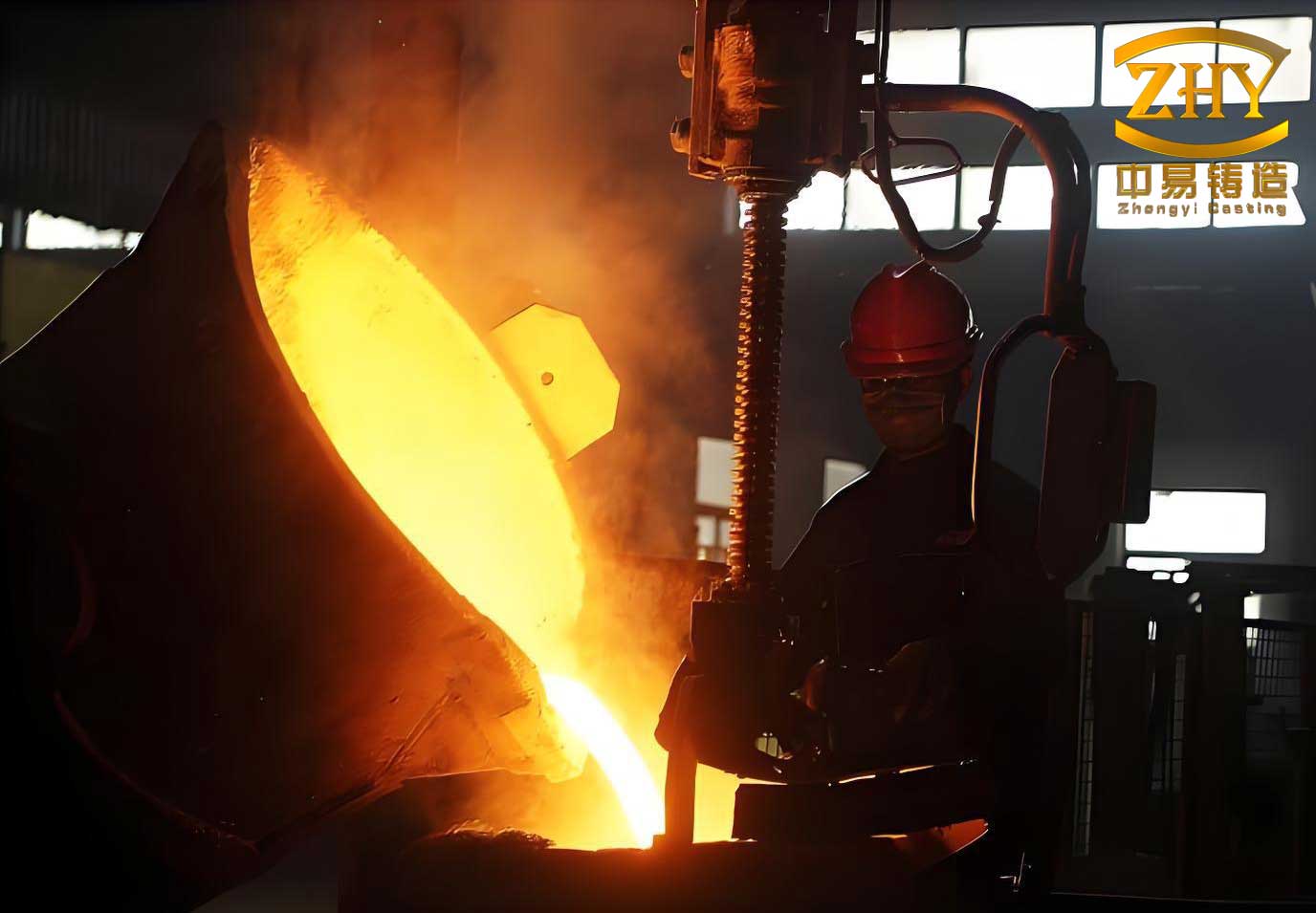
Internationally, high manganese steel casting maintains a premier status within the family of wear-resistant alloys. Its unparalleled combination of toughness and work-hardening ability is yet to be matched by alternative cast steels or irons. A range of standard compositions has been established to cater to varying severity of service. The table below outlines some typical grades, where Grade C is perhaps the most widely used for components like secondary and tertiary crusher liners due to its optimal balance of carbon content for wear resistance and manganese for stability.
| Grade | C (%) | Mn (%) | Si (%) | P (max, %) | Other (e.g., Cr, Mo, %) | Heat Treatment |
|---|---|---|---|---|---|---|
| A | 1.10-1.40 | 5.0-7.0 | 0.80 max | 0.08 | 0.80 max | Austenitize + Water Quench |
| B | 0.90-1.10 | 13.0-15.0 | <1.0 | 0.05 | – | Austenitize + Water Quench |
| C | 1.10-1.25 | 12.0-14.0 | <1.0 | 0.05 | – | Austenitize + Water Quench |
| D | 1.10-1.30 | 12.0-14.0 | <1.0 | 0.05 | 1.60-2.20 | Austenitize + Water Quench |
The ongoing development of high manganese steel casting focuses on enhancing its wear performance, expanding its service range, and improving consistency. This is achieved through several targeted strategies: alloying modification, advanced melting and refining, improved casting techniques, and innovative heat treatment cycles.
1. Alloying Strategies for Enhanced Performance
The baseline composition of a high manganese steel casting is defined by carbon, manganese, and controlled levels of silicon and phosphorus. Strategic alloying additions are employed to modify the microstructure and properties:
$$ \text{Base (Fe-C-Mn)} + \sum (Cr, Mo, V, Ti, B, RE) \rightarrow \text{Enhanced Properties} $$
The primary goal is to increase the work-hardening capability by impeding dislocation motion. This can be achieved through:
- Grain Refinement: Adding inoculants or modifiers like titanium or rare earth (RE) elements to promote a finer as-cast austenite grain size, leading to grain boundary strengthening.
- Solid Solution Strengthening: Alloying with elements like chromium, molybdenum, or copper that dissolve in the austenite lattice, increasing its intrinsic strength.
- Second-Phase Precipitation Strengthening: Adding carbide-forming elements such as chromium, vanadium, titanium, or molybdenum. During heat treatment or in service, these form fine, dispersed secondary carbides within the austenite grains. These particles act as potent obstacles to moving dislocations, significantly enhancing the work-hardening rate and bulk hardness. The interaction between a dislocation line and a non-deformable particle can be conceptually described by the Orowan strengthening mechanism, where the increase in shear stress $\Delta \tau$ required to bypass the particle is inversely proportional to the inter-particle spacing $L$:
$$ \Delta \tau \approx \frac{G b}{L} $$
where $G$ is the shear modulus and $b$ is the Burgers vector. - Microstructure Control: Rare earth elements also help purify the grain boundaries and modify the morphology of non-metallic inclusions, improving overall toughness.
2. Melting and Refining Practices
The control of impurities, especially phosphorus, is paramount in producing a superior high manganese steel casting. Phosphorus forms low-melting-point eutectics (e.g., Fe3P, Mn3P) that segregate to grain boundaries during solidification. This segregation drastically reduces toughness, promotes hot tearing, and provides easy paths for crack propagation during wear, severely degrading performance. Advanced refining techniques, such as the use of barium carbonate ($BaCO_3$) based slags, have proven effective in reducing phosphorus to remarkably low levels, on the order of 0.003-0.005%. The reaction can be simplified as:
$$ 3BaO_{(slag)} + 2P_{(metal)} + 5FeO_{(slag)} \rightarrow 3BaO \cdot P_2O_5_{(slag)} + 5Fe_{(metal)} $$
The widespread adoption of such deep dephosphorization practices is a critical step toward consistent, high-quality high manganese steel casting.
3. Advanced Casting Technique: Suspension Pouring
The solidification structure significantly affects mechanical properties. The suspension pouring method involves introducing a composite “suspension agent” into the molten metal stream during casting. This agent typically contains fine, inert particles that act as additional nucleation sites. This practice refines the primary crystallization structure, suppresses columnar grain growth, promotes equiaxed grains, reduces micro-segregation and interdendritic shrinkage, and enhances the overall density of the high manganese steel casting. The result is a more homogeneous and finer-grained microstructure, which translates directly to improved mechanical properties and wear resistance.
4. Evolution in Heat Treatment
While standard water quenching (water toughening) remains the baseline, modified heat treatment cycles have been developed to unlock further potential, especially in alloyed grades.
Modified Water Quenching for Alloyed Grades: When elements like chromium and molybdenum are added, a higher austenitizing temperature may be required (e.g., 30-50°C above the standard 1050°C) to ensure complete dissolution of alloy carbides. Subsequently, an aging or precipitation heat treatment can be employed to finely disperse secondary carbides. The optimal aging temperature ($T_{age}$) is often empirically related to the solution temperature ($T_s$):
$$ T_{age} \approx (0.5 \text{ to } 0.6) \times T_s $$
For a solution temperature of 1100°C (1373 K), the aging might be conducted around 550-650°C for several hours, followed by air cooling.
The Intermediate-Temperature Cyclic Heat Treatment: A particularly innovative approach involves a cyclic heat treatment without altering the standard composition. This process, as illustrated in the schematic below, involves repeatedly cycling the high manganese steel casting around an intermediate temperature (e.g., 950°C).
Schematic Process:
Heat to 950°C → Quench (Water/Oil) → Re-heat to 950°C → Quench → (Repeat n times) → Final Temper/Age at ~350°C.
This cyclic treatment refines the microstructure and promotes a uniform dispersion of fine, globular carbides within the austenite grains. The resulting properties are impressive: tensile strength ($\sigma_b$) can reach ~680 MPa, impact toughness ($a_k$) around 70-80 J/cm², and a bulk hardness of approximately 40 HRC. The key to its superior wear resistance lies in the interaction between dislocations and these finely dispersed carbides. During service, as dislocations move under stress, they are rapidly impeded by the carbide particles. To bypass them, dislocations bow out, leaving behind dislocation loops (Orowan loops). This process multiplies dislocation density at a much higher rate than in conventional material, leading to rapid and intense work hardening of the surface layer. Field trials, such as those on jaw crusher plates processing cement clinker, have demonstrated a 50-60% improvement in wear life compared to traditionally water-quenched plates.
5. The Critical Influence of Base Chemistry
Even within the standard specification for a common grade like ZGMn13 (1.0-1.4% C, 10-14% Mn), the specific choice of composition has a profound effect on performance. Based on experimental wear data, the influence of key elements can be summarized as follows:
Carbon (C): Carbon is the primary element responsible for hardness and work-hardening capacity. However, its relationship with wear is not monotonic and must be balanced against toughness. The table below shows relative wear data (lower unit wear is better) for different carbon levels, illustrating an optimum range.
| Carbon Content (%) | Relative Wear Rate Index* | Observation |
|---|---|---|
| 1.09 | 100 (Baseline) | Good Toughness |
| 1.20 | 124 | Improved Wear |
| 1.30 | 142 | Higher Wear, Lower Toughness |
| 1.43 | 124 | Potential Brittleness |
*Approximate index derived from unit wear data; a higher index indicates more material lost per unit work.
Manganese (Mn) and the Mn/C Ratio: Manganese stabilizes austenite. While its absolute content within the standard range has a muted direct effect on wear, the ratio of Mn to C is crucial for maintaining austenite stability and adequate toughness after water quenching. A ratio that is too low risks pearlite or martensite formation upon cooling, causing brittleness. A ratio that is too high is economically wasteful. An optimal Mn/C ratio for balancing wear and toughness is generally considered to be between 9.5 and 10.5. The impact toughness ($a_k$) shows a clear dependence on this ratio, which can be expressed as a general trend:
$$ a_k \propto f(\text{Mn/C}) \quad \text{for constant C%} $$
Empirically, maximum toughness is often found near Mn/C ≈ 10.
Silicon (Si): Silicon is a deoxidizer. Moderate levels (0.4-0.8%) are beneficial for fluidity and soundness of the high manganese steel casting. However, excessive silicon (>1.0%) can promote the formation of harmful silicates and embrittle the grain boundaries, adversely affecting both toughness and wear resistance.
Phosphorus (P): As previously stressed, phosphorus is deleterious. Its effect on impact toughness is drastic. The relationship can be approximated by a sharp decay function:
$$ a_k \approx A – B \cdot [P]^n $$
where $[P]$ is the phosphorus content, and $A$, $B$, $n$ are constants. Keeping phosphorus below 0.05% is essential for high-performance applications.
Therefore, for high-impact abrasive conditions, an optimized standard high manganese steel casting composition can be specified as: C: 1.25-1.35%, Mn: 12.0-13.5%, Si: 0.4-0.7%, P: <0.05%, S: <0.03%, with an Mn/C ratio targeting 9.5-10.2. This provides an excellent balance of high work-hardening capability, good toughness, and economic viability without mandatory exotic alloying additions.
Conclusion and Perspective
The development of high manganese steel casting is a dynamic field that synthesizes fundamental metallurgy with practical process engineering. Its enduring relevance in the most severe impact-abrasion applications is a testament to the brilliance of its original design. However, modern advancements have transformed it from a single, fixed-grade material into a versatile family of alloys. Through precise control of chemistry—especially minimizing phosphorus and optimizing carbon and the Mn/C ratio—coupled with advanced melting, innovative casting techniques like suspension pouring, and sophisticated heat treatments such as intermediate-temperature cycling, the performance envelope of high manganese steel casting continues to expand. The future lies in further tailoring these microstructures through computational alloy design and advanced manufacturing processes to meet ever-increasing demands for longevity and efficiency in mineral processing, cement production, mining, and earth-moving industries. The core principle remains: harnessing the unique transformation-induced plasticity and work-hardening behavior of austenite, making high manganese steel casting an indispensable solution for defeating wear.