
In today’s automotive industry, the advent of the “micro-profit era” has intensified competition, where after product quality reaches a certain level, the battle among enterprises essentially becomes a cost competition. Cost control is a prerequisite for survival and development. Against the backdrop of continuously declining product prices and persistently high raw material costs, reducing product costs has become an urgent necessity. The famous shadow theory indicates that although product design only accounts for about 5% of the total product cost, it influences 70% to 80% of the entire product cost. Once the product structure design is finalized, it determines the manufacturability and manufacturing cost of the product. Therefore, controlling product quality and reducing costs from the design source is crucial and yields the most significant effects. This article, based on my extensive experience in the automotive components sector, delves into the optimization design of automotive casting parts from a cost-control perspective, emphasizing structural manufacturability and tolerance rationality.
The design of automotive casting parts must not only meet functional requirements but also ensure castability, machinability, and tolerance specifications. A rational structure and appropriate tolerances can enhance product strength, simplify casting and machining processes, improve production efficiency, enhance casting part quality, and reduce costs. Conversely, unreasonable designs can lead to high scrap rates and increased costs for the casting part. Thus, the structural manufacturability of a part is a vital technical indicator for evaluating design quality. In the following sections, I will analyze key factors affecting the cost of casting parts and propose optimization strategies.
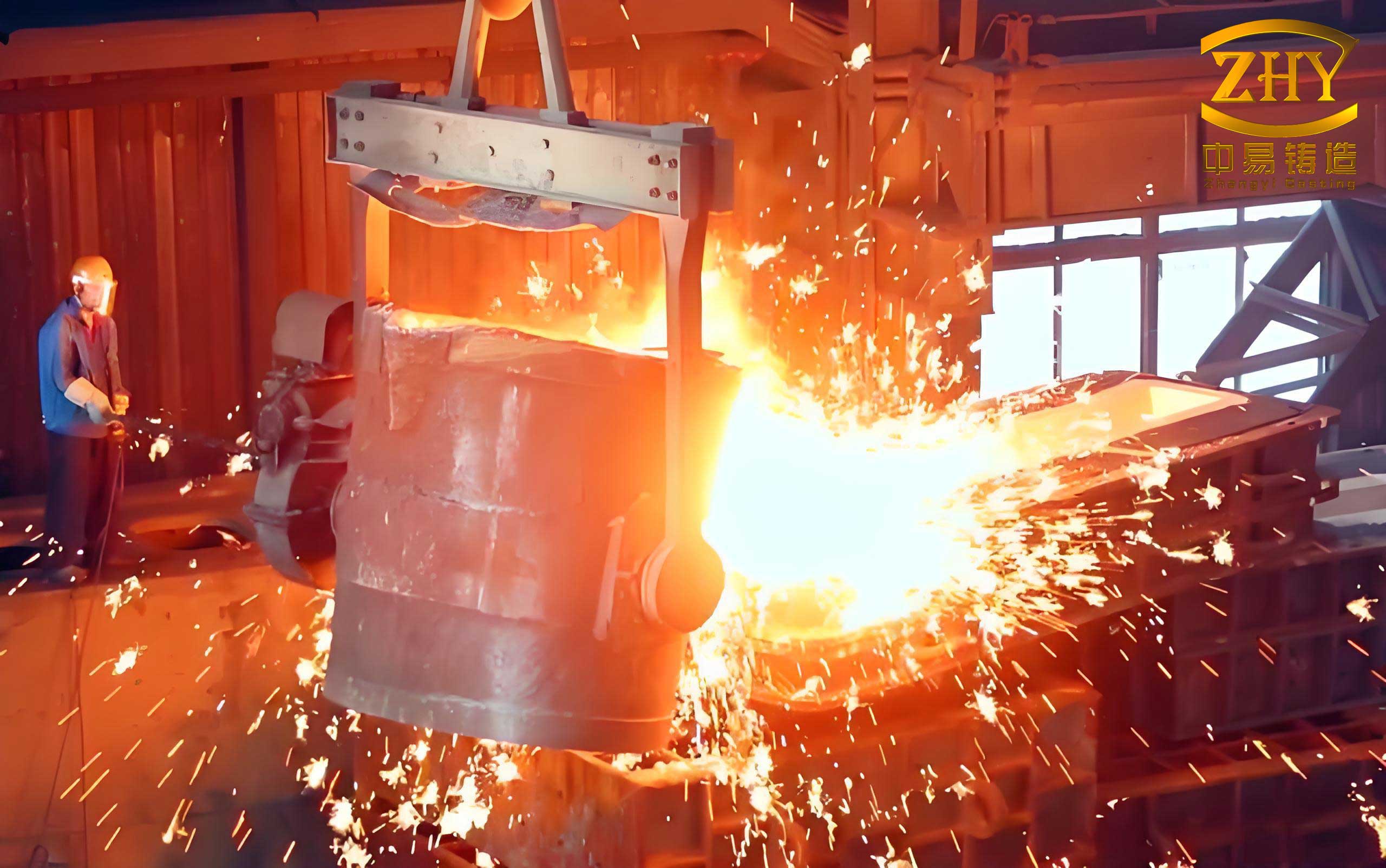
Primary Factors Influencing the Cost of Casting Parts
The cost of a casting part is influenced by multiple interrelated factors, which can be broadly categorized into design-related, process-related, and material-related aspects. From a design optimization standpoint, the structural and tolerance specifications are paramount. The table below summarizes the main cost influencers for automotive casting parts.
| Factor Category | Specific Elements | Impact on Cost |
|---|---|---|
| Structural Design | Wall thickness uniformity, presence of sharp corners, deep cavities, large flat surfaces, isolated hot spots, etc. | Directly affects casting yield, defect rate, and process complexity. Poor design increases scrap and rework costs. |
| Tolerance Design | Dimensional tolerances, geometric tolerances (flatness, position, etc.) | Tighter tolerances require more precise processes, higher tooling costs, and increased inspection, raising manufacturing cost exponentially. |
| Castability | Feeding design, gating system complexity, moldability | Complex casting parts may need multiple cores or special processes, increasing production time and cost. |
| Machinability | Ease of clamping, accessibility for tools, amount of material to remove | Designs that simplify machining reduce cycle times, tool wear, and energy consumption. |
| Material Utilization | Weight of the casting part, scrap generation during machining | Lightweight designs and near-net-shape casting reduce material cost. Excessive machining allowance wastes material. |
Mathematically, the total cost \( C_{total} \) of a casting part can be expressed as a function of these factors:
$$ C_{total} = C_{material} + C_{casting} + C_{machining} + C_{inspection} $$
Where \( C_{casting} \) and \( C_{machining} \) are highly dependent on design decisions. Optimizing the design of the casting part aims to minimize this total cost while meeting all functional requirements.
Impact of Structural Castability on Casting Part Cost
Castability refers to the ease with which a metal can be cast into a sound, defect-free component. The structural design of the casting part profoundly influences castability. Based on my experience, several key principles should guide the design of any casting part to ensure economic production.
1. Uniform Wall Thickness
Avoiding significant variations in wall thickness is critical. Thick sections act as hot spots, leading to shrinkage porosity and cracks during solidification. For instance, replacing a design with intersecting ribs (creating localized thick areas) with a uniform wall structure can eliminate these hot spots. The thermal gradient \( \nabla T \) should be minimized, which reduces thermal stress \( \sigma_{thermal} \), approximated by:
$$ \sigma_{thermal} \propto E \cdot \alpha \cdot \Delta T $$
where \( E \) is Young’s modulus, \( \alpha \) is the coefficient of thermal expansion, and \( \Delta T \) is the temperature difference. Uniform walls promote uniform cooling.
2. Avoiding Sharp Corners and Wall Intersections
Sharp corners and acute-angle junctions are stress concentrators and hinder proper mold filling. Using generous fillet radii improves metal flow and reduces stress concentration factors. The stress concentration factor \( K_t \) for a sharp corner can be significantly higher than for a rounded one. For a casting part, a minimum fillet radius \( R \) is recommended, often related to the wall thickness \( t \):
$$ R_{min} \approx 0.3t \text{ to } 0.5t $$
Furthermore, avoiding cross-junctions like “X” or “T” shapes and using staggered ribs or adding process holes can break up continuous hot spots, as shown in practical cases for automotive brackets.
| Design Issue | Problematic Design | Optimized Design | Cost Benefit |
|---|---|---|---|
| Non-uniform wall thickness | Intersecting ribs creating hot spots | Uniform wall with distributed stiffness | Reduces shrinkage defects, improves yield |
| Sharp corners | Internal acute angles | Fillets with radius R ≥ 0.3t | Lowers stress concentration, prevents cracks |
| Large flat surfaces | Horizontal plane area > 100 cm² | Introduce slight draft or serrations | Prevents gas entrapment and mistruns |
| Deep cavities/pockets | Depth > 3× width, no draft | Add draft (1-3°) or break into sections | Simplifies core making and ejection |
| Isolated heavy sections | Bosses away from feeding paths | Connect to main body via ribs | Enables effective feeding, eliminates porosity |
3. Preventing Distortion in Thin-Walled Sections
Large, thin-walled areas in a casting part are prone to warping. Incorporating strategic strengthening ribs increases stiffness and minimizes distortion. The deflection \( \delta \) of a plate under residual stress can be modeled. By adding ribs, the moment of inertia \( I \) increases, reducing deflection since \( \delta \propto 1/I \).
4. Facilitating Feeding and Solidification
Design should promote directional solidification towards feeders. Isolated hot spots should be eliminated by providing feeding channels. For example, multiple small bosses can be connected to form a continuous rib that can be easily fed from a single riser. This principle is crucial for producing sound casting parts in alloys with wide freezing ranges.
5. Simplifying Core Usage
Cores add complexity and cost. Designs should minimize internal undercuts and deep cavities. If a deep hole is essential, consider converting it into a through-hole or redesigning the feature to be cast with a simple core. For instance, a long blind hole might be replaced by two shorter through-holes from opposite sides, significantly improving the manufacturability of the casting part.
Impact of Structural Machinability on Casting Part Cost
After casting, most casting parts require machining to achieve final dimensions and surface finish. The design greatly influences machining time, tool life, and fixture complexity. Here are several principles I advocate to enhance the machinability of casting parts.
1. Minimizing Machining Stock and Areas
Excessive machining allowance wastes material and time. Design casting parts with near-net-shape surfaces where possible. For large flat surfaces that must be machined, use raised pads (bosses) instead of machining the entire area. This reduces the contact area \( A_{mach} \) for milling, directly cutting down machining time \( T_{mach} \):
$$ T_{mach} \approx \frac{A_{mach}}{MRR} $$
where \( MRR \) is the material removal rate. Smaller \( A_{mach} \) means lower cost.
2. Ensuring Tool Accessibility and Clearance
Features should be designed so that standard cutting tools can easily reach and machine them without collisions. Avoid closed pockets; prefer open-sided designs. This allows for efficient tool paths and reduces the need for special tools. For a casting part with multiple bores, ensure there is sufficient space for tool approach and retraction.
3. Reducing Setup and Operation Count
Designing all machined surfaces to be in the same plane or with the same orientation minimizes the number of setups. For example, if a casting part has several mounting bosses, making them the same height allows milling all in one pass. The total number of setups \( N_{setup} \) significantly impacts cost, as each setup adds time and potential error.
4. Enhancing Rigidity for Machining
Thin-walled or unsupported sections may vibrate during machining, causing poor surface finish and tool chatter. Adding stiffening ribs increases the natural frequency \( f_n \) of the part, making it more stable. The relationship can be approximated for a simple beam:
$$ f_n \propto \sqrt{\frac{EI}{mL^4}} $$
Higher \( f_n \) reduces the chance of resonance with cutting forces.
5. Facilitating Clamping and Fixturing
Include design features like parallel faces, pads, or holes that can be used as reliable datums for clamping. This reduces fixture design complexity and ensures accuracy. A well-designed casting part will have obvious and accessible locating points.
| Machinability Aspect | Poor Design Feature | Good Design Practice | Cost Saving Mechanism |
|---|---|---|---|
| Excessive machining | Entire large surface specified as machined | Cast raised pads only where sealing occurs | Reduces machining time and tool wear |
| Tool access | Deep slot with closed end, tight corner radius | Open slot, radius larger than cutter radius | Enables use of standard tools, faster feed |
| Multiple setups | Machined surfaces on multiple non-parallel planes | Group machined faces in same orientation | Reduces machine setup time and errors |
| Low rigidity | Thin wall adjacent to machined feature | Add reinforcing rib behind thin wall | Permits higher cutting speeds, better finish |
| Fixturing difficulty | No flat reference surface for primary datum | Design a stable, accessible datum surface | Simplifies fixture design, improves repeatability |
Impact of Tolerance Design on Casting Part Cost
Tolerance specification is a powerful lever in the cost-performance trade-off. Unnecessarily tight tolerances on a casting part drive up manufacturing costs without adding functional value. The relationship between tolerance \( T \) and manufacturing cost \( C \) is often inverse and nonlinear.
The Cost-Tolerance Relationship
Empirically, as tolerance tightens, the cost increases dramatically due to the need for finer processes, more skilled labor, and higher inspection rates. A common model is the reciprocal power model:
$$ C(T) = C_0 + \frac{k}{T^a} $$
where \( C_0 \) is the baseline cost for a very loose tolerance, \( k \) is a constant, and \( a \) is an exponent typically between 1 and 2 for machining processes. For casting parts, the exponent might be lower for as-cast dimensions but higher for machined features. This underscores why assigning functional, not just “standard,” tolerances is crucial.
Geometric Dimensioning and Tolerancing (GD&T) should be used intelligently to control only the necessary relationships. For example, consider a casting part with two locating holes and four mounting holes. One design might individually tolerance each hole relative to a datum, inadvertently over-constraining the part. A more optimal design uses a composite position tolerance or patterns to reflect the actual assembly function, effectively relaxing the permissible variation between the two locating holes without compromising assembly. This can double the allowable tolerance zone, significantly reducing scrap rates for the casting part.
Functional vs. Non-Functional Tolerances
Every tolerance on a drawing should serve a clear purpose. Non-critical dimensions should have the widest possible tolerances. I often perform a tolerance stack-up analysis to determine the minimum tolerances required for assembly. For a casting part in an automotive suspension, the critical interfaces might need IT8-IT9 grades, while non-functional surfaces can be IT12-IT13 or even left as-cast.
The economic impact is profound. Relaxing a tolerance from ±0.1 mm to ±0.2 mm on a bored hole in a casting part might reduce machining cost by 30% or more because it allows using a simpler process or fewer passes.
Statistical Tolerance Analysis
Using statistical methods like Root Sum Square (RSS) analysis can justify larger component tolerances while still ensuring assembly yield. For an assembly of \( n \) casting parts, the assembly tolerance \( T_{assy} \) is related to individual part tolerances \( T_i \) by:
$$ T_{assy} = \sqrt{\sum_{i=1}^{n} (T_i)^2} $$
This often allows looser tolerances on individual casting parts compared to a worst-case analysis, leading to direct cost savings.
Comprehensive Optimization Framework
To systematically optimize a casting part design, I propose an integrated approach that balances castability, machinability, and tolerance design. The objective function is to minimize total cost subject to functional constraints. This can be framed as a multi-disciplinary optimization problem.
Let \( \mathbf{x} \) be a vector of design variables (e.g., wall thicknesses, fillet radii, tolerance values). The cost model includes material cost \( C_m(\mathbf{x}) \), casting cost \( C_c(\mathbf{x}) \), and machining cost \( C_{ma}(\mathbf{x}) \). Constraints include strength requirements \( g_s(\mathbf{x}) \ge 0 \), dimensional limits \( g_d(\mathbf{x}) \ge 0 \), and process limits (e.g., minimum wall thickness \( t_{min} \)).
$$ \min_{\mathbf{x}} \left( C_m(\mathbf{x}) + C_c(\mathbf{x}) + C_{ma}(\mathbf{x}) \right) $$
$$ \text{subject to: } g_i(\mathbf{x}) \ge 0, \quad i = 1,2,…,m $$
While an exact analytical solution is complex, practical optimization is achieved through iterative design reviews, simulation tools (like casting simulation and FEM), and cost modeling.
For instance, topology optimization can suggest material layout for lightweighting, but the resulting shape must be interpreted for castability. Similarly, tolerance analysis software can identify critical dimensions on the casting part. The table below summarizes a checklist for design reviews focused on cost reduction.
| Check Category | Specific Questions | Potential Savings |
|---|---|---|
| Castability | Is wall thickness uniform? Are fillets used? Are there isolated heavy sections? Can cores be eliminated or simplified? | 10-25% reduction in scrap and rework; lower tooling cost. |
| Machinability | Can machining area be reduced? Are all critical features accessible? Can number of setups be minimized? Is part rigid enough? | 15-30% reduction in machining time and tooling cost. |
| Tolerance | Is every tolerance functionally necessary? Can statistical tolerancing be applied? Are as-cast tolerances used where possible? | 5-40% reduction in machining and inspection cost, depending on feature. |
| Material Use | Can weight be reduced without compromising function? Is the design near-net-shape? | Direct material cost saving, also reduces energy for melting. |
| Assembly | Does the design facilitate easy alignment and fastening? Are datum features clearly defined? | Reduces assembly time and potential for mismatch. |
Case Studies and Quantitative Examples
To illustrate these principles, consider a common automotive casting part: a transmission valve body. Originally, it had several deep, blind threaded holes and non-uniform walls around ports. Redesigning the blind holes to through-holes improved core venting and eliminated a drilling operation. Adding slight drafts to deep cavities improved mold release. Changing the tolerance on the port locations from a ±0.05 mm positional tolerance referenced to a single datum to a ±0.1 mm pattern tolerance relative to a datum system reflecting the mating part’s bolt pattern increased the acceptable process window. The overall cost for this casting part was reduced by an estimated 18%.
Another example is a bracket casting part. The initial design had a sharp corner at a load-bearing junction, leading to cracking in service. Increasing the fillet radius from 1 mm to 3 mm eliminated failures without adding weight. Furthermore, the machining requirement for the mounting face was relaxed from a Ra 1.6 µm to Ra 3.2 µm after confirming that the seal function was not compromised. This allowed using a faster milling operation.
The economic benefit of optimized design for casting parts can be modeled over production volume \( Q \). The total savings \( S \) is:
$$ S = Q \cdot \Delta C_{unit} $$
where \( \Delta C_{unit} \) is the unit cost reduction achieved through design changes. For high-volume automotive casting parts, even a small \( \Delta C_{unit} \) translates to substantial annual savings.
Conclusion
In conclusion, the cost of a product is indeed determined during the design phase. For automotive casting parts, a deep understanding of casting and machining processes, coupled with rational tolerance specification, is essential for creating competitive, cost-effective designs. By adhering to principles of uniform wall thickness, avoidance of stress concentrators, simplification of machining, and application of functional tolerances, significant cost reductions can be realized without sacrificing quality or performance. The integration of simulation tools and cost models into the design process further enhances optimization outcomes. As the industry continues to face cost pressures, the role of the designer in mastering these techniques becomes ever more critical. Ultimately, a well-designed casting part is not only one that meets its functional requirements but also one that can be manufactured robustly and economically at scale, delivering value to both the producer and the end customer. Continuous learning and application of cost-control strategies in design will remain a key driver of profitability and sustainability in the automotive casting sector.