
The integrity and reliability of high-performance casting parts are paramount in demanding engineering applications, particularly in sectors like marine and underwater equipment. The economic loss associated with scrapping entire components due to minor surface defects, such as micro-porosity, inclusions, or pinholes, is significant. Therefore, developing reliable and efficient repair techniques is crucial for salvaging these valuable casting parts. This article presents a detailed investigation from a first-person research perspective into the use of laser spot welding as a repair method for surface defects in TiB2 ceramic particulate reinforced aluminum matrix composite (AMC) casting parts.
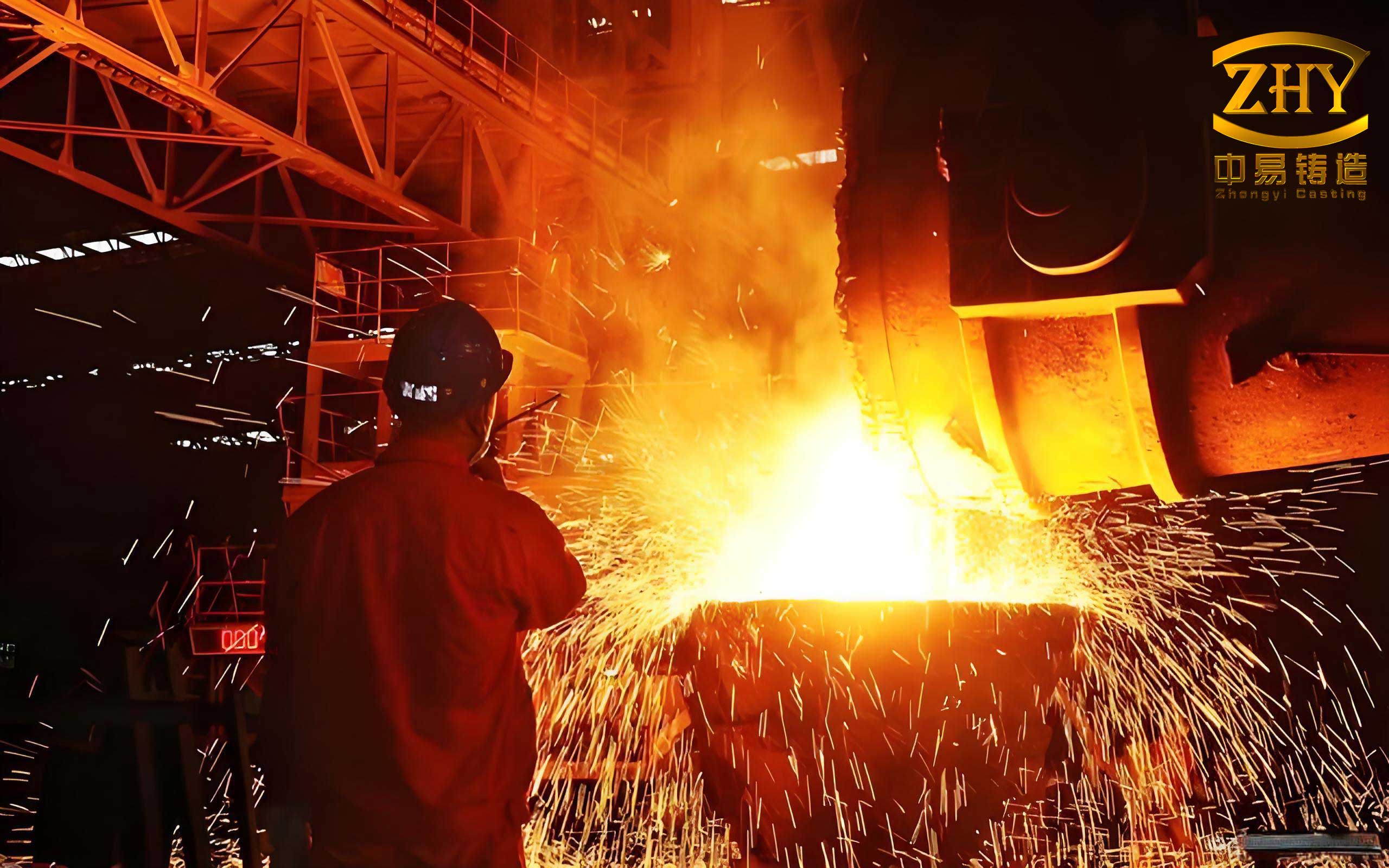
casting parts manufactured from TiB2/Al composites are increasingly favored for lightweight, thin-walled pressure hulls in underwater applications due to their exceptional specific strength, stiffness, and wear resistance. The reinforcement phase, titanium diboride (TiB2), is synthesized in-situ within the aluminum melt, leading to a fine distribution and excellent interfacial bonding with the matrix. TiB2 possesses a unique combination of properties including high melting point (~3225°C), exceptional hardness (~25-35 GPa), outstanding chemical stability, and good thermal/electrical conductivity, making it an ideal reinforcement for aluminum alloys intended for severe service environments.
However, the welding and joining of such metal matrix composites, especially for repairing casting parts, presents formidable challenges stemming from the vast disparity in physical and chemical properties between the ceramic reinforcement and the metallic matrix. Key issues include:
- Interfacial Reactions: At elevated temperatures encountered during welding, deleterious interfacial reactions can occur between molten aluminum and TiB2, potentially forming brittle intermetallic phases like Al3Ti and AlB2, which severely degrade mechanical properties.
- Altered Melt Pool Rheology: The presence of solid ceramic particles significantly increases the viscosity and reduces the fluidity of the molten weld pool. This can lead to poor fusion, entrapment of gases, and the formation of defects like porosity and lack-of-fusion.
- Residual Stresses: The large difference in coefficients of thermal expansion (CTE) between the aluminum matrix (≈23-24 ×10-6/K) and TiB2 (≈8 ×10⁻⁶/K) generates significant micro-scale residual stresses at the particle-matrix interface during the welding thermal cycle, potentially initiating micro-cracks.
- Reinforcement Distribution: Conventional fusion welding can cause agglomeration or segregation of the reinforcing particles, disrupting the uniform microstructure achieved during casting.
Traditional repair methods like Tungsten Inert Gas (TIG) welding often introduce excessive heat input, exacerbating these problems. Laser welding, characterized by its high energy density, low total heat input, rapid heating/cooling cycles, and precise control, emerges as a promising alternative for repairing localized defects in casting parts. The small heat-affected zone (HAZ) and minimal distortion are particularly advantageous for preserving the dimensional accuracy and base material properties of the精密casting parts.
The primary objective of this research is to systematically evaluate the feasibility and effectiveness of laser spot welding for repairing point defects on critical surfaces of TiB2/Al composite casting parts. The investigation encompasses a thorough analysis of the post-repair microstructure, microhardness, and, critically, the performance of subsequently applied corrosion-protective coatings, which is essential for the service life of marine components.
Experimental Materials and Methodology
The substrate material used in this study was a cast TiB2/Al composite plate, simulating the typical microstructure of industrial casting parts. The nominal chemical composition of the base composite is detailed in Table 1. The material features an Al-Si-Mg matrix reinforced with in-situ formed TiB2 particles, with Titanium and Boron contents designed to yield a specific volume fraction of the ceramic phase.
| Si | Mg | Zr | Ti | B | Impurities | Al |
|---|---|---|---|---|---|---|
| 5.0 – 7.5 | 0.3 – 0.65 | 0.3 – 0.5 | 6.5 – 10.0 | 3.0 – 5.0 | ≤ 0.5 | Bal. |
To simulate surface defects commonly found in casting parts, artificial indentations were created on the surface of 100 mm × 50 mm × 5 mm test coupons using a center punch. The selection of filler wire is critical for weld metal compatibility. ER4043 (Al-5Si) wire with a diameter of 0.8 mm was chosen. Its silicon content helps to reduce the cracking susceptibility by modifying the solidification range and eutectic composition, and its corrosion-resistant element profile is not inferior to that of the base composite. The composition is listed in Table 2.
| Si | Fe | Cu | Mg | Zn | Ti | Al |
|---|---|---|---|---|---|---|
| 5.0 | 0.80 | 0.30 | 0.05 | 0.10 | 0.20 | Bal. |
A GY-FLW1500 handheld fiber laser welding system was employed for the repair operations. The process parameters were varied based on the simulated defect’s size and depth, employing three distinct strategies: single-pulse spot welding, double-pulse spot welding, and continuous laser scanning. High-purity argon (≥99.9%) was used as the shielding gas with pre- and post-flow sequences to ensure adequate protection. The key welding parameters are summarized in Table 3.
| Parameter | Range/Value |
|---|---|
| Laser Power (P) | 900 – 1500 W |
| Pulse Frequency (f) | 7000 – 10000 Hz |
| Scanning Speed (v) | 300 – 600 mm/s |
| Oscillating Width | 1 – 4 mm |
The specific heat input (Q) per unit length for the continuous scan can be approximated by:
$$ Q = \frac{P}{v} $$
where $P$ is the laser power and $v$ is the scanning speed. For the pulsed modes, the energy per pulse is a more relevant metric.
Prior to welding, each simulated defect was meticulously cleaned using a triangular scraper or an electric engraver to remove any oxides and create a smooth groove, followed by degreasing with alcohol. The repair sequence strictly followed: initiate shielding gas flow, perform laser welding, and terminate gas flow after a specified delay.
Post-repair evaluation consisted of:
- Macro- and Micro-structural Analysis: Cross-sections of repair spots were prepared for metallographic examination according to standard procedures (polishing and etching) to observe fusion zone geometry, defect presence, and TiB2 particle distribution.
- Microhardness Testing: Vickers microhardness (HV0.05) profiles were measured across the repair zone, heat-affected zone (HAZ), and base material to assess local property changes.
- Coating Performance Evaluation: Repaired samples underwent two standard surface treatments for marine casting parts: anodizing and electroless nickel-phosphorus (Ni-P) plating. Coated samples were subjected to:
- Seawater Immersion Test: Anodized samples were immersed in natural seawater at room temperature for 120 days to evaluate long-term corrosion resistance.
- Strong Alkali Corrosion Test: Ni-P plated samples were immersed in a 25 wt.% NaOH solution at 90°C for 2.5 hours to assess coating integrity under aggressive chemical attack.
Post-corrosion, the coatings were inspected for blisters, peeling, or corrosion products. Coating thickness and microhardness (HV0.1) were measured on both the repaired spots and the surrounding base material areas.
Results and Discussion: Microstructure and Mechanical Properties of Laser Repairs
2.1 Macro- and Micro-morphology of Laser Repair Zones
Macroscopic examination of the repaired casting parts coupons revealed excellent surface quality. All three welding strategies produced smooth, metallic, and shiny weld beads without visible oxidation, indicative of effective inert gas shielding. Cross-sectional analysis confirmed sound repairs: full penetration was achieved, the weld beads were well-formed without collapse, and no macroscopic defects such as cracks, pores, or lack of fusion were observed. The HAZ was extremely narrow, consistent with the low heat input characteristic of laser processes, suggesting minimal thermal impact on the surrounding casting parts microstructure.
Microstructural analysis provided profound insights. The as-cast base material microstructure, shown schematically in analysis, consisted of an α-Al dendritic network with eutectic Si and clusters of nano-scale TiB2 particles often agglomerated along interdendritic regions. This is a common feature in such casting parts. The laser repair process induced significant microstructural refinement within the fusion zone (FZ).
- TiB2 Particle Refinement and Distribution: In the repaired zone, the originally agglomerated TiB2 particles were notably refined and more uniformly dispersed within the aluminum matrix. This phenomenon can be attributed to several synergistic effects:
- Marangoni Convection & Fluid Flow: The high-intensity laser creates strong temperature gradients across the melt pool, driving vigorous Marangoni convection. This fluid flow effectively breaks apart particle agglomerates and promotes a more homogeneous distribution.
- Vaporization-Induced Stirring: Elements with lower vaporization points in the matrix (e.g., Mg, Zn) may preferentially vaporize at the high temperatures of the laser keyhole or melt pool surface. The recoil pressure from this vaporization creates additional turbulence, aiding in particle dispersion.
- Rapid Solidification: The extremely high cooling rates (often exceeding 103-106 K/s) associated with laser welding restrict particle mobility and inhibit re-agglomeration during solidification, “freezing in” the more uniform distribution.
The resulting microstructure eliminates the continuous network of second phases, potentially improving ductility and fracture toughness of the repaired locale.
- Interfacial Integrity: Crucially, the interface between the refined TiB2 particles and the re-solidified aluminum matrix in the FZ appeared clean and well-bonded. There was no evidence of the formation of continuous layers of brittle reaction products like Al3Ti or AlB2. This can be explained by the short liquid phase duration and the overall reduced thermal cycle, which limits the time available for deleterious interfacial reactions to proceed to a significant extent. The integrity of this interface is fundamental to load transfer and the mechanical performance of the repaired casting parts.
- Fusion Line Characteristics: The boundary between the repair weld metal (ER4043) and the composite base material was distinct but well-bonded. Elemental mixing occurs across this boundary, and the absence of cracks or voids indicates good metallurgical compatibility and fusion.
2.2 Microhardness Profile Analysis
Microhardness mapping provides a direct indicator of local strength changes induced by the repair thermal cycle. The average Vickers microhardness (HV0.05) values for the different repair conditions and the base material are compared in Table 4.
| Condition | Hardness Measurements (HV0.05) | Average (HV0.05) |
|---|---|---|
| Base Material (As-Cast) | 93.6, 95.7, 89.9 | 93.1 |
| Single-Pulse Spot Weld | 94.1, 95.8, 92.7, 91.2 | 93.5 |
| Double-Pulse Spot Weld | 74.0, 82.0, 68.5 | 74.8 |
| Continuous Scan Weld | 96.6, 109.5, 92.0 | 99.4 |
The results lead to several key conclusions:
- Single-Pulse and Continuous Scan Repairs: The hardness of the fusion zone for both single-pulse and continuous scanning repairs is comparable to, or slightly higher than, that of the base casting parts material. The slight increase in some cases for continuous scan could be due to the finer microstructure (grain and particle refinement) and potentially higher solid solution strengthening from the rapid cooling. Since hardness ($H$) often correlates strongly with yield strength ($\sigma_y$) for metals and composites via a relationship近似 like $\sigma_y \propto H$, this indicates that the local strength of the repair is not compromised. This is a highly favorable outcome for maintaining the load-bearing capacity of the pressure hull casting parts.
- Double-Pulse Spot Weld: In stark contrast, the double-pulse repair showed a marked decrease in hardness (approximately 20% reduction). This is attributed to an effective annealing or over-aging effect. The first laser pulse heats the material. Before it can cool completely, the second pulse applies an additional thermal cycle, effectively holding the material at an elevated temperature for a longer cumulative time. This extended thermal exposure can cause coarsening of strengthening precipitates (like Mg2Si in the matrix) and relieve internal stresses, leading to softening. This finding is critical for process optimization: double-pulse strategies should be avoided for repairing age-hardenable Al composite casting parts unless followed by a post-weld heat treatment.
The hardness distribution can be modeled as a function of the thermal cycle’s peak temperature ($T_{peak}$) and cooling time ($t_{8/5}$). For aluminum alloys, a simplified relationship for hardness in the HAZ can be conceptualized as:
$$ H_{HAZ} = H_0 – k \cdot f(T_{peak}, t_{8/5}) $$
where $H_0$ is the base hardness and $k$ is a material-dependent constant. The double-pulse process increases the effective $t_{8/5}$, leading to a greater decrease in $H_{HAZ}$, which in this case encompasses the entire small fusion zone.
Influence of Laser Repair on the Performance of Protective Coatings
For casting parts deployed in marine environments, surface engineering through anodizing or electroless plating is mandatory to ensure long-term corrosion resistance. A paramount concern is whether the laser-repaired area, with its distinct microstructure and composition, will support a protective coating with performance equivalent to the parent material.
3.1 Coating Integrity and Corrosion Resistance
Anodized Samples (Seawater Test): After 120 days of immersion, the anodized layer on both the repaired spots and the surrounding base material remained intact. No pitting, blistering, or spallation was observed. The primary noticeable difference was a color variation: the repaired spots appeared darker (grey-black) compared to the silver-white color of the anodized base material. This color difference is purely aesthetic and stems from the variation in alloy composition (especially silicon content from the ER4043 filler) and microstructure in the repair zone, which affects light interference in the porous anodic alumina layer. Importantly, the continuity, adhesion, and barrier properties of the anodic film were not impaired, confirming its protective functionality.
Ni-P Plated Samples (Alkali Test): The electroless Ni-P coatings withstood the aggressive hot NaOH immersion test. No signs of coating failure—such as peeling, blistering, or the formation of corrosion products—were detected on either the repaired areas or the base material. The visual color match was superior to anodizing, with only a slight metallic hue difference, indicating that the Ni-P deposition process is less sensitive to the substrate’s microstructural variations. The coating provided uniform sacrificial and barrier protection.
3.2 Coating Thickness and Hardness
Quantitative measurements of coating thickness and hardness were conducted post-corrosion to ensure they met specification requirements. The data, presented in Tables 5 & 6 for anodizing and Tables 7 & 8 for Ni-P plating, demonstrate the consistency of the coating processes over repaired casting parts.
| Measurement Location | Spot 1 (µm) | Spot 2 (µm) | Spot 3 (µm) |
|---|---|---|---|
| Adjacent Base Material | 32.2 | 32.3 | 32.4 |
| Laser Repair Spot | 29.0 | 27.3 | 30.3 |
| Measurement Location | Spot 1 | Spot 2 | Spot 3 |
|---|---|---|---|
| Adjacent Base Material | 481 | 464 | 460 |
| Laser Repair Spot | 489 | 489 | 480 |
| Measurement Location | Spot 1 (µm) | Spot 2 (µm) | Spot 3 (µm) |
|---|---|---|---|
| Adjacent Base Material | 57.1 | 64.3 | 60.3 |
| Laser Repair Spot | 56.9 | 65.3 | 61.9 |
| Measurement Location | Spot 1 | Spot 2 | Spot 3 |
|---|---|---|---|
| Adjacent Base Material | 510 | 566 | 514 |
| Laser Repair Spot | 514 | 572 | 542 |
The analysis of this data confirms the following:
- Coating Thickness: The thickness of both anodic and Ni-P coatings on the laser repair spots is statistically equivalent to the thickness on the adjacent base material of the casting parts. The minor variations observed are within the normal range of the coating deposition processes. This indicates that the surface condition and electrochemical activity of the repaired zone are suitable for uniform coating growth.
- Coating Hardness: Similarly, the microhardness of the coatings applied over the repair zones matches or slightly exceeds that on the base material. This suggests that the coating’s intrinsic mechanical properties (e.g., the hardness of the alumina layer or the as-plated Ni-P structure) are not adversely affected by the different substrate underneath. The coating itself maintains its protective quality.
The corrosion rate ($CR$) in a service environment is governed by factors including coating integrity, thickness ($d$), and adhesion. The effective protection can be conceptually assured if:
$$ CR_{repaired} \approx CR_{base} $$
which is true when $d_{repaired} \approx d_{base}$ and the coating adhesion is sufficient, as evidenced by the absence of blistering or peeling in our tests.
Conclusions and Engineering Implications
This comprehensive investigation validates laser spot welding as a highly capable and reliable technique for repairing localized surface defects in high-value TiB2/Al metal matrix composite casting parts. The key findings and their implications are summarized as follows:
- Process Advantages for Casting Parts Repair: The low, localized heat input of laser welding minimizes the thermal impact on the sensitive composite microstructure of the surrounding casting parts. It produces a narrow HAZ and negligible distortion, preserving the dimensional accuracy and global properties of the component—a critical factor for精密casting parts like pressure housings.
- Microstructural Superiority: The laser repair process actively improves the local microstructure by refining and homogenizing the distribution of TiB2 reinforcement particles, breaking up the as-cast agglomerates. Furthermore, it successfully avoids the formation of brittle interfacial reaction products, resulting in a clean, strong bond between the reinforcement and the matrix within the fusion zone.
- Mechanical Property Retention: When employing single-pulse or continuous scanning strategies, the microhardness (and by inference, strength) of the repaired zone is maintained at a level equivalent to the base casting parts material. This confirms the structural adequacy of the repair. The significant softening observed in double-pulse repairs underscores the importance of optimized parameter selection to avoid deleterious thermal cycles.
- Compatibility with Corrosion Protection Systems: Laser-repaired areas on casting parts are fully compatible with standard marine-grade surface treatments, including anodizing and electroless Ni-P plating. While anodizing may result in a visible color difference, both coating processes yield layers with equivalent thickness, hardness, adhesion, and most importantly, corrosion resistance compared to coatings on the untouched base material. This ensures the long-term durability of the repaired component in service.
In conclusion, laser spot welding transitions from a mere joining technique to a powerful restoration tool for advanced casting parts. It offers a precise, controlled, and metallurgically sound method to salvage expensive TiB2/Al composite components that would otherwise be scrapped due to minor casting imperfections, delivering significant economic benefits while ensuring performance reliability in critical applications.