
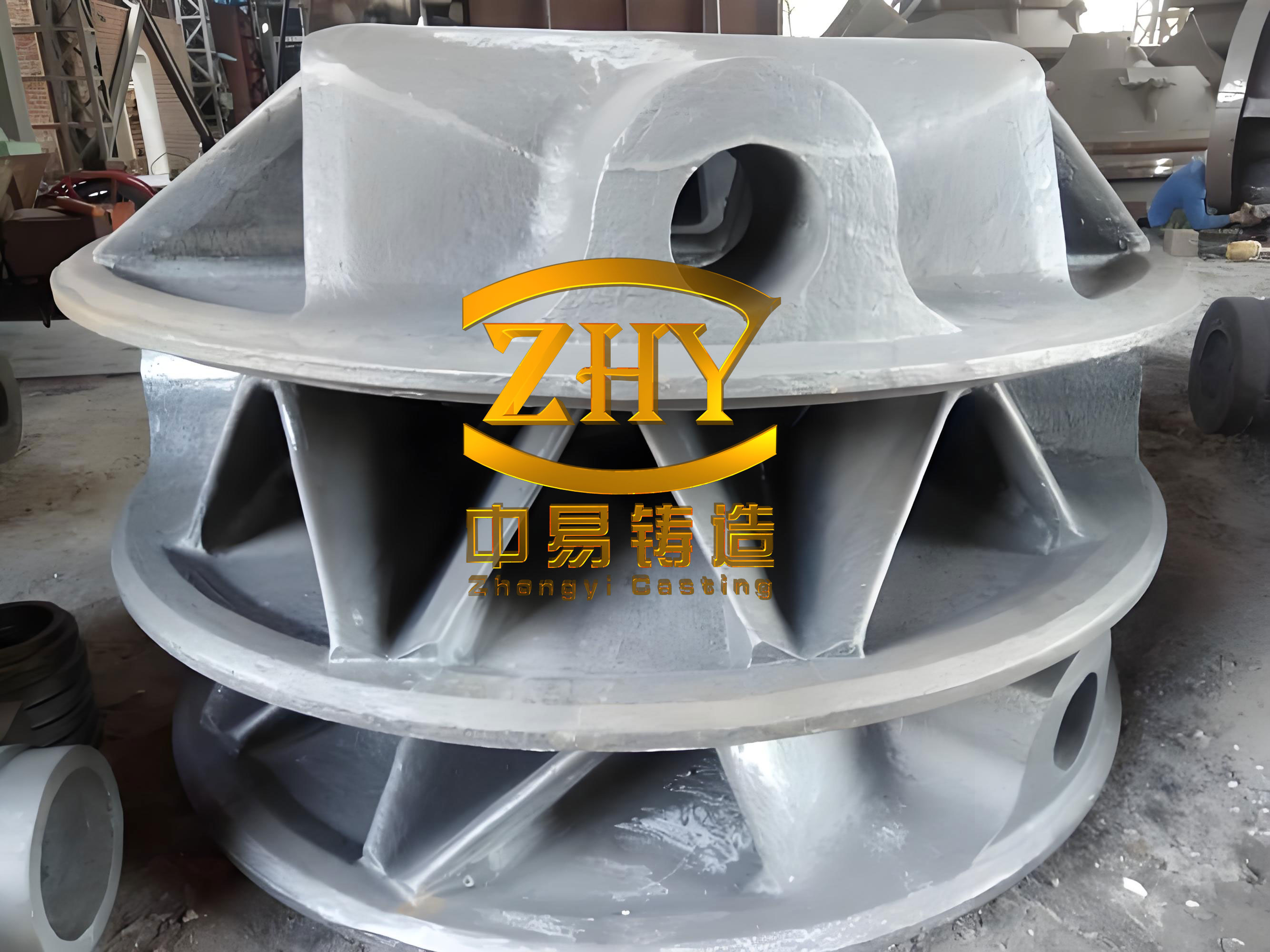
The relentless advancement of global rail transportation, particularly in regions spanning vast latitudinal ranges with winter temperatures plummeting below -40°C, has imposed increasingly stringent demands on material performance. Critical components, such as gearbox housings for electric locomotives, require a unique combination of high strength, ductility, and exceptional toughness at ultra-low temperatures. Traditional ductile iron casting grades, like QT500-7, often fall short of meeting these comprehensive specifications, which may mandate elongations exceeding 8% and Charpy V-notch impact energies (AKV) with averages ≥4 J (minimum single value ≥3 J) at -40°C. While ferritic grades like QT400-18AL offer superb low-temperature toughness, their tensile strength is significantly lower, and they typically necessitate energy-intensive high-temperature graphitization annealing. This gap in the material property landscape has driven significant research and development efforts toward a new class of high-strength, high-toughness, ultra-low temperature ductile iron castings.
This article details a systematic investigation undertaken to develop and optimize such advanced ductile iron casting materials. The core objective was to engineer alloys that satisfy or exceed the mechanical properties of QT500-7 and QT600-7 grades while simultaneously achieving robust performance in cryogenic conditions. The research pathway involved a meticulous examination of alloying strategies, impurity control, and processing techniques, with all findings synthesized through targeted experimentation and analysis.
The foundational microstructure of ductile iron castings, comprising spherical graphite nodules embedded within a metallic matrix (ferrite, pearlite, or a mixture), dictates its mechanical properties. The challenge for ultra-low temperature applications lies in suppressing the ductile-to-brittle transition temperature (DBTT). Key factors influencing this include:
1. Graphite Morphology: Round, well-dispersed nodules minimize stress concentration.
2. Matrix Structure: A predominantly ferritic matrix offers superior toughness but lower strength. Pearlite increases strength but can detrimentally impact low-temperature toughness.
3. Alloying Elements: Elements like Nickel (Ni) and Copper (Cu) can strengthen the matrix without severely compromising toughness and can also influence the stability of austenite at low temperatures.
4. Impurity Control: Elements like Sulfur (S) and Phosphorus (P) promote the formation of brittle phases at grain boundaries, elevating the DBTT.
The relationship between ultimate tensile strength (Rm), matrix composition, and nodule characteristics can be conceptually described by a modified rule of mixtures and Griffith’s criterion for stress concentration around voids (graphite):
$$ R_m \approx (1 – f_g)V_f \cdot \sigma_f + (1 – f_g)V_p \cdot \sigma_p + \Delta\sigma_{ss} – \frac{K_{IC}}{\sqrt{\pi a}} $$
where \(f_g\) is the volume fraction of graphite, \(V_f\) and \(V_p\) are the volume fractions of ferrite and pearlite, \(\sigma_f\) and \(\sigma_p\) are their respective strengths, \(\Delta\sigma_{ss}\) is the solid solution strengthening contribution, \(K_{IC}\) is the fracture toughness, and \(a\) is a characteristic defect size related to graphite spacing and morphology. For high low-temperature toughness, a high \(K_{IC}\) and a fine, uniform distribution of nodules (small effective \(a\)) are crucial.
The experimental work was conducted using a 100 kg medium-frequency induction furnace. Base charges consisted of pig iron and steel scrap, with alloying additions made during meltdown. The target base compositions for the QT500-7LT and QT600-7LT ductile iron castings were maintained within a tight range, with particular attention to low manganese and phosphorus levels. Melting was carried out between 1,500-1,550°C, with tapping and pouring temperatures controlled at 1,500-1,520°C and 1,380-1,420°C, respectively.
Treatment of the molten iron involved a sandwich spheroidization process using a Fe-Si-Mg alloy, followed by a two-stage inoculation practice (covering and late-stream addition). A crucial aspect of the process was the implementation of a mold-side inoculation (pouring stream inoculation) using a specially designed feeder to ensure effective late-stage graphitization and matrix refinement. Test specimens were cast in standardized Y-blocks, from which samples for tensile, hardness, impact, and metallographic analysis were extracted.
Alloying Strategy for Enhanced Cryogenic Performance in Ductile Iron Castings
The selection of alloying elements was paramount to achieving the desired synergy of strength and low-temperature toughness in these advanced ductile iron castings. Three primary strategies were evaluated and compared.
1. Nickel (Ni) as a Sole Addition
Nickel, being an austenite stabilizer, dissolves in ferrite and pearlite, providing solid solution strengthening without forming carbides. It also narrows the solidification range, promoting a finer microstructure. Trials were conducted on a QT500-7 base with varying Ni contents.
| Experiment Set | Ni Content (wt.%) | Rm (MPa) | A (%) | AKV @ -40°C (Avg. J) | Matrix Structure (As-Cast) |
|---|---|---|---|---|---|
| A1 | 0.9 | ~480 | ≥12 | 6.7 | F + <10% P |
| A2 | 1.3 | ~490 | ≥12 | 7.0 | F + (10-20)% P |
| A3 | 1.6 | ~495 | ≥12 | 7.3 | F + (15-25)% P |
| A4 | 1.9 | >500 | ≥12 | 7.7 | F + (25-35)% P |
While excellent elongation and low-temperature impact energy were achieved, the tensile strength only marginally met the 500 MPa threshold at the highest Ni level (1.9%). The strengthening efficiency per unit weight of Ni was low, making this approach economically unfeasible for high-strength ductile iron castings. The contribution of Ni to strength can be approximated by:
$$ \Delta R_{m(Ni)} \approx k_{Ni} \cdot [wt.\% Ni]^{n} $$
where \(k_{Ni}\) is a strengthening coefficient and \(n < 1\), indicating diminishing returns.
2. Nickel (Ni) and Molybdenum (Mo) Composite Addition
Molybdenum is a potent ferrite strengthener and refiner of pearlite. It was hypothesized that a small Mo addition (0.17%) would provide the necessary strength boost, allowing for a lower Ni content. A QT500-7 base with fixed Mo was used.
| Experiment Set | Ni Content (wt.%) | Rm (MPa) | A (%) | AKV @ -40°C (Avg. J) |
|---|---|---|---|---|
| B1 (0.17% Mo) | 0.6 | <500 | High | 5.3 |
| B2 (0.17% Mo) | 0.7 | <500 | High | 4.7 |
| B3 (0.17% Mo) | 0.8 | <500 | High | 4.3 |
Although the low-temperature impact values were acceptable, the tensile strength failed to reach the 500 MPa target. Increasing Mo content to raise strength was rejected due to its strong tendency to form carbides and promote pearlite, which would severely degrade both elongation and cryogenic toughness in ductile iron castings. Furthermore, Mo is a costly alloying element.
3. Nickel (Ni) and Copper (Cu) Composite Addition
Copper, like nickel, is a graphitizing element that promotes pearlite formation and provides solid solution strengthening. It is significantly less expensive than Mo or high levels of Ni. This combination emerged as the most promising route for developing both QT500-7LT and QT600-7LT grade ductile iron castings.
The effects were studied systematically by varying one element while holding the other relatively constant.
For QT500-7LT Grade Ductile Iron Castings: (Constant ~1.0% Ni)
| Cu Content (wt.%) | Rm (MPa) | Rp0.2 (MPa) | A (%) | AKV @ -40°C (Avg. J) |
|---|---|---|---|---|
| 0.12 | 520 – 540 | 340 – 360 | 12 – 15 | 6.5 – 7.5 |
| 0.18 | 540 – 560 | 350 – 370 | 10 – 13 | 6.0 – 7.0 |
| 0.22 | 550 – 580 | 360 – 380 | 9 – 12 | 5.5 – 6.5 |
For QT600-7LT Grade Ductile Iron Castings: (Constant ~0.35% Cu)
| Ni Content (wt.%) | Rm (MPa) | Rp0.2 (MPa) | A (%) | AKV @ -40°C (Avg. J) |
|---|---|---|---|---|
| 1.0 | >600 | >370 | ≥7 | ≥4.5 |
| 1.5 | >620 | >380 | ≥7 | ≥4.5 |
| 2.0 | >630 | >390 | ≥6 | ≥4.0 |
The synergistic effect of Ni and Cu can be modeled as a combined strengthening contribution:
$$ \Delta R_{m(Ni+Cu)} \approx k_{NiCu} \cdot ([wt.\% Ni] + \alpha[wt.\% Cu]) $$
where \(\alpha\) is a factor representing the relative strengthening potency of Cu compared to Ni. The optimal ranges identified were:
• QT500-7LT: Ni: 0.8 – 2.0%, Cu: 0.1 – 0.2%.
• QT600-7LT: Ni: 1.0 – 2.0%, Cu: 0.2 – 0.5%.
This combination successfully provided the necessary strength through solid solution and pearlite promotion while retaining sufficient ferrite content and matrix toughness for cryogenic performance, establishing it as the cornerstone alloying strategy for these advanced ductile iron castings.
The Critical Role of Sulfur Control in Ductile Iron Castings
Sulfur is a surface-active element that profoundly affects the morphology of graphite. In ductile iron castings, high sulfur levels consume magnesium from the spheroidizing agent to form MgS slag, leading to imperfect nodularity (spiky or vermicular graphite) and the formation of sulfides. These act as stress raisers and brittle interfaces, drastically reducing both ductility and low-temperature toughness. The effect of sulfur content was investigated by comparing charges made from standard pig iron versus high-purity pig iron.
| Charge Type | S Content (wt.%) | Rm (MPa) | A (%) | AKV @ -40°C (Avg. J) | Graphite Nodularity |
|---|---|---|---|---|---|
| Standard Pig Iron | ~0.012 – 0.015 | < 500 | 8 – 10 | 3 – 4 | Degraded (Ⅴ/Ⅵ) |
| High-Purity Pig Iron | 0.004 – 0.008 | > 550 | 12 – 15 | 6 – 8 | Excellent (Ⅵ) |
The results unequivocally demonstrate that stringent control of sulfur is non-negotiable for producing high-integrity ultra-low temperature ductile iron castings. The recommended range is 0.004% to 0.008%. The detrimental effect of sulfur can be related to the Mg consumption:
$$ [Mg]_{available} = [Mg]_{added} – \beta \cdot [S]_{initial} $$
where \([Mg]_{available}\) is the magnesium left for graphitization, and \(\beta\) is a stoichiometric factor. Low \([Mg]_{available}\) leads to poor nodularity, directly impacting the stress concentration factor and the effective fracture toughness \(K_{IC}\) in the earlier strength equation.
Optimizing Spheroidization and Inoculation for Superior Cryogenic Toughness in Ductile Iron Castings
The final microstructural refinement, critical for maximizing the low-temperature potential of the alloyed ductile iron castings, is achieved through spheroidization and inoculation. A comparative study was performed between a conventional process and a compound process involving enhanced inoculation methods.
Conventional Process: Standard sandwich spheroidization followed by a single post-inoculation.
Compound Process: Sandwich spheroidization combined with a two-stage inoculation (covering + late addition) and the critical use of mold-side (pouring stream) inoculation.
| Processing Route | Graphite Morphology (ISO 945) | Matrix Structure (As-Cast) | Nodule Count (per mm²) | AKV @ -40°C (Avg. J) | Improvement |
|---|---|---|---|---|---|
| Conventional | 80% Type VI, 20% Type V | P + (5-30)% F | ~120 | 4.0 – 4.3 | Baseline |
| Compound | 85% Type VI, 15% Type V | P + (10-35)% F | ~180 | 4.7 – 5.0 | +9.3% to +25% |
The compound process yielded significant benefits for the ductile iron castings:
1. Enhanced Nodularity and Refinement: Higher percentage of spherical graphite (Type VI) and a greater nodule count.
2. Promoted Ferrite Formation: The enhanced inoculation, especially the late-stream addition, provided more effective substrates for graphite precipitation during eutectic solidification and subsequent cooling, encouraging the formation of a ferrite halo around nodules and increasing the overall ferrite fraction.
3. Improved Low-Temperature Toughness: The combined effect of better nodularity (lower stress concentration) and a higher, more stable ferrite content directly translated to a measurable increase in Charpy impact energy at -40°C. The relationship between nodule count (N) and inter-nodule distance (λ), which influences the effective flaw size \(a\), is given by:
$$ \lambda \propto \frac{1}{\sqrt[3]{N}} $$
A higher N leads to a smaller λ, which in turn increases the material’s resistance to crack initiation and propagation, as indicated by a higher effective \(K_{IC}\).
Conclusions and Industrial Implications for Advanced Ductile Iron Castings
This comprehensive investigation successfully outlines a viable pathway for the production of high-strength, high-toughness ductile iron castings capable of reliable service in ultra-low temperature environments down to -40°C and below. The key conclusions are:
- The optimal alloying strategy for balancing strength, ductility, and cryogenic toughness in these ductile iron castings is the composite addition of Nickel and Copper. For the QT500-7LT grade, Nickel should be controlled within 0.8–2.0% and Copper within 0.1–0.2%. For the higher-strength QT600-7LT grade, Nickel should be between 1.0–2.0% and Copper between 0.2–0.5%.
- Impurity control, specifically Sulfur, is foundational. Sulfur levels must be rigorously maintained between 0.004% and 0.008% to ensure optimal graphite morphology and to prevent the formation of embrittling phases, which are catastrophic for low-temperature performance in ductile iron castings.
- Metallurgical processing is as critical as composition. A compound spheroidization and inoculation practice, incorporating mold-side inoculation, is essential for maximizing the potential of the alloy. This process refines graphite structure, increases nodule count, promotes a more favorable ferrite-pearlite matrix, and thereby delivers a consistent 10-25% improvement in ultra-low temperature impact toughness compared to conventional treatments.
The development of QT500-7LT and QT600-7LT grades represents a significant material advancement for the transportation and heavy machinery sectors, where components like gearboxes, brake systems, and structural parts must withstand severe mechanical loads in arctic conditions. The principles established—targeted alloying with Ni/Cu, ultra-low impurity melts, and advanced inoculation techniques—provide a robust framework for engineers and foundries specializing in high-performance ductile iron castings. Future work may explore the further extension of service temperatures, the role of other micro-alloying elements, and the long-term stability of these microstructures under cyclic cryogenic loading.