
In modern industrial applications, the demand for enhanced surface properties of engineering materials is ever-increasing. Among these materials, ductile iron casting stands out due to its excellent combination of high strength, good wear resistance, machinability, and cost-effectiveness. It is extensively used in automotive components, machinery parts, and transportation systems. However, to meet more stringent performance requirements in harsh operating environments, the surface characteristics of ductile iron casting often need further improvement. Traditional surface hardening techniques, such as bulk quenching, induction hardening, or flame hardening, have limitations including significant workpiece distortion, environmental concerns, and challenges in processing complex geometries. Laser surface hardening has emerged as a promising alternative, offering advantages like precise localized treatment, minimal thermal distortion, rapid processing, and the ability to automate for complex shapes. This technique utilizes a high-energy laser beam to rapidly heat the material surface above the transformation temperature, followed by self-quenching due to heat conduction into the cold substrate, resulting in a hardened layer with refined microstructure.
Our research focuses on optimizing the laser surface hardening process for a specific grade of ductile iron casting, QT600-3A, which is commonly employed in stamping dies and other high-wear applications. The effectiveness of laser hardening is highly dependent on the interplay of process parameters, primarily laser power (P) and scanning speed (V). These parameters determine the energy input per unit area, influencing the thermal cycle and consequently the resulting microstructure, surface hardness, roughness, and hardened case depth. A systematic approach to understanding and optimizing these parameters is crucial for achieving desired performance outcomes. In this study, we employ Response Surface Methodology (RSM), a collection of statistical and mathematical techniques, to develop empirical models that correlate the laser process parameters with key response variables. Specifically, we utilize a Central Composite Design (CCD), a type of RSM design known for its sequential and rotatable properties, to plan our experiments efficiently. The primary objectives are to establish quantitative relationships between P and V and the responses—surface hardness (y1), surface roughness (y2), and case depth (y3)—and subsequently to determine the optimal parameter set that maximizes hardness and case depth while minimizing surface roughness through a multi-objective desirability function approach.
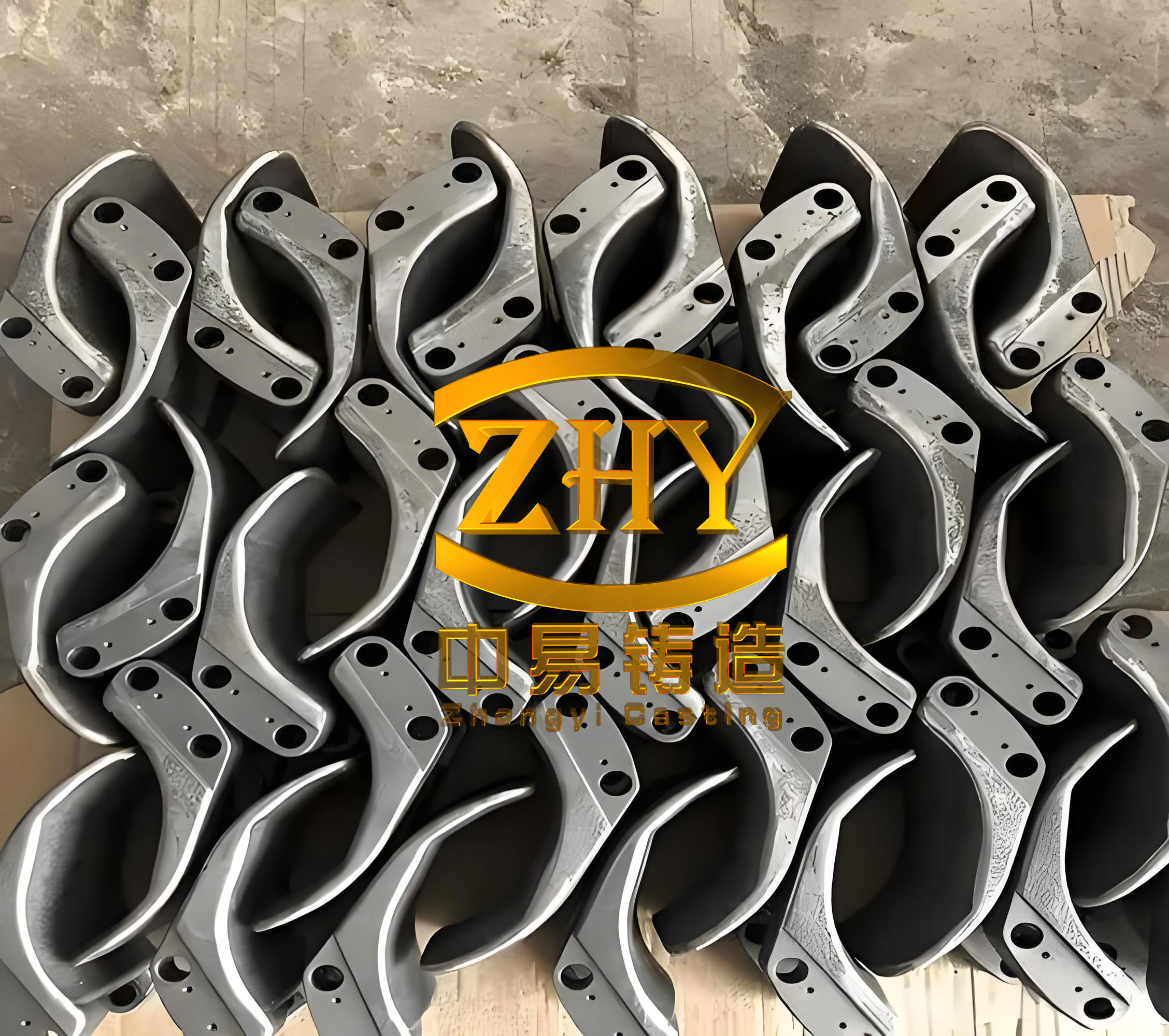
The substrate material selected for this investigation is a pearlitic grade of ductile iron casting, QT600-3A. The chemical composition of this ductile iron casting, determined via spectroscopic analysis, is presented in Table 1. The initial microstructure, as observed under an optical microscope, consists of a matrix of pearlite (lamellar ferrite and cementite) with uniformly distributed spherical graphite nodules, which is characteristic of this grade and contributes to its balanced mechanical properties.
| C | Si | Mn | P | S | Mo | Cu | Ni | Mg |
|---|---|---|---|---|---|---|---|---|
| 3.55 | 2.05 | 0.49 | 0.031 | 0.010 | 0.51 | 0.68 | 0.43 | 0.045 |
Specimens with dimensions of 100 mm × 100 mm × 15 mm were machined from the as-received ductile iron casting. The surfaces were ground using progressively finer砂纸 to remove oxide layers and achieve an initial surface roughness of approximately Ra = 0.8 µm, followed by ultrasonic cleaning in alcohol to eliminate contaminants. The laser surface hardening system comprised a fiber-coupled diode laser source with a maximum power of 3000 W. The laser head, mounted on a six-axis robotic arm for precise motion control, produced a rectangular beam spot with dimensions of 20 mm × 2 mm at the focal plane (focal length 300 mm). No coating or absorptivity-enhancing agent was applied, as the ductile iron casting surface has sufficient intrinsic absorption for the laser wavelength used.
To model the process, we adopted a two-factor, five-level Central Composite Design (CCD). The factors were laser power (P) and scanning speed (V). The levels for each factor, including axial points, are detailed in Table 2. This design allows for the estimation of linear, quadratic, and interaction effects of the parameters on the responses. A total of 13 experimental runs were conducted, including factorial points, axial points, and center points for estimating pure error. The energy density (E), a combined parameter, is often used to represent the net heat input and is calculated as:
$$E = \frac{P}{V \cdot W}$$
where W is the width of the laser beam spot (2 mm in our setup). This parameter provides an initial insight into the thermal input, but RSM helps decipher the individual and interactive effects of P and V more precisely.
| Level | Coded Value for V | Scanning Speed, V (mm/s) | Coded Value for P | Laser Power, P (W) |
|---|---|---|---|---|
| -α (-1.414) | -1.414 | 2.6 | 0 | 1440 |
| -1 | -1 | 3.0 | -1 | 1450 |
| 0 | 0 | 4.0 | 0 | 1475 |
| +1 | +1 | 5.0 | +1 | 1500 |
| +α (+1.414) | +1.414 | 5.4 | 0 | 1510 |
After laser treatment, the responses were meticulously measured. Surface hardness was evaluated using a Rockwell hardness tester (scale C) with a load of 1471 N, taking five indentations per specimen and averaging the results. Surface roughness (Ra) was measured perpendicular to the laser scanning direction using a contact profilometer; five profiles were taken, and the average Ra value was recorded. The case depth, defined as the distance from the surface to the point where the microstructure transitions to that of the unaffected base material, was determined metallographically. Cross-sectional specimens were prepared by standard mounting, polishing, and etching with nital. The hardened layer depth was measured at five different locations along the track using an optical microscope equipped with image analysis software, and the average was computed. The complete experimental design matrix along with the measured response values is consolidated in Table 3.
| Run No. | V (mm/s) | P (W) | Energy Density, E (J/mm²) | Surface Hardness, y₁ (HRC) | Surface Roughness, y₂ (µm) | Case Depth, y₃ (µm) |
|---|---|---|---|---|---|---|
| 1 | 3.0 | 1450 | 24.17 | 59.74 | 6.226 | 1334.96 |
| 2 | 5.0 | 1450 | 14.50 | 53.17 | 2.386 | 957.34 |
| 3 | 3.0 | 1500 | 25.00 | 59.47 | 5.565 | 1390.91 |
| 4 | 5.0 | 1500 | 15.00 | 54.34 | 3.229 | 971.33 |
| 5 | 2.6 | 1475 | 28.37 | 59.58 | 5.894 | 1579.72 |
| 6 | 5.4 | 1475 | 13.66 | 51.78 | 1.386 | 824.48 |
| 7 | 4.0 | 1440 | 18.00 | 55.40 | 3.963 | 1097.20 |
| 8 | 4.0 | 1510 | 18.88 | 56.28 | 4.787 | 1069.23 |
| 9 | 4.0 | 1475 | 18.44 | 55.98 | 4.484 | 1111.19 |
| 10 | 4.0 | 1475 | 18.44 | 56.06 | 4.816 | 1125.17 |
| 11 | 4.0 | 1475 | 18.44 | 56.18 | 4.217 | 1139.16 |
| 12 | 4.0 | 1475 | 18.44 | 57.94 | 4.707 | 1083.22 |
| 13 | 4.0 | 1475 | 18.44 | 57.72 | 4.214 | 1055.24 |
The data from Table 3 were subjected to analysis of variance (ANOVA) using statistical software to fit second-order polynomial models for each response. The general form of the model is:
$$y = \beta_0 + \beta_1 V + \beta_2 P + \beta_{11} V^2 + \beta_{22} P^2 + \beta_{12} V P + \epsilon$$
where y is the predicted response, β0 is the constant coefficient, β1 and β2 are linear coefficients, β11 and β22 are quadratic coefficients, β12 is the interaction coefficient, and ε is the error term. The significance of each term was assessed using p-values (significance level α=0.05). Models were refined by removing non-significant terms (except those involved in significant interactions) to enhance predictive capability. The adequacy of the models was evaluated using the coefficient of determination (R²), adjusted R² (R²Adj), predicted R² (R²Pred), and the lack-of-fit test.
The ANOVA results for the surface hardness (y₁) model are summarized in Table 4. The model F-value of 16.85 and a p-value of 0.001 indicate that the model is highly significant. The lack-of-fit p-value of 0.630 (>0.05) suggests the model adequately fits the data. The R² value of 92.33% means the model explains over 92% of the variability in surface hardness. Among the factors, the linear effect of scanning speed (V) is extremely significant (p<0.001), while the linear effect of laser power (P) is not significant (p=0.422). However, to maintain hierarchy and because P is part of the model structure, it was retained. The final reduced model for surface hardness, in terms of actual factors, is:
$$y_1 = 132.514 – 21.7975 V – 0.0468 P – 0.2873 V^2 + 0.0144 V P$$
| Source | Degrees of Freedom | Sum of Squares | Mean Square | F-Value | p-Value |
|---|---|---|---|---|---|
| Model | 5 | 66.6321 | 13.3264 | 16.85 | 0.001 |
| Linear | 2 | 65.1780 | 32.5890 | 41.21 | 0.000 |
| V | 1 | 64.6041 | 64.6041 | 81.69 | 0.000 |
| P | 1 | 0.5739 | 0.5739 | 0.73 | 0.422 |
| Square | 2 | 0.9357 | 0.4678 | 0.59 | 0.579 |
| V² | 1 | 0.6726 | 0.6726 | 0.85 | 0.387 |
| P² | 1 | 0.3695 | 0.3695 | 0.47 | 0.516 |
| Interaction | 1 | 0.5184 | 0.5184 | 0.66 | 0.445 |
| V×P | 1 | 0.5184 | 0.5184 | 0.66 | 0.445 |
| Residual Error | 7 | 5.5356 | 0.7908 | ||
| Lack of Fit | 3 | 1.7881 | 0.5960 | 0.64 | 0.630 |
| Pure Error | 4 | 3.7475 | 0.9369 | ||
| Total | 12 | 72.1677 |
Model Summary: R² = 92.33%, R²Adj = 86.85%, R²Pred = 74.27%.
Similarly, ANOVA was performed for surface roughness (y₂) and case depth (y₃). For surface roughness, the model was highly significant (p<0.001) with R² = 96.90%. The linear term of V, the quadratic term of V², and the interaction term V×P were found to be significant (p<0.05). The reduced model is:
$$y_2 = 84.0828 – 21.0015 V – 0.0534 P – 0.3449 V^2 + 0.0150 V P$$
For case depth, the model was also highly significant (p<0.001, R² = 96.48%). The linear effect of V and the quadratic effect of V² were significant. The reduced model is:
$$y_3 = 234.473 – 66.9524 V + 1.8339 P + 56.463 V^2 – 0.4196 V P$$
A comparison of the full and reduced models for all responses, shown in Table 5, confirms that the reduced models have improved adjusted and predicted R² values with lower standard error (S) and predicted residual sum of squares (PRESS), indicating better predictive performance.
| Response | Model Type | R² (%) | R²Adj (%) | S | R²Pred (%) | PRESS |
|---|---|---|---|---|---|---|
| Surface Hardness (y₁) | Full Model | 92.33 | 86.85 | 0.8893 | 74.27 | 18.6 |
| Reduced Model | 91.82 | 87.73 | 0.8592 | 81.50 | 13.3 | |
| Surface Roughness (y₂) | Full Model | 96.90 | 94.69 | 0.3118 | 85.66 | 3.2 |
| Reduced Model | 96.87 | 95.30 | 0.2933 | 88.96 | 2.4 | |
| Case Depth (y₃) | Full Model | 96.48 | 93.97 | 48.7697 | 80.31 | 93245.0 |
| Reduced Model | 96.45 | 94.68 | 45.8297 | 83.83 | 76549.9 |
The developed models allow us to visualize and interpret the effects of laser power and scanning speed on each response within the experimental domain. For surface hardness of the ductile iron casting, the 3D response surface plot (described by the equation for y₁) reveals that hardness increases with decreasing scanning speed and, to a lesser extent, with increasing laser power. This can be explained metallurgically. Lower scanning speed or higher power increases the energy density, leading to a higher surface temperature and longer interaction time. This promotes more complete austenitization of the pearlitic matrix. Upon rapid self-quenching, this austenite transforms into a harder martensitic structure. At very high energy densities (low V, high P), surface melting can occur, leading to the formation of a ledeburitic (eutectic) structure consisting of fine dendrites of austenite and cementite, which upon cooling can transform to very hard phases, further increasing surface hardness.
For surface roughness, the model indicates that roughness decreases with increasing scanning speed and decreasing laser power. At high speeds and low power, the energy density is low, and the surface may not melt. The increase in roughness compared to the initial state is primarily due to volumetric expansion associated with the martensitic transformation, creating microscopic surface relief. At low speeds and high power, higher energy density causes surface melting. The melt pool dynamics, influenced by surface tension, gravity, and Marangoni convection, lead to material redistribution and solidification wrinkles, resulting in a significantly rougher surface. The interaction term (V×P) suggests that the effect of one parameter on roughness depends on the level of the other.
The case depth response is critically important for wear resistance. The model shows that case depth increases substantially with decreasing scanning speed and increasing laser power. This is a direct consequence of heat conduction. Higher energy input (lower V, higher P) raises the surface temperature and extends the depth at which the temperature exceeds the austenitization temperature (Ac1). The relationship can be conceptually linked to the simplified formula:
$$H \propto \frac{P}{V \cdot S}$$
where H is case depth and S is the beam area, which aligns with the trends observed in our model for this ductile iron casting.
Having established reliable models, we proceeded to multi-objective optimization. The goal was to find the combination of laser power and scanning speed that simultaneously maximizes surface hardness (y₁), minimizes surface roughness (y₂), and maximizes case depth (y₃). These objectives often conflict; for instance, parameters that maximize hardness and depth tend to increase roughness. To resolve this, we used the desirability function approach. Individual desirability functions (di) were defined for each response. For “larger-the-better” responses (y₁, y₃), the function is:
$$d_i(\hat{y}_i) = \begin{cases}
0, & \hat{y}_i < L_i \\
\left( \frac{\hat{y}_i – L_i}{T_i – L_i} \right)^r, & L_i \leq \hat{y}_i \leq T_i \\
1, & \hat{y}_i > T_i
\end{cases}$$
For “smaller-the-better” responses (y₂), the function is:
$$d_i(\hat{y}_i) = \begin{cases}
1, & \hat{y}_i < T_i \\
\left( \frac{H_i – \hat{y}_i}{H_i – T_i} \right)^r, & T_i \leq \hat{y}_i \leq H_i \\
0, & \hat{y}_i > H_i
\end{cases}$$
Here, $\hat{y}_i$ is the predicted response value, Ti is the target, Li and Hi are the lower and upper bounds, respectively, and r is the weight (set to 1 for equal weighting). The bounds were set based on the experimental range: for y₁: L₁=51.78 HRC, T₁=59.74 HRC; for y₂: T₂=1.386 µm, H₂=6.226 µm; for y₃: L₃=824.48 µm, T₃=1579.72 µm. The individual desirabilities are then combined into an overall composite desirability (D) using the geometric mean, which also incorporates importance weights (wi):
$$D = \left( \prod_{i=1}^{n} d_i^{w_i} \right)^{1 / \sum w_i}$$
We assigned importance weights reflecting our priorities: w₁ = 10 for surface hardness (most critical for wear), w₂ = 1 for surface roughness (as it can be improved by subsequent grinding), and w₃ = 5 for case depth (important for durability).
Using numerical optimization algorithms, the solution that maximizes the composite desirability D was sought. The optimal process parameters identified were: Laser Power P = 1510 W and Scanning Speed V = 2.6 mm/s. At this point, the predicted responses are: y₁ = 59.72 HRC, y₂ = 5.539 µm, y₃ = 1563.87 µm, with an individual desirability of d₁ = 0.9975, d₂ = 0.1419, d₃ = 0.9791. The composite desirability was calculated as D = 0.8776, which is close to 1, indicating a satisfactory compromise among all three objectives. It is noted that surface roughness desirability is lower, meaning to achieve high hardness and depth, some sacrifice in surface finish is necessary, which is acceptable for many industrial applications of ductile iron casting where post-process machining is employed.
To validate the models and the optimization result, a confirmation experiment was conducted using the optimal parameters (P=1510 W, V=2.6 mm/s). The measured values were: Surface Hardness = 58.59 HRC, Surface Roughness = 5.897 µm, Case Depth = 1450.74 µm. The prediction errors are 1.9%, 6.1%, and 7.8% for y₁, y₂, and y₃, respectively, all within an acceptable range of 10%. This confirms the adequacy of the RSM models for predicting the laser hardening performance on this ductile iron casting.
Microstructural examination of the optimally hardened ductile iron casting sample revealed a multi-zone structure. The top layer is a melted and rapidly solidified zone, often called the fusion or melt-hardened zone, exhibiting a fine dendritic structure of ledeburite. Below this is a transition zone where partial melting around graphite nodules occurred, creating a distinctive “shell” structure of martensite and ledeburite around the graphite. This dual-phase shell is beneficial as it reduces the hardness gradient and supports the hard surface layer. The subsequent zone is the solid-state transformation-hardened zone, consisting of very fine, nearly featureless (acicular or lath) martensite, retained austenite, and the original spherical graphite. The base material remains unchanged pearlitic ductile iron casting. Microhardness profiling across the cross-section showed an average hardness in the hardened layer of approximately 695 HV0.2, which is about 2.5 times the base hardness (~280 HV0.2). The profile exhibited a peak not at the very surface but within the transformation zone, corresponding to the region with the refined martensitic shell structure, and then gradually decreased to the base hardness.
The implications of this study are significant for industries utilizing ductile iron casting components subjected to wear, such as automotive stamping dies, gearboxes, and heavy machinery parts. The demonstrated methodology provides a systematic, data-driven pathway to tailor laser surface hardening processes. Instead of relying on trial-and-error, engineers can use the developed models to predict hardening outcomes for a given set of parameters within the studied range, or to inversely determine parameters needed to achieve specific hardness, roughness, and depth targets. Furthermore, the insight that scanning speed has a more dominant influence than laser power on the hardening outcomes for this specific ductile iron casting is valuable for process control. It suggests that for fine-tuning the process, adjusting the scanning speed might be more effective. The success of the desirability function approach shows that multi-criteria optimization is feasible and practical for laser surface engineering.
In conclusion, our investigation successfully applied Response Surface Methodology to model and optimize the laser surface hardening process for QT600-3A ductile iron casting. Second-order polynomial models were developed with high accuracy (R² > 91%) to predict surface hardness, surface roughness, and case depth as functions of laser power and scanning speed. Analysis confirmed that scanning speed is the more influential parameter within the studied window (P: 1440-1510 W, V: 2.6-5.4 mm/s). Surface hardness and case depth increase with higher power and lower speed, while surface roughness exhibits the opposite trend. Through multi-objective optimization using the desirability function, the optimal parameters were identified as P = 1510 W and V = 2.6 mm/s, yielding a high composite desirability of 0.8776. Validation experiments confirmed the model predictions with errors under 8%. This work establishes a robust framework for optimizing laser surface treatment of ductile iron casting, enhancing its surface properties for demanding applications, and underscores the effectiveness of RSM as a tool for process development in advanced manufacturing. Future work could explore the effects of other parameters like beam shape or pre-heat, and extend the study to other grades of ductile iron casting or to evaluate tribological performance directly.