
In the demanding world of construction machinery, component failure due to wear is a persistent and costly challenge. My research focuses on a critical yet vulnerable part: the excavator sleeve. These sleeves, acting as bearings within the hinge points of boom, arm, and bucket linkages, are subjected to extreme conditions. They endure significant oscillatory motion under high loads, combined with intense shock, abrasive particles, and often inadequate or intermittent lubrication. The consequence is rapid wear, leading to premature failure, unplanned downtime, and increased maintenance costs. Traditionally, these components are manufactured from quenched and tempered medium-carbon steels. However, as observed in field returns, these steels frequently exhibit unacceptable wear rates, with sleeves wearing through within months and generating abrasive debris that further accelerates the degradation process. This clear performance gap necessitates the exploration of advanced materials and processing routes.
This investigation centers on the potential of Austempered Ductile Iron (ADI) as a superior alternative. ADI is not merely another cast iron; it is a material engineered through specific heat treatment to achieve an exceptional balance of properties. The process involves austenitizing a high-quality ductile iron casting followed by rapid quenching into a salt bath held at a precise temperature range (typically 230–400°C). This isothermal transformation yields a unique microstructure of acicular ferrite (bainite) and carbon-stabilized retained austenite, providing an outstanding synergy of high strength, good toughness, excellent fatigue resistance, and notably, superior wear resistance. The objective of this work is to systematically develop, process, and evaluate centrifugally cast and austempered ductile iron castings specifically for excavator sleeve applications, comparing their performance directly against conventional steel.
Materials and Experimental Methodology
The foundation of high-performance ductile iron castings lies in precise chemical composition control. The iron used in this study was formulated to ensure both excellent castability and a strong response to the austempering heat treatment. The target composition is detailed in Table 1.
| Element | C | Si | Mn | Cu | S | P | Fe |
|---|---|---|---|---|---|---|---|
| Weight % | 3.4 – 3.6 | 1.8 – 2.0 | 0.8 – 1.0 | 0.4 – 0.6 | < 0.04 | < 0.04 | Balance |
Table 1: Chemical Composition of the Ductile Iron.
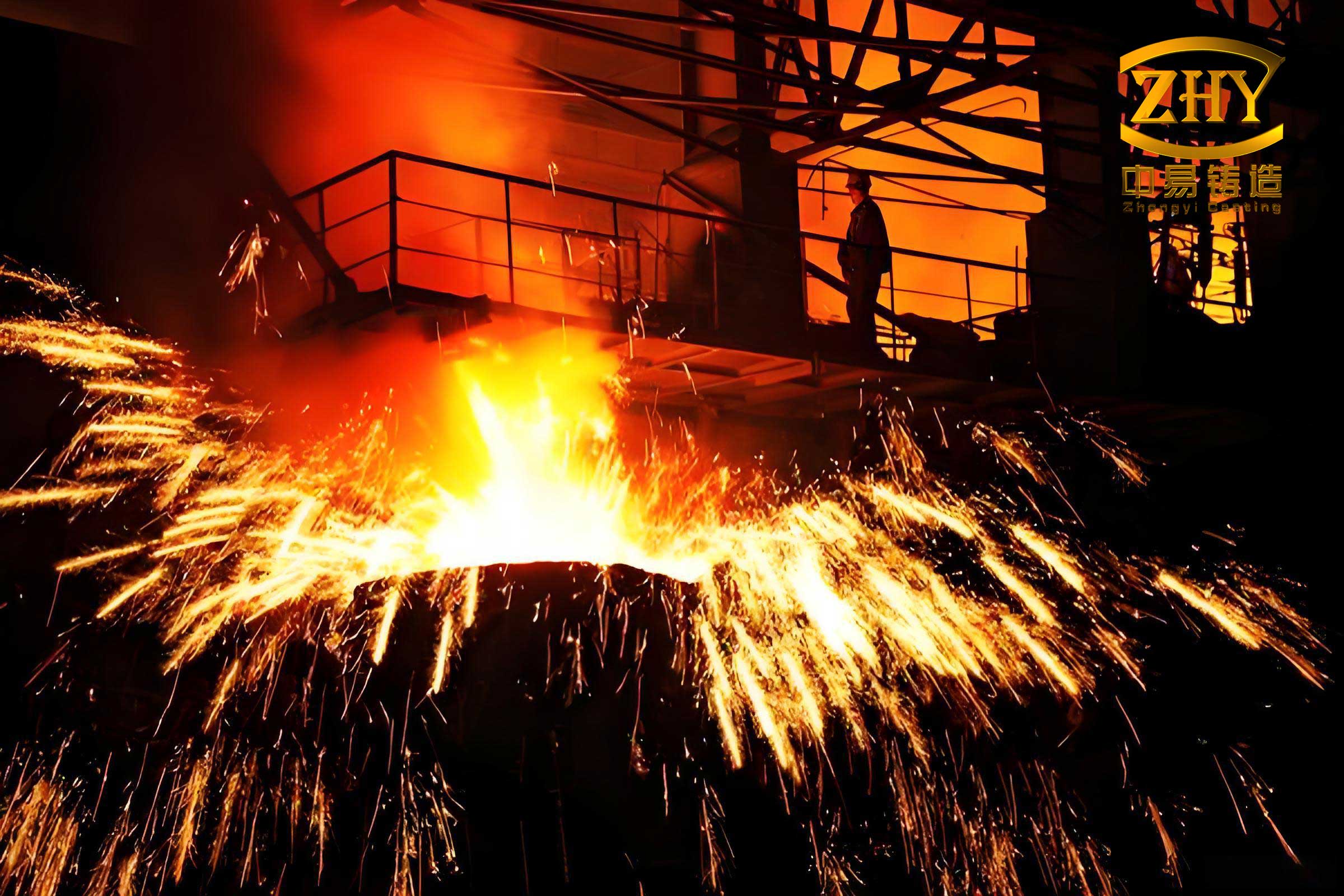
The role of copper is particularly noteworthy. Copper acts as a pearlite promoter and solid-solution strengthener, but in the context of ADI, it primarily enhances the hardenability and stabilizes the austenite phase during the isothermal hold. This allows for the formation of a finer, more uniform bainitic structure at the chosen transformation temperature, which is directly linked to improved mechanical properties. The manufacturing of sleeve pre-forms was accomplished via centrifugal casting. This process is ideal for producing symmetrical, hollow cylindrical components like sleeves. It offers significant advantages for ductile iron castings, including superior metallurgical quality, higher density, and excellent dimensional accuracy. The molten iron was treated in-ladle with a magnesium-ferrosilicon alloy for nodularization and a post-inoculant to ensure a high nodule count and count. It was then poured into a rotating steel mold. The centrifugal force (G-factor > 60) drives the denser metal against the mold wall while pushing less dense inclusions and slag towards the inner bore, which is subsequently machined away. This results in a sound, defect-free casting wall with a refined microstructure.
The critical step in achieving ADI properties is the heat treatment. The centrifugally cast sleeves were subjected to the following optimized austempering cycle:
- Austenitization: Heating to 900°C ± 10°C and holding for 90 minutes to achieve a homogeneous, carbon-saturated austenitic matrix.
- Quenching: Rapid transfer to a pre-heated salt bath maintained at 260°C ± 5°C.
- Isothermal Transformation: Holding at this temperature for 100 minutes, during which the high-carbon austenite decomposes into carbide-free bainitic ferrite and carbon-enriched retained austenite.
- Cooling: Air cooling to room temperature.
For comparison, sleeves made from normalized 1045 steel (equivalent to Chinese grade 45 steel) were prepared as a benchmark, representing common industry practice.
The experimental evaluation comprised several streams. Microstructural analysis was performed using optical microscopy on polished and etched samples. Mechanical properties were assessed via tensile testing (according to ASTM E8) and bulk hardness measurements (Rockwell C scale). The density and porosity of the ductile iron castings were measured using the Archimedes principle. The core of the investigation was tribological testing. Pin-on-disk wear tests were conducted under both dry sliding and oil-lubricated conditions to simulate extreme and normal operating environments, respectively. A hardened GCr15 steel ball (HRC 62) served as the counterface. Tests were run for a fixed duration under a constant load, with the friction coefficient recorded in real-time. Wear loss was quantified by mass loss measurement and wear scar morphology was examined using scanning electron microscopy (SEM). The specific test parameters are summarized in Table 2.
| Condition | Normal Load | Sliding Speed | Duration | Lubricant | Counterface |
|---|---|---|---|---|---|
| Dry Sliding | 30 N | 0.01 m/s | 1800 s | None | GCr15 Ball (Ø10 mm) |
| Oil Lubricated | 30 N | 0.01 m/s | 1800 s | ISO VG 68 Hydraulic Oil | GCr15 Ball (Ø10 mm) |
Table 2: Parameters for Pin-on-Disk Wear Tests.
Results and Analysis
Microstructural and Mechanical Characterization
The microstructure of the austempered sample is the key to its performance. Analysis reveals a matrix consisting of very fine, acicular lower bainite ferrite laths. These laths are embedded in a continuous network of high-carbon, thermally stable retained austenite. Uniformly dispersed throughout this matrix are well-formed, nodular graphite spheroids with a high degree of sphericity and a nodule count exceeding 120 nodules/mm². This unique combination—strong, fine bainite, ductile retained austenite, and soft graphite nodules—defines the ADI microstructure. No significant carbides or martensite were detected, indicating a successful and complete austempering transformation.
The mechanical properties derived from this structure are exceptional, especially when considering it is a casting. The results, averaged from multiple tests, are presented in Table 3. The ultimate tensile strength approaches that of many forged steels, while the hardness is significantly higher than that of traditionally hardened medium-carbon steel sleeves. The elongation, though modest, is adequate for this application and is complemented by very high fatigue strength, a critical property for cyclically loaded components.
| Material | Ultimate Tensile Strength (MPa) | Yield Strength (0.2% Offset, MPa) | Elongation (%) | Hardness (HRC) |
|---|---|---|---|---|
| Austempered Ductile Iron (ADI) | 1099 ± 58 | 850 ± 40 | 5.5 ± 1.2 | 52.8 ± 3.2 |
| Normalized 1045 Steel | 625 ± 20 | 380 ± 15 | 25.0 ± 3.0 | 18-22 (HB) |
Table 3: Mechanical Properties of ADI vs. Conventional Steel.
The centrifugal casting process proved highly effective for these ductile iron castings. Density measurements confirmed a very low porosity level, which can be approximated by the relationship between measured density ($\rho_m$) and theoretical density ($\rho_t$):
$$ \text{Porosity Percentage} \approx \left(1 – \frac{\rho_m}{\rho_t}\right) \times 100\% $$
For our ADI sleeves, the calculated porosity was less than 0.5%, contributing directly to the consistency and reliability of the mechanical properties.
Tribological Performance: Friction and Wear
The wear test results unequivocally demonstrate the superiority of ADI. The evolution of the coefficient of friction (COF) over time under both test conditions is most revealing. Under dry sliding, the 1045 steel exhibited a high and unstable COF, rapidly rising to an average of approximately 0.58, indicative of severe adhesive and abrasive wear. In contrast, the ADI sample showed a significantly lower and more stable COF, stabilizing around 0.38. This represents a reduction of about 35%. The difference under oil-lubricated conditions was even more dramatic. While lubrication reduced the steel’s COF to about 0.45, the ADI’s COF dropped remarkably to an average of 0.12—a reduction of nearly 75% compared to the lubricated steel.
Wear loss, quantified by mass loss, followed the same trend, with the data presented in Table 4. Under harsh dry conditions, the ADI sleeve’s wear rate was only about one-sixth that of the steel sleeve. In the oil-lubricated scenario, which better represents intended operation (though often with contaminated oil), the benefit was even greater: the wear loss of ADI was merely one-tenth of the steel’s loss. This exceptional performance translates directly into a potential order-of-magnitude increase in service life for the ductile iron castings.
| Test Condition | Material | Average Mass Loss (mg) | Relative Wear Resistance (Steel/ADI Loss) |
|---|---|---|---|
| Dry Sliding | Austempered Ductile Iron (ADI) | 3.59 | 6.1 : 1 |
| 1045 Steel | 21.8 | ||
| Oil Lubricated | Austempered Ductile Iron (ADI) | 0.82 | 10.9 : 1 |
| 1045 Steel | 8.95 |
Table 4: Wear Mass Loss and Relative Wear Resistance.
Discussion: The Synergistic Mechanisms of Superior Wear Resistance
The outstanding tribological performance of these centrifugally cast and austempered ductile iron castings is not due to a single factor, but rather a powerful synergy of multiple mechanisms inherent to the ADI microstructure.
1. Microstructural Hardness and Stability: The fine, acicular lower bainite provides a high-dislocation, strong matrix with substantial inherent hardness (≈ 52 HRC). More importantly, this structure is highly stable under mechanical and thermal stress. During sliding contact, the surface layer experiences significant strain. In ADI, this strain can induce a transformation of the metastable, high-carbon retained austenite into very hard, strain-induced martensite. This creates a work-hardened, wear-resistant “shell” on the surface, a phenomenon described by transformation-induced plasticity (TRIP). The hardness of this surface layer ($H_{surface}$) can be significantly higher than the bulk hardness ($H_{bulk}$), effectively resisting penetration and cutting by abrasive particles. This can be conceptually related to the improved load-bearing capacity.
2. The Self-Lubricating Effect of Graphite: This is a defining advantage of ductile iron castings over monolithic steels. During the wear process, the soft, solid-lubricant graphite nodules at or near the surface are smeared or released onto the friction interface. This forms a thin, protective tribofilm that separates the metallic surfaces, reducing metal-to-metal contact and thereby lowering both friction and wear. The effectiveness of this film is a function of graphite content, nodule morphology, and distribution—all optimized in our centrifugal casting and treatment process. Under oil lubrication, this mechanism is amplified. The graphite acts as an oil reservoir; the small cavities left after a nodule is exposed can trap and re-release lubricant, maintaining a more persistent lubricating film even under conditions of starved lubrication. The friction reduction can be modeled as a composite friction coefficient ($\mu_{comp}$) combining boundary ($\mu_b$) and fluid film ($\mu_f$) components, where graphite favorably alters the boundary component:
$$ \mu_{comp} = (1-\alpha)\mu_f + \alpha \mu_b^{graphite-modified} $$
where $\alpha$ is the fraction of surface contact in boundary lubrication regime.
3. Damage Tolerance and Crack Arrest: The retained austenite phase, being ductile and tough, plays a crucial role in mitigating wear damage. It can plastically deform to accommodate localized stress concentrations, blunting the tips of micro-cracks that may initiate in the harder bainite. Furthermore, the interfaces between the bainite ferrite and the retained austenite, as well as the graphite-matrix interfaces, act as effective barriers to crack propagation. This prevents the formation and delamination of large wear debris (a common failure mode in brittle hardened steels), leading to a much smoother wear surface and finer, less abrasive wear debris. The energy dissipation during wear ($E_{wear}$) involves both plastic deformation and fracture; ADI’s microstructure optimizes this by favoring energy-absorbing deformation over catastrophic fracture:
$$ E_{wear} \propto \int (H \cdot \epsilon_p + G_c \cdot da) $$
where $H$ is hardness, $\epsilon_p$ is plastic strain, $G_c$ is fracture toughness, and $da$ is crack area increment. ADI provides a favorable balance of $H$ and $G_c$.
4. Process-Induced Quality: The centrifugal casting process cannot be overlooked. It produced ductile iron castings with exceptional soundness, minimal shrinkage, and a very uniform distribution of graphite nodules from the outer to inner diameter of the sleeve wall. This uniformity ensures that the self-lubricating and crack-arresting benefits of graphite are consistently available throughout the component’s critical wear surface, eliminating weak points that could initiate premature failure.
Conclusion and Engineering Implications
This comprehensive study establishes that austempered ductile iron (ADI), manufactured via the centrifugal casting route, represents a transformative material solution for heavy-duty excavator sleeves and similar oscillating bearing applications. The synergy of a finely dispersed lower bainitic ferrite matrix, stabilized retained austenite, and well-formed graphite nodules—all achieved through controlled chemistry and precise heat treatment—confers a property profile unattainable by conventional quenched and tempered steels.
The data conclusively shows that these advanced ductile iron castings offer a dramatic improvement in wear life. Under simulated severe (dry) conditions, wear resistance improved by a factor of six. Under lubricated conditions more representative of field operation, the improvement exceeded a factor of ten. Concurrently, the coefficient of friction was substantially reduced, by approximately 35% dry and 75% lubricated, which directly lowers operational energy losses and heat generation at the joint.
The engineering implications are significant. Adopting centrifugally cast ADI sleeves can lead to: 1) Greatly extended service intervals and reduced frequency of costly, time-consuming maintenance downtimes; 2) Enhanced reliability and reduced risk of catastrophic linkage failure; 3) Lower total lifecycle cost despite a potentially higher initial component cost due to the extended life; and 4) Improved operational efficiency through lower friction. The success of this project underscores the potential for material science and advanced processing techniques, like centrifugal casting and austempering, to solve persistent engineering challenges. It confirms that high-performance ductile iron castings are capable of replacing traditional steel components in demanding tribological systems, offering a superior combination of longevity, performance, and value for the construction machinery industry and beyond.