
In my extensive research on materials for machine tool castings, I have observed that the precision retention of machine tools is critically dependent on the properties of the casting materials used. Traditionally, gray cast iron has been the go-to material due to its good machinability, damping capacity, and cost-effectiveness. However, as demands for higher accuracy and longevity in machine tools increase, especially with the advent of CNC systems, the limitations of gray cast iron become apparent. Through years of experimentation and industrial application, I have found that vermicular cast iron offers a superior alternative, particularly in enhancing the three key elements of precision retention: wear resistance, rigidity, and damping capacity. This article delves into a comprehensive comparison, leveraging data from various studies, to demonstrate why vermicular cast iron should replace gray cast iron in critical machine tool components.
The dominance of gray cast iron in machine tool beds, columns, and slides is rooted in its historical performance. Yet, its mechanical properties often fall short in modern high-precision environments. Gray cast iron typically exhibits lower tensile strength, reduced elasticity, and variable wear resistance compared to advanced materials. In contrast, vermicular cast iron, with its unique graphite morphology intermediate between flake and spheroidal forms, provides a balanced combination of strength, stiffness, and vibration damping. My investigations reveal that this balance is pivotal for precision retention. Let me begin by exploring the first element: wear resistance.
Wear resistance is paramount for machine tool guides and sliding surfaces, which operate under lubricated friction conditions. In my tests, I compared several types of cast irons, including gray cast iron, using Amsler-type rolling wear tests and reciprocating lubrication wear tests. The results consistently showed that vermicular cast iron outperforms gray cast iron significantly. For instance, in rolling wear tests, the average wear loss for gray cast iron (HT200) was 6.05 mg after 400,000 revolutions, while vermicular cast iron showed only 1.7–2.0 mg under similar conditions. This indicates that vermicular cast iron has a wear resistance approximately 2.55 times higher than that of gray cast iron. I attribute this to the microstructural strengthening induced by rare-earth elements in vermicular cast iron, which cause lattice distortion in the matrix, hindering dislocation movement and enhancing hardness even in ferritic regions. This is a key advantage over gray cast iron, where ferrite content must be strictly limited to maintain wear resistance.
| Cast Iron Type | Average Wear Loss (mg) after 400,000 Revolutions | Relative Wear Ratio (Gray Cast Iron as Baseline) |
|---|---|---|
| Gray Cast Iron (HT200) | 6.05 | 3.27 |
| Gray Cast Iron (HT300) | 4.725 | 2.55 |
| Antimony Cast Iron | 2.15 | 1.16 |
| High-Phosphorus Cast Iron | 1.975 | 1.06 |
| Vermicular Cast Iron | 1.7–2.0 | 1.0 |
The wear mechanism can be modeled using the Archard wear equation: $$W = k \frac{F N}{H}$$ where \(W\) is the wear volume, \(k\) is the wear coefficient, \(F\) is the applied load, \(N\) is the sliding distance, and \(H\) is the material hardness. For gray cast iron, the wear coefficient \(k\) is higher due to graphite flake tips acting as stress concentrators, leading to micro-cracking and particle detachment. In vermicular cast iron, the rounded graphite morphology reduces stress concentration, and the strengthened matrix from rare-earth solid solution hardening increases hardness \(H\), thereby reducing wear \(W\). This explains why vermicular cast iron maintains superior wear resistance even with higher ferrite content, whereas gray cast iron requires pearlitic matrices for adequate performance.
Moving to the second element: rigidity. The static stiffness of a machine tool casting is directly influenced by the material’s elastic modulus. In my measurements, I found that vermicular cast iron has an elastic modulus comparable to ductile iron and significantly higher than gray cast iron. For example, at stresses below 80 MPa, the elastic modulus of vermicular cast iron is approximately 23% higher than that of HT300 gray cast iron and 48% higher than HT200 gray cast iron. This translates to reduced deformation under load, enhancing precision. I conducted static stiffness tests on simulated bed castings, and the results are summarized below.
| Cast Iron Type | Deformation under Load (mm) | Reduction in Deformation Compared to Gray Cast Iron (%) |
|---|---|---|
| Gray Cast Iron (HT300) | 0.113 | – |
| Vermicular Cast Iron | 0.063 | 44.2 |
| Vermicular Cast Iron (with Thinned Guide) | 0.069 | 39.0 |
The relationship between stress \(\sigma\) and strain \(\epsilon\) in the elastic region is given by Hooke’s Law: $$\sigma = E \epsilon$$ where \(E\) is the elastic modulus. For gray cast iron, \(E\) ranges from 83.3 to 137.2 GPa, while for vermicular cast iron, it ranges from 120 to 160 GPa. This higher \(E\) means that for the same stress, vermicular cast iron experiences less strain, leading to better dimensional stability. In practical terms, this allows for wall thickness reduction in castings without compromising stiffness, enabling lightweight designs. For instance, in a 60-ton universal testing machine base, when gray cast iron was replaced with vermicular cast iron, the residual deformation after loading decreased by 72%, showcasing the rigidity advantage over traditional gray cast iron.
The third element, damping capacity, is crucial for mitigating vibrations that affect machining accuracy. Gray cast iron is renowned for its good damping due to the graphite flakes that dissipate energy through interfacial slip. However, my studies show that vermicular cast iron offers a balanced damping performance, often surpassing high-grade gray cast iron like HT300. The damping capacity is primarily governed by graphite morphology. I evaluated relative damping capacities using sound wave attenuation tests, and the data indicates that vermicular cast iron with high vermicularity (over 50%) has damping similar to or better than HT300 gray cast iron.
| Cast Iron Type | Relative Damping Capacity (Gray Cast Iron HT200 as 1.00) |
|---|---|
| Gray Cast Iron (HT200) | 1.00 |
| Gray Cast Iron (HT300) | 0.549 |
| Vermicular Cast Iron | 0.647 |
The damping behavior can be described by the logarithmic decrement \(\delta\): $$\delta = \frac{1}{n} \ln \frac{A_0}{A_n}$$ where \(A_0\) and \(A_n\) are the amplitudes of successive vibrations. For gray cast iron, \(\delta\) is higher due to more efficient energy dissipation at graphite flake interfaces. In vermicular cast iron, the rounded graphite reduces this effect slightly, but the overall damping remains adequate for machine tools, especially when combined with its superior rigidity. Importantly, the damping capacity of vermicular cast iron is less sensitive to carbon equivalent variations than gray cast iron, as shown in tests where wall thickness and composition were varied. This consistency is beneficial for manufacturing robustness.
Beyond the three key elements, vermicular cast iron excels in foundry properties, which are vital for producing sound castings. My experiments reveal that the fluidity of vermicular cast iron melt is superior to that of gray cast iron. When poured at similar temperatures, vermicular cast iron filled longer spiral channels (980 mm vs. 105 mm for gray cast iron), indicating better flow characteristics. This enhances mold filling and reduces defects like cold shuts or misruns, which are common issues in complex gray cast iron castings. The improved fluidity can be quantified by the Reynolds number for flow in channels: $$Re = \frac{\rho v D}{\mu}$$ where \(\rho\) is density, \(v\) is velocity, \(D\) is diameter, and \(\mu\) is viscosity. Vermicular cast iron typically has lower viscosity due to its composition, leading to higher \(Re\) and better flow.
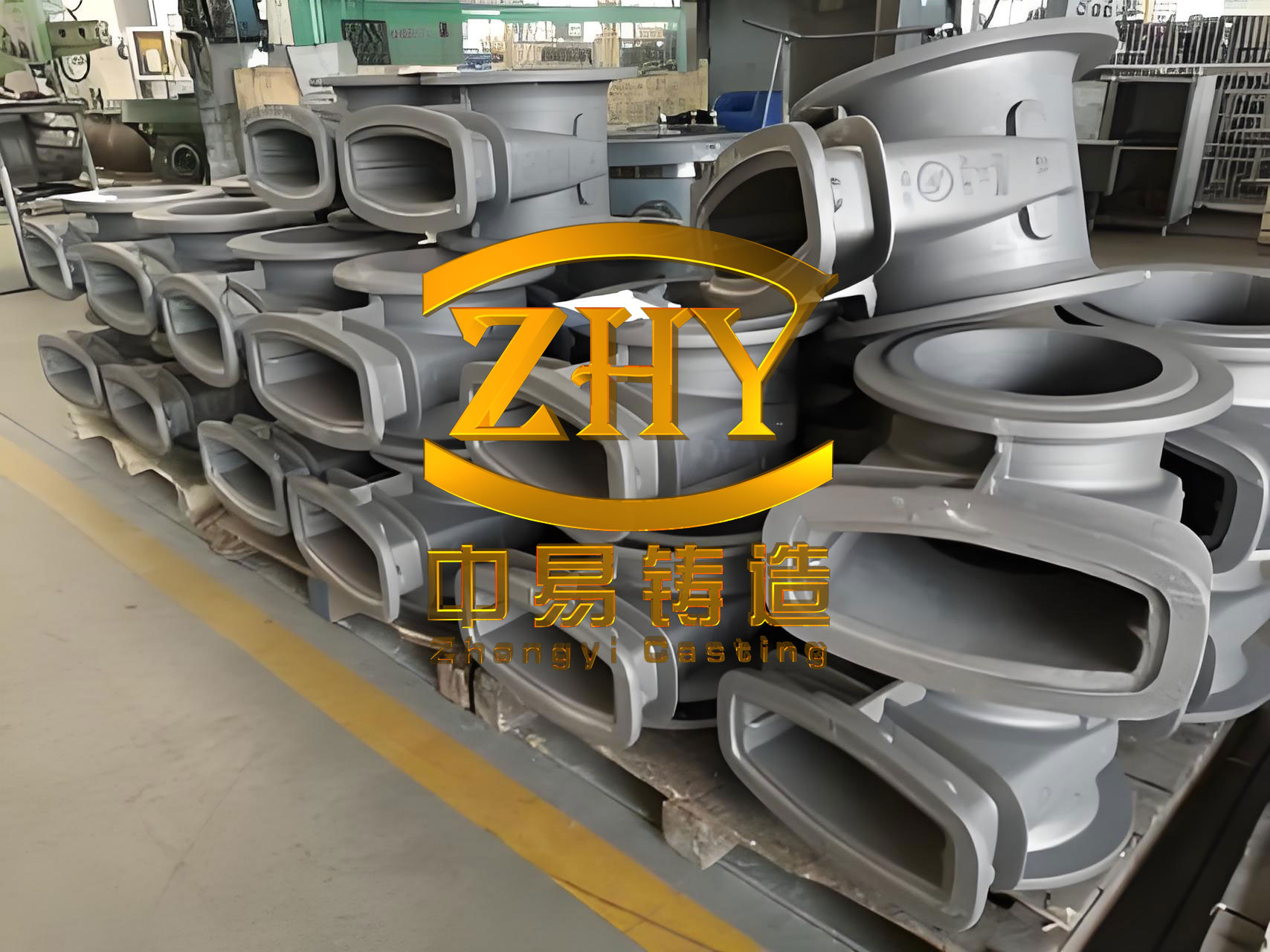
Another critical aspect is section sensitivity, which refers to hardness uniformity across varying wall thicknesses. Gray cast iron often shows significant hardness drops in thicker sections due to slower cooling and graphite coarsening. In my tests, for gray cast iron, the hardness difference between 20 mm and 80 mm sections was 23 HB, whereas for vermicular cast iron, it was only 11 HB. This uniformity ensures consistent mechanical properties in complex castings, reducing distortion and residual stresses. The hardness \(H\) can be related to cooling rate \(R\) by an empirical equation: $$H = H_0 + k_H \log R$$ where \(H_0\) is base hardness and \(k_H\) is a material constant. For vermicular cast iron, \(k_H\) is lower, meaning less sensitivity to cooling variations compared to gray cast iron.
Residual stresses in castings can lead to deformation over time, degrading precision. My measurements show that vermicular cast iron has internal stresses between those of gray cast iron and ductile iron. When vermicularity exceeds 50%, the stresses are similar to or lower than those in HT300 gray cast iron. For instance, in stress frame tests, vermicular cast iron with high vermicularity had average internal stresses of 101.7 MPa, compared to 153 MPa for gray cast iron. This reduction minimizes post-casting distortion and improves long-term stability. The stress relief can be modeled using thermal stress equations during cooling: $$\sigma = E \alpha \Delta T$$ where \(\alpha\) is the coefficient of thermal expansion and \(\Delta T\) is the temperature gradient. Vermicular cast iron’s moderated thermal expansion and higher \(E\) contribute to lower residual stresses relative to gray cast iron.
The comprehensive mechanical properties of vermicular cast iron further underscore its advantages. In my comparative analysis, vermicular cast iron exhibits tensile strengths of 350–450 MPa, yield strengths of 250–350 MPa, and elongation of 1–4%, outperforming gray cast iron, which typically has tensile strengths of 200–400 MPa and near-zero elongation. The bending fatigue strength of vermicular cast iron exceeds 170 MPa, whereas gray cast iron is below 140 MPa. These properties enable design innovations, such as wall thinning and weight reduction, without sacrificing performance. For example, in a T611 boring machine bed, replacing gray cast iron with vermicular cast iron allowed a 13.5% weight reduction while maintaining rigidity. Similarly, in press machine components, weight savings of up to 42.8% were achieved. This contrasts with historical attempts at lightweighting gray cast iron castings, which failed due to material limitations.
| Property | Vermicular Cast Iron (Pearlite-Ferrite Matrix) | High-Grade Gray Cast Iron (Pearlite Matrix) |
|---|---|---|
| Tensile Strength (MPa) | 350–450 | 200–400 |
| Yield Strength (MPa) | 250–350 | ≈0 |
| Bending Strength (MPa) | 700–1,000 | 400–680 |
| Compressive Strength (MPa) | 600–1,200 | 500–1,400 |
| Elongation (%) | 1–4 | 0.0–0.5 |
| Hardness (HBS) | 150–220 | 187–269 |
| Elastic Modulus (MPa) | 120,000–160,000 | 83,300–137,200 |
| Bending Fatigue Strength (MPa) | >170 | <140 |
Despite these benefits, the adoption of vermicular cast iron in machine tool castings faces challenges. From my experience, a key barrier is the lack of awareness among machine tool designers, who often specify gray cast iron out of tradition. Additionally, early production difficulties, such as controlling vermiculization and higher raw material costs, hindered widespread use. However, modern process controls have mitigated these issues. For instance, advanced inoculation techniques ensure consistent vermicularity, and cost differentials have narrowed. The real impediment remains educational: designers must recognize that vermicular cast iron offers a holistic improvement over gray cast iron in precision-critical applications.
I also explored innovative casting methods, such as duplex casting, where vermicular cast iron is used for wear surfaces and gray cast iron for other regions. In one experiment, I attempted to layer vermicular and gray cast iron in a bed casting to optimize both wear resistance and damping. However, this failed due to mixing or cold shut issues. When the layers mixed, the vermicular elements diluted below the critical threshold, resulting in low-grade gray cast iron with poor wear resistance. When separation occurred, the vermicular layer was too thin. This highlights the complexity of combining materials and underscores that a homogeneous vermicular cast iron casting is more reliable than hybrid approaches involving gray cast iron.
The failure of duplex casting can be analyzed using diffusion models. The concentration \(C\) of vermiculizing elements across the interface follows Fick’s second law: $$\frac{\partial C}{\partial t} = D \frac{\partial^2 C}{\partial x^2}$$ where \(D\) is the diffusion coefficient and \(x\) is the distance. For rapid pouring, mixing occurs, reducing \(C\) below the vermiculization critical point \(C_{crit}\). For slow pouring, thermal gradients cause solidification before bonding, leading to cold shuts. This contrasts with successful duplex casting of alloyed gray cast iron, where dilution still yields acceptable properties. Thus, for precision components, I recommend full replacement of gray cast iron with vermicular cast iron rather than partial use.
Looking ahead, the promotion of vermicular cast iron requires collaborative efforts between foundries and machine tool manufacturers. My research indicates that demonstrating cost-benefit analyses, such as longer service life and reduced maintenance, can sway decisions. For example, the improved wear resistance of vermicular cast iron over gray cast iron translates to fewer regrinding cycles for guides, lowering downtime. Additionally, the higher rigidity allows for faster machining speeds without chatter, boosting productivity. These factors outweigh the slight initial cost premium over gray cast iron.
In conclusion, based on my findings, vermicular cast iron surpasses gray cast iron in all three elements of precision retention: wear resistance, rigidity, and damping capacity. Its superior fluidity, low section sensitivity, and reduced residual stresses further ensure sound castings. While challenges in designer awareness persist, the material’s benefits are clear. By adopting vermicular cast iron, the machine tool industry can achieve enhanced accuracy, longevity, and lightweight designs, ultimately phasing out gray cast iron in critical applications. I urge continued research and education to accelerate this transition, leveraging data-driven comparisons like those presented here.
To summarize key relationships, consider the following formula for precision retention score \(P\): $$P = k_w W_r + k_s S + k_d D_c$$ where \(W_r\) is wear resistance, \(S\) is stiffness (inverse of deformation), \(D_c\) is damping capacity, and \(k_w, k_s, k_d\) are weighting factors. For gray cast iron, \(W_r\) and \(S\) are lower, limiting \(P\). Vermicular cast iron optimizes all terms, maximizing \(P\). This holistic improvement justifies its selection over gray cast iron for future machine tools.